Image
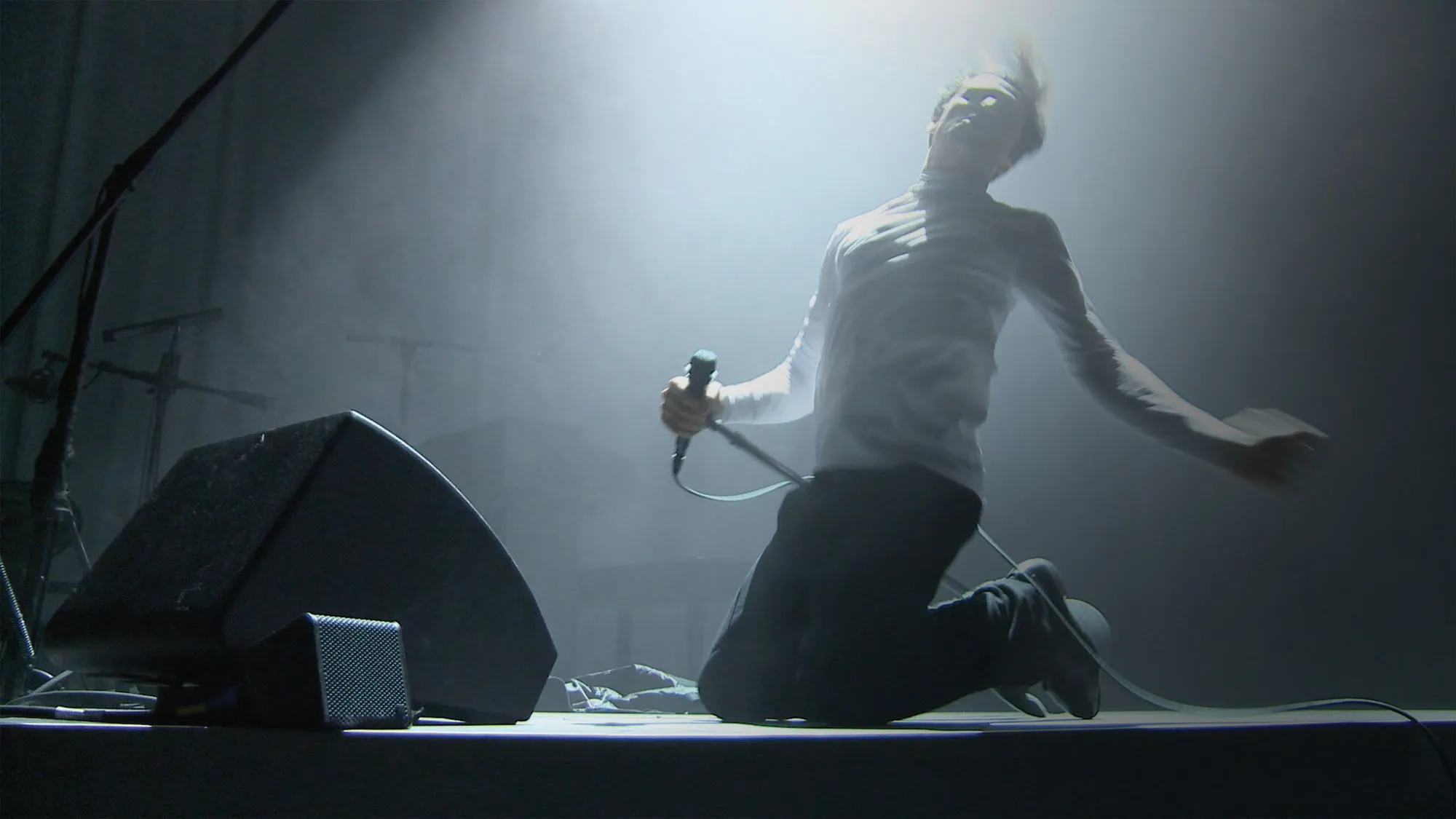
frances starlite holding a microhpone sliding on his knees to the end of the stage in light theatrical fog.

The White Room

Francis and the Lights

American culture has been defined by pop music. It’s who we are—and our pop stars must cultivate a persona, while maintaining an unquestionable sense of authenticity. Or are those things one and the same? It is a delicate balance of conscious mythmaking and absolute earnest humanity. Or could it be one pursuit alone? Reclusive singer, songwriter, and pianist Francis Farewell Starlite will be in residence to create a new pop music spectacle—The White Room.

White Room references the small, white, environmentally controlled chamber used by NASA astronauts to make final preparations before entering the spacecraft, such as donning parachute packs, putting on helmets, and detaching portable air conditioning units. First used in Project Gemini, its use continued through subsequent programs up to and including the Space Shuttle program. You may not have expected a show like this to be produced at EMPAC, but here it is. Don’t miss it!

Main Image: Frances Starlite in Studio 1 in 2011. Photo: EMPAC/Rensselaer.

Dionysia

Poor Dog Group

Half man and half horse, satyrs were the legendary companions of Dionysus, the Greek god of wine and theater. In Dionysia, Poor Dog Group uses ancient drama, lore, and imagery found on clay pots, to reinvent the “satyr play.” Based on fragments of these plays, many by Euripides, Dionysia relates the myth of Thyestes and Atreus and delves into the ritualistic, unstable, and sometimes hilarious behavior of satyrs. Commissioned by EMPAC and created during a three-week residency including the work’s premiere, Dionysia channels forgotten rites into a full-blown physical expression of the bestial qualities inherent in contemporary life, revealing a world both barbaric and beautiful.

Poor Dog Group is a Los Angeles-based collective of performance and media artists committed to nurturing a distinctive aesthetic through adventurous collaboration in the creation of new work and through the radical reexaminations of existing texts.

Quote Unquote: Experiments in Time-Based Text was an interdisciplinary series presenting works by artists that use an existing text as a departure point for time-based works including installation, film, and performance.

Image
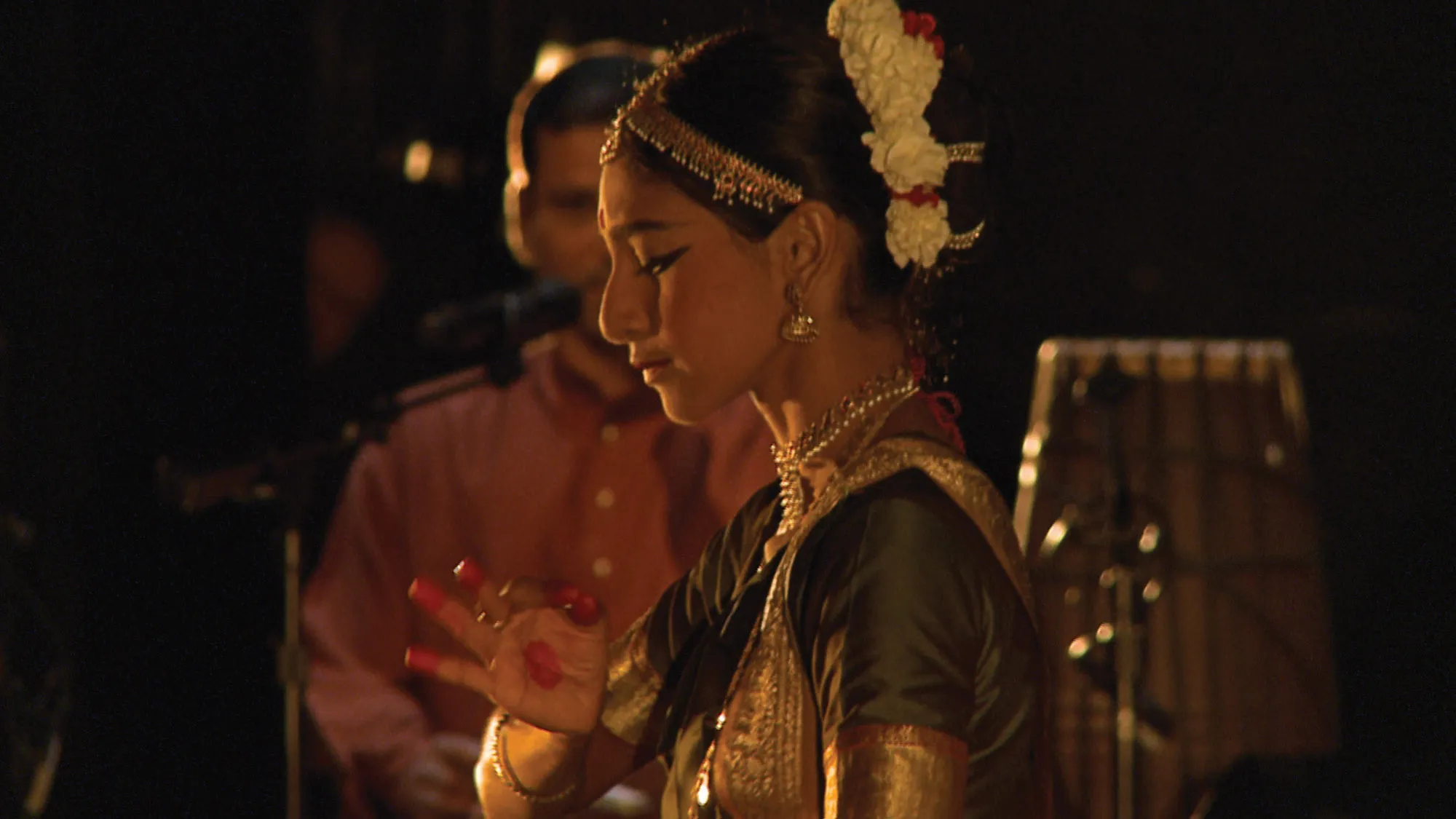
The profile of Indian woman dressed in traditional dress with white flowers in her hair, in a pose, mid dance.

Shantala Shivalingappa

Acclaimed for her exquisite performances across India and Europe, Shantala Shivalingappa offers a dynamic double program of contemporary solos and traditional Indian dance. A renowned performer in Kuchipudi, a 2,000-year-old Indian style that fuses dance, music, and theater, Shivalingappa has been called “a total revelation” and “divinely gifted” for her grace, finesse, and powerful presence on stage. She has also performed with some of the greatest contemporary theater and dance artists working today, including Maurice Béjart and Peter Brook, bringing her stamp of classical mastery to contemporary works.

The program begins with two solos that pairs her sensuous and precise dancing style with new forms. This is followed by an excerpt from Gamaka, a Kuchipudi-based performance choreographed by Shivalingappa, danced in shimmering silks and in rhythmically complex and playful dialogue with four master musicians.

Main Image: Shantala Shivalingappa, 2011.

Media

Namasya and Swayambhu

Shantala Shivalingappa

Shantala Shivalingappa offered a program of contemporary solos and traditional Indian dance, and made a video recording of her work while in residence. A renowned performer in Kuchipudi, a 2,000-year-old Indian style that fuses dance, music, and theater, Shivalingappa has been praised for her grace, finesse, and powerful presence on stage. The program began with two solos that paired her sensuous and precise dancing style with new forms. This was followed by an excerpt from Gamaka, a Kuchipudi-based performance choreographed by Shivalingappa, danced in shimmering silks and in rhythmically complex and playful dialogue with four master musicians.

Born in Madras, India, and brought up in Paris, Shivalingappa was inspired by Kuchipudi Master Vempati Chinna Satyam, and received an intense and rigorous training in Kuchipudi. She has also performed with some of the greatest contemporary theater and dance artists, including Maurice Béjart, Peter Brook, and Pina Bausch.

AKOUSMA

Presenting international works across the spectrum of electronic music, this concert highlights selections from this year’s eighth annual AKOUSMA festival in Montréal. Pierre-Yves Macé (France), France Jobin (Canada), Horacio Vaggione (France/Argentina), and Louis Dufort (Canada) will be interpreting their works live over a 16-speaker system surrounding the audience. AKOUSMA is produced by Réseaux, a composer-run organization dedicated to presenting and commissioning electroacoustic music since 1991. Montréal is the North American hub for electronic music, offering a wide range of festivals spanning dance music, acoustics research, and everything in between. Louis Dufort Matério_** (2006) – US premiere Matério_*** (2007) – US premiere Pierre-Yves Macé Qui-vive (2008) Miniatures (2010–…) except France Jobin Valence of one (2011) – US premiere Horacio Vaggione Arenas (2007)

Image
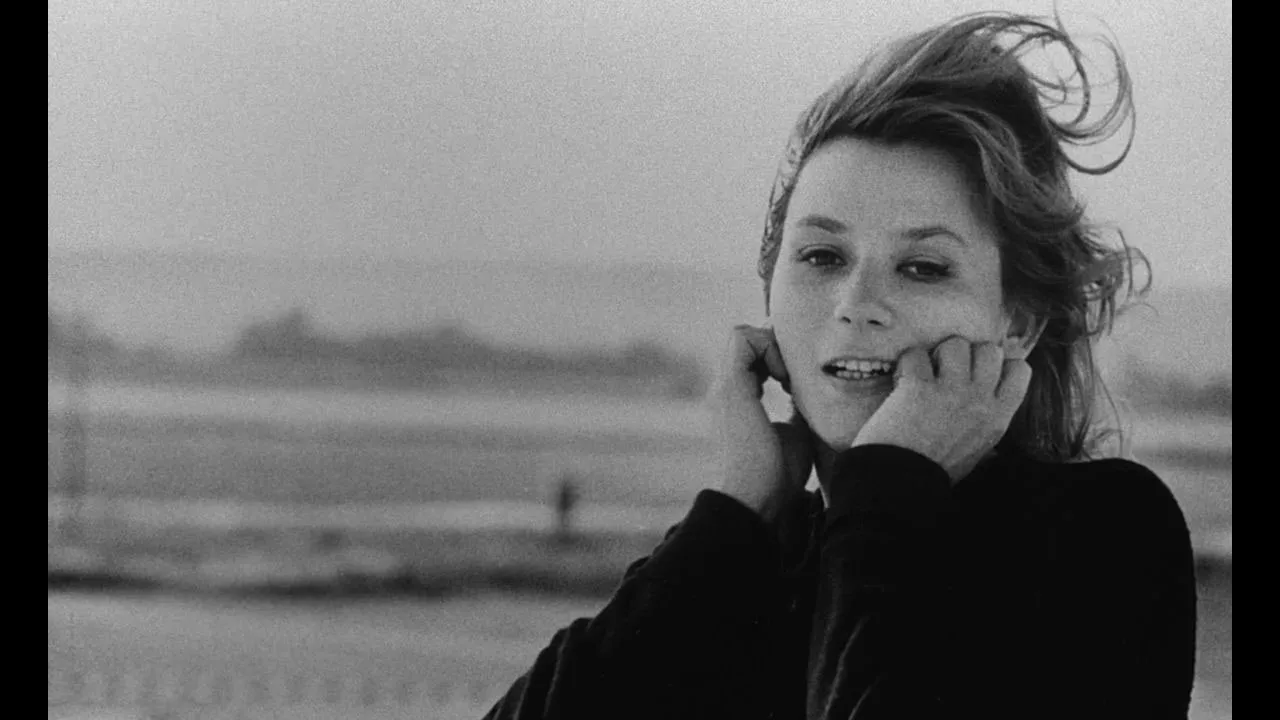
A white woman wearing a black turtleneck with windswept hair gently resting her face on her hands.

Time and Time Again

La Jetée & The Eternal Recurrence

Chris Marker's 1962 science fiction classic, La Jetée, launches The Eternal Return screening series, accompanied by a talk with experimental filmmaker Keith Sanborn, as well as screenings of his short film Operation Double Trouble, and Ben Badeau's 300 Clouds. La Jetée is a cinema landmark for good reason: it supersedes one of the most venerated myths of the cinema—that film exists only in the present. Instead of a direct refutation, Marker offers an exacting meditation on time, chance, fate, and memory in the form of a scientific fiction, which resonates strongly with Nietzsche's thoughts in his Late Notebooks. Keith Sanborn will examine the interconnections between the two thinkers and suggest echoes with these in his own Operation Double Trouble. Operation Double Trouble is an antithetical version of the propaganda film Enduring Freedom: The Opening Chapter. By repeating each shot of the film twice, Sanborn pushes the strategic manipulations of the original, both in terms of montage and ideology. The echoing effect destabilizes the transparency of the narrative and provides insight into how we relate to audiovisual media. Benjamin Badeau's 300 Clouds re-contextualizes Chris Marker's 1962 film La Jetée, imagining a different Earth and a new set of challenges shaped by the myriad, interwoven environmental catastrophes of the past 50 years. Will the count continue to slip, or can the ominous forms on the horizon help rebuild?

Enigmatic French filmmaker Chris Marker is one of the most highly regarded and experimental figures in cinema. Aside from his work, little is known about him. Born in a suburb of Paris, he has allowed a legend to grow about his birth in a “far-off country.” Born Christian Francois Bouche-Villeneuve on July 29, 1921, Marker is one of a half-dozen aliases he has used. It is thought that he chose “Marker,” in reference to the Magic Marker pen. Chris Marker began his career as a writer (publishing poems, a novel, and various essays and translations) and journalist (whose travels took him all over the world). His films include Le joli mai (1963), Le Jetée (1962), A Grin Without a Cat (1977), Sans Soleil (1983), The Last Bolshevik (1993), Level Five (1996), and The Case of the Grinning Cat (2004).

His work was been presented internationally. Marker was the subject of a film retrospective at The Museum of Modern Art, New York, and was a featured artist in the exhibitions Passage de l'image at the Centre Pompidou, Paris, and Documenta X, Kassel, Germany.

Keith Sanborn is a media artist and theorist based in New York. His work has been the subject of one-person shows, and has been shown in major surveys including the Whitney Biennial and “Monter/Sampler” at the Centre Pompidou, as well as festivals such as OVNI, The Rotterdam International Film Festival, and the European Media Arts Festival. His theoretical work has appeared in journals (Artforum), anthologies and exhibition catalogs for the Museum of Modern Art (New York), Exit Art, the San Francisco Cinematheque, and the University Art Museum, Berkeley. He has translated into English the work of Guy Debord, René Viénet, Gil Wolman, Georges Bataille, and Paolo Gioli. He is currently at work on a translation of the writings of Esfir Shub and a video installation called Energy of Delusion. He teaches at Princeton University and at the Milton Avery Graduate School in the Arts of Bard College.

Benjamin Badeau received his BArch in 2011 from the School of Architecture at Rensselaer Polytechnic Institute. As a graduating thesis student he received the Matthew W. Del Gaudio award for excellence in design, theory, and structural understanding. Emergent relationships between man, technology, and environment have become primary foci for his research and theoretical practice. He currently works as an Intern Architect in Bennington, Vermont.

Main Image: Film still from La Jetee (1962).
Media
Image
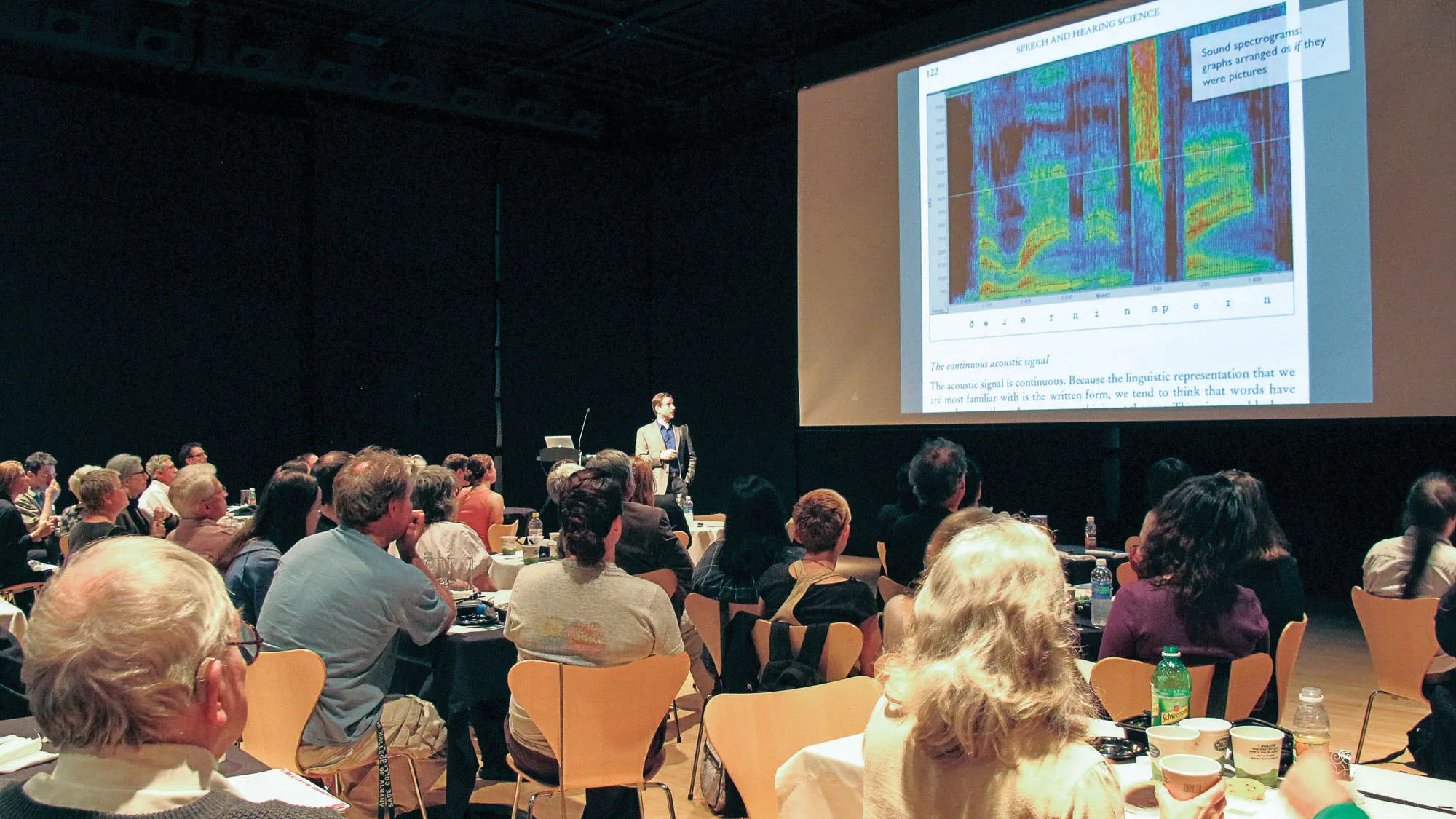
James Elkins giving a lecture

James Elkins

Visual Practices Across the University

In this interdisciplinary talk, art historian James Elkins discussed the wide range of practices related to image interpretation that take place across a university: lawyers, doctors, scientists, engineers, humanists, and social scientists all produce images and present arguments about them in different ways. This talk assessed the state of scholarship on links between art and science, arguing that it is possible to consider images in various fields without using tropes from the humanities or social sciences as explan-
atory tools—in other words, by letting the different disciplines speak in their own languages. 

Elkins is the E.C. Chadbourne Professor in the Department of Art History, Theory, and Criticism at the School of the Art Institute of Chicago; in addition to Visual Practices Across the University, his books include On Pictures and the Words that Fail Them.

Observer Effects offered a dialogue between the fields of art and science. The title was derived from the principle in physics that the act of observation transforms the observed, an idea that has been influential in philosophy, aesthetics, psychology, and politics.

Main Image: James Elkins in studio 1. 

Image
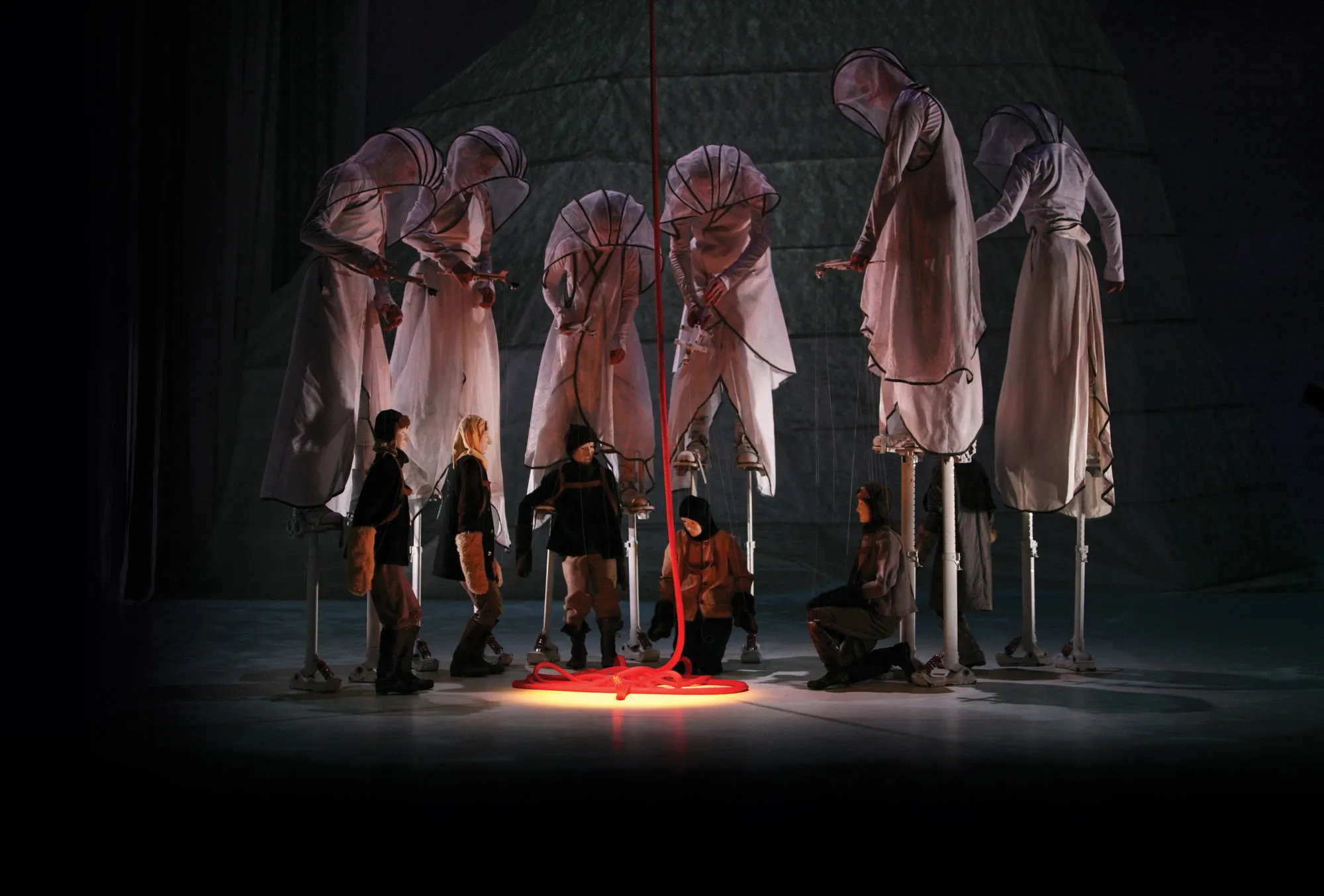
A group of six puppeteers dressed in hooded white robes on stilts working large marionettes gathered around a lit red rope.

69˚S.

Phantom Limb

Inspired by Sir Ernest Shackleton's harrowing expedition to Antarctica in 1914, Phantom Limb unites puppetry, dance, film, history, and photography with contemporary music to create a stunning vision of the great arctic continent—past, present, and future. Dim light plays across a lunar terrain dotted with icebergs. Shackleton’s crew, played by half-life-size puppets, struggles to survive in this vast landscape, putting into stark relief the power of endurance and camaraderie and the price of knowledge. With sound that combines the junkyard dog aesthetic of the band Skeleton Key playing live, a score recorded by the Kronos Quartet, and glacial field recordings, 69˚S. mines the inherently bittersweet and complex nature of the Shackleton experience and what the future may hold for this fragile environment.

Following a two-week residency at EMPAC with the entire cast and crew, these performances are the final workshop showings before the piece officially premieres at Dartmouth College. A look inside the creative process in the making of 69°S.

The New York City-based Phantom Limb Company, founded by composer and marionette maker Erik Sanko and visual artist Jessica Grindstaff, is critically acclaimed for its reinvention of traditional theatrical forms, incorporating marionette puppetry, music, and large-scale installation in order to probe issues of contemporary life. Since the success of their first marionette play The Fortune Teller in 2006, Sanko and Grindstaff have collaborated on numerous original theatrical works with such diverse artists as Ping Chong & Company, Ulrike Quade, Geoff Sobelle of Pig Iron and rainpan 43, and Mark Z. Danielewski.

Jessica Grindstaff is a multimedia artist. Known for her tiny Victorian taxidermied shadowboxes, wax and chalk paintings, she has most recently taken her micro-universe macro through the medium of installation and set design.

Erik Sanko is a lifelong musician, and has played with The Lounge Lizards, John Cale, Yoko Ono, They Might Be Giants and his own band, Skeleton Key. Erik also has always made puppets, first for his own amusement, then for art collectors, and now for theatrical productions.

Main Image: 69​​​​​​˚ S. Photo: Courtesy Phantom Limb. 

Media
Image
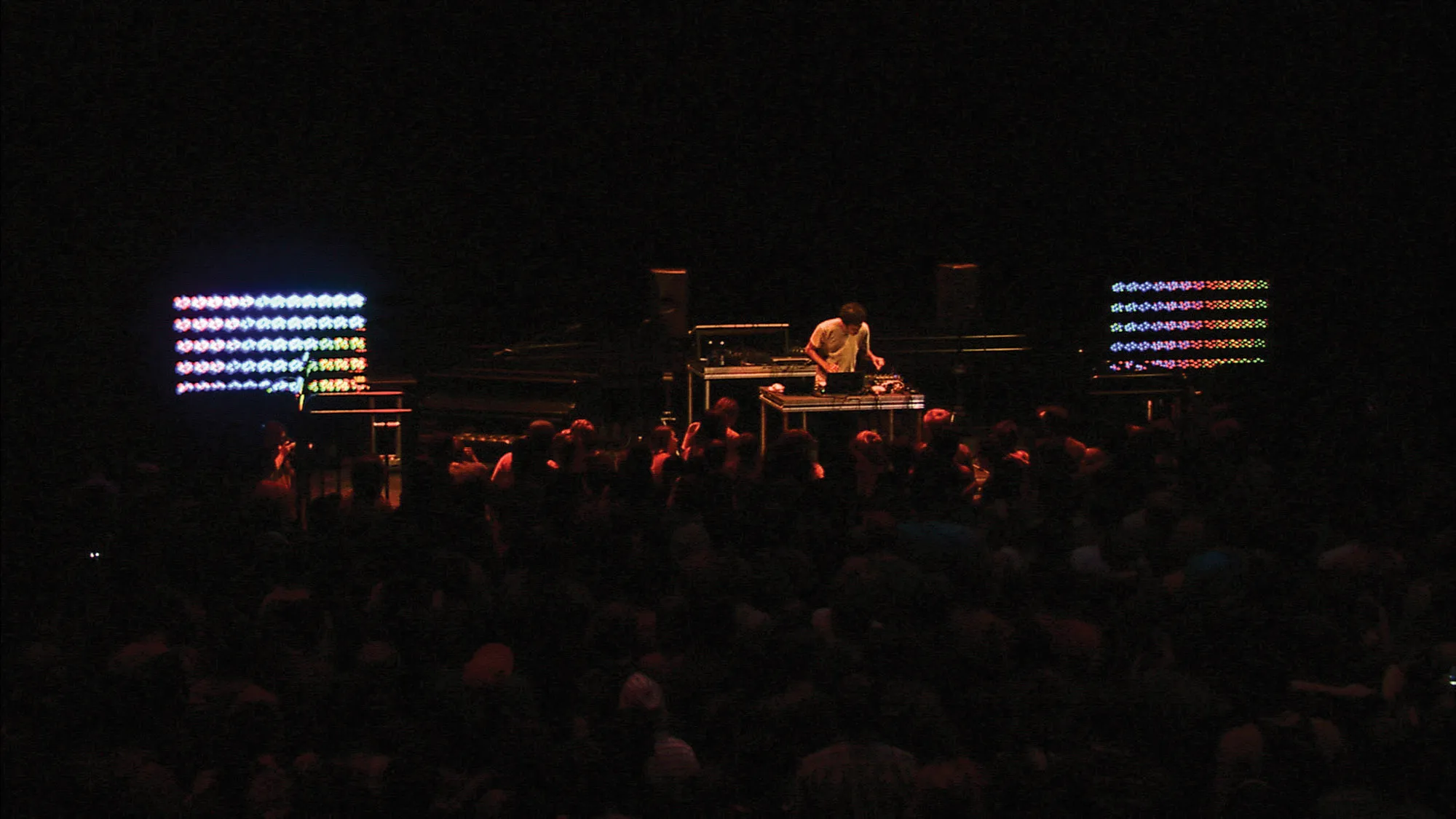
A man DJing to a packed crowd in a dark room lit only by dim red light and the two screens on either side of the stage showing lines of rainbow shapes.

Four Tet + Jon Hopkins

A stellar double bill featuring two of Britain's hottest musicians, producers, and composers of electronic music performing their trademark energetic knob-twisting beats intertwined with live video and a unique instrumental piano set. 

With several Four Tet studio albums, remixes, and live shows to his credit, Kieran Hebden is rooted in many musical camps. He has worked with jazz drummer Steve Reid on critically acclaimed albums for Domino records; produced remixes for artists such as Explosions in the Sky, Thom Yorke, and Steve Reich; worked with directors and artists such as Woof Wan Bau and Jason Evans; and extensively toured the UK, Europe, the US, and Japan.

Jon Hopkins is a London-based electronic composer, producer, and remixer who makes emotive, instrumental music that crosses genres, ranging from solo acoustic piano to explosive, bass-heavy electro. In addition to a  long-term collaboration with Brian Eno, his career includes collaborations with Wayne McGregor, King Creosote, and David Holmes, remixes for such varied artists as Wild Beasts, Nosaj Thing, James Yorkston, and Four Tet, and film scores for directors such as Peter Jackson and Gareth Edwards. 

Main Image: Jon Hopkins in Studio 1, 2011.

69°S

Phantom Limb

“When I look back at those days, I have no doubt that divine providence guided us... it seemed to me often that we were not alone.”—Sir Ernest Henry Shackleton. Inspired by Shackleton’s harrowing expedition to Antarctica in 1914, Phantom Limb used puppetry, dance, film, photography, music, and sound (including live music by Skeleton Key, a score recorded by the Kronos Quartet, and field recordings) to create a vision of the great arctic continent—past, present, and future. Dim light plays across a vast lunar terrain dotted with icebergs, while Shackleton’s crew—played by half-life-size puppets—struggles to survive, putting into stark relief the power of endurance and camaraderie and the price of knowledge. The entire cast and crew participated in a two-week residency at EMPAC for technical rehearsals to prepare for final workshop showings at EMPAC prior to a premiere at Dartmouth College and performances at Brooklyn Academy of Music. Phantom Limb, founded by composer and marionette maker Erik Sanko and visual artist Jessica Grindstaff, incorporates puppetry, music, and large-scale installation to probe contemporary life. Sanko and Grindstaff have collaborated with such diverse artists as Ping Chong & Company, Ulrike Quade, Geoff Sobelle of Pig Iron and rainpan 43, and Mark Z. Danielewski.

Quote Unquote: Experiments in Time-Based Text was an interdisciplinary series presenting works by artists that use an existing text as a departure point for time-based works including installation, film, and performance.