Image
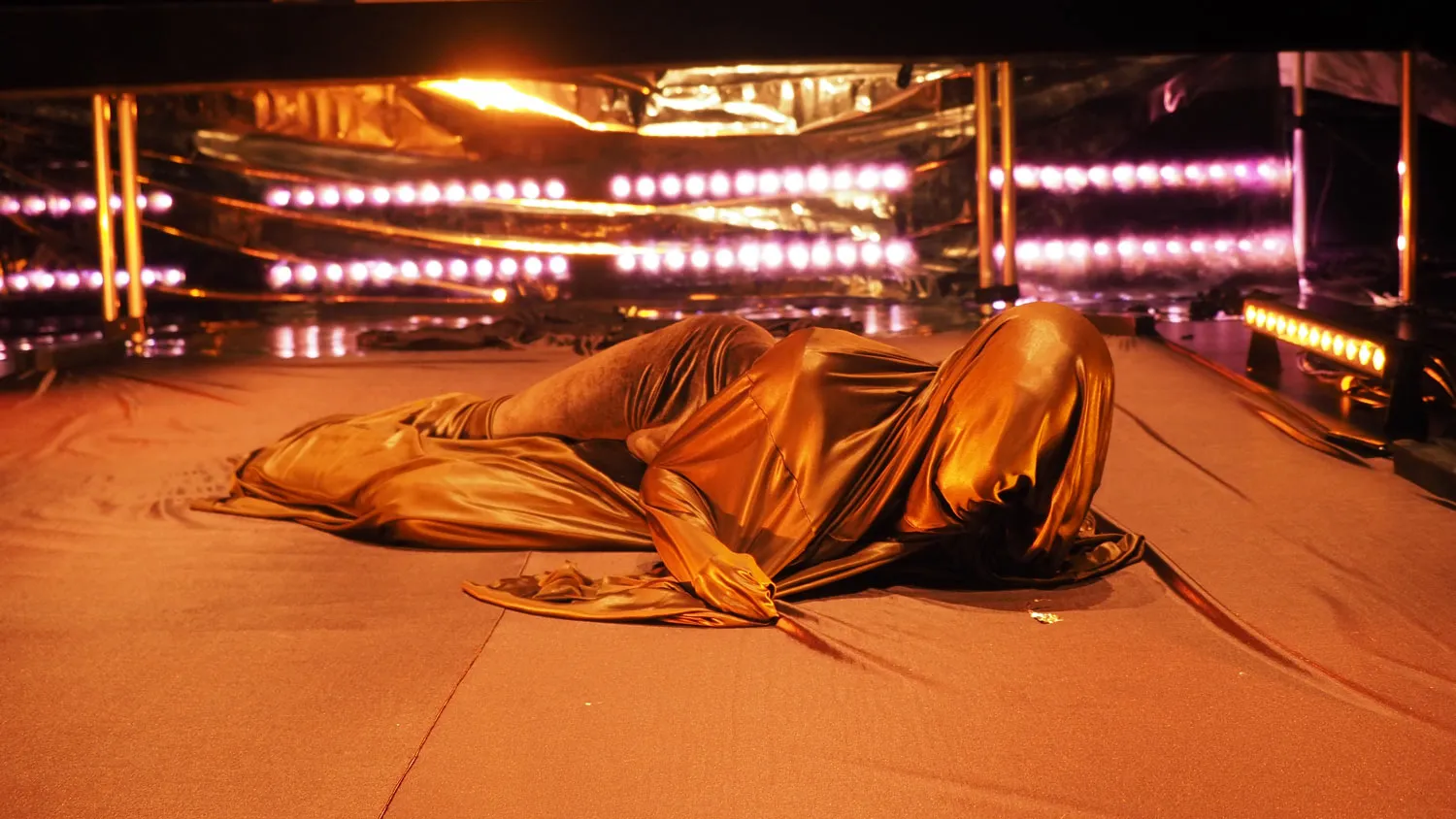
An unseen man in a shroud of brown silky fabric rolling on the floor in a studio lit pink lights.

Chameleon: A Biomythography

Jaamil Olawale Kosoko

This residency has been postponed to follow University policies that have been put in place in light of new developments related to the coronavirus.

Spring 2020 Residency

The last of four residencies to create Chameleon: A Biomythography— this residency will focus on completing set and technical elements as well as rehearsals toward the world premiere April 2, 2019.

Fall 2019 Residency

Continuing work on the hold, a multimedia performance project that explores the role of media archives in American Black diasporic communities. 

Spring 2019 Residency

Kosoko and a team of AV collaborators worked to conceive and develop their own archive of sound and visual material that will become central to the hold. In collaboration with the EMPAC team they created elements of a stage performance that moves fluidly between body, image, sound, and text. Continuing research during future residencies will work toward a film installation, podcast series, and live performance event at New York Live Arts in 2020.

Main Image: Production still from Chameleon: A Biomythography. Studio 1 February 2019. Photo: Mick Bello/EMPAC.

Image
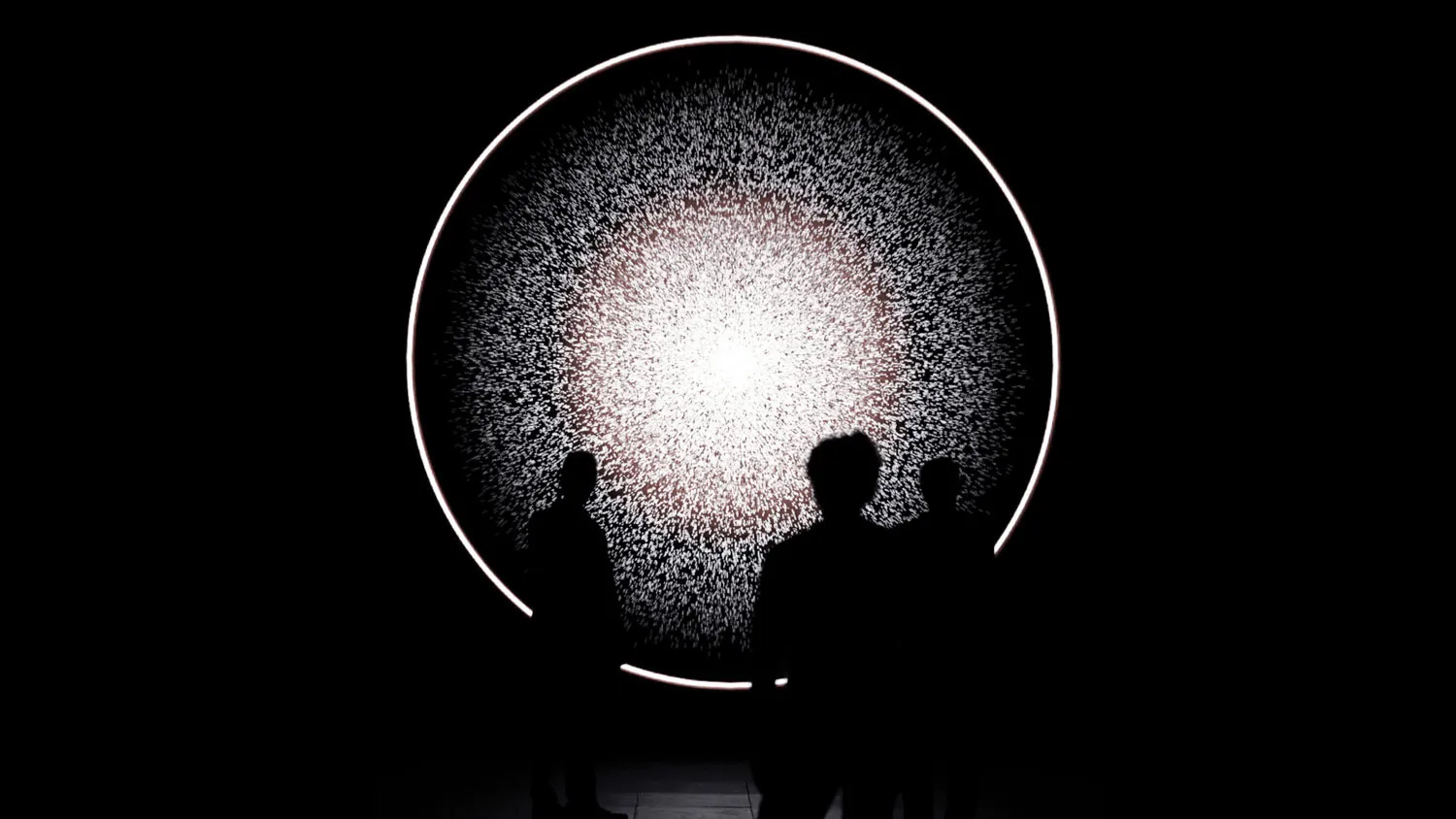
A ring of light surrounding spore like dots of light in a dark room. A small group of three people silhouetted looks on

EKO Artist Residency

Kurt Hentschläger

The New York-based Austrian artist Kurt Hentschläger will be in residence to develop a new audio-visual work for a custom-built LED wall and a multichannel surround-sound system. EKO is the third work in his ongoing series staged in complete darkness.

He will perform the premiere of this piece on November 14.

Main Image: SOL. Courtesy the artist. Photo: Martin Gross.

Image
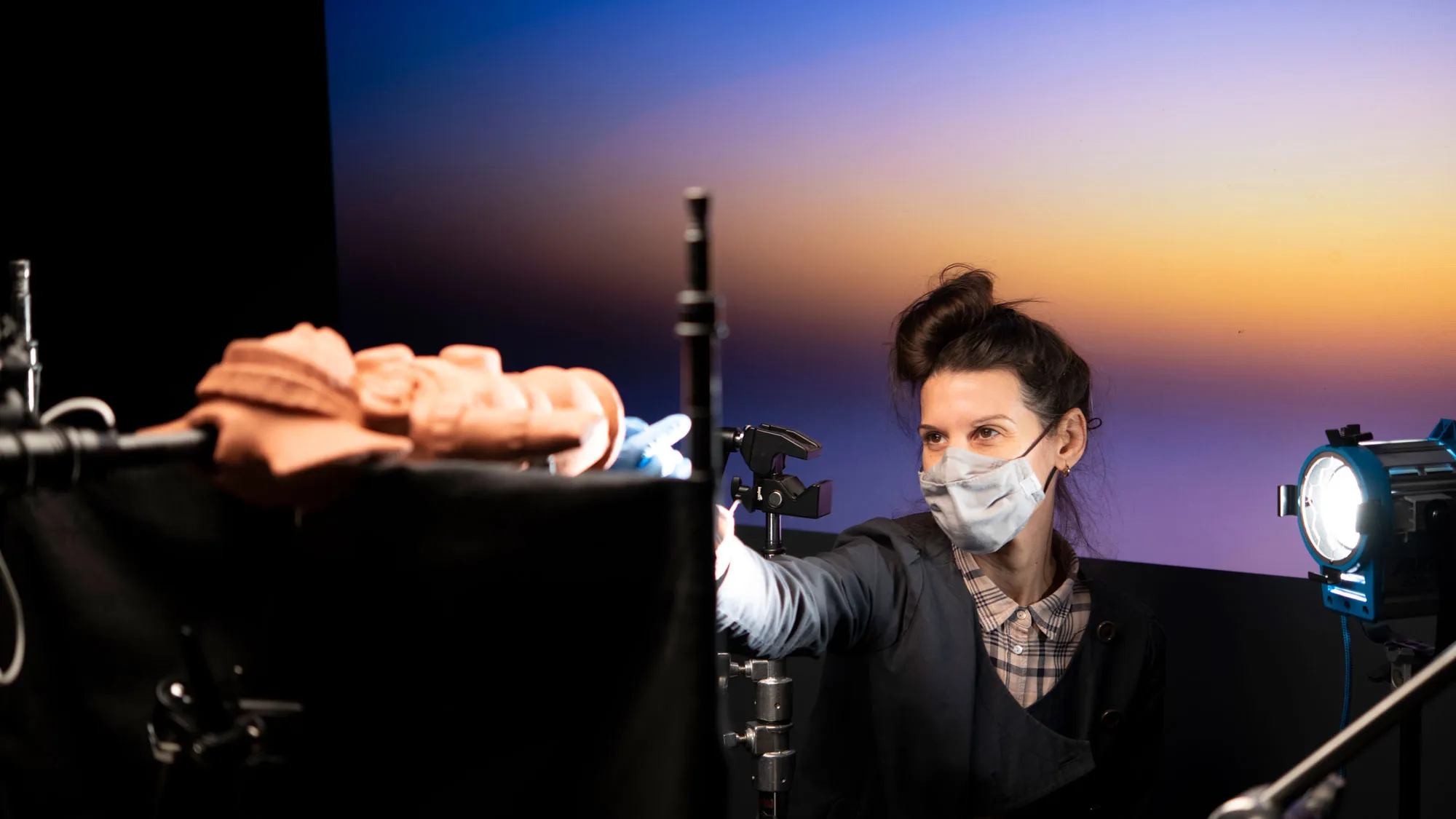
clarissa tossin working in a studio against a gradient background with a mayan flute

Mojo’q che b’ixan ri ixkanulab’ / Antes de que los Volcanes Canten / Before the Volcanoes Sing

Clarissa Tossin

Artist Clarissa Tossin is back in residence in the Concert Hall with composer Michelle Agnes Magalhães to work on the sound design, dramaturgy, and realization of her installation Mojo’q che b’ixan ri ixkanulab’ / Antes de que los Volcanes Canten / Before the Volcanoes Sing.

The moving image work utilizes a higher-order Ambisonic spatial audio system. Ambisonics is a specific audio format developed to record, mix, and playback audio in a scalable immersive three-dimensional soundfield. The listeners in the Concert Hall are surrounded by 64 loudspeakers distributed across the wall and ceiling surfaces, each contributing to the soundfield with their own audio channel.

Over the last several years, the principal photography for Mojo’q che b’ixan ri ixkanulab’/ Antes de que los Volcanes Canten / Before the Volcanoes Sing was filmed by Tossin and cinematographer Jeremy Glaholt in the Concert Hall and Theater at EMPAC with flautist Alethia Lozano Birrueta; at Sowden House and the Mayan Theater in Los Angeles with Lozano Birrueta and artist Tohil Fidel Brito; and in Guatemala with poet and artist Rosa Chávez.

Los Angeles-based artist Clarissa Tossin’s Mojo’q che b’ixan ri ixkanulab’ / Antes de que los Volcanes Canten / Before the Volcanoes Sing is scored by Brazilian composer Michelle Agnes Magalhães and performed by Mexican flautist Alethia Lozano Birrueta, Ixil Maya artist Tohil Fidel Brito, and K’iche ’Kaqchiquel Maya poet Rosa Chávez. The film takes a sonic approach to the articulation of architectural borrowings by Western architects of indigenous cultural motifs, utilizing 3D-printed replicas of Maya wind instruments from Pre-Columbian collections held in US and Guatemalan museums.

In this video Tossin and some of her collaborators, including the director of photography Jeremy Glaholt, discuss the production of the flutes, the composition of the score, and approaches to the film’s cinematography. These 3D scanned and playable replica instruments were created by anthropologist/archaeologist Jared Katz, the Mayer Post-Doctoral Curatorial Fellow for Pre-Columbian Art at the Denver Art Museum.

Main Image: Clarissa Tossin working in residence in the theater on principal photography for Mojo’q che b’ixan ri ixkanulab’ September 28, 2021. Courtesy the artist. Photo: Michael Valiquette / EMPAC. 
Media


An introduction to Mojo’q che b’ixan ri ixkanulab’ / Antes de que los Volcanes Canten / Before the Volcanoes Sing, a new EMPAC-commissioned moving image work by Clarissa Tossin that is currently in production at Sowden House in Los Angeles and at EMPAC/Rensselaer in Troy, NY.

2019 Fall

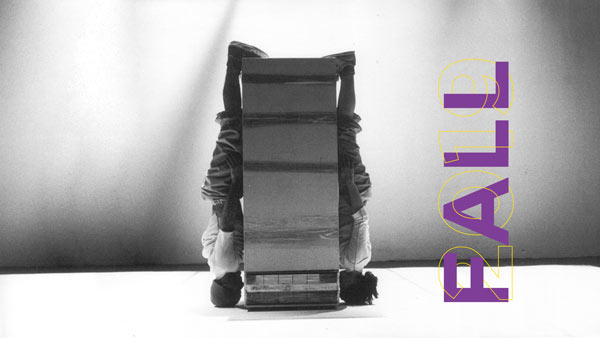
fall 2019

Main Image: Taldans, Dolap on the cover of the Fall 2019 brochure. Photo: Isabelle Meister.

Image
Two people wearing jeans and t-shirts against a wall with heads covered by white cloth.

Taldans

Turkish duo Taldans—Mustafa Kaplan and Filiz Sizanli—will be at EMPAC for an extended residency in Studio 1 in order to further develop the choreographic, stage, and audio elements of their work Dolap with EMPAC’s technical team and infrastructure.

Main Image: Taldans in residence in Studio 1, Fall 2019. Courtesy the artists. Photo: Sara Griffith.

Image
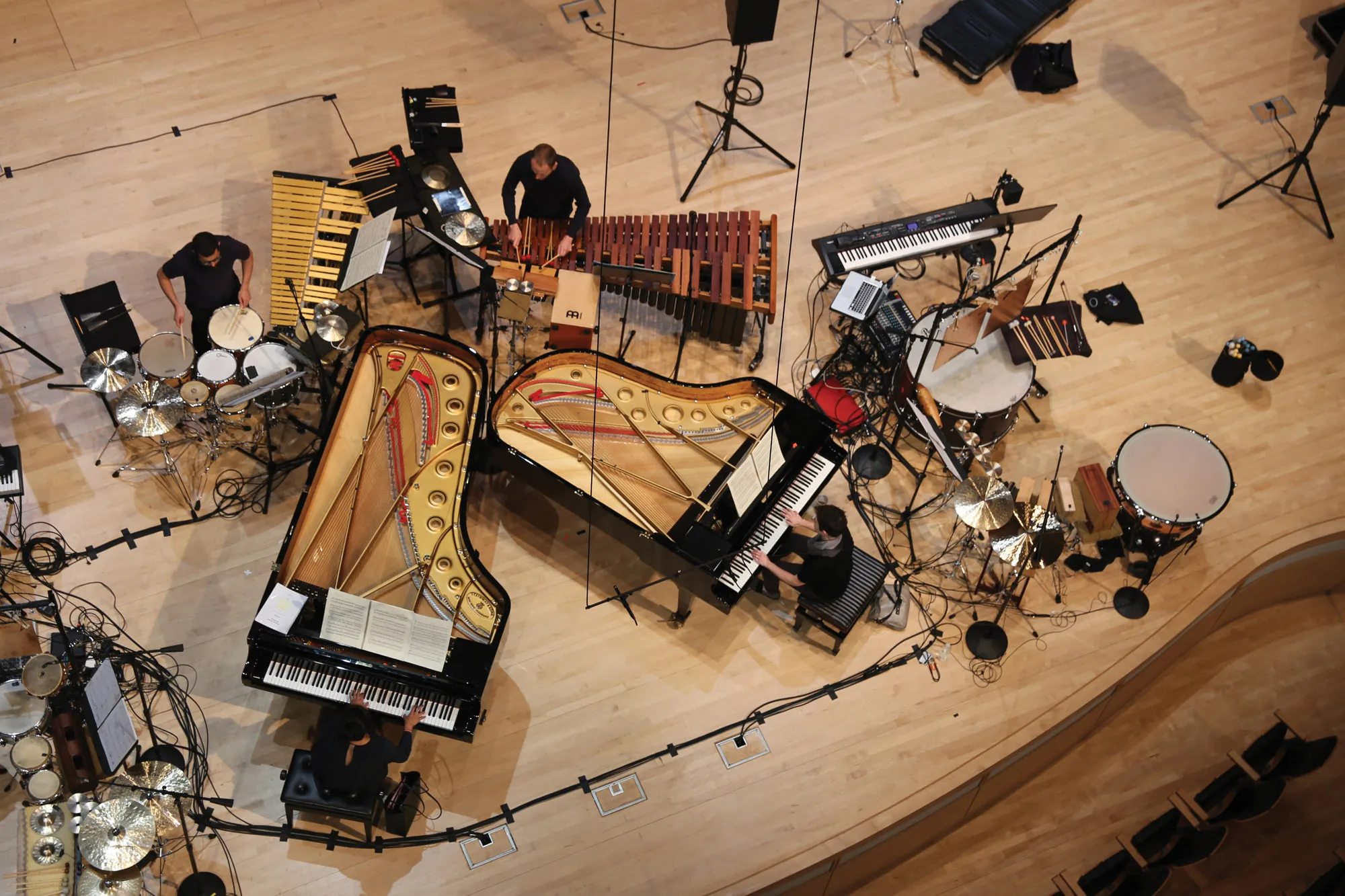
An aerial view of two people playing pianos and two people playing various percussion instruments on a clutter concert hall stage

Feld and Tonband

Yarn / Wire

New York-based quartet Yarn/Wire (two percussionists and two pianists) will record contemporary German composer Enno Poppe's EMPAC-commissioned piece Feld, and Tonband, Poppe’s co-composition with Wolfgang Heiniger.

Feld was premiered at EMPAC on September 22, 2017.

Main Image: Yarn/Wire in residence in the Concert Hall in 2017 to premiere Enno Poppe's FELD. Photo: Mick Bello/EMPAC.

Work in Progress

Corin Sworn

Glasgow-based Canadian artist Corin Sworn is in residence with two dancers to research the algorithms in domestic surveillance systems that purport to recognize “suspect’ movement and gesture.

Image
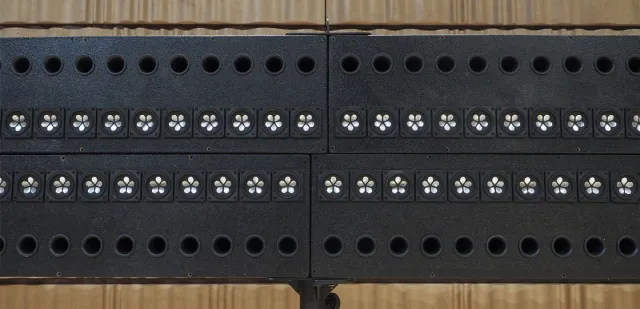
Tight shot of the wave field synthesis array

Instrumental Recordings and Wave Field Synthesis

Mark Fell

For a recent sound work produced in the UK, Mark Fell collaborated with IRCAM/Paris to create a large database of extreme and unusual instrumental recordings. At EMPAC, he will explore the use of these materials and their behavior on the High-Resolution Wave Field Synthesis Array, which offers precise positioning of sound in space. 

Image
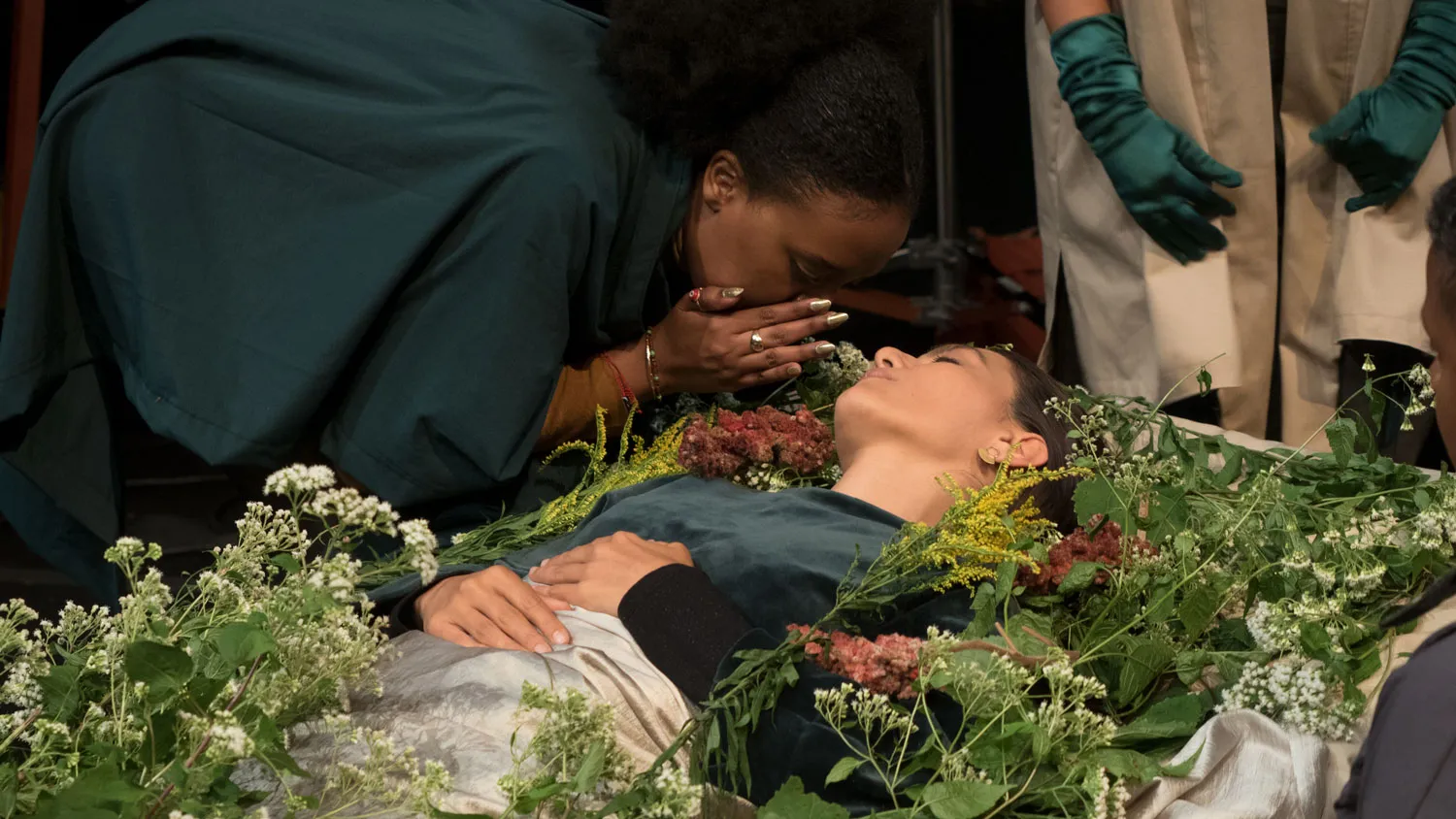
A woman laying in a coffin covered in flowers while a another woman wearing a green cloak whispers in her ear.

Oriana

Beatriz Santiago Muñoz


Following the principal filming of Oriana at EMPAC and in Puerto Rico, and the production of a score by Brazilian ensemble Rakta, Beatriz Santiago Muñoz will be back in residence in the Theater to work on the post-production of her feature-length moving image work. 

Oriana entwines the linguistic structure of Monique Wittig’s iconic 1969 feminist novel Les Guérillères with the material and conceptual ground of the Caribbean. It visualizes the ecstatic potential of a near-future, non-binary world order through the struggles of its protagonists to imagine a new sort of sensorium—an autonomous language of post-colonial and post-patriarchal society.

Animated by a shifting cast of collaborators from music, performance, art, and poetry, Oriana is being produced in Puerto Rico and at EMPAC, where the center’s theatrical infrastructure forms the backdrop to an iterative and recursive moving image work.

Main Image: Production still from Oriana by Beatriz Santiago Muñoz. Photo: Sara Griffith/EMPAC

Media

Beatriz Santiago Muñoz – Oriana (Coming Fall 2021)

Beatriz Santiago Muñoz in conversation with Vic Brooks

Image
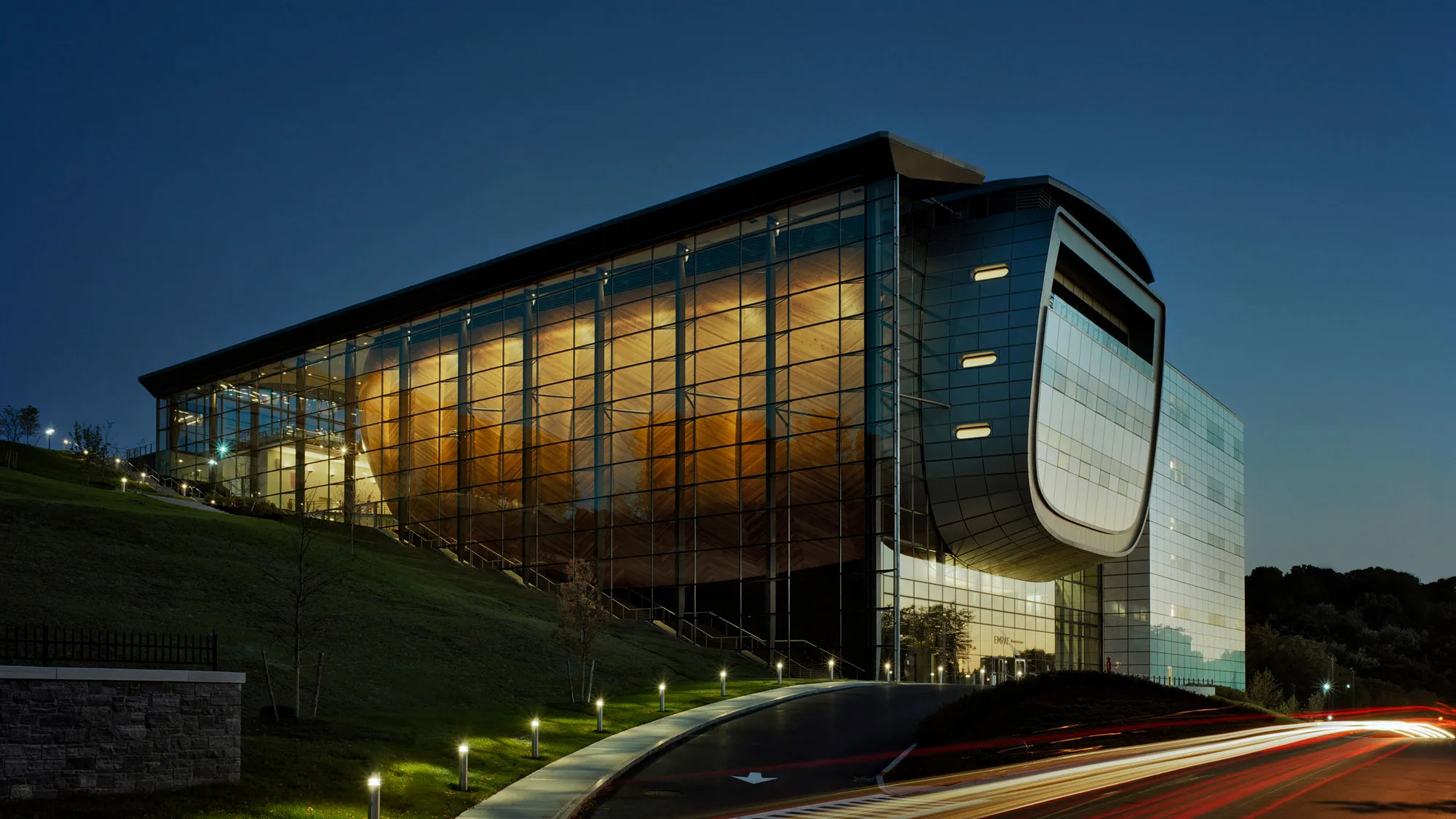
EMPAC's north facade at night

EMPAC Tours

Fall 2019

EMPAC building tours are offered throughout the fall season. In October, a Director’s Tour will be led by Johannes Goebel; in November, a Technology Tour will be led by Lead Video Engineer Eric Brucker; and in December, the building tour will be led by Front of House Manager Avery Stempel.  

OCTOBER 12 with Director Johannes Goebel

Join EMPAC’s founding director Johannes Goebel for a tour of the building (and overview of the program) that he helped realize and has led through EMPAC’s first 11 years. Goebel will take visitors through the EMPAC building with an eye and an ear to the “human-scale” functions he strove to achieve in taking the project from a lofty vision to one of the world’s most advanced media centers.

NOVEMBER 2 with Lead Video Engineer Eric Brucker

From 3D film productions to green-screen animations, flying cameras, and panoramic projection environments, EMPAC is a lush visual world. This tour focuses on EMPAC as a film- production facility and high-resolution screening venue.

DECEMBER 7 with Front of House Manager Avery Stempel

A general overview of the EMPAC building, with focus on its architectural highlights and programmatic capabilities, this tour will take guests through all four EMPAC venues, audio and video recording facilities, and the many spaces in between. 

Main Image: EMPAC's north façade. Photo: Paul Rivera.