Modern Living

Gerard & Kelly

Modern Living is a multi-chapter project by choreographers Gerard & Kelly made in collaboration with L.A. Dance Project to explore themes of queer intimacy and domestic space within legacies of modernist architecture. The project began as two site-specific dance performances, which the duo then took to EMPAC to translate into a gallery installation integrating architectural forms and video projection. This work-in-progress presentation took audiences behind the scenes of Modern Living.

In 2016, Gerard & Kelly choreographed nine dancers in performances at the landmark Schindler House in West Hollywood, CA, the site of an early experiment in communal living, and Philip Johnson’s Glass House in New Canaan, CT, where the architect and his partner David Whitney lived for over 40 years. The performances investigated the livability of queer space—its pleasures, tensions, and impossibilities—and were filmed for the next iteration of the project. Gerard & Kelly were in residence with their technical and artistic collaborators to build the installation to scale, experimenting with architecture, projection mapping, and sound.

Brennan Gerard and Ryan Kelly have collabo- rated since 2003 to create installations and performances interrogating the formation of the couple and exploring the critical potential of intimacy. Driven by an inquiry of their own partnership, the duo uses choreography, lan- guage, video, and sculpture to address questions of sexuality, memory, and the formation of queer consciousness.
Tesseract

Charles Atlas, Rashaun Mitchell, and Silas Riener

The new two-part work, Tesseract, by artist Charles Atlas and choreographers Rashaun Mitchell and Silas Riener, will be presented for the first time following several years of development at EMPAC on Friday, January 27th and Saturday, January 28th both at 8PM.

The evening will commence with the world premiere of the stereoscopic 3D video Tesseract ▢. A six-chapter work of science fiction, it is Atlas’ first “dance video” in over a decade. Filmed with a mobile camera rig that moves with the choreography, Tesseract ▢ traverses a series of hybrid and imagined worlds staged and filmed over a series of EMPAC production residencies. Each chapter combines a specific set, choreography, and camera motion to encompass pas de deux and ensemble pieces, choreographed and performed by former Merce Cunningham dancers Mitchell and Riener. Manipulating the 3D footage to combine live dance with animation, Atlas’ distinctive video effects reach into otherworldly dimensions beyond the stage.

For the second part of the evening, Tesseract ◯ expands the view from film frame to proscenium stage. A performance for six dancers and multiple mobile cameras—the footage of which Atlas will manipulate in real-time and project back onto the stage—Tesseract ◯ superimposes the space of dance with live cinematic production, rendering a choreographic analogue to the four-dimensional cube from which the piece takes its title.

2017 Spring

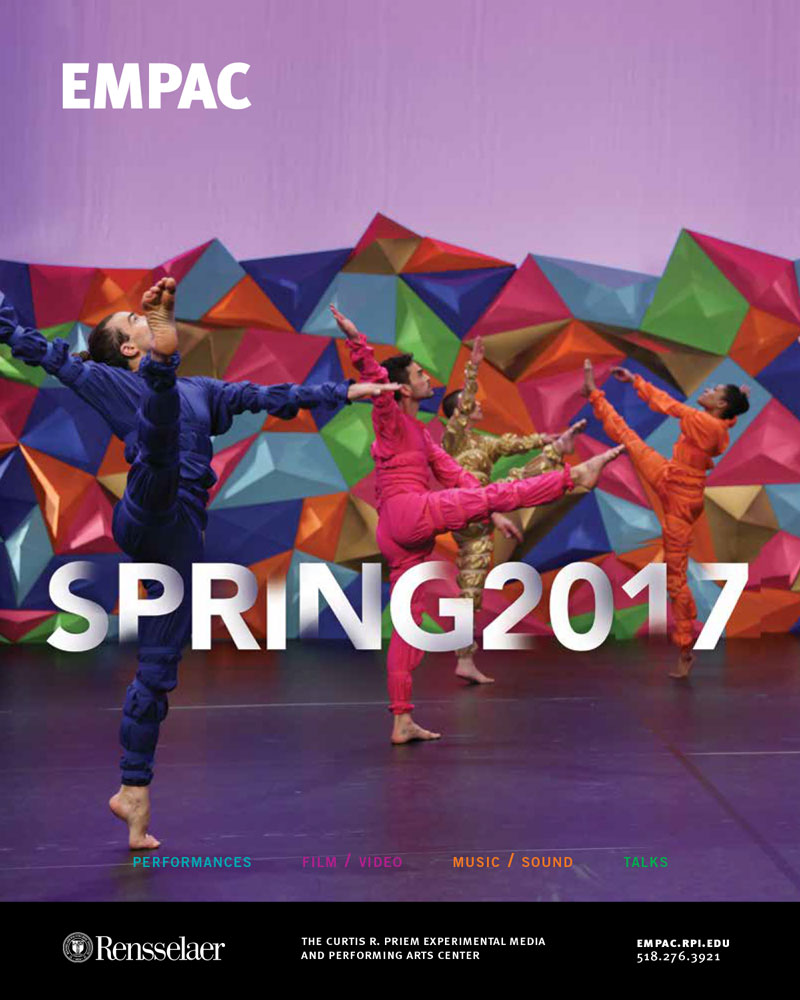
spring 2017 brochure cover

2017 Spring season reel. Courtesy the artists/EMPAC.

Image
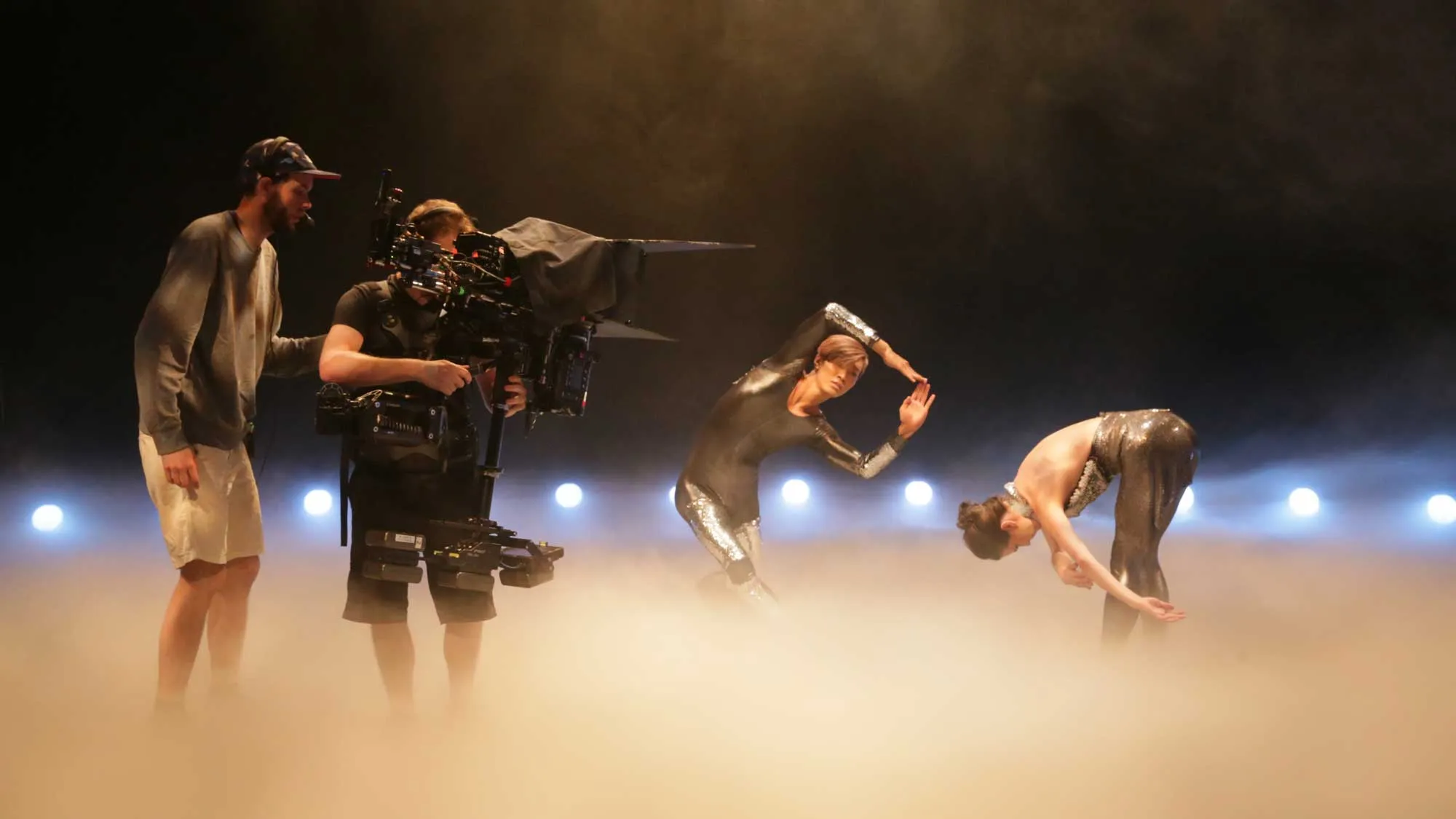
Two camera operators shooting two dancers wearing silver unitards standing in a sea of theatrical fog.

Tesseract

Charles Atlas, Rashaun Mitchell, and Silas Riener

Tesseract, by artist Charles Atlas and choreographers Rashaun Mitchell and Silas Riener, was presented for the first time over two nights following several years of development at EMPAC.

The show commenced with the world premiere of the stereoscopic 3D video Tesseract ▢. A six-chapter work of science fiction, it was Atlas’ first “dance video” in over a decade. Filmed with a mobile camera rig that moves with the choreography, Tesseract ▢ traverses a series of hybrid and imagined worlds staged and filmed over a series of EMPAC production residencies. Each chapter combines a specific set, choreography, and camera motion to encompass pas de deux and ensemble pieces, choreographed and performed by former Merce Cunningham dancers Mitchell and Riener. Manipulating the 3D footage to combine live dance with animation, Atlas’ distinctive video effects reach into otherworldly dimensions beyond the stage.

For the second part of the show, Tesseract ◯ expands the view from film frame to proscenium stage. A performance for six dancers and multiple mobile cameras—the footage of which Atlas manipulated in real-time and projected back onto the stage—Tesseract ◯ superimposes the space of dance with live cinematic production, rendering a choreographic analogue to the four-dimensional cube from which the piece takes its title.

Image
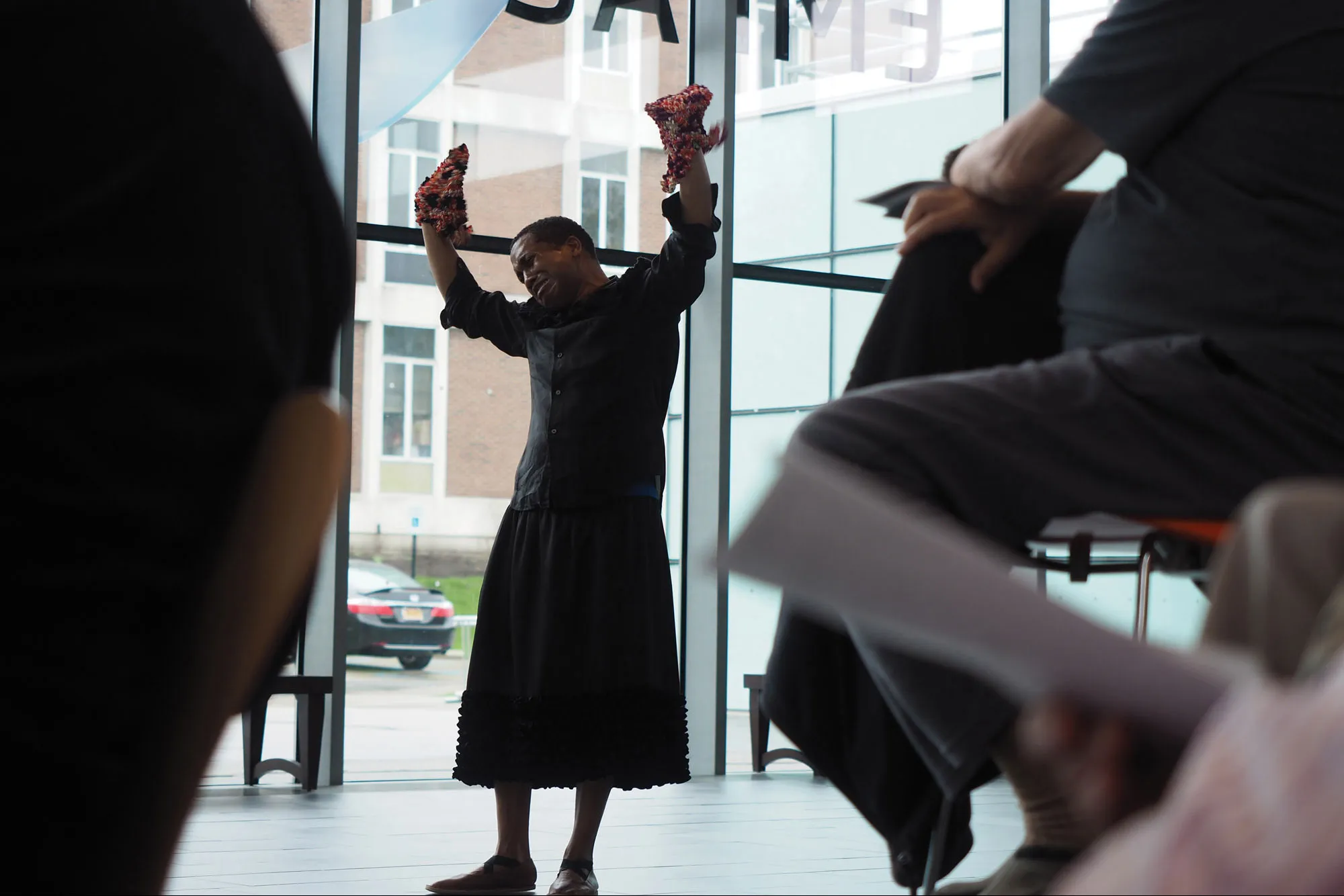
Trajal Harrell wearing a black dress performing with hands up in a light filled lobby.

The Return of La Argentina

Trajal Harrell

In The Return of La Argentina, Trajal Harrell mixes postmodern/voguing styles with the Japanese dance/theater form “butoh,” co-founded by Kazuo Ohno and Tatsumi Hijikata. Harrell identifies the key sensibilities of voguing in Ohno and Hijikata’s signature work, Admiring La Argentina (1977). Where Harlem voguing is inspired by the movements of models, Admiring La Argentina was inspired by La Argentina, the stage name of the famous Spanish dancer Antonia Merce. In his interpretation, Harrell identifies Ohno as voguing La Argentina and director Hijikata as voguing Antonia Merce. Producing his own take on the classic, Harrell adds another layer of complexity: Harrell vogues Ohno and Hijikata voguing La Argentina and Merce. This web of danced relationships brings Harrell’s audience on a journey of remembering, forgetting, memorializing, and ritualizing Admiring La Argentina.

Originally designed to inhabit museum spaces, Harrell brought The Return of La Argentina to EMPAC in a mezzanine performance. 

Trajal Harrell is a choreographer who shows his work in a range of settings including performance venues such as The Kitchen, New York Live Arts, and Festival d’Avignon, and museums including MoMA, ICA Boston, and Centre Pompidou—Paris and Metz. Harrell is the recipient of the Guggenheim Fellowship, The Doris Duke Impact Award, and a Bessie Award. He developed The Return of La Argentina in a two-year Annenberg Residency at MoMA.

Choreographer Trajal Harrell was in residence to develop the stage environment for Calm House Terrace, an evening-length contemporary dance solo. The work ritualistically resurrects Japanese butoh artist Tatsumi Hijikata’s Quiet House (1973).

Main Image: Trajal Harrell performs in the EMPAC lobby as part of The Return of La Argentinia in 2017. Photo: Mick Bello/EMPAC.

Image
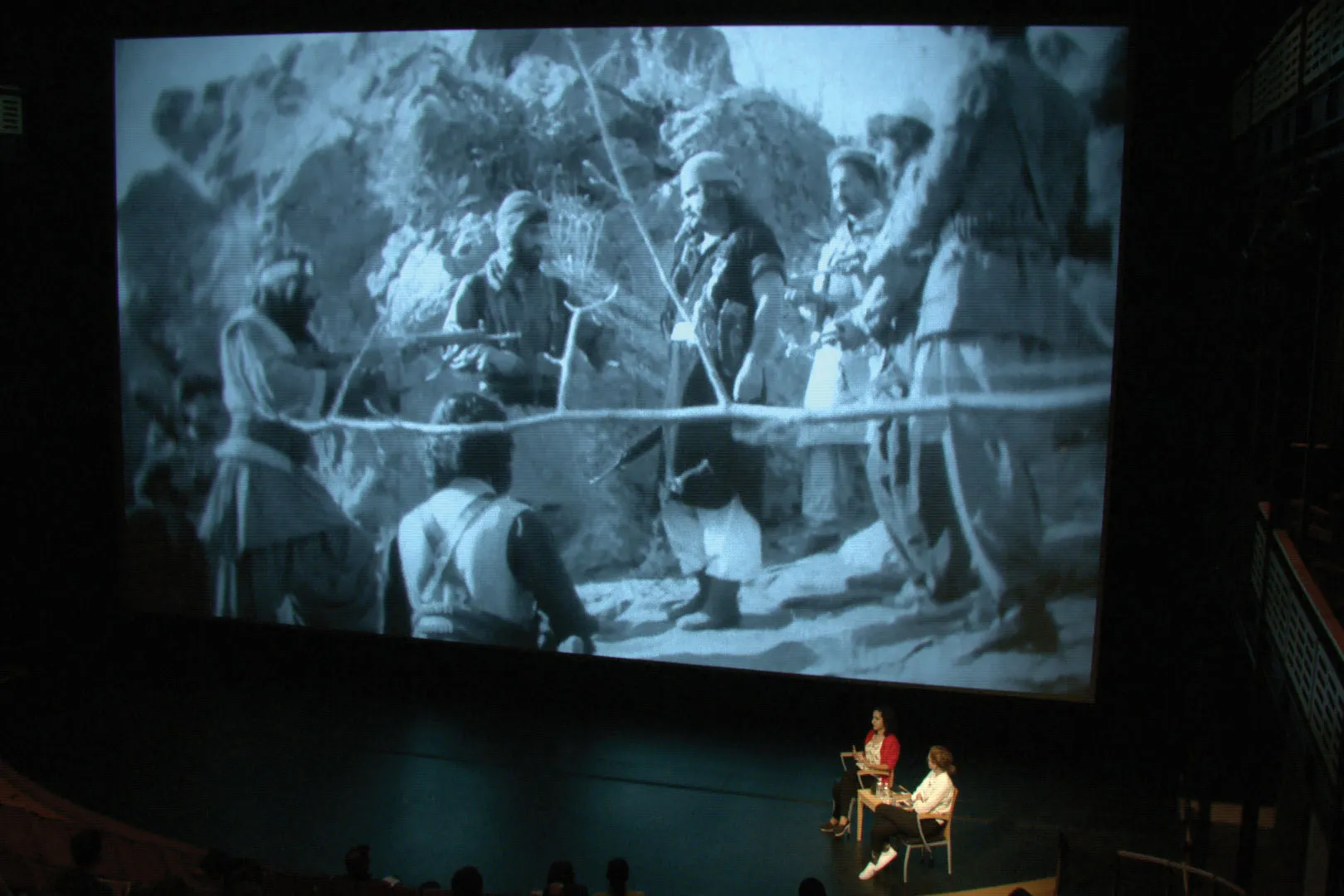
miriam ghani and Vic Brooks on stage in front of a large projection of an Afghan film.

What we Left Unfinished

Mariam Ghani

Mariam Ghani introduced several films from the Afghan Film Archive—the state film institute based in Kabul, Afghanistan—as part of her ongoing research project What we Left Unfinished. The New York-based artist also screened her own in-progress film, which explores five unfinished feature films that were made between 1978-1991, during the years of Afghan Communism. These films and her archival research gesture towards the possibility of reconstructing hidden and parallel narratives that draw on both what the images of state propaganda tell us about the political and social upheaval during a specific moment in time, and the day-to-day lived experience of the Afghan Film Archive’s management, film directors, and governmental players during this period. 

“In the research project What we Left Unfinished, I will be looking for some of these unfinished films and the people who made them, trying to decipher, from the gaps between what was finished and unfinished, some clue to the gaps between how the Afghan Left imagined its re-invention of the state and how that project went so terribly wrong—the gaps between revolution, reconciliation, and dissolution […] What, then, is the task of an artist in an archive, as she balances between the roles of archivist, historian, translator, and narrator? Perhaps it is to understand which of the archive's preserved pasts relate to the present moment of danger, and find a way to translate and narrate that past into the present, not casually, not haphazardly, and not nostalgically, but just when and where it is most needed.” —Mariam Ghani, “Field Notes for What we Left Unfinished,” IBRAAZ (June-September 2013)

Mariam Ghani’s work spans video, installation, performance, photography, and writing, and frequently turns on memory, history, language, loss and reconstruction. Ghani’s projects often engage with places, ideas, or institutions over long periods of time, and she maintains several long-standing collaborations: the experimental archive Index of the Disappeared (with Chitra Ganesh, since 2004), the video series Performed Places (with choreographer Erin Kelly and composer Qasim Naqvi, since 2006), and the Afghan Films online archive (with Pad.ma, since 2012). 

Watering the Flowers was a year-long screening program. Each evening focused on a recent film or video by an EMPAC-affiliated artist, and was succeeded by a program of other shorts or features that were influential in the making of their work, whether fiction or documentary, experimental or commercial.

Main Image: Miriam Ghani and curator Vic Brooks on the Theater stage in 2017 during her screening and talk. Photo: EMPAC.

Image
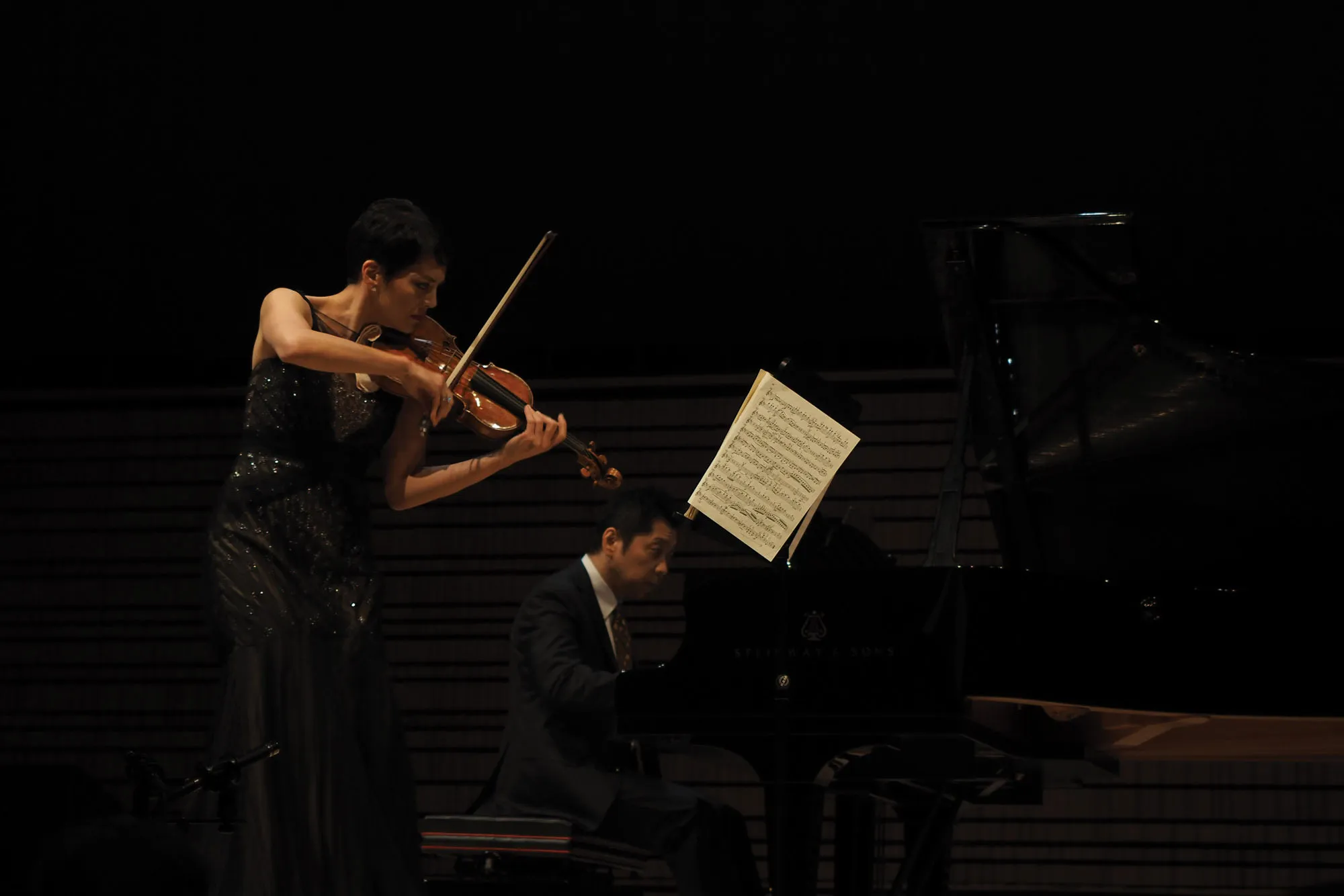
anne akiko meyers in the concert on the concert hall stage.

Anne Akiko Meyers

Known for her purity of sound as much as for her innovative programming and commitment to commissioning new works, violin virtuoso Anne Akiko Meyers has maintained an active performing schedule for the past three decades since being discovered as a child prodigy at the age of 7. The top-selling classical instrumental soloist in 2014, she has released more than 34 albums and has performed with many of the top orchestras in the world. For this performance, Meyers mixed repertoire works by Ravel, Beethoven, and Arvo Pärt with performances of O Magnum Mysterium by composer Morten Lauridsen, Einojuhani Rautavaara’s Fantasia, and Jakub Ciupinski’s Wreck of the Umbria, all written for her.

Anne Akiko Meyers performs on the 1741 “Vieuxtemps” Guarneri del Gesu, considered to be one of the finest violins in the world due to its powerfully luxuriant sound and mint state of preservation.

PROGRAM:
  • Ludwig van Beethoven Violin Sonata in D major, Op. 12, No. 1
  • Arvo Pärt Fratres
  • Einojuhani Rautavaara Fantasia (NY Premiere)
  • Maurice Ravel Tzigane
  • Morten Lauridsen O Magnum Mysterium (NY Premiere)
  • Jakub Ciupinski Wreck of the Umbria

Main Image: Anne Akiko Meyers on the Concert Hall stage in 2017. Photo: EMPAC.

Media
Image
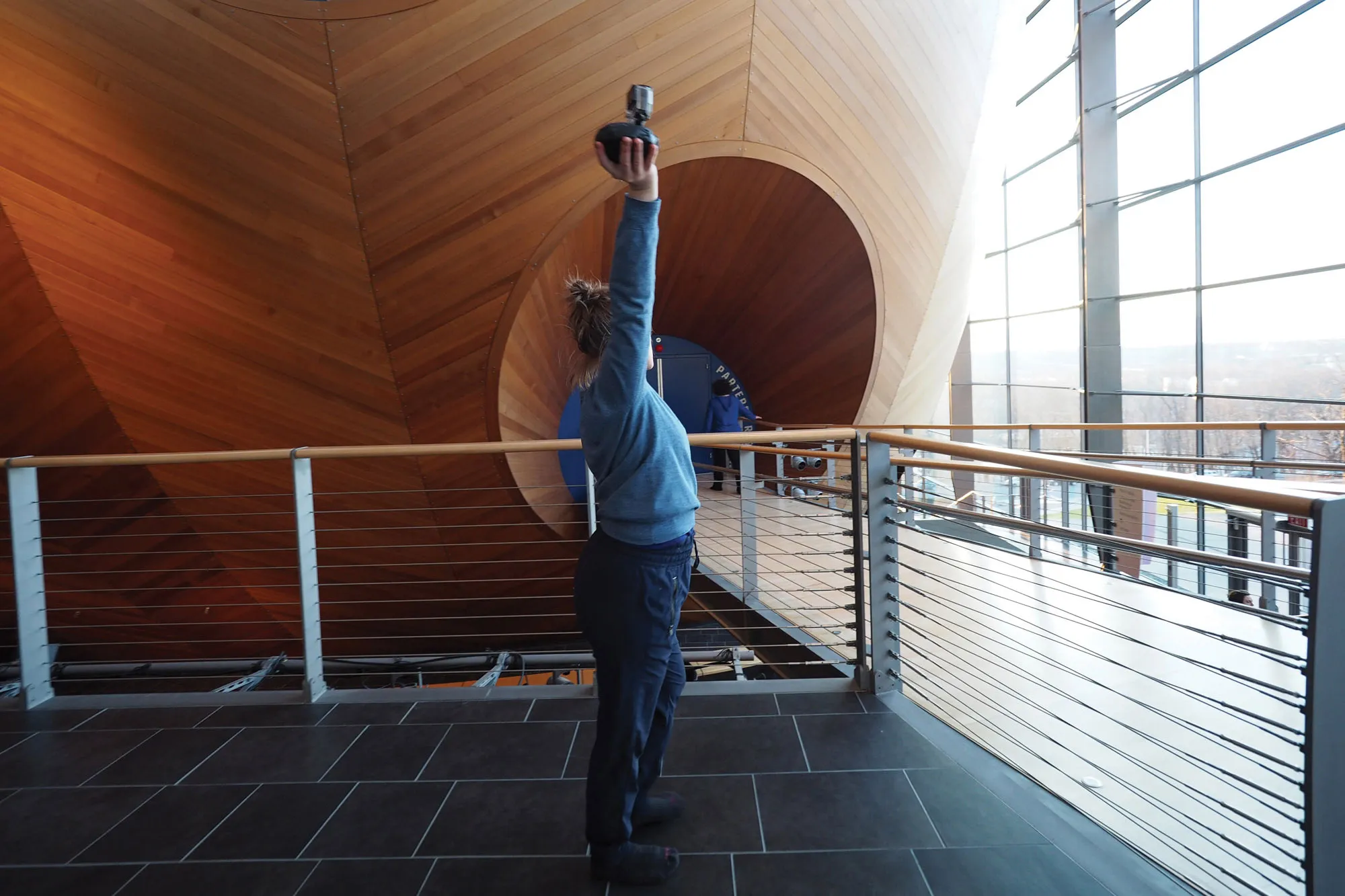
A woman in a grey sweatshirt and black joggers holding a camera above her head in front of the concert hall.

From Feldenkrais to GoPro

Mary Armentrout

Choreographer Mary Armentrout was in residence to develop a new performance with media artist Ian Winters, composer Evelyn Ficarra, and performer Chris Evans. Together, the collaborators led a workshop in which participants explored the intersections of bodily experience and technology. The workshop began with an awareness-through-movement sequence based on the Feldenkrais Method of Somatic Education. It consisted of a series of gentle movement exercises that bring individual attention to the bodily experience, thus cultivating embodied awareness. The artists then led participants in compositional exercises using technology such as GoPro cameras to explore electronic mediation from a consciously embodied state. 

Mary Armentrout is a San Francisco-based choreographer and performance artist, and director of Mary Armentrout Dance Theater. She is the winner of an Isadora Duncan Dance Award, one of the most prestigious honors for Bay-area choreographers. She has long collaborated on her site-specific and staged works with Ian Winters and Evelyn Ficarra. Winters develops visual and acoustic media environments for stage. Together, Armentrout and Winters run their studio The Milkbar in Richmond, CA. Ficarra is lecturer in the music department at the University of Sussex, where she is also the Assistant Director of the Centre for Research in Opera and Music Theater. Armentrout brings her years-long collaborations with Winters and Ficarra to new work with music and dance artist Chris Evans, who participates in the House Full of Black Women Project, Bandelion Dance Theater, and Black and White Projects art collective in Oakland, CA.

Image
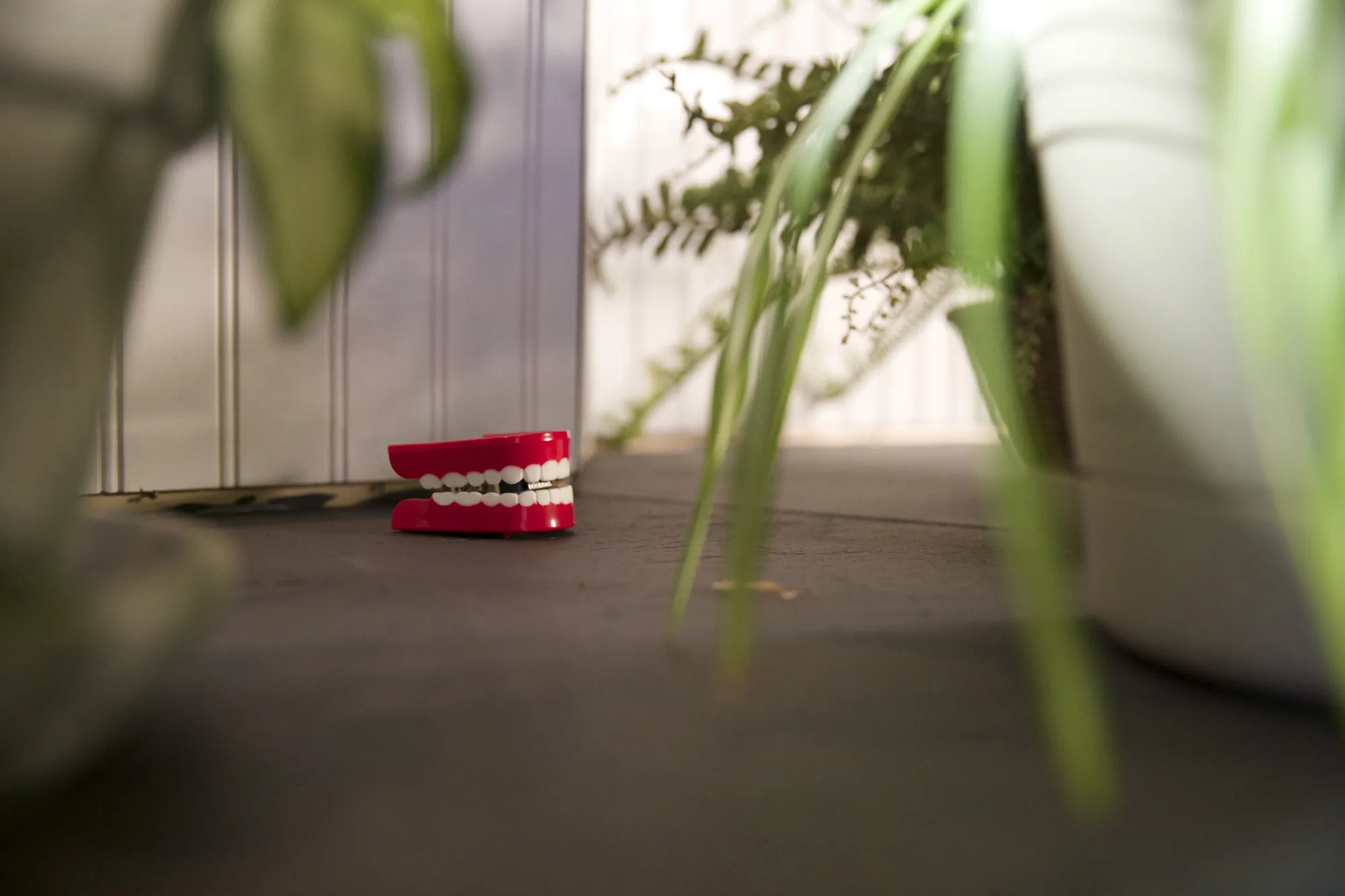
a pair of mechanical toy teeth on a gray floor surrounded by houseplants.

,000,

Isabelle Pauwels

Canadian artist Isabelle Pauwels returned to EMPAC to complete the pre-production and cast the actors for her major new moving-image work in production in fall 2017.

To initiate the residency, curator Vic Brooks screened the single-channel version of her 2014 multimedia performance ,000,. Pauwels’ new project takes its cues from the scripted artifice of professional Mixed Martial Arts (MMA), and the spectacle of the televised Ultimate Fighting Championship (UFC). 

Watering the Flowers was a year-long screening program. Each evening focused on a recent film or video by an EMPAC-affiliated artist, and was succeeded by a program of other shorts or features that were influential in the making of their work, whether fiction or documentary, experimental or commercial. 

Main Image: Isabel Pauwels. Photo: Mick Bello

Image
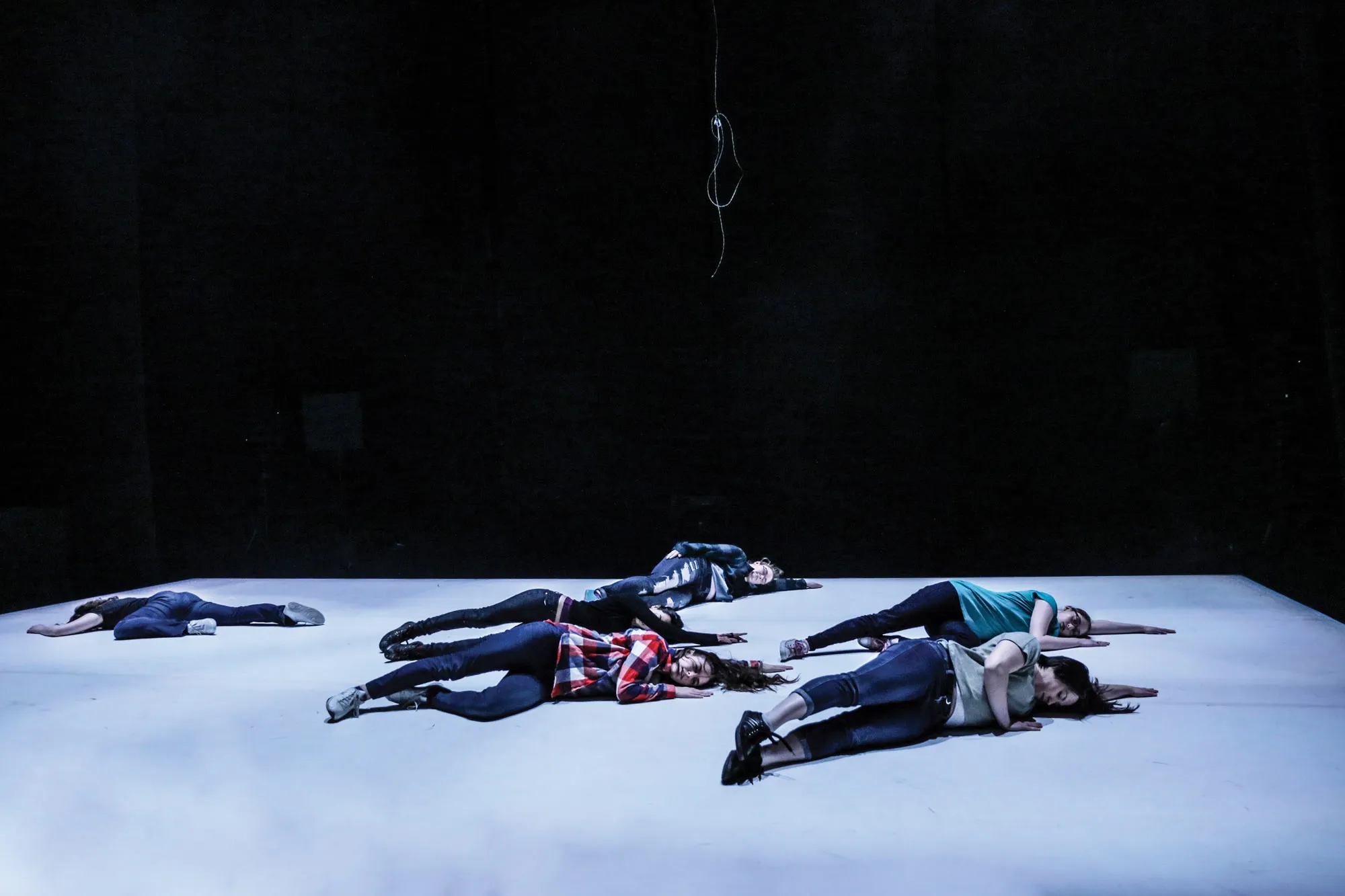
Six dancers laying on a light gray floor.

FIELD

Andrew Schneider

Performer, writer, and interactive-electronics artist Andrew Schneider completed a series of three development residencies at EMPAC with this work-in-progress showing of his new performance, FIELD (later titled AFTER). Picking up where his Obie Award-winning project YOUARENOWHERE left off, Schneider’s follow-up explores the physics and temporality of parallel universes and perception. Schneider and his collaborators Alicia ayo Ohs, Alessandra Calabi and Bobby McElver used lighting, projection mapping, and 3D sound spatialization to create an immersive environment inside of a non-linear narrative that prioritizes audience experience and leads viewers to consider where they are and how they got there. Choreographer Vanessa Walters worked with the Rensselaer Dance Club to develop original choreography for the showing that would inspire scenes in the final production of AFTER

Andrew Schneider is a Brooklyn-based artist who creates and performs in original performance works and videos and builds interactive electronic artworks and installations. Schneider was a Wooster Group company member (video/performer) from 2007-2014 and has shown his work at 3LD in New York, the Melbourne Arts Festival, LIFT Festival, and in theaters across France, including Maillon, Théâtre de Strausbourg, and Théâtre de Gennevilliers.