Image
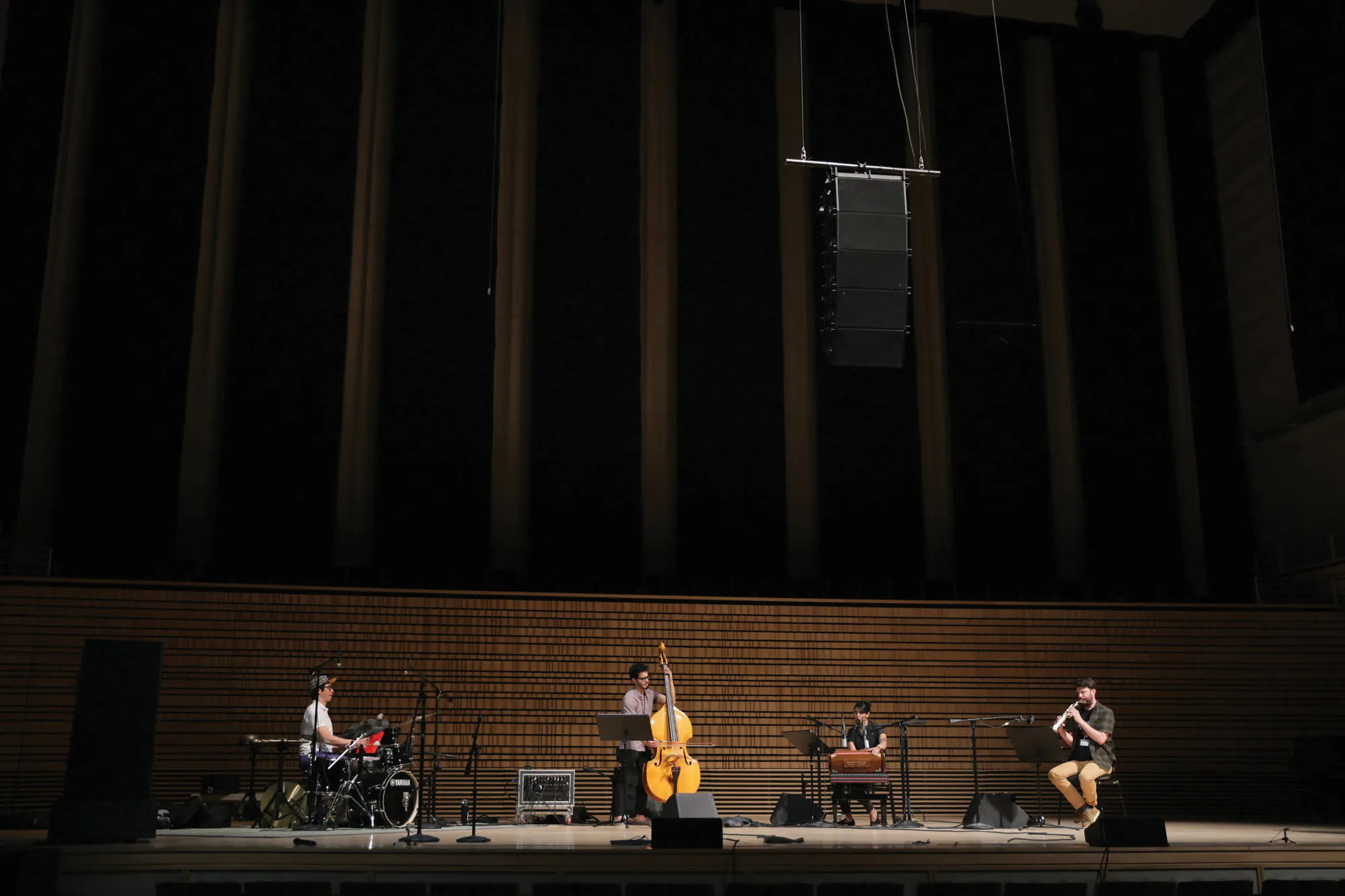
A quartet playing spread out across the concert hall stage.

Amirtha Kidambi’s Elder Ones + Longleash

From tight rhythmic unisons to expansive, wandering melodic lines, Amirtha Kidambi’s Elder Ones and Longleash represent many possible futures for contemporary experimental music. Each group features highly accomplished, technically virtuosic musicians, conversant in a wide range of musical styles and idioms, driven by the goal of an ever-expanding musical vernacular.

Elder Ones, a quartet performing the compositions of vocalist Amirtha Kidambi, lies nestled in a Venn diagram of diverse musical spheres and communities in New York City. Bandleader Kidambi performs on harmonium and draws her vocal influence from both Indian Carnatic and Western Classical training. With saxophonist Matt Nelson, bassist Brandon Lopez, and drummer Max Jaffe, the band expands its influence to the realm of hip-hop and free improvisation. Oscillating between modal, Sufi-like circular grooves and jagged, brutal rhythmic constructions, the band equally suspects Thyagaraja, Coltrane, and Stockhausen as illegitimate fathers of their sound. 

Named for the Cold War-era CIA program that aimed to undermine Soviet culture by secretly disseminating art from the American avant-garde, Longleash relish the paradox of experimental sound. Formed in 2013 by violinist Pala Garcia, cellist John Popham, and pianist Renate Rohlfing, the group is focused on the commissioning and performance of music by emerging composers. Pursuing the freedom of exploration within a pre-determined set of limitations, they mine the depths of the traditional piano trio in search of sounds and ideas yet undiscovered. This performance featured works by Juan de Dios Magdaleno, Francesco Filidei, Yukiko Watanabe, Christopher Trapani, and Clara Iannotta. 

PROGRAM

Longleash Trio

clara iannotta, Il colore dell’ombra

yukiko watanabe, ver_flies_sen

chistopher trapani, Passing Through, 

    Staying Put

juan de dios magdaleno, Strange Attractors

francesco filidei, Corde Vuote

pala garcia, violin

john popham, cello

renate rohlfing, piano

Amirtha Kidambi’s Elder Ones

Mother Tongues Suite - 

i. Sathya-Yuga

ii. Treta-Yuga

iii. Dvapara-Yuga

iv. Kali-Yuga

amirtha kidambi, voice/harmonium 

+ compositions

matt nelson, soprano saxophone

brandon lopez, bass

max jaffe, drums/percussion

Main Image: Amirtha Kidambi on stage in the concert hall in 2016. Photo: Mick Bello/EMPAC.

Media
Image
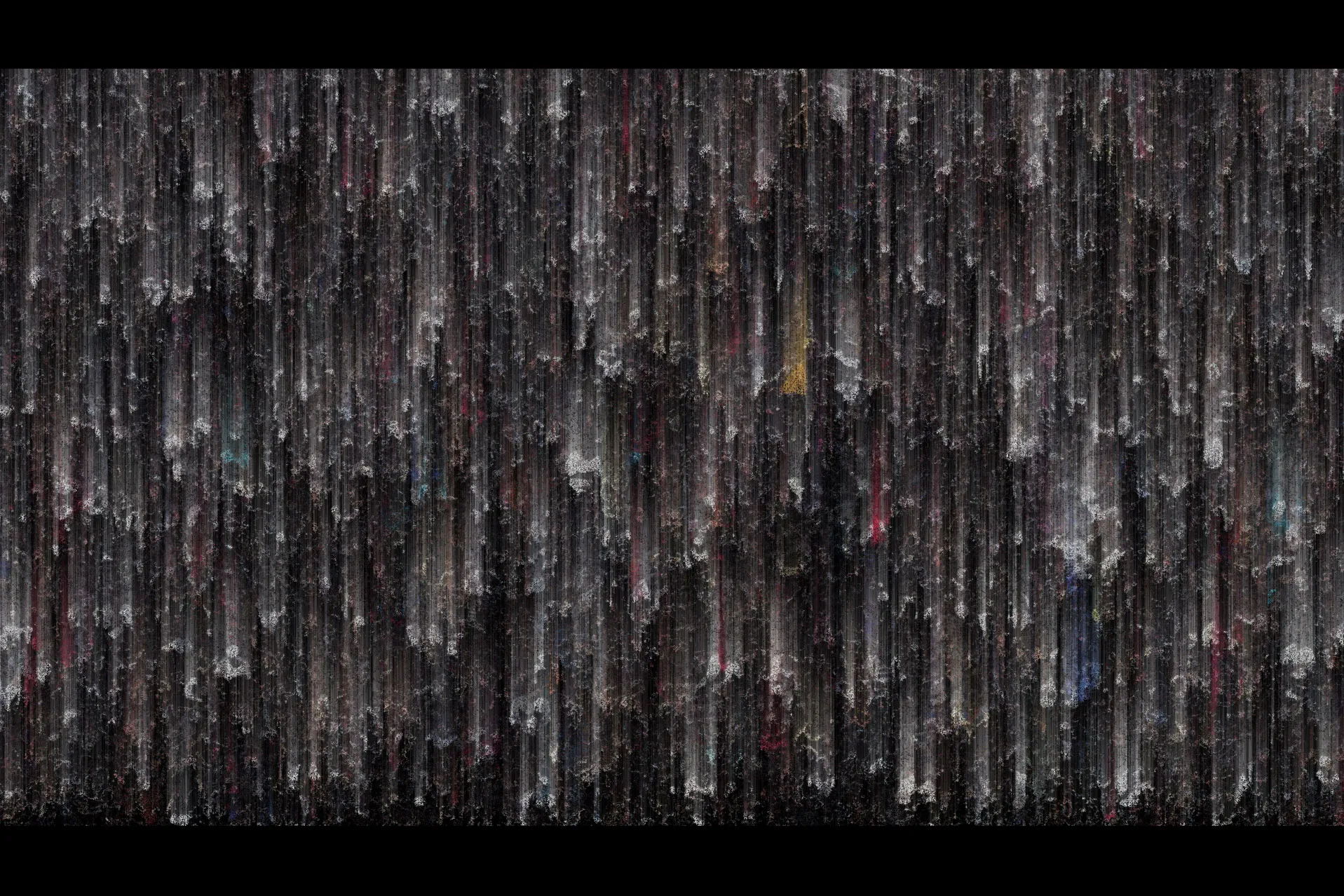
CGI abstract image in red and gray.

Bernd Lintermann

Art and Science: Pushing the Limits of the Creative Process in Media Art

On April 21–22 internationally renowned researchers Bernd Lintermann and Markus Noisternig will give insight into the most sophisticated computer-based applications in real-time generated immersion for sight and sound. Both have been collaborating with EMPAC's research, production and development of new technology and new works.

Bernd Lintermann works as an artist and scientist in the field of real-time computer graphics with a strong focus on interactive and generative systems. The results of his research are applied in the scientific, creative, and commercial context. While at EMPAC, Lintermann will present a pair of talks to introduce work being done at the intersection of art and science and outline specific computational strategies. Lintermann and his software were the foundation for the first big multi-year EMPAC production, the panoramic, interactive film by the Wooster Group, made for the opening of EMPAC. He has worked with internationally renowned artists, like Bill Viola, Jeffrey Shaw, and Peter Weibel, and has created a vast range of interactive, immersive, and 3D environments. One significant example is the software Xfrog, a procedural modeling and animation system with a focus on complex organic structures used by various entertainment companies, including Electronic Arts, Lucas Digital, and Digital Domain. The software has been used in movies such as Avatar and Alice in Wonderland. In 2015, Xfrog was nominated for a Scientific Achievement Award by the Academy of Motion Pictures.

Part One (2 PM):

Art and Science: Pushing the Limits of the Creative Process in Media Art I In his first presentation, Bernd Lintermann will give a technical introduction to computational strategies he developed for algorithmic modeling, interactive scenarios, and immersive environments, including the software Xfrog. This talk is especially geared towards programmers, artists, and practitioners of digital media.

Part Two (7 PM):

Art and Science: Pushing the Limits of the Creative Process in Media Art II In the second presentation, Bernd Lintermann will present examples from the oeuvre of works he has developed in various interactive media formats, also in 3D stereoscopic projection. These will include virtual reality installations for museums, stage performances, panoramic and dome projections, and stereoscopic projections for music concerts. This presentation will provide an experiential encounter with Lintermann’s work and a point of reference for where the frontiers of art and science are today.

Main Image: SonoMorphis (2016) Bernd Lintermann. 

Image
boychild lunging to the ground painting the floor with their hands in red light

You Sad Legend

Moved by the Motion: Wu Tsang and boychild, featuring Patrick Belaga

Moved by the Motion is a performance collaboration between artists Wu Tsang and boychild, featuring experimental cellist Patrick Belaga. As part of an ongoing series of such performances, Moved by the Motion explores different modes of storytelling through an improvisational structure of voice, movement, and music. The series began as a poetic interpretation of the science fiction world in Tsang’s forthcoming feature film, A day in the life of bliss, and has since evolved into its own form.

In the performance, Tsang, the film’s director, plays the voice, an evocative and commanding vocal performer, who uses language to manipulate the scene like a puppeteer pulling strings. boychild, the film’s principle actor, plays the mover, a visceral dancer who is bound to the voice but is constantly breaking down language with her ineffable physicality. All the while, Belaga plays the improvisational score live. "Play" is a central part of this performance—both play as an activity, and play as it defines a space for flexibility and leeway.

Main Image:You Sad Legend (2016). Image: Mick Bello/EMPAC.

Image
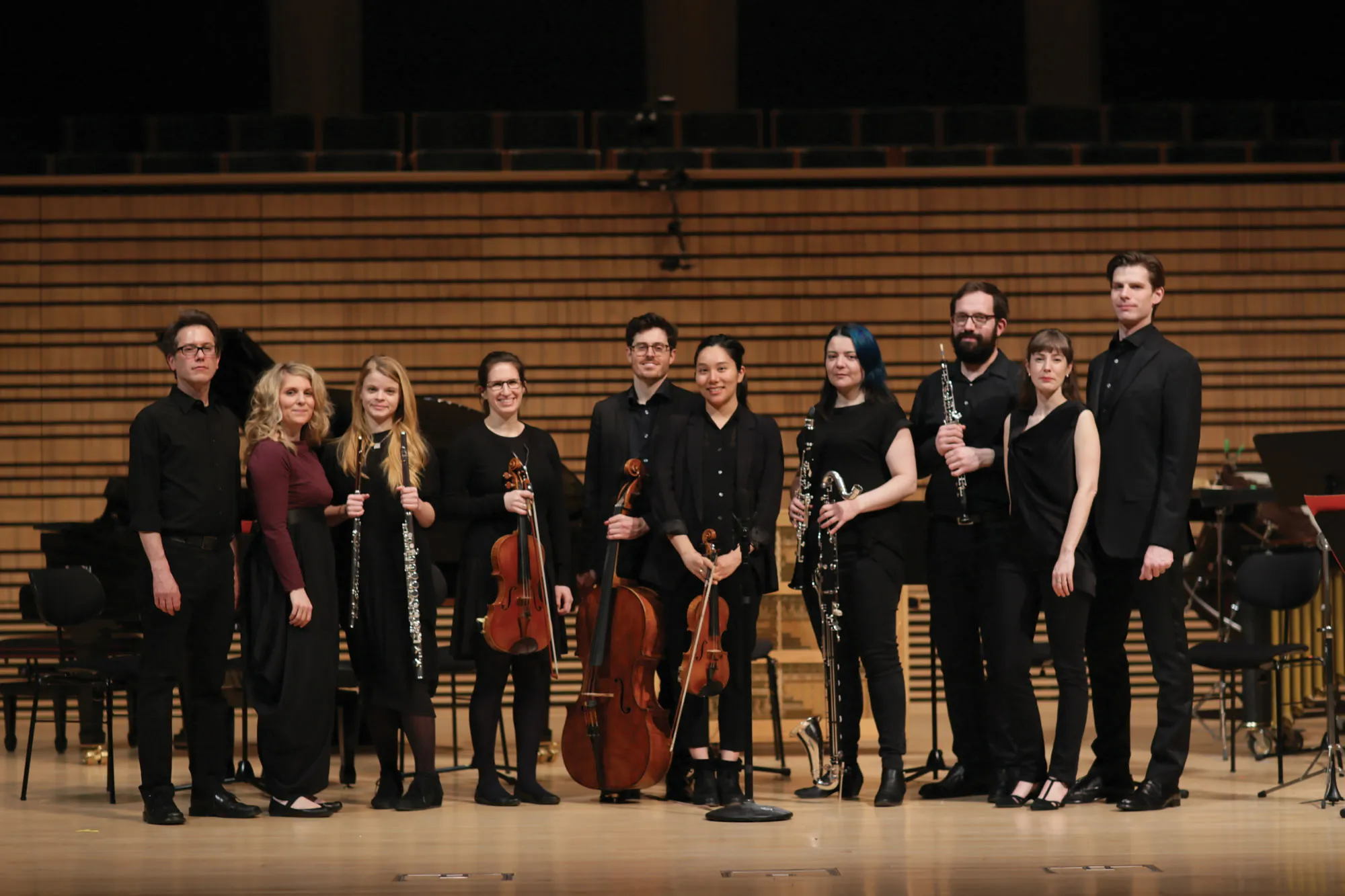
A small orchestra dressed in black posing for a picture, smiling at the end of the concert hall stage.

The Music of Salvatore Sciarrino

Existing at the edge of what can be heard, the music of Italian composer Salvatore Sciarrino (b. 1947) is identified by whispers of sound that punctuate a canvas of silence. Often touching upon Italian medieval and Renaissance culture as an inspiration, Sciarrino distills the sounds he uses in his compositions down to their essence to create music that exists outside of the noise of daily modern life. For his new approach to old ideas, he has become one of the best known and respected European composers working today, with more than 100 recordings of his work. His fragile music requires exceptional focus from its performers, stretching their technique and control to extremes.

One of Sciarrino’s best known works for chamber ensemble, Infinito Nero, frames the vocal outbursts of 16th century mystic St. Mary Magdalene de' Pazzi with gentle and metronomic raindrops of sound. Lo Spazio Inverso for five players creates islands of sound in a sea of silence, paradoxically creating motion out of stasis. The program concludes with L’Altro Giardino for eight players and voice, an expansion and elaboration of his previous work, 2008’s Il giardino di Sara.

This performance is conducted by Rensselaer Arts Department faculty Nicholas DeMaison and features vocalist Amanda DeBoer Bartlett.

PROGRAM:
  • Infinito Nero (1998) —
    flute, oboe, clarinet, percussion, piano, violin, cello, voice
  • Lo Spazio Inverso (1985) —
    flute, clarinet, celesta, violin, cello
  • L’Altro Giardino (2009) —
    flute, English horn, clarinet, percussion, piano, violin, viola, cello, voice

Main Image: The ensemble on stage in the concert hall in 2016. Photo: EMPAC.

Media

THE MUSIC OF SALVATORE SCIARRINO

Existing at the edge of what can be heard, the music of Italian composer Salvatore Sciarrino (b. 1947) is identified by whispers of sound that punctuate a canvas of silence. Often touching upon Italian medieval and Renaissance culture as an inspiration, Sciarrino distills the sounds he uses in his compositions down to their essence to create music that exists outside of the noise of daily modern life. His fragile music requires exceptional focus from its performers, stretch- ing their technique and control to extremes. One of Sciarrino’s best known works for chamber ensemble, Infinito Nero, frames the vocal out- bursts of 16th century mystic St. Mary Magdalene de’ Pazzi with gentle and metronomic raindrops of sound. Lo Spazio Inverso for five players creates islands of sound in a sea of silence, paradoxically creating motion out of stasis. The program con- cluded with L’Altro Giardino for eight players and voice.

Image
abstract silver and primary colored falling rain.

On Screen/Sound: No. 14

Oskar Fischinger / Mary Ellen Bute / Ryoichi Kurokawa

On Screen Sound: No.14
 brings together a series of films from the 1930s and ’40s by early animation pioneers Mary Ellen Bute (1906-1983) and Oskar Fischinger (1900-1967) with a digital moving-image work made over 70 years later by Novi_sad and Ryoichi Kurokawa. 

Both Mary Ellen Bute and Oskar Fischinger explored the correspondence of moving images and sounds in their work. Many of Fischinger’s films combine image and music into tightly choreographed works of motion. He continually advanced the technical and aesthetic boundaries of abstract film. Notable techniques include early silent film experiments of thinly sliced wax forms to “ornament sound” films created by photographing objects onto the optical soundtrack of the filmstrip to create “direct” sound from the material.

Between the 1930s and ’50s, Bute’s films were grounded within the tradition of “visual music” through a series of abstract film techniques that she called “Seeing Sound.” An early proponent of electronic art, Bute undertook collaborative research with Leon Theremin, and by 1954 she used a cathode ray oscilloscope to create several abstract films. 

Equally committed to the innovative intersection of the visual and sonic, Novi_sad and Ryoichi Kurokawa project animation into the 21st century with their 2012 collaboration, Sirens, which uses data processing to create pulsing, impossibly detailed images and sounds.

PROGRAM:
  • Ornament Sound Experiments (1932) Oskar Fischinger
  • Study No. 7 (1931) Oskar Fischinger / Music: Brahms’ Hungarian Dance No. 5
  • Polka Graph (1947) Mary Ellen Bute / Music: Shostakovich’s Polka from The Age of Gold
  • Tarantella (1940) Mary Ellen Bute / Music: Edwin Gerschefski
  • Sirens (2012) Ryoichi Kurokawa / Music: Novi_sad
  • Approximate runtime: 69 minutes

This year-long film series takes a close look at—and listen to—the way filmmakers have employed the sonic dimension of their form to complement, challenge, and reconsider our experience of the moving image.

Presenting cinematic performance, artists’ moving image, and Hollywood feature films, each On Screen/Sound program delves into the relationship between movie sound and image tracks, highlighting some radical examples of the aesthetic power and technical potential of sound in cinema. From musical theater to the music video, experimental shorts to industrially produced features, the series explores the affective and technical relationship between sound and image through the art of Foley, experimental music, found footage, soundtrack imaging, synched, multi-channel, and non-diegetic sound.


Main Image: Film still from Kurokawas Sirens. Courtesy the artist.

Media
Image
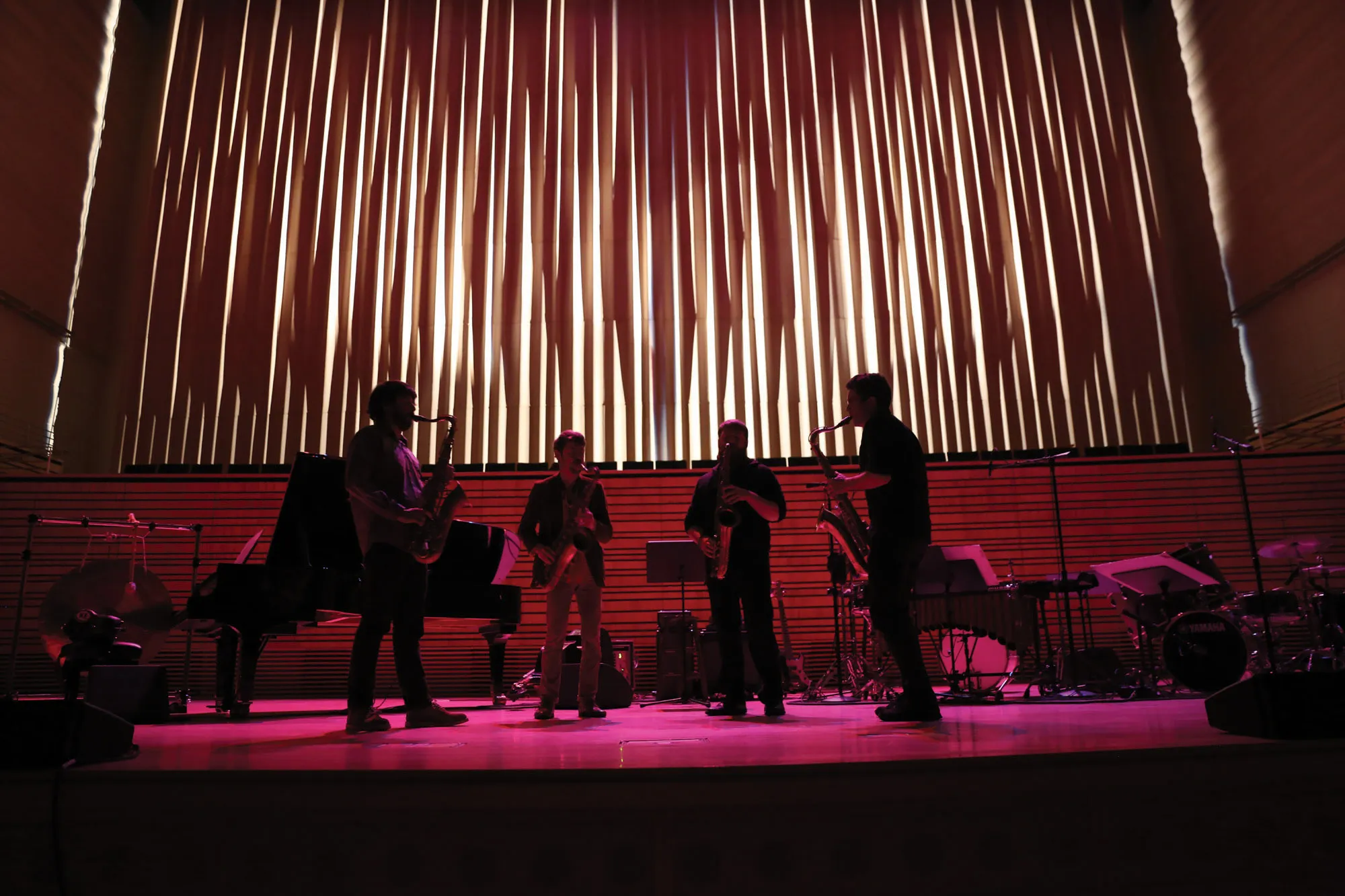
Four men playing saxophone in a semi circle on a stage washed in pink light.

Bearthoven + Battle Trance

Converging from the “new music” and indie scenes, Bearthoven and Battle Trance each offered variations on the same theme: engaging music that straddles a line between jazz, classical, and the avant-garde.

Bearthoven is the trio of pianist Karl Larson, bassist Pat Swoboda, and percussionist Matt Evans. Since 2013, the group has rapidly built a diverse repertoire of material by commissioning works from leading young composers with the underlying challenge of producing innovative work for their familiar instrumental configuration. The project is a reexamination of what the traditional jazz trio can do and mean.

The flurry of saxophones known as Battle Trance is a tour de force of intense focus and unending breath. Comprised of tenor saxophonists Travis Laplante, Matthew Nelson, Jeremy Viner, and Patrick Breiner, the quartet uses circular breathing and immense physical stamina to produce hypnotic, meditative, and transformative sounds. In pursuit of a music that is both modern and timeless, the group strives to create a “portal of resonance” where there is no separation between the listener and the sound.

PROGRAM

Bearthoven

Brooks Frederickson – Undertoad (2013)

Anthony Vine – From a Forest of Standing Mirrors (2014)

Fjola Evans – Shoaling (2014)

Adrian Knight – The Ringing World (2016)

Ken Thomson – Grizzly (2014)

Battle Trance

Palace of Wind (2014)

Main Image: Battle Trance on stage in the concert hall. Photo: Mick Bello/EMPAC.

Image
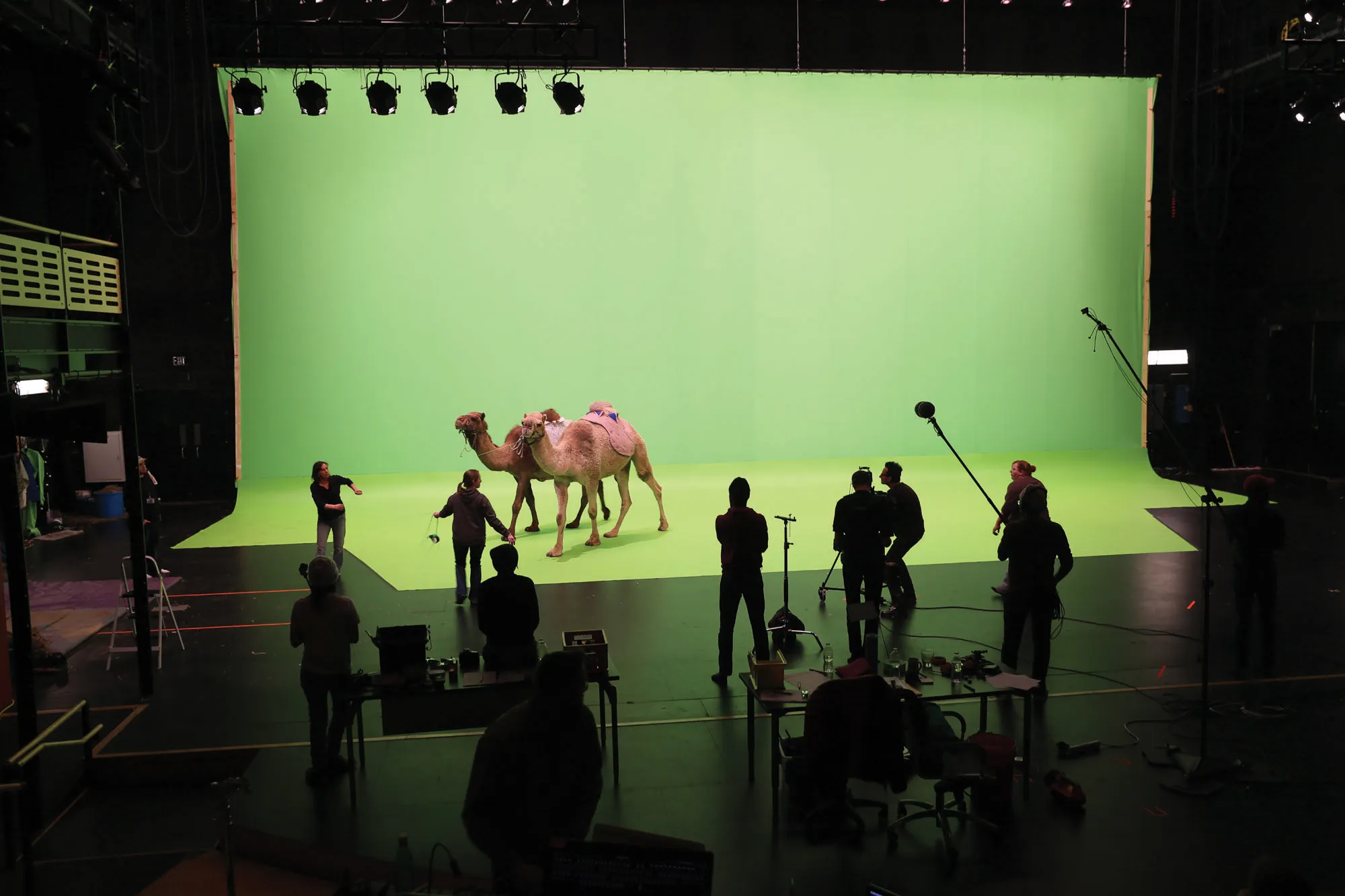
Two camels walking across a green screen in a black box studio.

Atlas Revisited

Karthik Pandian and Andros Zins-Browne

In 2012, visual artist Karthik Pandian and choreographer Andros Zins-Browne visited the Atlas Film Studios in the desert of Ouarzazate, Morocco. There, in front of film sets from previous Hollywood productions, they hired a group of studio camels and tried to persuade them to dance. The result of this endeavor can be seen in their 2014 video Atlas/Inserts, a choreography that casts the camel both as a political animal and a technology of movement.

Now with Atlas Revisited, their latest collaboration, the artists look back at the project and beyond. In a performance using text, movement, and moving image, they question their own motivations and the consequences of their pursuit of an “image of freedom.”

Drawing on new video material, shot at EMPAC in front of a green screen with American camel-actors, they pose the question of whether Atlas/Inserts was actually a ruse. Was the coercion depicted actually the performance of high-priced American talent keyed into background footage from Morocco? Were the artists documenting a shoot or acting in one?

In Atlas Revisited, Pandian and Zins-Browne stage the making, unmaking, and remaking of a dance about freedom and the treachery often required to realize images of it.

Main Image: Production still from Atlas Revisited (2016). Courtesy the artists. Photo: Mick Bello/EMPAC.

Media
Image
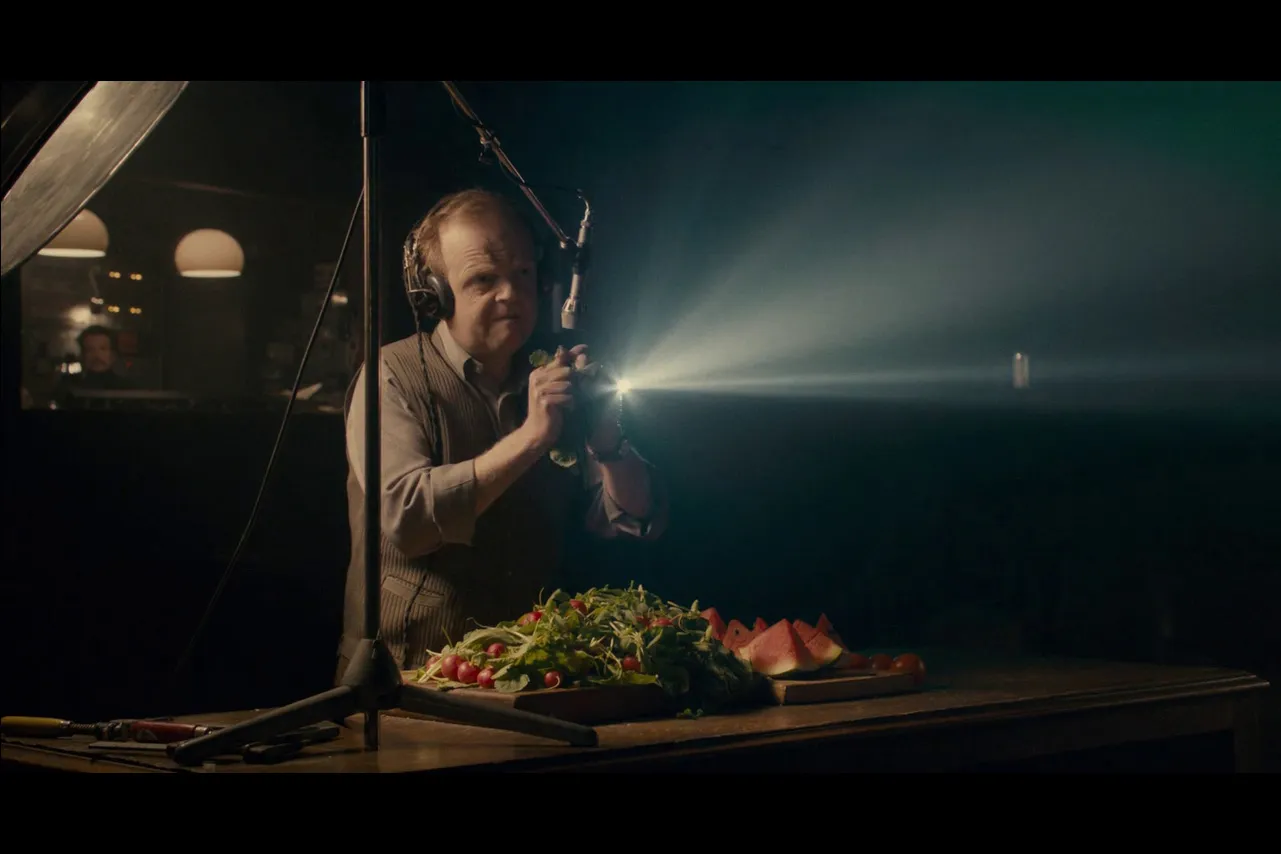
A foley artist ringing a piece of lettuce into a microphone over a pile of salad and a cut up watermelon.

Berberian Sound Studio

Peter Strickland

Looking at the importance of incidental music and Foley sound effects in the horror movie genre.

Berberian Sound Studio takes the horror of labor as its narrative center, albeit through the lens a Foley artist who takes a job in an Eastern European studio to do the post-production sound design for a slasher movie.

This darkly imagined and expressionistically shot feature takes up the mantle of cult films that use the labor of a sound recordist—notably Brian de Palma’s Blow Out (shown at On Screen/Sound: No. 7) and Francis Ford Coppola’s The Conversation—as a plot device to entwine Foley sounds with the sounds of real murder.

PROGRAM
  • Berberian Sound Studio (2012) Peter Strickland / Music: Will Slater
  • Approximate runtime: 110 minutes

Main Image: Berberian Sound Studio, Peter Strickland (2012) Video still: Courtesy Swank Motion Pictures

Media
Image
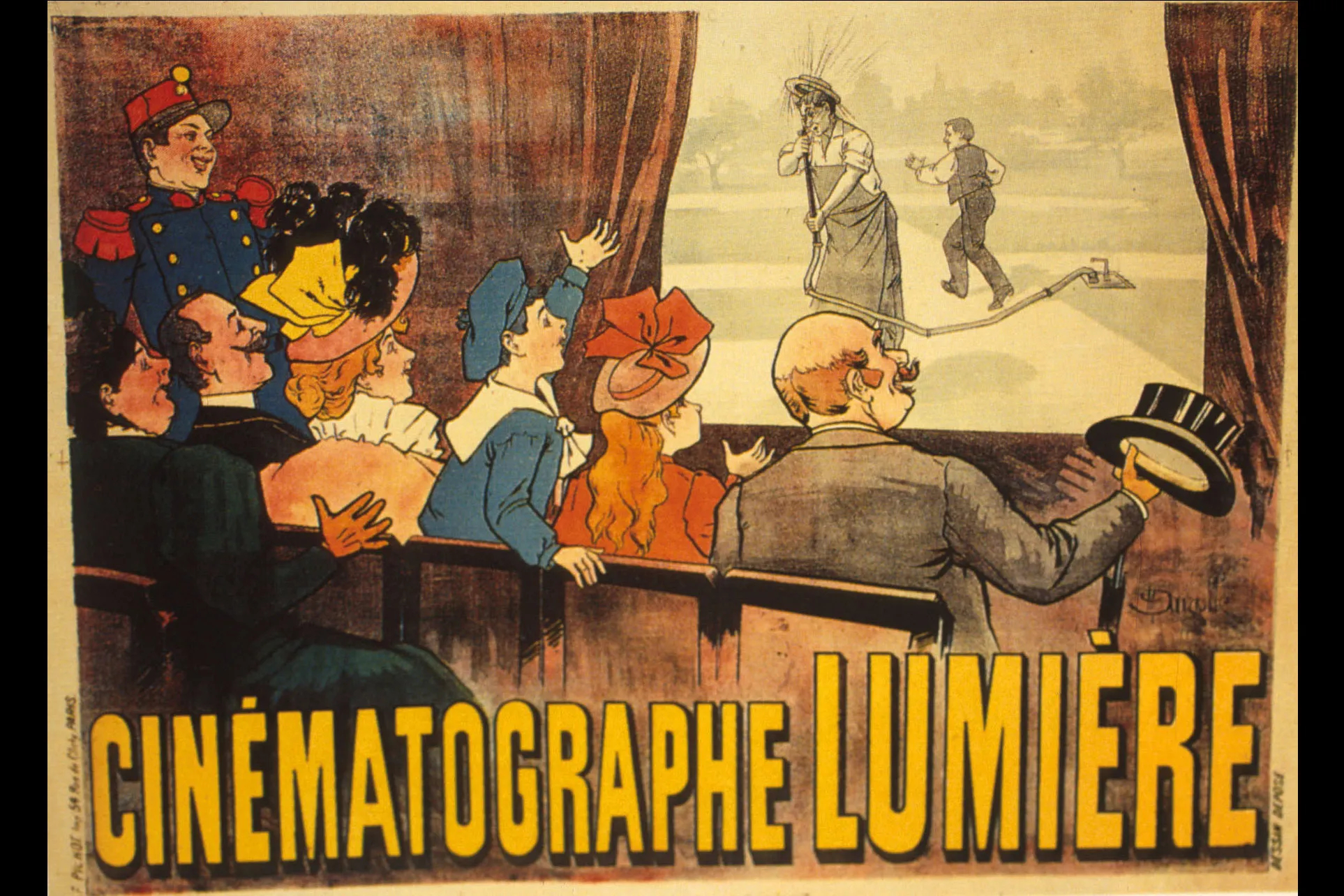
1800's hand drawn film poster showing a crowd dressed in period clothing cheering at a movie screen.

Watering the Flowers

Watering the Flowers is a new year-long screening program. Each evening focuses on a recent film or video by an EMPAC-affiliated artist, and will be succeeded by a program of other shorts or features that were influential in the making of their work, whether fiction or documentary, experimental or commercial.

Watering the Flowers, or L’Arroseur, is the title of a lost film from 1896 by cinema pioneer Georges Méliès, based on Louis Lumière’s film L’Arroseur Arrosé, which was released the previous year. L’Arroseur Arrosé is often credited as the first fiction film, and its 45 seconds comprise a single gag played on a gardener watering his plants. Highly influential to the development of both narrative cinema and on-screen comedy, it was endlessly copied, parodied, duplicated, and is appropriated even to this day. Its promotional poster was also a first: an audience watching the film—an image of cinema itself.

The title has also been referred to in distinct ways: The Waterer Watered or The Sprinkler Sprinkled or The Tables Turned on the Gardener. This act of differing translation points to the subjective relationship each of us has to language, either textual, visual, or sonic. All artists are inspired by and learn from others, and this program seeks to “water the flowers,” so to speak, opening a space for collective watching through the artist’s eyes. At a time when so many of our moving images are viewed from a computer or handheld device, and our selections are channeled algorithmically according to our narrow interests, this program provides the opportunity to see films that are “lost.” Not films lost in the sense of Méliès’ work, but films that are potentially masked by the flood of daily data. Watering the Flowers pursues inspiration through the juxtaposition of the unusual, the banned, the overlooked, the old, the new, the personal, the counter-historical, the experimental, and the popular.

Main Image: FILM POSTER FOR ARROSEUR-ET-ARROSÉ BY LOUIS LUMIERE, 1895