Image
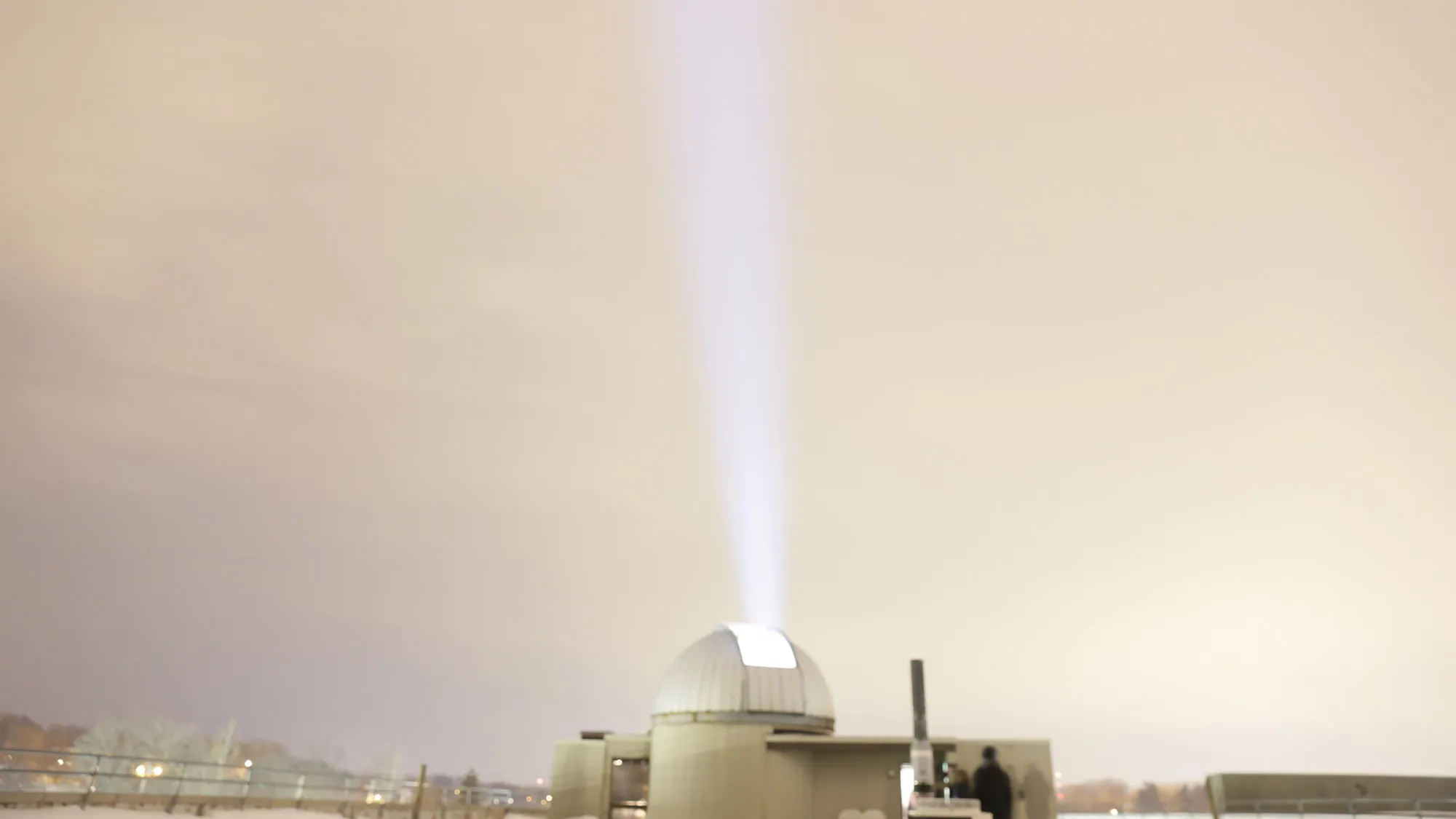
An observatory shooting a beam of light into a gray hazy sky.

Heidi Newberg and Rosa Barba

On the Speculative Intersection of Astronomy and Art

A conversation about the speculative intersection between astronomy, art, and time featuring artist-in-residence Rosa Barba and Heidi Newberg, professor of Physics, Applied Physics, and Astronomy at Rensselaer.

Rosa Barba’s publications, sculpture, and installation work are rooted in the material of cinema. In 2010, she won the Nam June Paik Award for Coro Spezzato, The Future Lasts One Day (2009), based on a multi-choral performance in which each member of the choir is represented by an individual film projector displaying the sung text. Her work has been presented in exhibitions worldwide. 

Heidi Newberg has worked in many areas of astronomy over the course of her career. A fellow of the American Physical Society, and professor of physics, applied physics, and astronomy at Rensselaer, Newberg’s research is primarily related to understanding the structure and evolution of our own galaxy, using stars as tracers of the galactic halo and disks. These stars, in turn, are used to trace the density distribution of dark matter in the Milky Way. 

Newberg did her PhD with the Berkeley Automated Supernova Search, and the Supernova Cosmology Project (SCP), and she shared the Gruber Cosmology Prize for her work with SCP. She has helped to build the Sloan Digital Sky Survey (SDSS), which imaged ~10,000 square degrees of the sky in five optical filters, and obtained over a million spectra of galaxies. She initiated the Sloan Extension for Galactic Understanding and Exploration (SEGUE) project in SDSS II, which obtained spectra for 250,000 galactic stars. 

She has published papers in diverse areas of galactic and extragalactic astronomy, including supernova phenomenology, measuring cosmological parameters from supernovae, galaxy photometry, color selection of QSOs, properties of stars, astronomy education, and the structure of our galaxy. 

Newberg is the head of Participants in LAMOST, US (PLUS), which, in collaboration with the Chinese LAMOST project, has so far obtained ~2 million spectra of galactic stars, using a new 4m-class telescope that can obtain spectra for 4000 objects at the same time. She also runs MilkyWay@home, a volunteer computing platform that supplies about a PetaFLOP of computing power (equivalent to the largest supercomputers) to her research projects, which include finding the best model of the Milky Way and running n-body simulations of Milky Way evolution.
Image
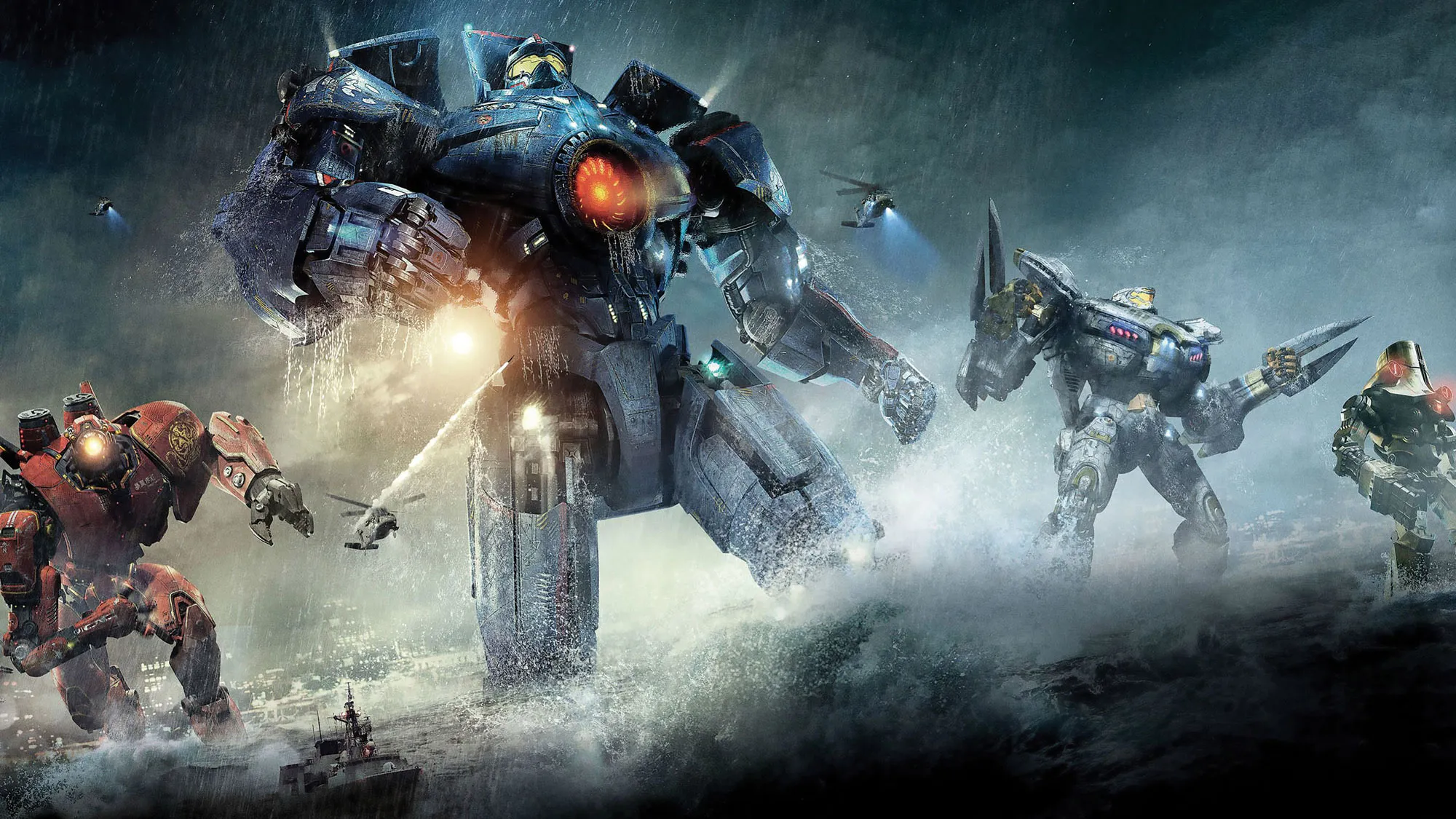
Four CGI robots standing in a stormy ocean.

On Animation and Workflow

Jaffe Colloquium Screening

This screening program presents Georges Méliès’ pre-digital compositing techniques at the turn of the 20th century, Karel Zeman’s stop-motion animation, Norman McLaren’s mid-century animated live action, along with the contemporary digital compositing of artist collective Flatform, and the industrial experiments with CG in Guillermo del Toro’s Pacific Rim. Looking back upon a century’s worth of image production that combines live action with the animated, the program investigates the technical and aesthetic conditions that manifest through the processes of each film’s construction.

PROGRAM

This screening is part of the Jaffe Colloquium: On Animation and Workflow that brings together a small groups of artists, curators, visual effects specialists, engineers, and theorists to informally discuss ideas centered around the conditions of the long co-history of animation and workflow (the sequence of processes through which a piece of work passes from initiation to completion). The last two decades have seen the increasing dominance of moving image productions that rely almost exclusively on post-production. In this situation, categories used to understand cinematic space and time that developed over a century of viewing and discourse have become increasingly inadequate, especially insofar as they reinforce a long-held divide between the filmed and the animated. To make better sense of these contemporary images, we have to instead read back through that history of the animated, constructed and built, and so too through the history of the technique and workflow from which it cannot be separated.

Of the major transformations in image production, one of the more significant involves the shift away from filming on naturalistic sets or on-location—filming live, so to speak. In this mode, which has been familiar for nearly a century, figures and surroundings are captured in the same shot; even significant processing and manipulation of the film does not alter that close bond. The last two decades, however, have seen the increasing dominance of moving image productions that rely almost exclusively on post-production. More shots are now digitally composited from various sources, some shot on green screen, some built from digital scratch. They are, for all intents and purposes, animations, in which each sequence renders a montage of disparate elements, produced at different times and often on different continents, into a single surface and flow of frames. In this situation, categories used to understand cinematic space and time that developed over a century of viewing and discourse have become increasingly inadequate, especially insofar as they reinforce a long-held divide between the filmed and the animated. To make better sense of these contemporary images, we have to instead read back through that history of the animated, constructed and built, and so too through the history of the technique and workflow from which it cannot be separated.

Main Image: Pacific Rim (2013).

Image
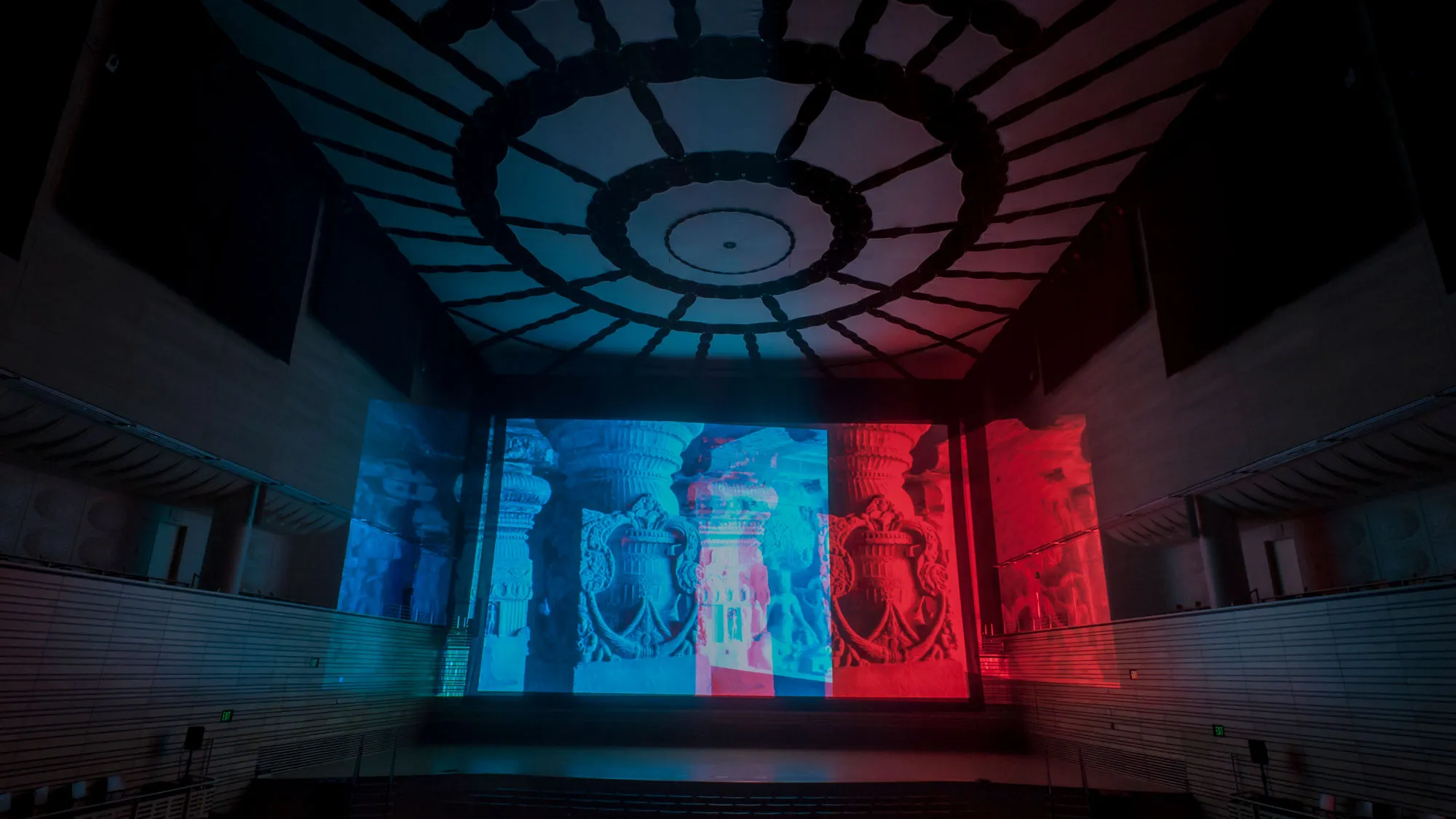
A projection of ornate classical/corinthian style columns in blue and red on the concert hall back wall.

Tales of Love and Fear

Lucy Raven

The culmination of several years of research, Tales of Love and Fear is a site-specific artwork for the Concert Hall. A regular artist-in-residence since fall 2013, Lucy Raven has focused her research on the history and evolution of 3D-film technologies and animation techniques. Investigating the fluid cultural perception of spatial depth though an art-historical lens, she explores the mechanisms of industrial cinema production through analysis of the transnational circulation of labor and materials. 

Developed in collaboration with our production team, Tales of Love and Fear is comprised of a custom-built rig of counter-rotating platforms. A single stereoscopic photograph, taken by the artist during her research in India, is split by the two projectors into the left and right eye perspective. Conceived as a cinema for a single image, this piece expands and unifies our perception of the cinematic beyond the screen. 

Using field recordings taken during a screening of a Bollywood horror movie in Mumbai, the surround soundtrack, designed by Paul Corley, transports the viewer back into this cinematic environment. By translating and overlaying this specific auditory experience onto the Concert Hall, Tales of Love and Fear creates a composite architecture. Cones of light slowly revolve through the volume of the hall connecting the photographic image to the projection apparatus.

Main Image: Raven's Tales of Love and Fear in the concert hall. Photo: Courtesy the artist.

Image
Mark Fell and Keith Fullerton Whitman

Mark Fell and Keith Fullerton Whitman

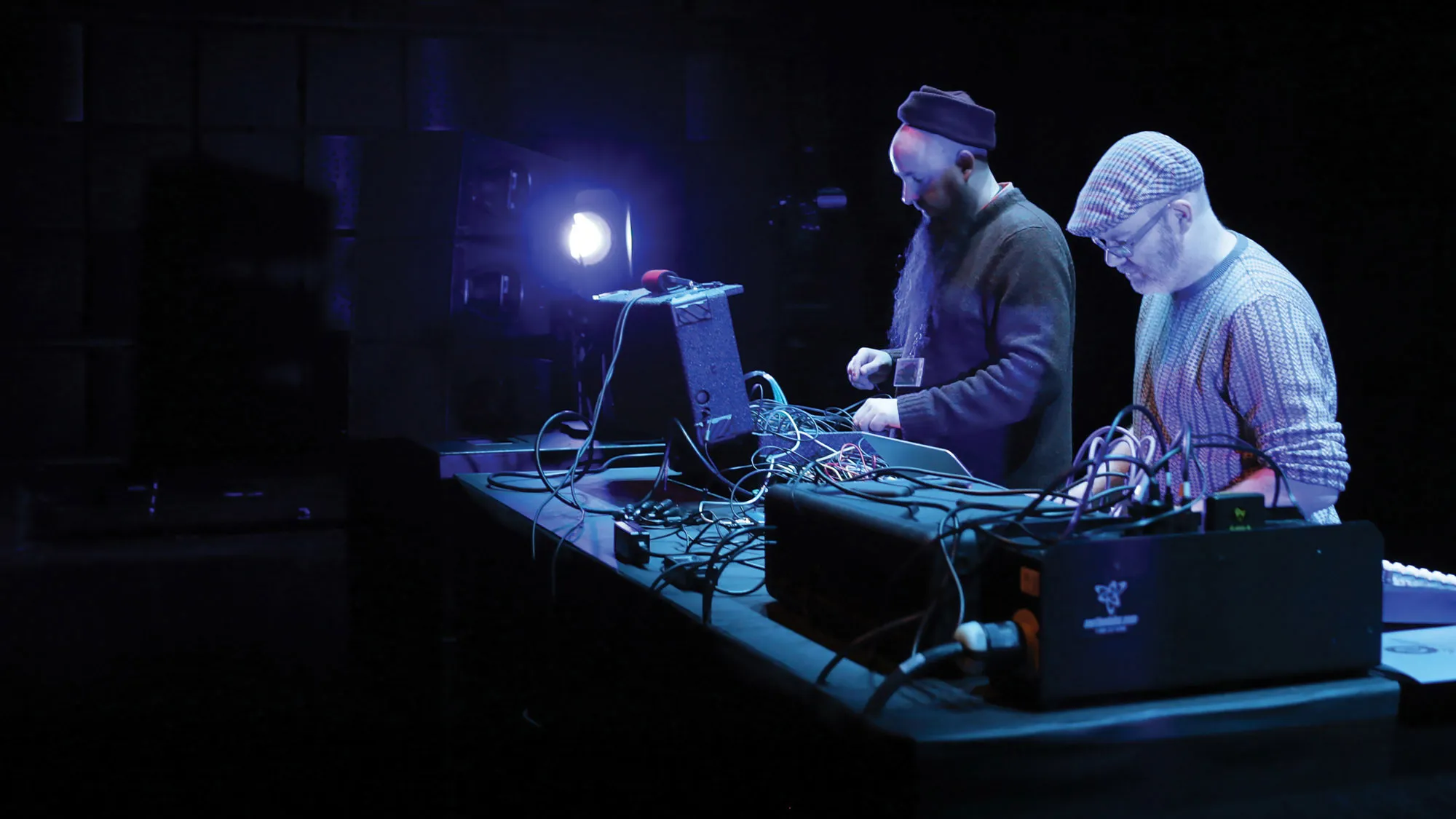
The US premiere of a new duo project from two of the most restless innovators in electronic music.

Mark Fell and Keith Fullerton Whitman are each known for their fluid approaches to electronic music making. Born of the techno generation, both have infused, deconstructed, and transcended their early mastery of vernacular dance styles with a more academic ear toward the legacy and promise of computer music. Exploring the technical, conceptual, and aesthetic notions of music synthesis, the duo is extending their shared approach to the project after an inaugural run of European performances in fall 2014.

Media

And You Were Wonderful, On Stage

Cally Spooner

On the final evening of Cally Spooner’s EMPAC production residency, in which she will be shooting her new film work And You Were Wonderful, On Stage in Studio 1, the artist invites you to be part of a live studio audience.

A performance with multiple actors, dancers, and stage sets that attempts to integrate the process of filming into the production itself, the event will be live-streamed and take on the format of a TV variety show. Directed by the artist and technical team to provide laughter and applause, the audience will be integral to the film’s production as both audience and actor.

Using assemblages of theory, philosophy, pop music, current affairs and corporate rhetoric to write—and casts of arguing characters to help her perform—Spooner produces plotless novellas, disjunctive scripts, looping monologues, and musical arrangements to stage the movement and behavior of speech. Appropriating different performance genres, such as the Broadway musical, the television commercial, and the radio play, Spooner considers how dematerialized, indeterminate, unmediated performance can sit within the extreme visibility of entertainment and today's attention economies.

Media
Image
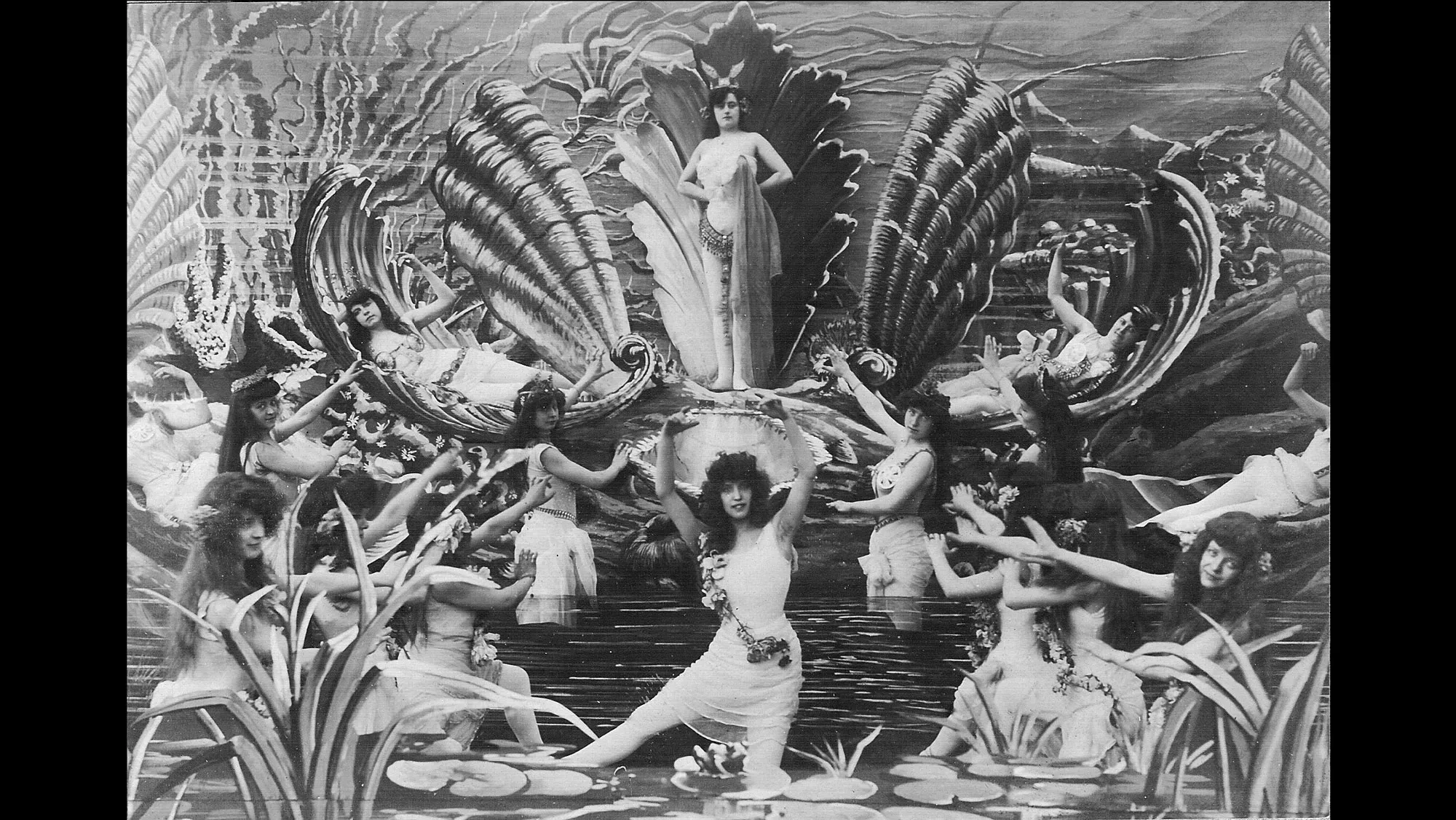
Film still of victorian woman dressed as water nymphs in a multi tiered ornate water scene.

On Animation and Workflow

Film Series + Jaffe Colloquium

This series takes as its starting point the long co-history of animation and workflow (the sequence through which a piece of work passes from initiation to completion), from early cinema to contemporary moving images, including art film and video, Hollywood productions, and video games. From Georges Méliès’ pre-digital compositing techniques at the turn of the 20th century to CGI, and artists’ experiments with gaming software, this series investigates the technical and aesthetic conditions that manifest through the process of constructing moving images.

Of the major transformations in image production, one of the more significant involves the shift away from filming on naturalistic sets or on-location—filming live, so to speak. In this mode, which has been familiar for nearly a century, figures and surroundings are captured in the same shot; even significant processing and manipulation of the film does not alter that close bond. The last two decades, however, have seen the increasing dominance of moving image productions that rely almost exclusively on post-production. More shots are now digitally composited from various sources, some shot on green-screen, some built from digital scratch. They are, for all intents and purposes, animations, in which each sequence renders a montage of disparate elements, produced at different times and often on different continents, into a single surface and flow of frames. In this situation, categories used to understand cinematic space and time that developed over a century of viewing and discourse have become increasingly inadequate, especially insofar as they reinforce a long-held divide between the filmed and the animated. To make better sense of these contemporary images, we have to instead read back through that history of the animated, constructed and built, and so too through the history of the technique and workflow from which it cannot be separated.

COLLOQUIUM PARTICIPANTS

Rosa Aiello
Eric Ameres
Stuart Comer
Kathy High
Esther Leslie
Gil Leung
Nathan Meltz
Rich Radke
Lucy Raven
Evan Calder Williams

Main Image: Georges Méliès The Kingdom of the Fairies, 1903. Courtesy: Flicker Alley.

Image
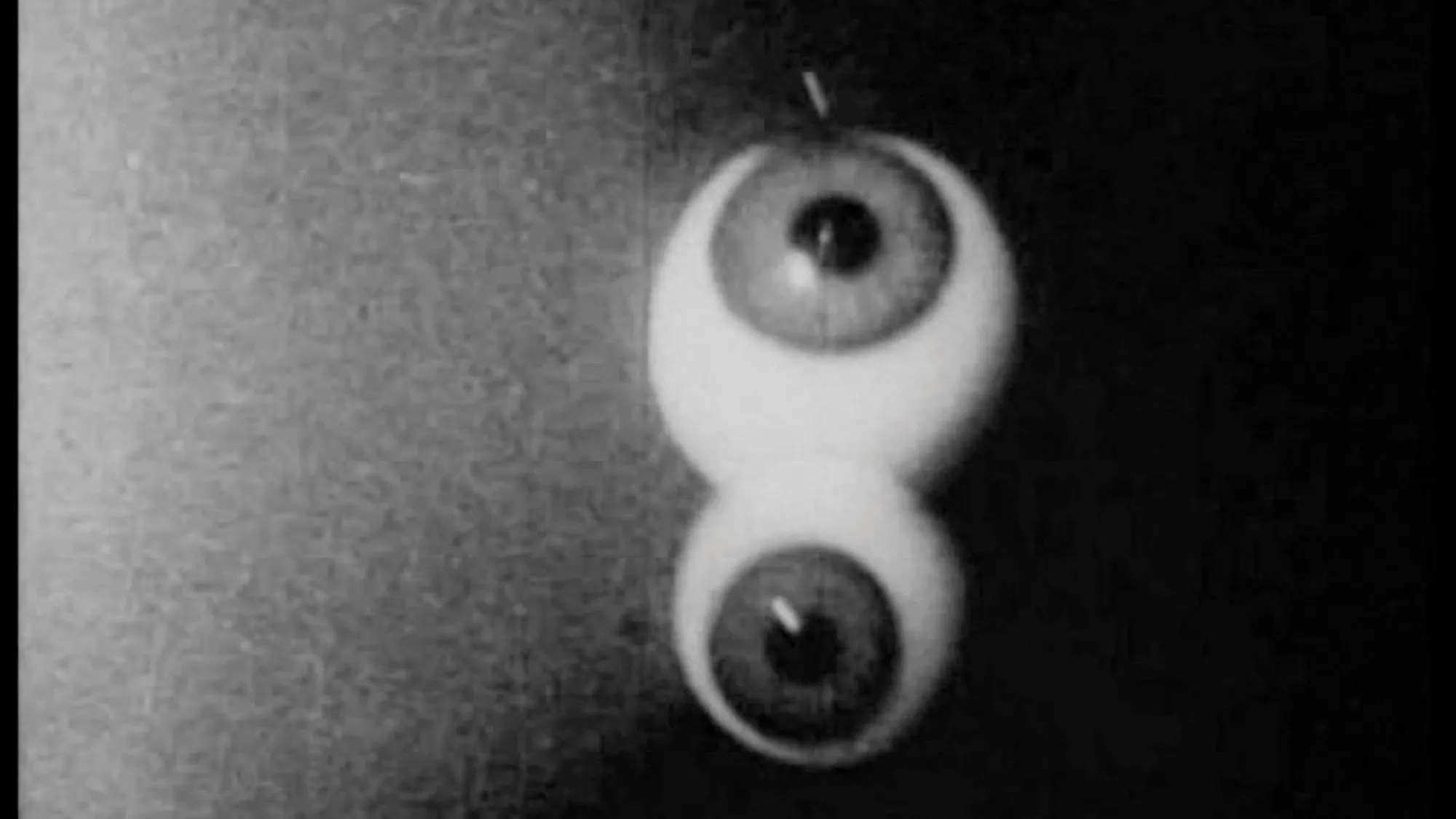
Black and white still of two horizontal eyeballs, with the top larger than the bottom.

Dreams that Money Can Buy

Hans Richter + Viking Eggeling

The first screening in the series On Animation & Workflow will start with two pioneering animated films from the 1920s, Viking Eggeling’s Symphonie diagonale (Diagonal Symphony, 1924) and Hans Richter’s Filmstudie (1926). Eggeling and Richter began experimenting with abstract animation techniques together in 1918 by using painted scrolls to create sequential, directional movement, and gravitated towards film in order to synthesize image with movement and music. Eggeling made two films, of which only Diagonal Symphony survives, as a “cinematic drawing.” Synthesizing painting and film, he shot his Diagonal Symphony scrolls using stop-motion techniques. Richter, however, moved away from this painterly approach to construct films that used cutouts and optical printing to establish a new abstract filmic language of “articulated time.” By 1926, in Filmstudie, Richter had started to incorporate Dada-esque, figurative photographic elements, such as eyeballs and faces. These 16mm shorts will be accompanied by Richter’s surrealist feature film, Dreams that Money Can Buy (1947), scored by experimental music pioneer John Cage, with Paul Bowles, Darius Milhaud, and Louis Applebaum. The film follows protagonist Joe/Narcissus as he enacts a madcap business idea in order to pay the rent. Using mystical powers that allow him to look in the mirror and see the contents of his mind, he is able to sell dreams to neurotic clients. Each dream sequence, several of which include complex animations, were directed in collaboration with Max Ernst, Marcel Duchamp, Man Ray, Alexander Calder, and Fernand Léger, respectively, to create a portmanteau film that represents the artistic visions of a roll call of the greats of early 20th century art and music.

Tales of Love and Fear

Lucy Raven

The culmination of several years of research, Tales of Love and Fear was a site-specific artwork for the Concert Hall. A regular artist-in-residence since fall 2013, Lucy Raven has focused her research on the history and evolution of 3D-film technologies and animation techniques. Investigating the fluid cultural perception of spatial depth though an art-historical lens, she explores the mechanisms of industrial cinema production through analysis of the transnational circulation of labor and materials.

Developed in collaboration with the EMPAC production team, Tales of Love and Fear is comprised of a custom-built rig of counter-rotating platforms. A single stereoscopic photograph, taken by the artist during her research in India, is split by the two projectors into the left and right eye perspective. Conceived as a cinema for a single image, this piece expands and unifies our perception of the cinematic beyond the screen.

Using field recordings taken during a screening of a Bollywood horror movie in Mumbai, the surround soundtrack, designed by Paul Corley, transports the viewer back into this cinematic environment. By translating and overlaying this specific auditory experience onto the Concert Hall, Tales of Love and Fear creates a composite architecture.

Cally Spooner

And You Were Wonderful, On Stage

Cally Spooner’s EMPAC production residency, culminated in a performance with multiple actors, dancers, and stage sets that attempts to integrate the process of filming into the pro- duction itself, the event was live-streamed and took on the format of a TV variety show.

Using assemblages of theory, philosophy, pop music, current affairs and corporate rhetoric to write—and casts of arguing characters to help her perform—Spooner produces plotless novellas, disjunctive scripts, looping monologues, and musical arrangements to stage the movement and behavior of speech. Appropriating different performance genres, such as the Broadway musi- cal, the television commercial, and the radio play, Spooner considers how dematerialized, inde- terminate, unmediated performance can sit within the extreme visibility of entertainment and today’s attention economies.

Image
marianne Kim in lecture.

Lost & Found

Marianne Kim

Commissioned, developed, and produced as part of the DANCE MOViES Commission, a program that supports the creation of new dance works for the screen, with projects developed and produced through the EMPAC artist-in-residence program, video artist and choreographer Marianne Kim creates a non-narrative investigation of the “fugue state,” referring to flight, wandering, forgetting, reinventing, and remembering. Lost & Found encounters a man in the midst of an internal crisis. During his wandering fugue state, he ruminates about the construction of fugue music and the vision quest a young J.S. Bach took on-foot from his home in Arnstadt to Lübeck to hear the music of Dietrich Buxtehude. 

Main Image: Film Still from Lost & Found (2015). Courtesy Marianne Kim.