ESKASIZER & Samba #2

chameckilerner

Rosane Chamecki and Andrea Lerner, a.k.a. chameckilerner, are Brazilian choreographers and filmmakers whose collaboration began with the shared desire to create work based on bold physicality. Moving from live performance to film did not diminish their interest in the body as a map of oneself. In residence to produce an EMPAC-commissioned dance film, chameckilerner experimented in the use of high-speed video to achieve extreme slow-motion images of dancers’ bodies—of various ages and shapes—in an Eskasizer vibrating belt massager. Zooming in to the point of abstraction, the result is a dance of the flesh. To achieve this result with 4,000-frames-per-second filming with the Phantom camera, EMPAC’s lighting team created a high-power lighting effect with custom-made diffusion panels.

During their 15-year collaboration, between 1992 and 2007, Rosane Chamecki and Andrea Lerner created more than 10 evening-length dances that toured internationally to much critical acclaim. In 2007, they premiered EXIT at The Kitchen in New York City. EXIT was a goodbye to their dance career and marked the beginning of their filmmaking collaboration. In 2008, the two were awarded a Guggenheim Fellowship.
Time Will Tell

Manuella Blackburn

British acousmatic composer Manuella Blackburn is widely acclaimed for her intricate and meticulous compositions. Blackburn was in residence to work on a composition commissioned by EMPAC called Time Will Tell. Assembled from the sounds of various clocks recorded across upstate New York, Blackburn transformed their mechanistic tick into a frantic and moving world of sound. Blackburn is a lecturer in music technology at Liverpool Hope University, and has received many awards for her work, including first prize for Vista Points in the 10th Electroacoustic Composition Competition Música Viva 2009, Portugal, and the grand prize at the Digital Arts Awards, Japan, for Kitchen Alchemy. Blackburn is also a member of The Splice Girls, a live laptop improvisation duo that performs at experimental music events.

The Vision Machine

Melvin Moti

The Vision Machine is a kinetic light sculpture that produces a short film based on the behavior of light in prisms. Melvin Moti led a team of undergraduate physics and engineering students to assemble the components of The Vision Machine: a light source shines through a prism and reflects off a series of Mylar-covered panels affixed to a rotating bike chain, projecting a kaleidoscopic display on the wall. The effect evokes rainbows, sundogs, halos, and other atmospheric optical effects that rely on the position and perspective of the viewer to become visible. The project is, in part, Moti’s response to the obsolescence of celluloid film: an attempt to create a movie that will still be viewable 50 years or more from today, due to its mechanical rather than electronic construction.

Melvin Moti lives and works in Rotterdam, Netherlands. He examines neurological, scientific, and historic processes in relation to visual culture. Over the last several years he has produced films, artist books, objects, and drawings. His two most recent films, Eigengrau (2011) and Eigenlicht (2012), were included in The Encyclopedic Palace at the 55th International Art Exhibition, Venice.

Image
lisbeth Gruwez

It’s going to get worse and worse and worse, my friend

Lisbeth Gruwez | Voetvolk

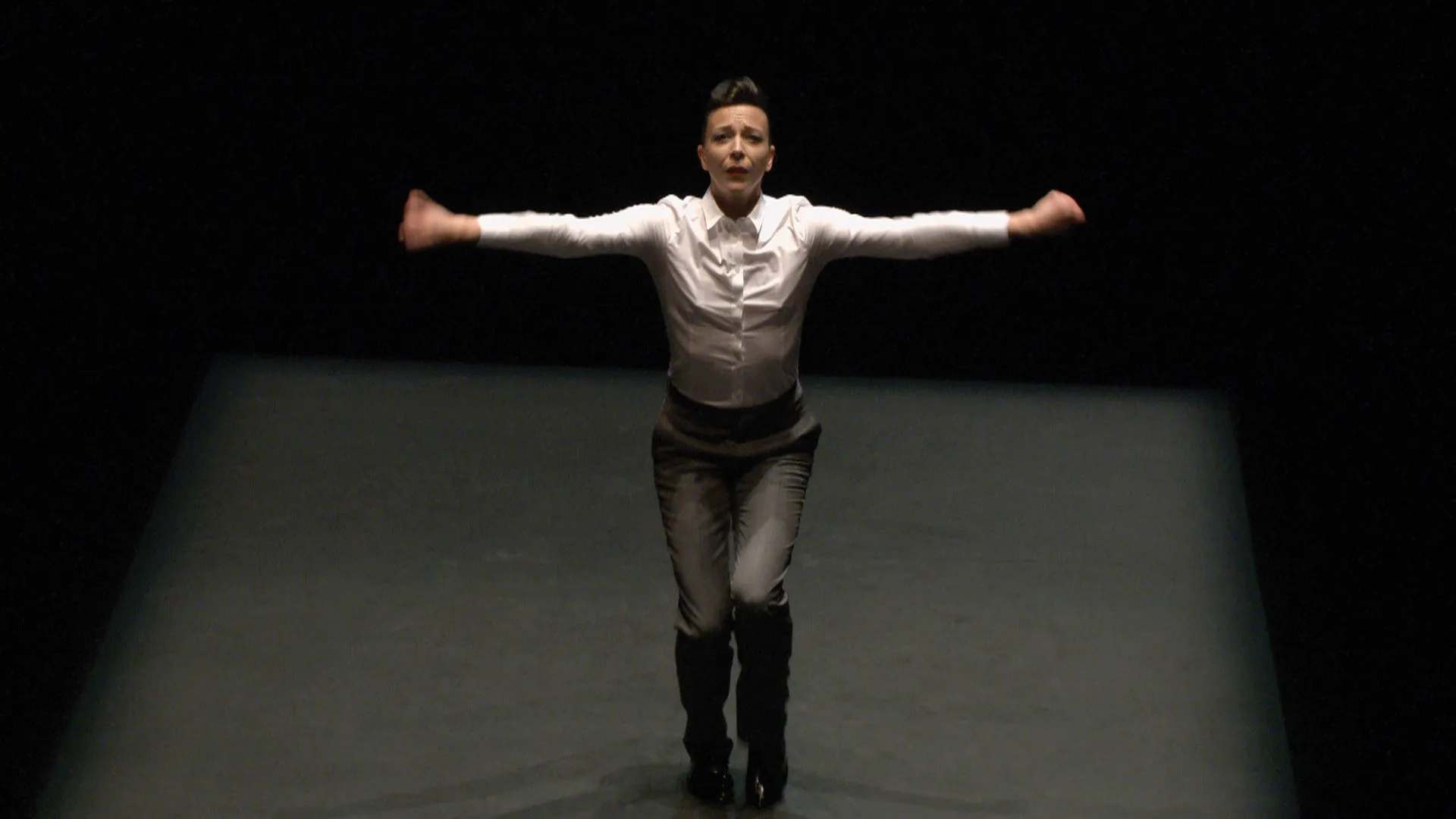
A speech can be a mighty weapon. Throughout the centuries it has enthused countless masses and mobilized them into action, for better or worse. It has unleashed revolutions and fueled wars. Such is the power of words. Belgian-based choreographer and dancer Lisbeth Gruwez transforms a recorded speech by ultraconservative American televangelist Jimmy Swaggart into a disturbing gesture and dance form. Her body juggles with words, makes syllables, shouts, stammers, horrifies, and fascinates. The piece deals less with the direct meanings of words and phrases and more with the violence that can lie in the rhetorical strategies of someone in a trance-like state.

Main Image: Video still: Lisbeth Gruwez, It’s going to get worse and worse and worse, my friend in Studio 1, 2013. 

Media
Image
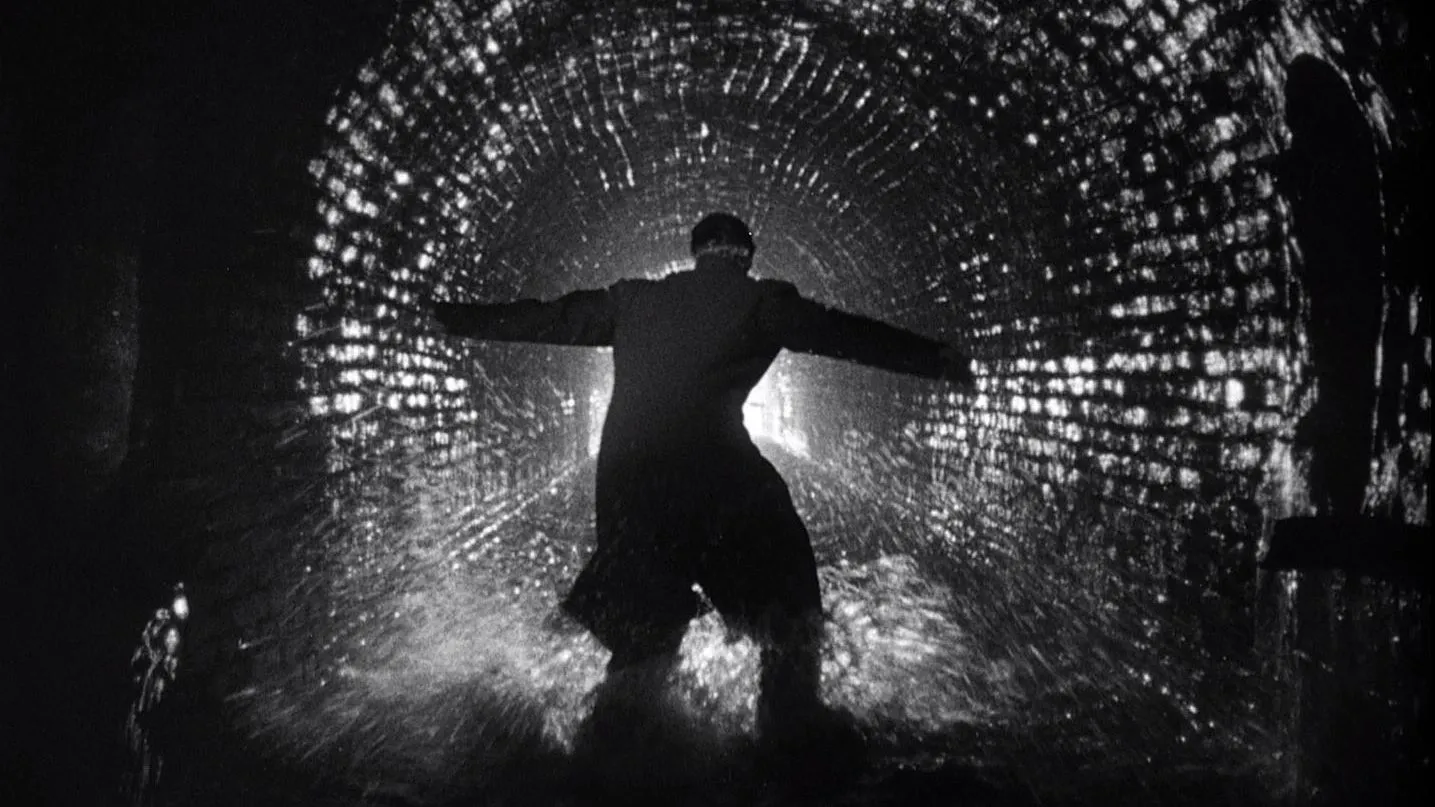
A man wearing a long coat with arms outstretched, touching each side of a cobblestone tunnel.

The Third Man

Directed by Carol Reed

Shrouded in darkness, Carol Reed’s classic film noir, The Third Man, follows pulp novelist Holly Martin as he unravels the circumstances behind his friend’s death in Vienna, a situation that increasingly resembles a plot from one of his own novels. Starring Joseph Cotten and Orson Welles, The Third Man won an Academy Award in 1951 for Robert Krasker’s lush cinematography. Hailed as one of the greatest British films ever made, The Third Man combines wit with a sense of existential crisis, which is visually reinforced through the film’s dramatic use of light and shadow.

Shadow Play is a series of films that tread nimbly between reality and illusion, acknowledging the artificial nature of cinema. Referencing the tradition of shadow puppetry, the origins of cinema in phantasmagoria, and Plato’s Allegory of the Cave, each film draws on the metaphors of light as reality and shadow as artifice. In Plato’s The Republic, the allegory of the cave illustrates the difference between truth and illusion. Many writers have noted that Allegory of the Cave (written c. 360 BCE), bears great resemblance to the contemporary movie theater.

Main Image: Film still from The Third Man (1949).

Image
Ursula Heise on stage in lecture.

Ursula Heise

The Beautiful Violent Futures of J.G. Ballard

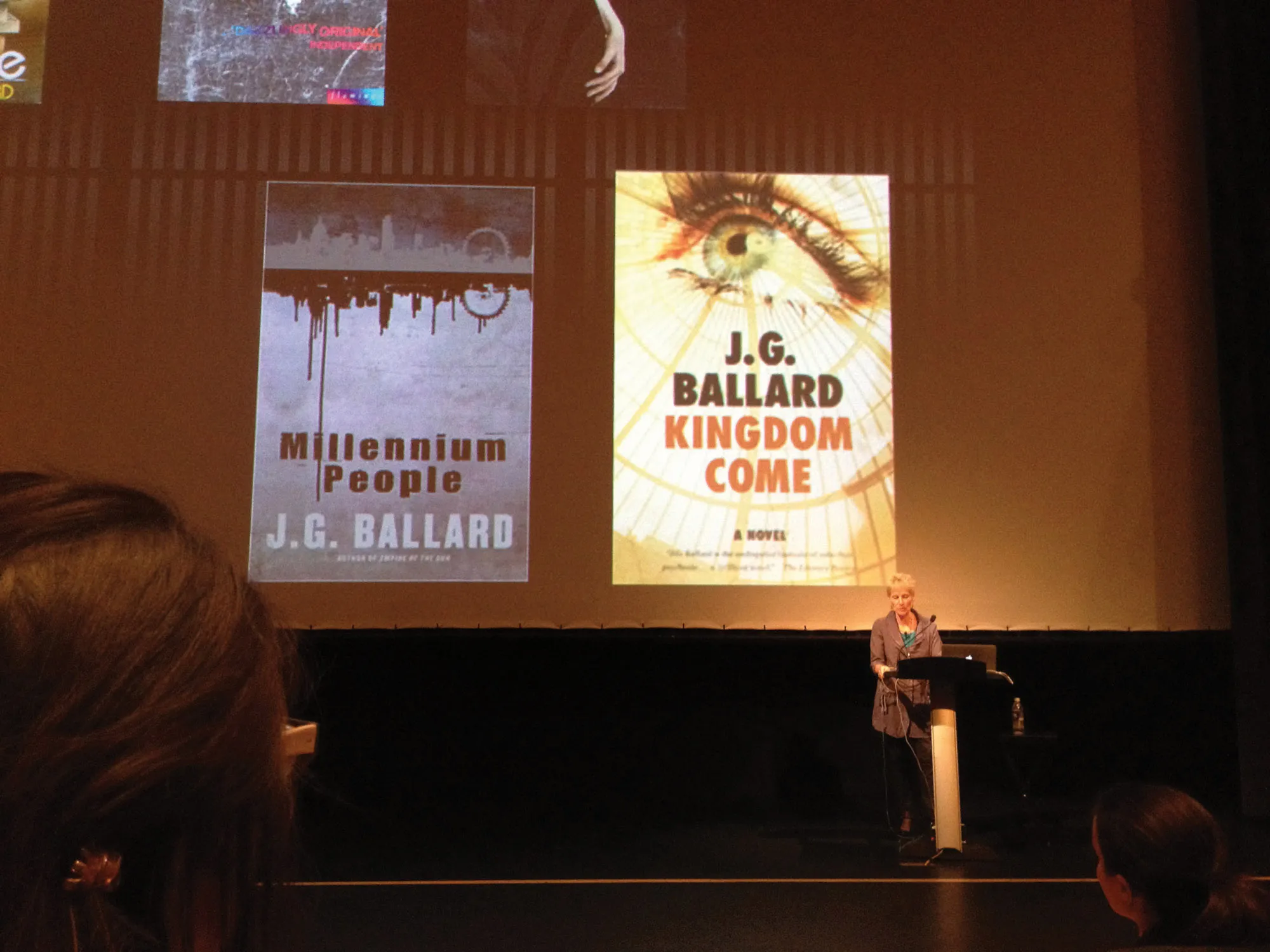
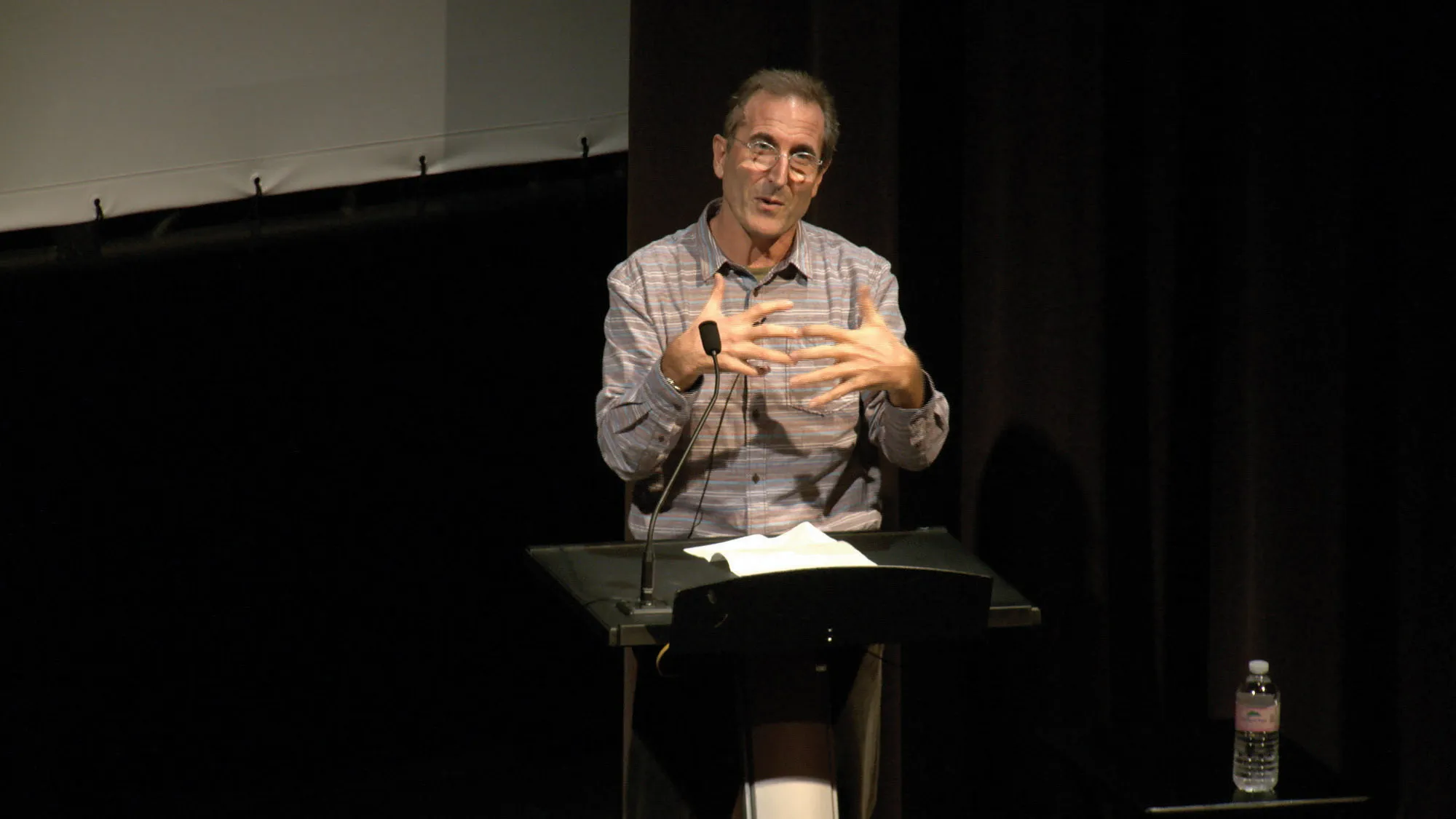
The novels and short stories of renowned English writer J.G. Ballard—author of Crash, Empire of the Sun, and The Atrocity Exhibition, among others—frequently depict scenes of violence through lyrical language. In this EMPAC-commissioned talk, Ursula Heise, professor of English at UCLA and founder of the Environmental Humanities Project at Stanford University, will recount examples of these violent scenes and reflect on the role the media plays in them. Heise will respond directly to Kris Verdonck’s new work, BALLARD, which can be experienced at EMPAC on September 7. She will consider what it means to transfigure these violent visions from words into an art installation.

Main Image: Ursula Heise on stage in the theater in 2013. Photo: EMPAC/Rensselaer.

Media
Image
Laurie Anderson wearing a black and white plaid shirt and orange vest speaking into a microphone.

Voices

Laurie Anderson

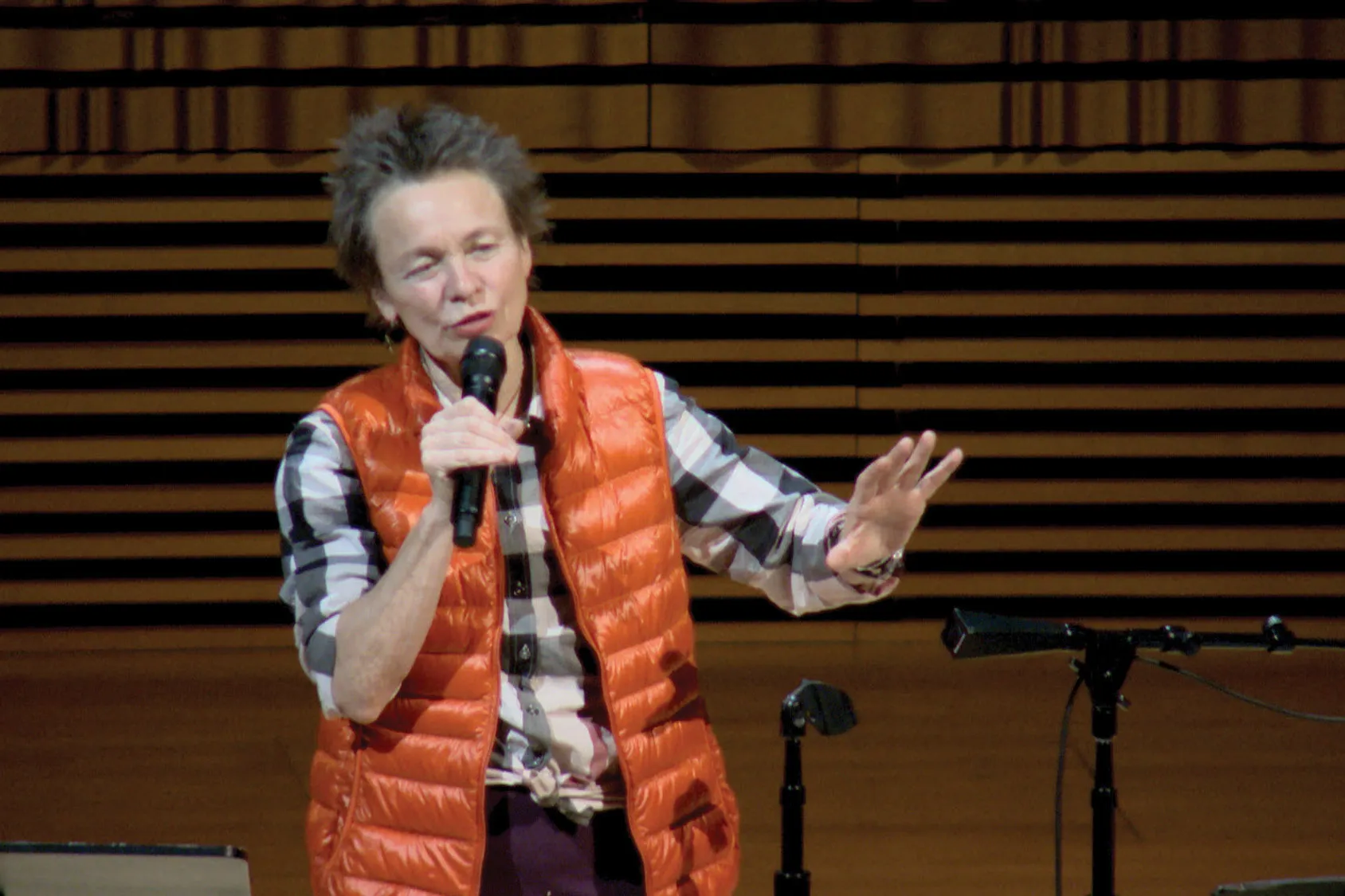
As one of America’s foremost contemporary artists; a persistent experimenter at the intersection of performance, media, and technology; and an inventor of tools and instruments, Laurie Anderson and EMPAC’s exceptional research and production environment for adventurous new work are an ideal match.

The residency provides Anderson with wide access to space, technology, and support for creative experimentation, but just as important, brings the artist into ongoing dialogue with students and faculty at Rensselaer.

Anderson’s voice being altered through electronics—creating her alter ego—is as much a part of her work as her singing, talking, and storytelling voices. This talk explored the many voices she created over the years.

One of America’s most renowned performance artists, Laurie Anderson’s genre-crossing work encompasses performance, film, music, installation, writing, photography, and sculpture. She is widely known for her multimedia presentations and musical recordings and has numerous major works to her credit, including United States I-V (1983), Empty Places (1990), Stories from the Nerve Bible (1993), Songs and Stories for Moby Dick (1999), and Life on a String (2001), among others. She has had countless collaborations with an array of artists, from Jonathan Demme and Brian Eno to Bill T. Jones and Peter Gabriel.

Anderson has invented several technological devices for use in her recordings and performance art shows, including voice filters, a tape-bow violin, and a talking stick. In 2002, she was appointed NASA’s first artist-in-residence, and she was also part of the team that created the opening ceremony for the 2004 Olympic Games in Athens. She has published six books, produced numerous videos, films, radio pieces, and original scores for dance and film. In 2007, she received the prestigious Dorothy and Lillian Gish Prize for her outstanding contribution to the arts. She lives in New York City.

Main Image: Laurie Anderson in the Concert Hall in 2013. Video Still: Ryan Jenkins/EMPAC.

Image
laurie Anderson

Art and Archive

Laurie Anderson

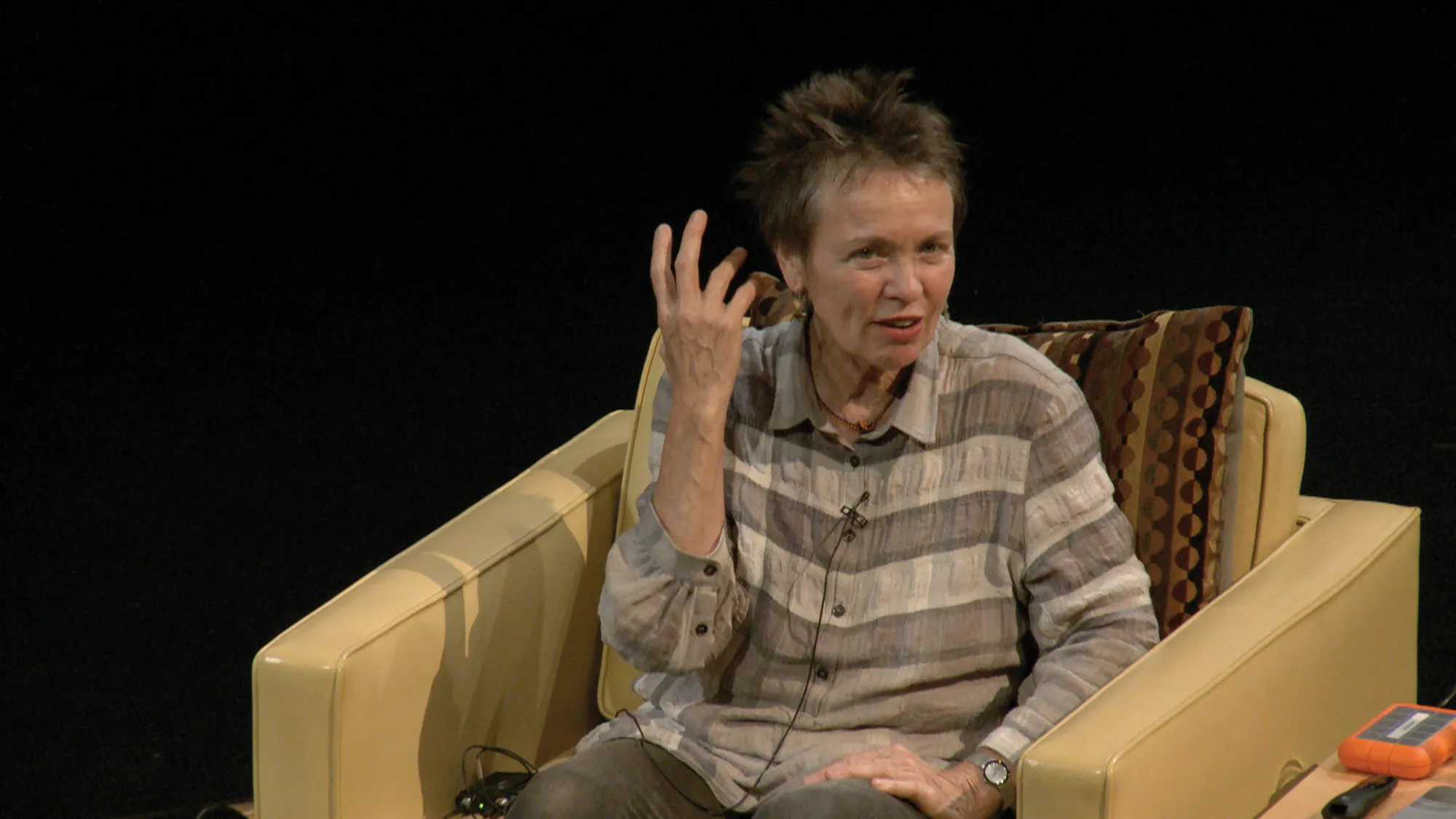
As one of America’s foremost contemporary artists; a persistent experimenter at the intersection of performance, media, and technology; and an inventor of tools and instruments, Laurie Anderson and EMPAC’s exceptional research and production environment for adventurous new work are an ideal match. The residency provides Anderson with wide access to space, technology, and support for creative experimentation, but just as important, brings the artist into ongoing dialogue with students and faculty at Rensselaer.

Through examples and an exchange with EMPAC Director Johannes Goebel, she will discuss the concrete steps she takes to archive her tapes, instruments, performances, texts, films, videos, drawings, sculptures, and media—intangible and tangible.

Image
Two screens projecting scratched images of human eyes to a seated audience in a black theater.

syn_

Ryoichi Kurokawa

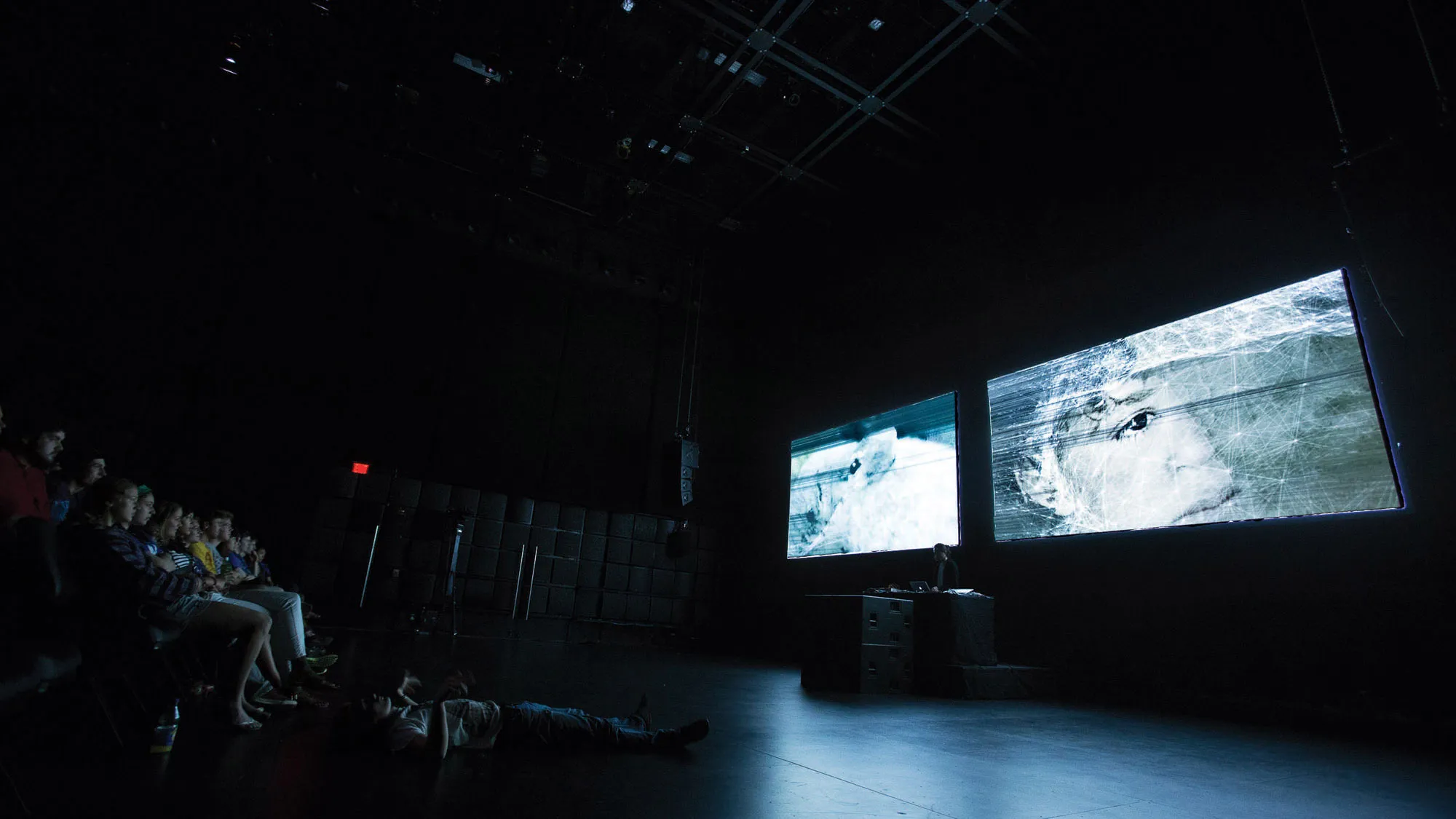
Ryoichi Kurokawa’s audiovisual work syn_ obscures familiar everyday imagery with vibrating, impossibly detailed geometric constel-
lations. Performed live on dual projection screens, his visuals were accompanied with clouds of sound that pulsed in accord to construct a sensory experience of overwhelming energy. 

Kurokawa’s works take multiple forms, including installations, recordings, and live performance. His audiovisual compositions bring visual and sonic materials together using a completely revolutionary perspective. His works have been shown at international festivals and museums including the Tate Modern (London), Venice Biennale, Transmediale (Berlin), and Sonar (Barcelona). In 2010, he was awarded the Golden Nica at Prix Ars Electronica in the Digital Music and Sound Art category. He lives and works in Berlin.

Main Image: syn_ in Studio 1, 2013. Photo: Mick Bello/EMPAC.

Media
Image
Randy Martin

Randy Martin

Dance and Finance—Social Kinesthetics and Derivative Logics

In this commissioned talk, New York University professor Randy Martin will link the movement of capital within financial markets to the history of dance.

Made in response to Bureau de l'APA’s La Jeune-Fille et la Mort, performed on October 12, Martin will draw parallels between choreographies of currency and bodily movement. Using the concept of the derivative as a key example, he will show how logics from financial markets inform social values and ultimately impact cultural production.

Main Image: Randy Martin on the theater stage in 2013. Video Still: EMPAC/Rensselaer.

Media