Image
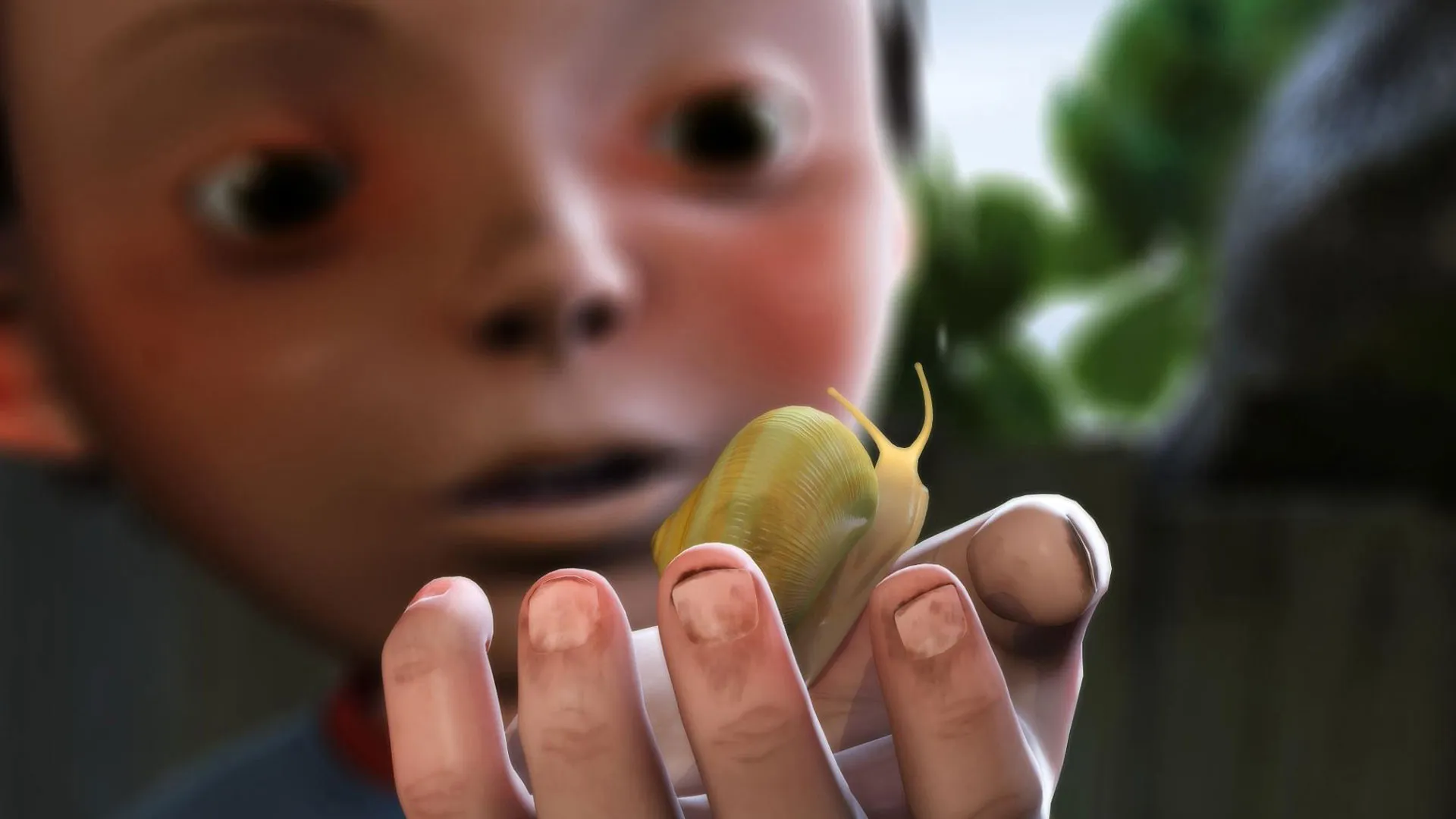
A CGI image of a young child holding a yellow snail up to the viewer.

sprites

onedotzero_adventures in motion

Evocative artist interpretations of an array of environments, real and imagined, from surreal urban worlds to the mutation of natural landscapes via architectural explorations highlighting our ever changing world.

  • philip hunt: lost and found / uk 2008 / 24:00
  • harduin, phrakornkham, bourgois, cabourg + vergne / miam! / france 2008 / 06:35
  • astereokid: galactic mail / uk 2008 / 04:50
  • pascal bideau: oona… sometimes flips out / uk 2008 / 02:14
  • lefebvre, tanon-chi, tardivier, vovau + walker: après la pluie [after the rain] / france 2008 / 02:58
  • clement crocq: machu picchu post / france 2008 / 05:35
  • desfretier, dufresne, kauffmann + laugero: bave circus / france 2008 / 04:50
  • guru studio: hazed / canada 2009 / 02:00
  • loubaresse, bouyer, cheriet + vivien: scoop volante [flying saucer] / france 2008 / 01:29
Tales from the Gimli Hospital: Reframed

Guy Maddin

Tales from the Gimli Hospital: Reframed paired Guy Maddin’s first feature film with a live performance of a newly-commissioned score by Matthew Patton, performed by a cast of Icelandic string musicians and vocalists including twin sisters Kristín Anna Valtýsdóttir and Gyða Valtýsdóttir (formerly of the band múm), Sigur Rós bandmates Amiina, Borgar Magnason, and more. A new narration, written by Maddin, was also performed live, accompanied by Foley sound effects (by Seattle’s Aono Jikken Ensemble) and live visuals created by electronics engineer Paul Corley. A cult sensation when it was released in 1988, Tales from the Gimli Hospital tells a dream-like, elliptical story of jealousy and madness instilled in two men sharing a hospital room in a remote Canadian village. In this new performance, the score takes the original film in an entirely new direction: layers of music mirror the film’s story-within-a-story structure and provides an ethereal quality that underscores the dark and haunting elements of the film.

Before the Beep

Kónic Thtr

Before the Beep examines how technology mediates interpersonal communication through a performance that could be experienced in person or remotely. During their residency, Kònic thtr developed and tested software to allow the public to participate in the performance using cell phones and the Internet. The result was a performance where a dancer interacts with information generated by the onsite audience (through cell phones) as well as text and audiovisual input from audience members via the Internet. Kònic thtr offered a work-in-progress performance of Before the Beep with excerpts of past works in performance, installation, and interactive technology.

Kònic thtr is an artistic platform based in Barcelona that is dedicated to contemporary creation at the confluence between arts, new technologies, and science.

Untitled-Epilog

Joanna Domke

Untitled-Epilog is a two-channel video installation that examines how media influences our view of other cultures, taking as a starting point an earlier piece by Domke where intercultural collaboration failed. The residency consisted of production and post-production on a series of video interviews (partly documentary and partly scripted) with the participants of the former project. Shifting between various layers of representation—the documentary and the staged—the protagonists move within a neutral, culturally undefined space: a film studio, and later on, a cinema. Reality and representation are interlocked as filmed interviews are later projected in the cinema, playing with the idea of “cultural projection” and commenting on how media industry shapes the image we have of other cultures.

Johanna Domke was educated in fine arts in Denmark and Sweden; her work crosses between art and cinema with both a structural and socio-political approach. She is concerned with how images influence the course of history, the creation of meaning, and the shaping of identity.

Forty-Nine Days in the Bardo

Laurie Anderson

Laurie Anderson worked in residence on Forty-Nine Days in the Bardo, a multimedia installation that was presented at The Fabric Workshop and Museum in Philadelphia. Using the structure of a diary and inspired by The Tibetan Book of the Dead, the installation explored the themes of love and death, the many levels of dreaming, and illusion. The work included texts as well as drawings, sculptures, projections, and sound made from materials including mud, foil, iron, chalk, and ashes. According to Anderson, “In The Tibetan Book of the Dead, also known as The Great Liberation Through Hearing in the Bardo, the bardo is described as the 49 day period between death and rebirth. The book is a detailed description of the way the mind dissolves and what the spirit experiences in this transition. In April 2011, Lolabelle, my small rat terrier died after a long illness. For 12 years she had been my constant and faithful companion. Counting the 49 days from Lolabelle’s death I realized according to The Tibetan Book of the Dead Lolabelle would be reborn on June 5, my birthday.”

Laurie Anderson, EMPAC’s inaugural distinguished artist-in-residence, presented a series of events focusing on topics unique to her practice as an artist.

The Syphilis of Sisyphus

Mary Reid Kelley

Mary Reid Kelley used her residency at EMPAC to produce The Syphilis of Sisyphus, a black-and-white, 11-minute video in which she plays a young, pregnant, 19th-century French grisette (or bohemian) named Sisyphus. She wanders through an elaborately designed set, waxingphilosophically in metered, rhyming verse about beauty, artifice, and the natural world. Jesus, Karl Marx, and Diderot are among figures of intellectual history that appear in this satire. Performing scripted narratives in rhyming verse, the artist—with her husband Patrick Kelley and various family members—explores historical periods through fictitious characters such as nurses, soldiers, and prostitutes. The piece was later included in season six of the PBS series Art in the Twenty-First Century (Art21) and released on DVD.

Kelley’s videos and drawings present her take on the clash between utopian ideologies and the realities of women’s lives in the struggle for liberation and through political strife, wars, and other historical events.

4Walls

Ralph Lemon

Over the course of three visits to EMPAC, Ralph Lemon worked on post-production on the video component of 4Walls, a multimedia installation with live performance that provides four points of view on one dance—entitled Wall—that was the central section of Lemon’s 2010 stage work How Can You Stay in the House All Day and Not Go Anywhere? Lemon’s intention for Wall was to create a “dance that disappears,” and which dramaturge Katherine Profeta characterized as an effort to “fling the body headlong into an instant of pure presence.” 4Walls was a collaboration between Lemon and videographer/editor Shoko Letton and video editor Mike Taylor, using months of footage from the development of Wall to create a film that would provide viewers with a different kind of engagement in a creative process, one that is relentless in its questioning of the nature of what passes between performers and audiences.

MIRIAM

Nora Chipaumire

Choreographer and dancer Nora Chipaumire used her research and writing residency at EMPAC to develop her first character-driven work (in collaboration with Okwui Okpokwasili). MIRIAM is a deeply personal dance-theater performance that looks closely at the tensions women face between public expectations and private desires; between selflessness and ambition; and between the perfection and sacrifice of the feminine ideal. The inspiration for the work springs from the cultural and political milieu of Chipaumire’s southern African girlhood, her self-exile to the US, and her self-discovery as an artist.

Born in Zimbabwe and based in New York City, Chipaumire has studied dance in many parts of the world including Africa (Senegal, Burkina Faso, Kenya, and South Africa), Cuba, Jamaica, and the US. She was a 2012 Alpert Award in the Arts recipient and 2011 United States Artist Ford Fellow; and a two-time New York Dance and Performance (“Bessie”) awardee.

The White Room

Francis Farewell Starlite

Singer, songwriter, and paradoxical pop icon, Francis Farewell Starlite was in residence to create a new pop music spectacle commissioned by EMPAC—The White Room. The title references the small, white, environmentally controlled chamber used by NASA astronauts to make final preparations before entering the spacecraft. Starlite began developing and composing a piece that would involve extensive stage and lighting design, a steadicam operator, and a highly choreographed experience for two nights: the first for a live audience, and the second streamed online from an empty performance space.

Starlite’s background as a virtuoso jazz pianist and commitment to a disciplined, and sometimes spectacular, performance aesthetic offers an expansive view of popular culture. For several years Starlite only performed at a space in downtown Brooklyn that he had built for his band; The White Room was an opportunity to document this area of his practice.