Image
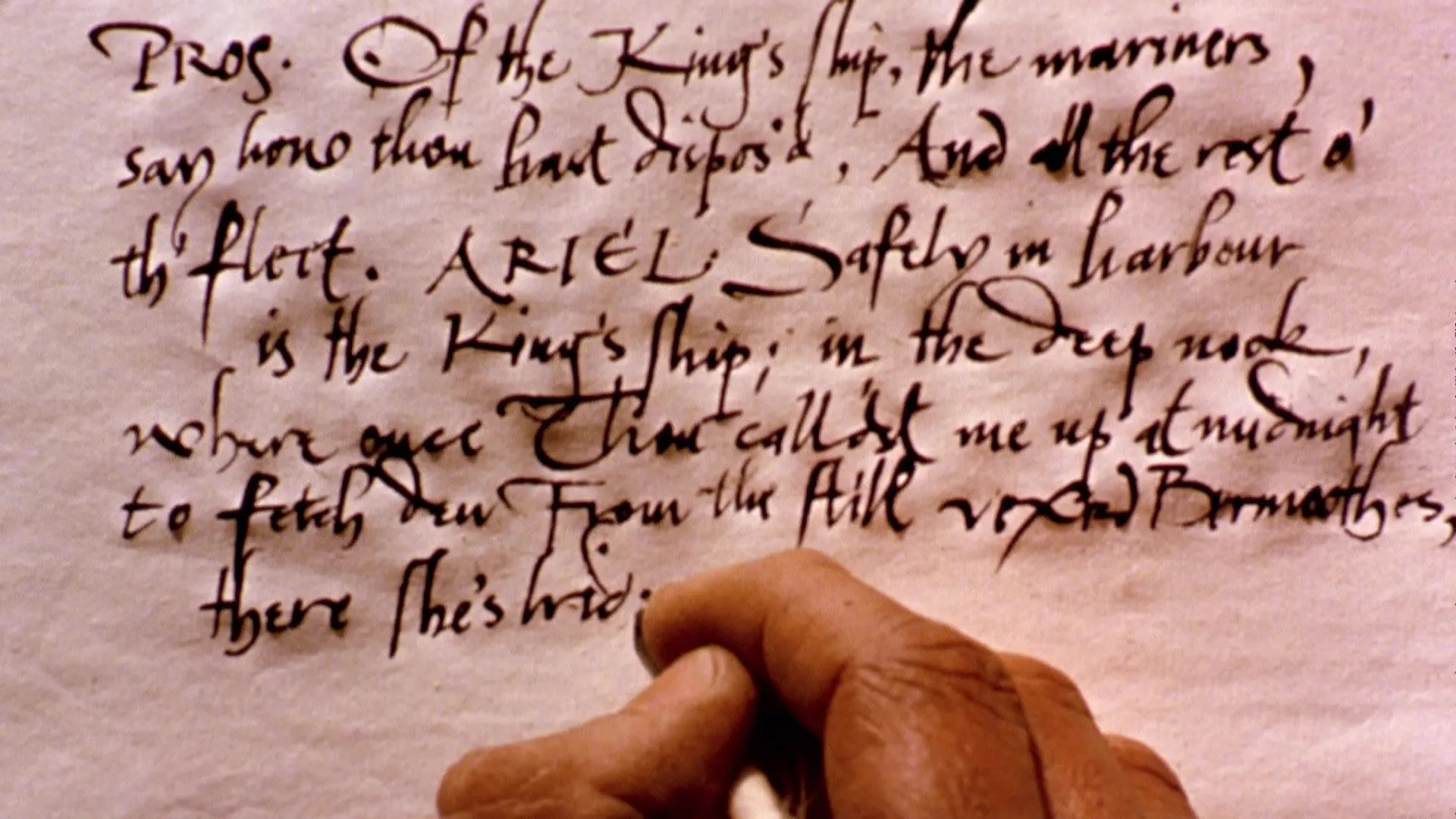
A hand writing with quill and ink on parchment in an old English style of cursive.

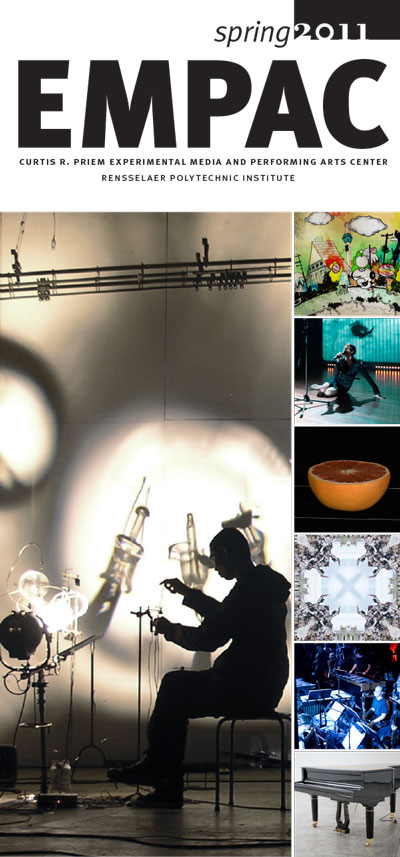
Prospero’s Books

Directed by Peter Greenaway

Prospero's Books, Peter Greenaway's celebrated cinematic adaptation of Shakespeare's The Tempest, interweaves dance, opera, and mime into its narrative. A palimpsest of filmed and animated images, Prospero's Books, starring John Gielgud as Prospero, the former duke of Milan who was exiled with 24 of his books, was a pioneering work in the digital manipulation of the cinematic image.

Warning: this film contains nudity and may not be suitable for some audiences.

Cinematic Chimera presents works that strive for a radical synthesis of artistic genres, reviving the notion of the Gesamtkunstwerk, or total artwork. United by their integration of theater, dance, music, architecture, literature, and visual art, these films also realize the Gesamtkustwerk’s technological imperative by making use of advanced cinematic techniques.

Main Image: Film still from Prospero's Books (1991).
The Gray Rabbit

Laurie Anderson

Anderson used this research and development residency for The Gray Rabbit, an autobiographical video installation where the artist explores her memories of a pivotal childhood event—a summer she spent in the hospital—realizing that what she remembers and what she recounts to people is a palatable, “cleansed” version of the tale. For Anderson, creating the work was a way to examine the mechanism of telling a story, and in particular how to transfer a story that was in her head into a museum gallery: how to put the story into places. Dreamlike and heavily processed images that evoke scenes from Anderson’s childhood story are projected onto an iconic landscape of a town made of shredded paper. The result is a shimmering sidewalk of imagery that has the motion of narrative without its literalness. Anderson has said that she wants her art to “ . . . evoke a reaction more than explain anything clearly.”

Laurie Anderson, EMPAC’s inaugural distinguished artist-in-residence, presented a series of events focusing on topics unique to her practice as an artist.

Image
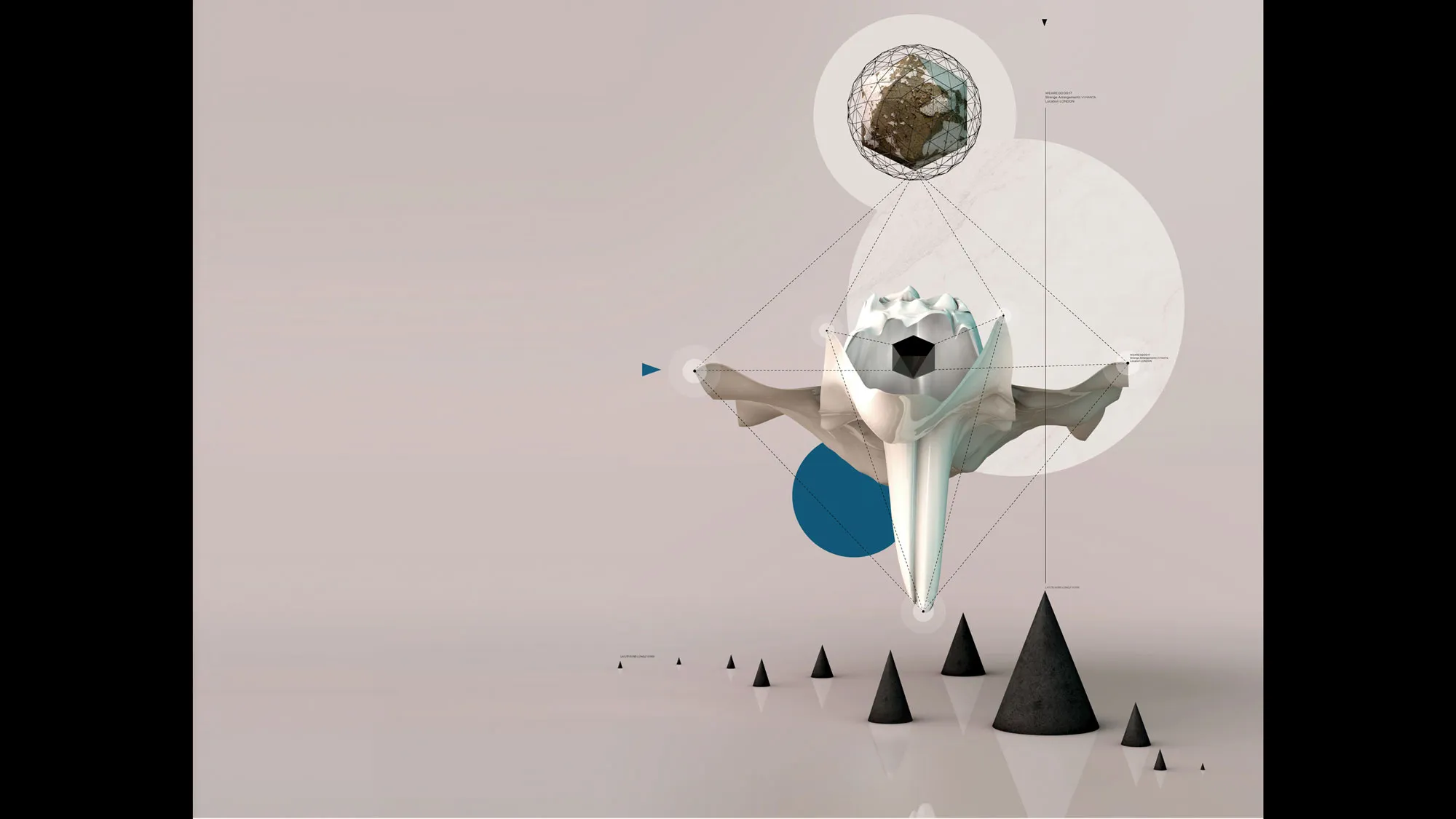
Abstract computer generated illustration of an organic white bone shape hovering over a serious of black cones on a pink background.

wow+flutter + wavelength

onedotzero

As we gear up for next season’s onedotzero_adventures in motion festival, two nights of double feature screenings will be presented from the international touring festival which premiered in London in 2010. Curated and compiled by onedotzero, all programs explore new forms and hybrids of moving image across motion graphics, short film, animation, music videos, and more.

wow + flutter 10

Sharing the most innovative and surprising new work across motion graphics, character design, typography, and animation from fresh talent and celebrated masters who blur and explode traditional notions of what moving image can be. This international selection comes from a program now synonymous with forecasting the future of moving image.

wavelength 10

Serving up radical new takes in music video—a genre that continues to act as a playground where new directors and musicians make their mark. Recent classics by critically acclaimed directors are showcased alongside witty lo-fi promos from up-and-coming talent.

Main Image: WOW + FLUTTER 10.

To Many Men Strange Fates Are Given

Brent Green

To Many Men Strange Fates Are Given is a trip through a storyland where a woman sews a spacesuit for a Russian dog astronaut and working-class people search for the meaning of their lives as they ride the tidal waves of technological invention. Green’s animation is characterized by familiar elements from this self-taught artist’s previous work—hand-drawn images and wry, off-kilter storytelling—while Green’s poetic narration ultimately becomes a lament for the disenfranchisement of working people then and now. This theme connects to his past protagonists: commonplace people who face toil and hardship, and sometimes, redemption and wonder. Working in residence, Green and collaborators developed an installation consisting of a welded metal frame that holds wooden phonograph horns, multiple planes of polarized glass, and brightly glowing LCD screens that emulate a multiplane camera used in classic animation films. Green often performs his films with live musicians, improvised soundtracks, and live narration in venues ranging from rooftops to art institutions such as the Getty Center, the Walker Art Center, the Hammer Museum, the Wexner Center for the Arts, The Kitchen, and MoMA. He lives and works in the Appalachian hills of Pennsylvania.

Moments in Motion 2

Marlene Millar and Phillip Szporer

In 2004, Marlene Millar and Philip Szporer made a documentary, Moments in Motion, that followed the creative lives of seven Canadian choreographers from diverse cultures and backgrounds: Natasha Bakht from Ottawa, Byron Chief-Moon from Lethbridge, Day Helesic from Vancouver, Hinda Essadiqi and Audrey Lehouillier, both from Montréal, Malgorzata Nowacka from Toronto, Sarah Stoker from St. John’s. The film used cinéma-vérité depictions of their communities, studios, and homes to capture the essence of their day-to-day worlds, as well as dance sequences to reveal their creative process. Working in residence, Millar and Szporer considered a new phase of this project that would use both video and the web in a multi-platform documentary series.

Millar and Szporer founded Mouvement Perpétuel, a Montréal-based media production company specializing in arts programming, in 2001.

Image
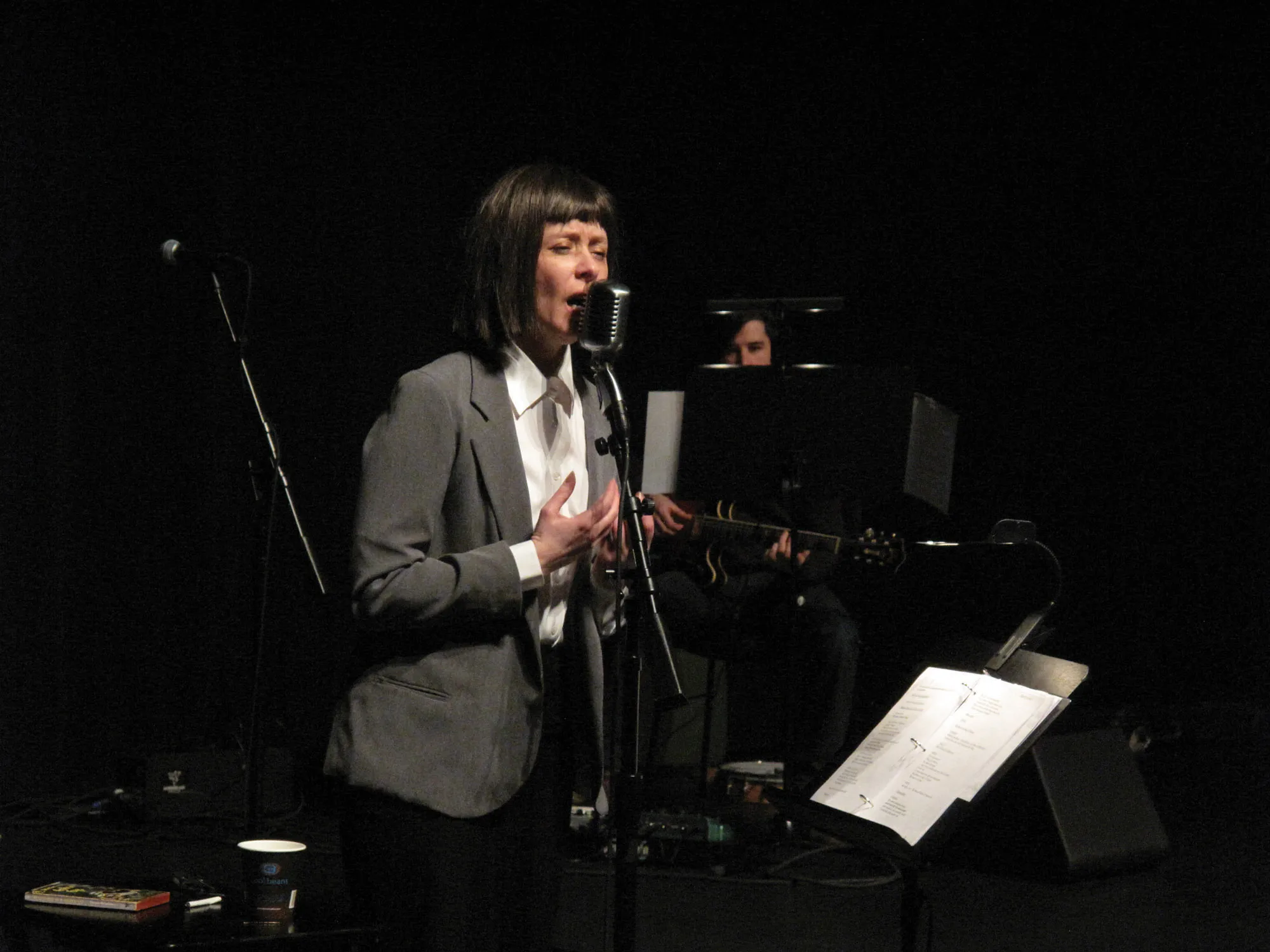
A women in a gray blazer and white collared shirt singing into a microphone.

Carson McCullers Sings About Love

Suzanne Vega, Duncan Sheik, and Kay Matschullat

Singer/songwriter Suzanne Vega, composer Duncan Sheik and director Kay Matschullat are in residence at EMPAC in January to explore the sound challenges provided by a music-theater piece that combines songs with conversation. Designers Louisa Thompson and Lenore Doxsee will also work with the director to experiment with set and light elements, creating a piece that floats in time and moves between forms. The informal work-in-progress showing will include songs and text from the show, with a chance for discussion with the artists. In Carson McCullers Sings About Love, Suzanne Vega, in the role of Southern writer Carson McCullers, presents her theory of love, divulging the secrets of the human heart. McCullers often repeated “Nothing human is alien to me” – a quote from the ancient Roman playwright Terence; her own story, as well as the stories of her characters, run the gamut from touching to terrifying. As she speaks and sings her way through this labyrinth of love, we experience the comedic Carson, the pained Carson and the provocateur she became. Accompanied by a guitarist and pianist who also take on characters, Vega moves seamlessly from spoken word to song and back again. She channels McCullers in a way that reveals the meeting of two souls through a work of art. Carson McCullers Sings About Love will premier at New York’s Rattlestick Theater, David Van Asselt, Artistic Director, in April of 2011.

Main Image: Photo: Travis Cano

Carson McCullers Sings About Love

Suzanne Vega and Duncan Sheik & Kay Matschullat

Singer/songwriter Suzanne Vega, composer Duncan Sheik, and director Kay Matschullat were in residence at EMPAC to work on a music theater piece that combined songs with conversation. Designers Louisa Thompson and Lenore Doxsee also worked with the director on set and light elements, creating a piece that floats in time and moves between forms. An informal work-in-progress showing included songs and text from the piece followed by a discussion with the artists. Moving from spoken word to song and back again, Vega took on the role of Carson McCullers, who often quoted the ancient Roman playwright Terence: “Nothing human is alien to me.” Accompanied by a guitarist and pianist who also portrayed characters from the author’s work, Vega revealed various facets of the Southern writer: comic, pained, and provocative.

Vega is a renowned singer-songwriter; Duncan Sheik’s theater credits include Spring Awakening; and Kay Matschullat directed the world premiere of Prize-wining Derek Walcott’s To Die For Grenada, the world premiere of Ariel Dorfman’s Widows, and the English language premiere of Vaclav Havel’s The Conspirators, among other works.

Image
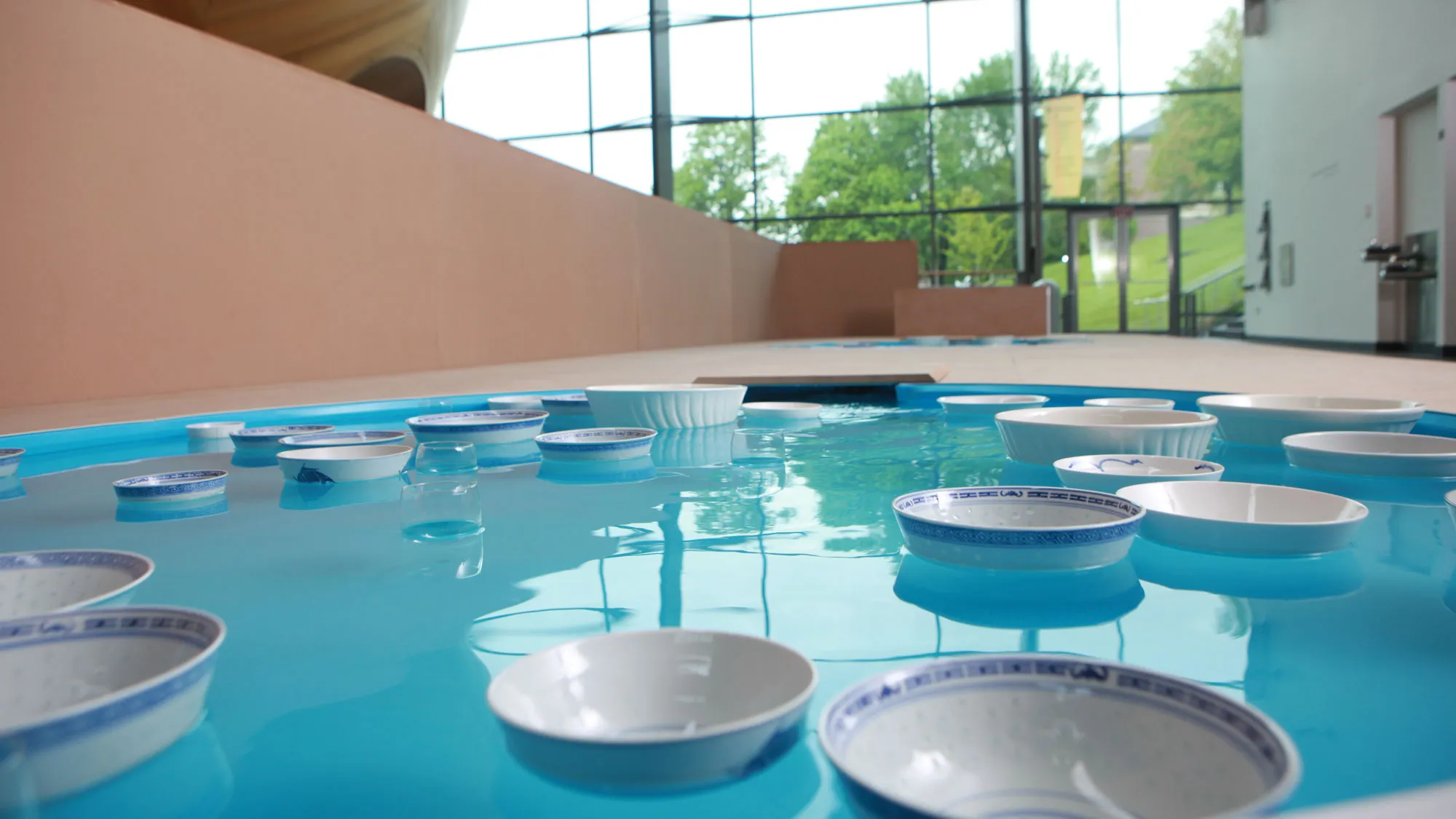
Numerous blue and white porcelain bowls floating in a blue pool on the mezzanine the interior of EMPAC.

untitled + index

Céleste Boursier-Mougenot

French artist Céleste Boursier-Mougenot developed two sound installations while in residence—untitled (Series #3) and index (v.4)—which were then presented as a single exhibition over three floors in EMPAC’s public spaces. Together, the pieces reflect on music composition’s relation to nature and technology as well as our perception of complexity, control, and authorship in time-based art. untitled (Series #3) was comprised of three wading pools filled with bowls and wine glasses; by calibrating the temperature of the water to increase the resonance of the floating objects, and by controlling the direction of the water flow with a small pump, ongoing, resonant collisions are created. The result is a chaotic, atmospheric music with a variety of small sounds surrounding the listener. For index (v.4) software designed by the artist was installed on computers throughout EMPAC, capturing typed letters, words, and punctuation into dynamics, pitch, and chords played by two mechanically actuated grand pianos. The real-time data stream became the chaotic generator of an ongoing score, in constant performance. Like untitled, this work conflated empirical, technological gestures with chaotic “natural” elements. 

A native of France, Boursier-Mougenot’s works have been exhibited worldwide.

Main Image: Installation view untitled (Series #3) on the mezzanine in 2011. Photo: Kris Qua/EMPAC.

Media
Image
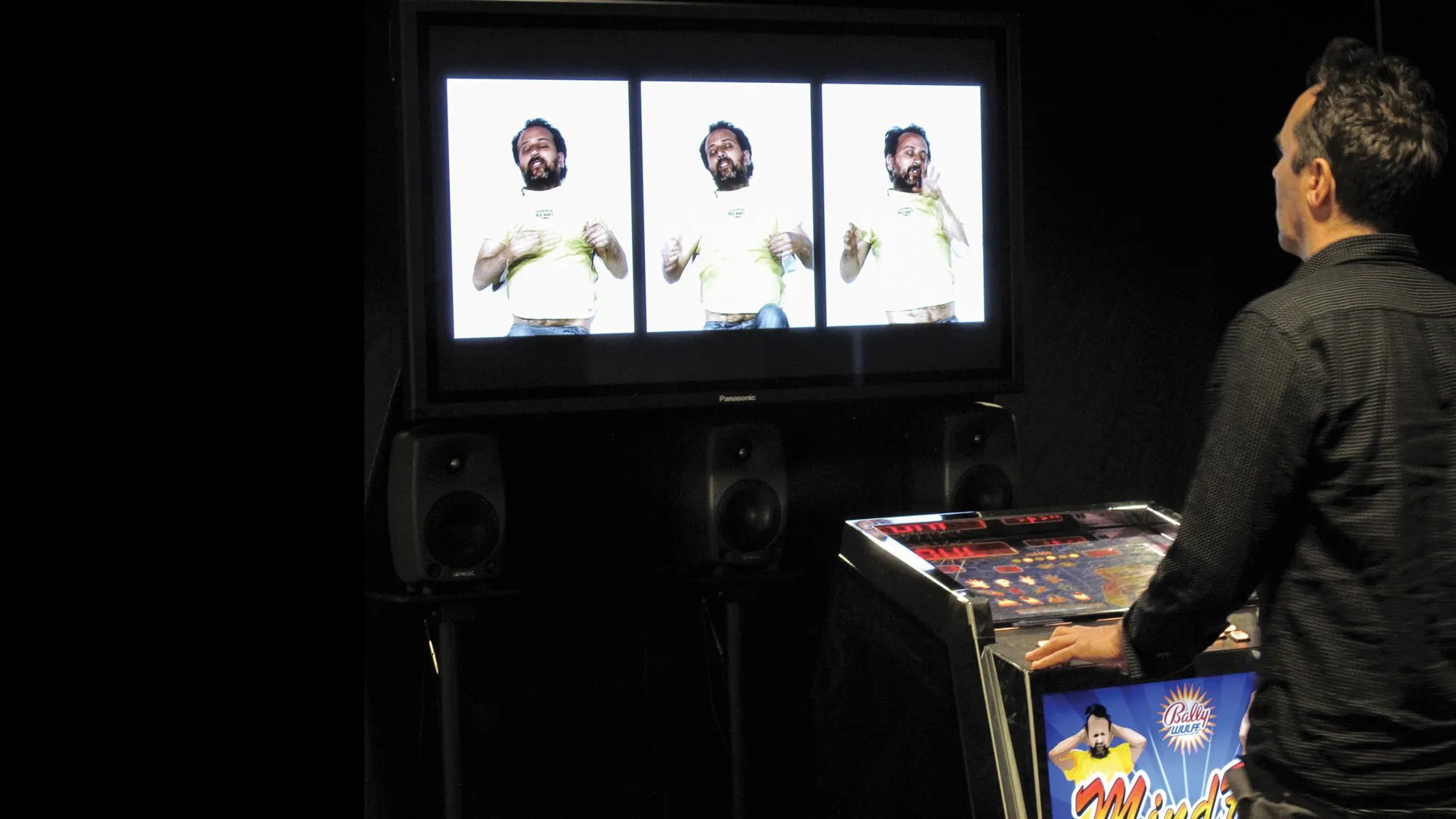
A man playing a pinball machine in front of three projected images of another man in various states of motion.

Christian Graupner

MindBox

Using a modified one-armed bandit slot machine, MindBox is a viewer-driven dance video: insert a coin, work the machine’s lever and buttons, and directly remix the moves of the beatboxing man on three screens. Media artist Christian Graupner and choreographer Roberto Zappalà teamed up to make a vocabulary of sounds and movements that take beatboxing—a vocal percussion style that comes out of hip-hop—into the realm of interactive media. The soundtrack takes advantage of both the randomized real-time processes of slot machines and Zappalà’s rhythmic, beat-based performance. As lights flash, the viewer plays this media sculpture like an instrument, creating an idiosyncratic movement portrait.

Graupner is a Berlin-based artist, film composer, and the creator and developer of real-time media playback systems. Zappalà founded the Compagnia Zappalà Danza to widen and deepen his own research in choreography while extending the possibilities for the training of young contemporary dancers. The technology was developed by Nils Peters (Humatic) and Norbert Schnell (IRCAM).

Main Image: Installation view: Mindbox, 2011. Photo: EMPAC/Rensselaer.