Image
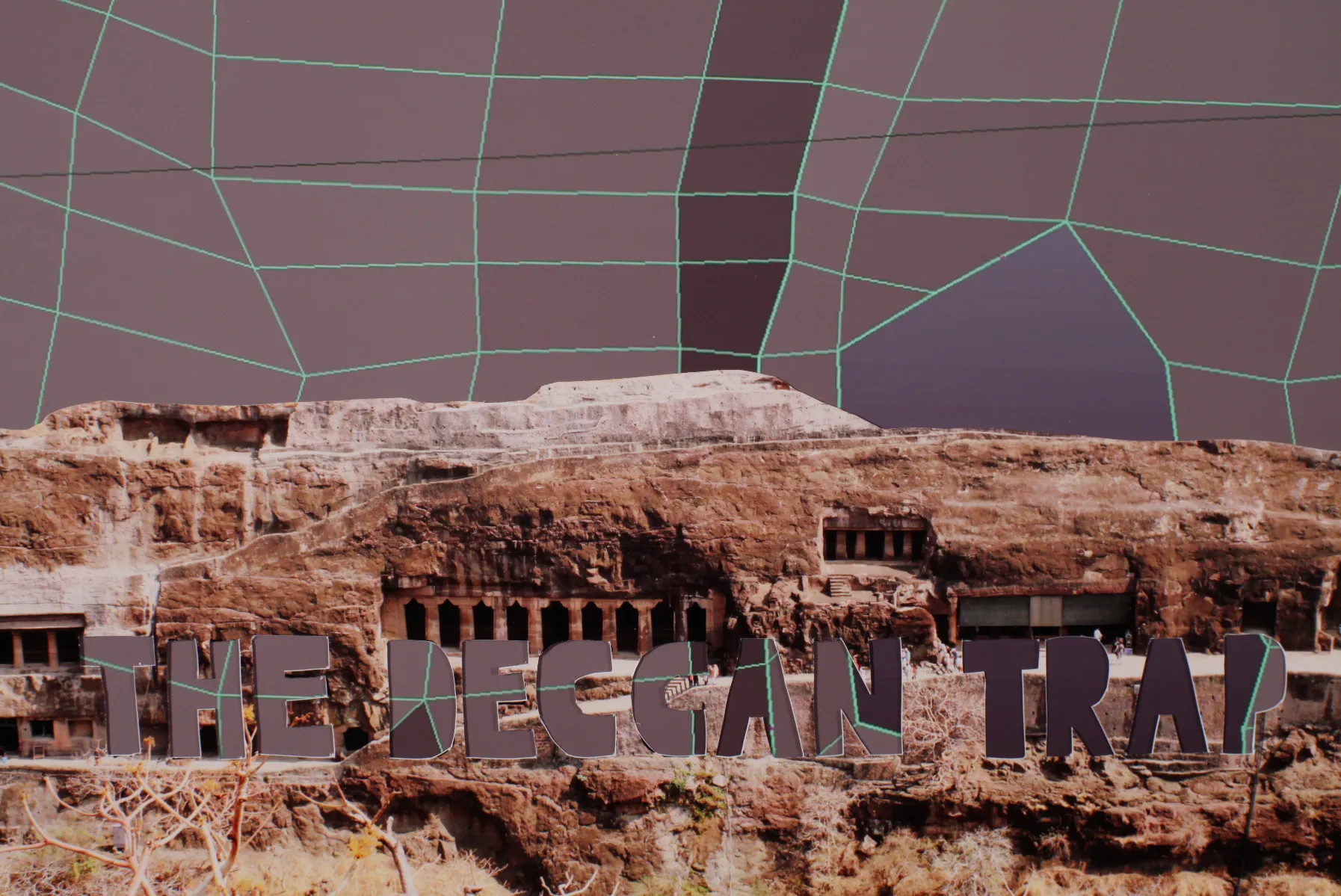
The Deccan Trap in blocky font in a desert scene

On Screen/Sound: No. 12

Charles Atlas / Ephraim Asili / Christian Marclay / Lucy Raven / Godfrey Reggio

On Screen/Sound: No. 12 gets speechless with a selection of 
films that work in sound and image but without the use of words. From a dance-film to a live video score, the evening culminates in a cult classic featuring meditative imagery and washes of sound.
 
A montage of things making sound (but without the sound), Fade to Slide by Christian Marclay is an audio-visual work designed to be performed like a score. This version features NYC-based ensemble Bang on a Can All-Stars, who make the sound to fill in the space.
 
Filmed on site in EMPAC's Studio 1, What does unstable time even mean?, by American artist Charles Atlas, finds two dancers in an otherworldly scene of smoke and light, encircled by an unknown observer.

Filmed on location in Salvador, Brazil and Harlem, New York, Ephraim Asili’s Many Thousands Gone draws parallels between a summer afternoon on the streets of the two cities. A silent version of the film was given to jazz multi-instrumentalist Joe McPhee and “sight read” in real time to create the score.

Composed from a series of photographic collages, The Deccan Trap follows Lucy Raven’s multi-year research into how stereoscopic 3D images are made. The short video charts the artist's journey from the myriad Hollywood post-production studios based across the world—in India, China, Canada, and the UK—to India’s ancient bas-reliefs, while Paul Corley’s score traces the same terrain, both dramatizing and exposing the circulatory routes of 3D filmmaking.

Called “an impressive visual and listening experience” by critic Roger Ebert, Godfrey Reggio’s 1983 film Koyaanisqatsi is one of the classics of epic image-oriented documentaries. Translated from Hopi as “Life out of balance,” Koyaanisqatsi contrasts the brutality of the man-made world with the expansiveness of nature, stimulating the audience to question their own position in the world. Interwoven with a swirling score by Phillip Glass, Koyaanisqatsi is as much an experience as it is a film.

PROGRAM
  • Koyaanisqatsi: Life Out of Balance (1982) Godfrey Reggio / Music: Philip Glass
  • 


What does unstable time even mean?


 (2015) Charles Atlas / Music: Eric Holm
  • 


Many Thousands Gone


 (2015) Ephraim Asili / Music: Joe McPhee
  • 


The Deccan Trap (2015) Lucy Raven / Music: Paul Corley
  • 


Fade to Slide


 (2015) Christian Marclay / Music: Bang on a Can All-Stars
  • Approximate runtime: 107 minutes

This year-long film series takes a close look at—and listen to—the way filmmakers have employed the sonic dimension of their form to complement, challenge, and reconsider our experience of the moving image.

Presenting cinematic performance, artists’ moving image, and Hollywood feature films, each On Screen/Sound program delves into the relationship between movie sound and image tracks, highlighting some radical examples of the aesthetic power and technical potential of sound in cinema. From musical theater to the music video, experimental shorts to industrially produced features, the series explores the affective and technical relationship between sound and image through the art of Foley, experimental music, found footage, soundtrack imaging, synched, multi-channel, and non-diegetic sound.

Main Image: Video still of Lucy Raven's The Deccan Trap (2015). Courtesy the artist.


Media
Image
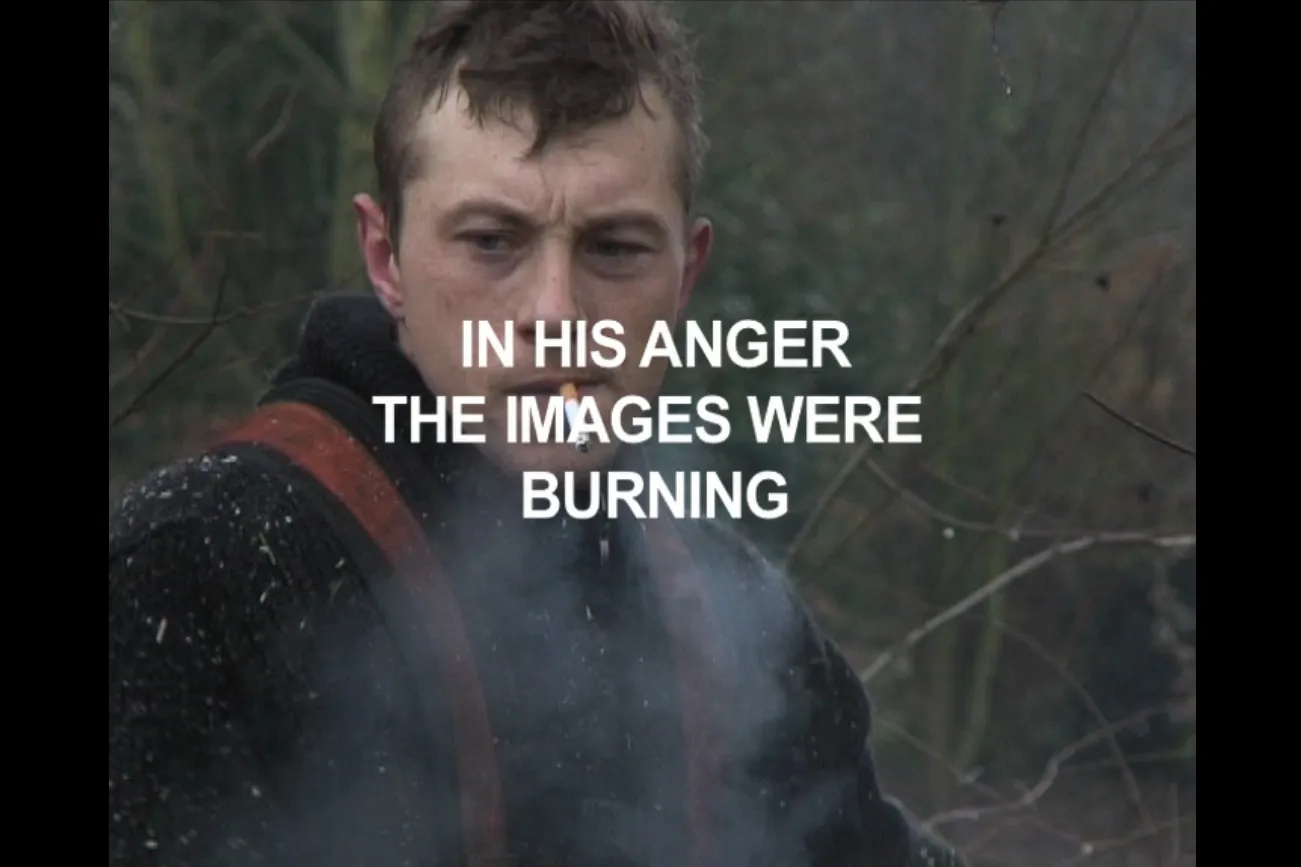
A man in the woods with a cigarette hanging from his mouth with white text over his face reading "in her mind the images were burning".

On Screen/Sound: No. 11

Tony Cokes / Alexander Kluge / Sara Magenheimer / Laure Prouvost

The 11th episode of the On Screen/Sound series presents a selection of films and videos that play with the relationship between textual and spoken language. Laure Prouvost, Sara Magenheimer, Tony Cokes, and Alexander Kluge all make videos that combine spoken and written language, focusing on the slippage of meaning and description as material and subject matter.

Prouvost’s It Heat Hit is a speedy cascade of images and words, featuring a seemingly autobiographical voice-over by the artist that is characteristic of the misuse and appropriation of English as her second language.

Magenheimer’s Slow Zoom Long Pause meanwhile analyzes language as a patriarchal structure and explores how gender roles are embedded and articulated, encouraging the audience to listen rather than simply observe.

Tony Cokes’ 3# Manifesto A Track #1 eschews both voice and realistic images. The animation uses a series of text and graphic transitions, edited to an upbeat electronic song by Seth Price. Through quotations, philosophical statements, and Morrisey lyrics, Cokes mocks the pop industry’s reliance on marketing to expose the underlying ideologies of representation in the media.

Inspired by early silent cinema, Alexander Kluge is well known for his regular use of the intertitle, and his 1971 sci-fi feature Der Grosse Verhau (The Big Mess) is a case in point. Engaging and humorous, but often deliberately fractured and poetic, Kluge’s film bombards us with loose, collagist associations of words and images in the story of two astronauts trying to make a living in a solar system controlled by corporate interest in 2035.

PROGRAM:
  • It Heat Hit (2010) Laure Prouvost
  • 3# Manifesto A Track #1 (2001) Tony Cokes
  • Slow Zoom Long Pause (2015) Sara Magenheimer
  • Der Grosse Verhau (The Big Mess) (1971) Alexander Kluge
  • Approximate runtime: 110 minutes

This year-long film series takes a close look at—and listen to—the way filmmakers have employed the sonic dimension of their form to complement, challenge, and reconsider our experience of the moving image.

Presenting cinematic performance, artists’ moving image, and Hollywood feature films, each On Screen/Sound program delves into the relationship between movie sound and image tracks, highlighting some radical examples of the aesthetic power and technical potential of sound in cinema. From musical theater to the music video, experimental shorts to industrially produced features, the series explores the affective and technical relationship between sound and image through the art of Foley, experimental music, found footage, soundtrack imaging, synched, multi-channel, and non-diegetic sound.

Main Image: It Heat Hit, Laure Prouvost (2010) Film still. Courtesy of the artist and LUX Artists’ Moving Image

Image
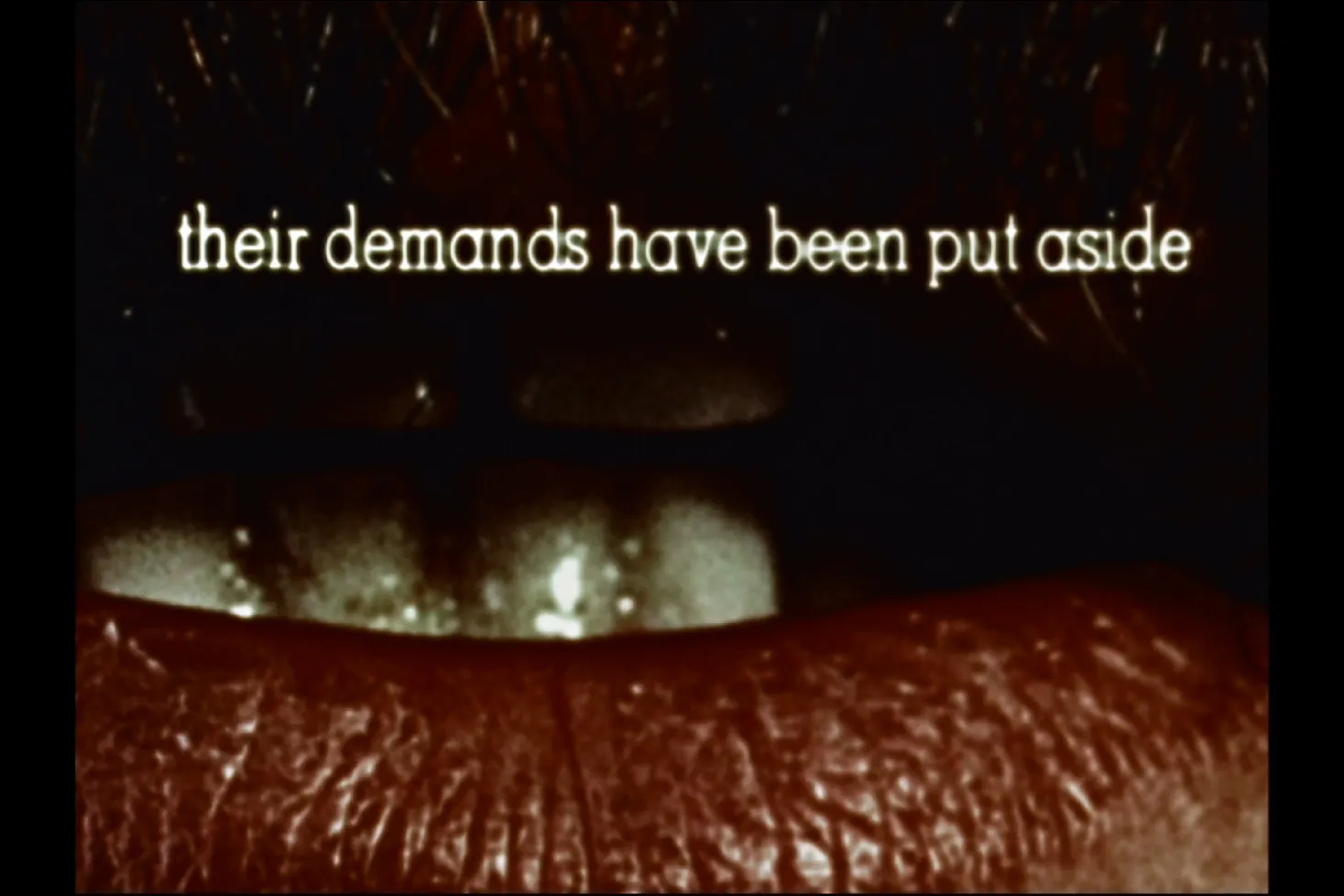
a tight shot of a mouth with text above it reading "their demands have been put aside"

On Screen/Sound: No. 10

Clio Barnard and Joyce Wieland

This two-part screening presents two seminal films made 30 years apart that explore the act of vocalization—both embodied in an on-screen speaker and as sound and images disembodied from the actor.

Canadian artist-filmmaker Joyce Wieland’s Pierre Vallières frames the mouth of Québécois separatist (and leader of the Front de libération du Québec) Pierre Vallières while he presents three corresponding speeches on Mont-Laurier, Quebec History and Race, and Women’s Liberation respectively. Referred to by Wieland as a “mouthscape,” it’s an intense, structuralist film that uses an extreme close-up of Vallières’ mustachioed lips, teeth, and tongue to connect voice and language with colonialism and national struggle.

In contrast, Clio Barnard’s 2010 documentary The Arbor was filmed with actors who precisely lip-synched the words of British playwright Angela Dunbar’s family and friends to tell the story of her short life and her daughter’s corresponding spiral into addiction. Barnard is an artist-filmmaker who has specialized for many years in “verbatim theater” in which audio-recorded documentary testimony is lip-synched by performers. Creating an uneasy and at times dislocating effect, the technique enhances the slippery relationship between image and sound. This, in turn, unsettles the documentary reading of Dunbar’s story and gestures towards the blurring of fiction and reality inherent in dramatization.

PROGRAM

  • Pierre Vallières (1972)
  • Joyce Wieland
  • 


The Arbor


 (2010)
  • Clio Barnard
  • Approximate runtime: 125 minutes

This year-long film series takes a close look at—and listen to—the way filmmakers have employed the sonic dimension of their form to complement, challenge, and reconsider our experience of the moving image.

Presenting cinematic performance, artists’ moving image, and Hollywood feature films, each On Screen/Sound program delves into the relationship between movie sound and image tracks, highlighting some radical examples of the aesthetic power and technical potential of sound in cinema. From musical theater to the music video, experimental shorts to industrially produced features, the series explores the affective and technical relationship between sound and image through the art of Foley, experimental music, found footage, soundtrack imaging, synched, multi-channel, and non-diegetic sound.

Main Image: Pierre Vallières, Joyce Wieland (1972) Film Still. Courtesy of Canadian Filmmakers Distribution Center

Media
Image
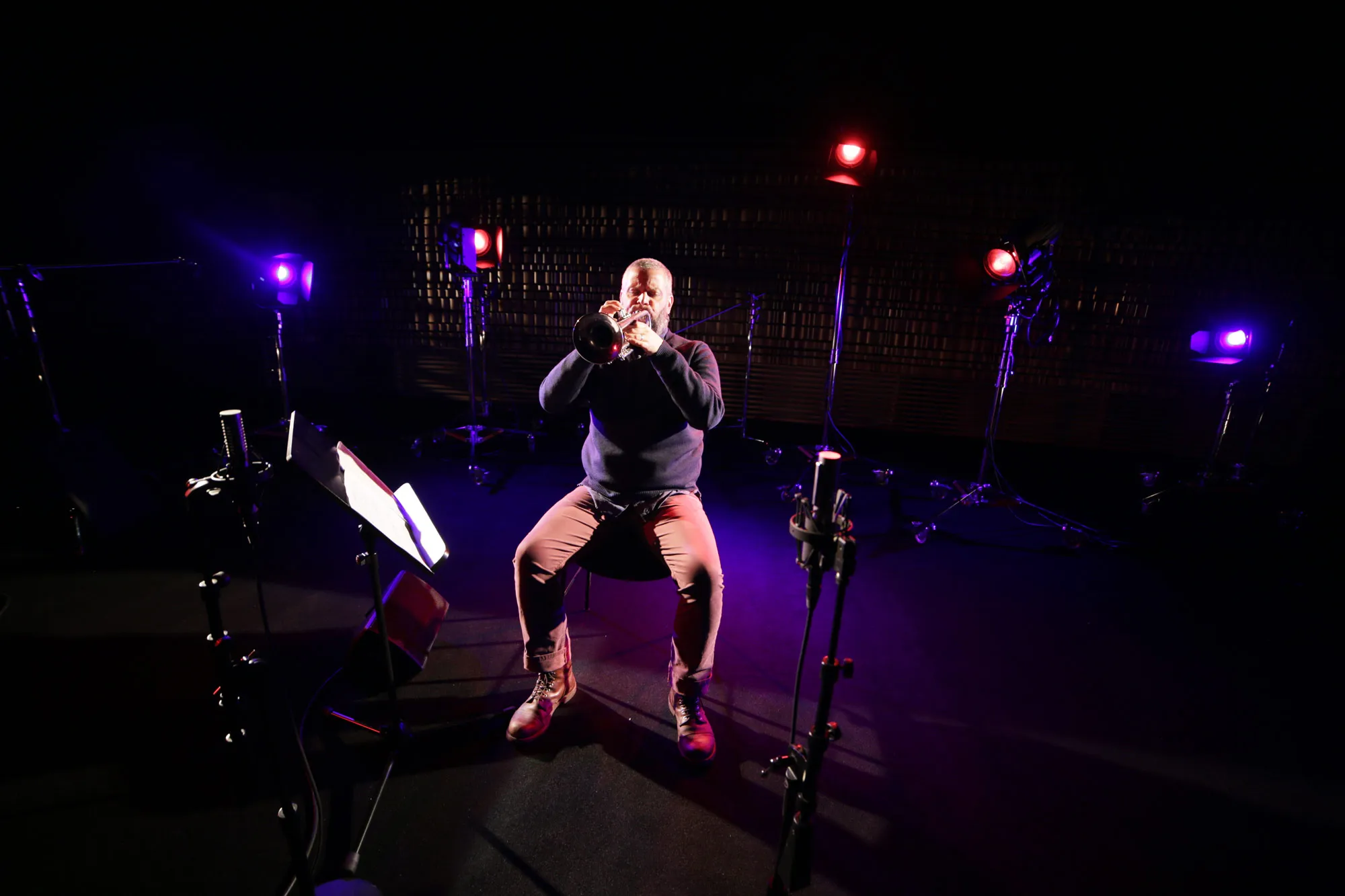
nate wooley playing his trumpet in a black box studio with red and purple lights.

For Kenneth Gaburo

Nate Wooley

One of the most in-demand players across the Brooklyn jazz, improv, noise, and new music scenes, Nate Wooley is redefining the way the trumpet is played. In his project, For Kenneth Gaburo, Wooley refines his concept of “combinatory sound,” which blends traditional trumpet techniques with vocalizations and mouth shapes typically used for ordinary speaking. Wooley’s piece takes texts by composer Kenneth Gaburo and combines synthesized tones on tape with manipulated trumpet techniques “to create shadings of the phonetic sounds inherent in the text.”

Nate Wooley’s solo playing has often been cited as part of an international revolution in improvised trumpet. Along with Peter Evans and Greg Kelley, Wooley is considered one of the leading lights of the American movement to redefine the physical boundaries of the horn and demolish the instrument’s historical context, which is still largely overshadowed by the legacy of Louis Armstrong. Wooley’s combination of vocalization, extremely extended technique, noise and drone aesthetics, amplification and feedback, and compositional rigor has led one reviewer to call his solo recordings “exquisitely hostile.”

This performance was the culmination of Wooley’s residency in the Concert Hall recording For Kenneth Gaburo released by Pleasure of the Text records in 2017.

Main Image: Nate Wooley, For Kenneth Gaburo (2016)Photo: Mick Bello/EMPAC.

Media
Image
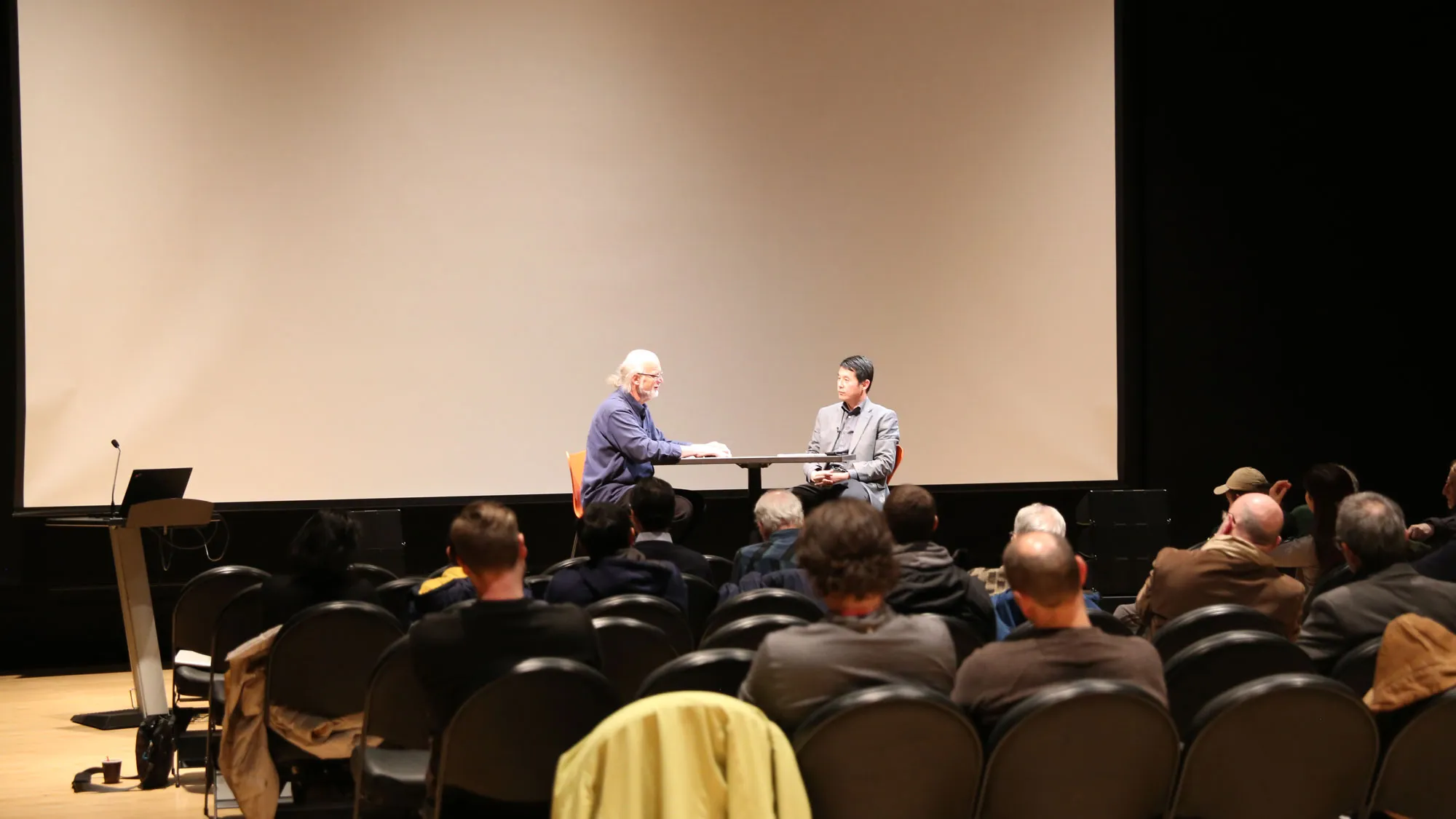
Johannes Goebel and Hui Su in discussion in front of a seated crowd.

Vectors and Circles: CISL and EMPAC

A Conversation with Johannes Goebel and Hui Su

EMPAC has been designed from the beginning as a center where art, science, and technology “meet under one roof and breathe the same air” through research, development, production, and performance. CISL @ EMPAC is a new, substantial research initiative between Rensselaer and IBM, which uses the infrastructure of EMPAC to further expand the intellectual and artistic discourse at the intersection of digital technology and the human condition.

IBM and Rensselaer launched the Cognitive and Immersive Systems Laboratory (CISL) as part of the IBM Cognitive_ColloquiumNY, which was held at EMPAC on November 18, 2015. The name of the laboratory indicates the convergence of a major research enterprise in cognitive computing with what is unique about EMPAC.

Hui Su, the director of CISL, and EMPAC director Johannes Goebel come from two ends of a wide-ranging spectrum. Su is the former director of the IBM Research Lab in Cambridge, MA, and holds expertise in multiple areas ranging from Human Computer Interaction, Cloud Computing, Visual Analytics, and Neural Network Algorithms for Image Recognition. Goebel, during his long career in the arts (with and without the “high-tech”), has been responsible for the programmatic, technical, and functional design of EMPAC. In this initial phase of CISL, the two had lively ongoing discussions as to where and how computing and the human condition meet.

This conversation was meant to open the public discussion around these topics and create a fruitful atmosphere for exchange on science and art from many different perspectives.

Main Image: Johannes Goebel and Hui Su in studio 2 during their discussion.

Media

For Kenneth Gaburo

Nate Wooley

One of the most in-demand players across the Brooklyn jazz, improv, noise, and new music scenes, Nate Wooley is redefining the way the trumpet is played. In his project, For Kenneth Gaburo, Wooley refines his concept of “combina- tory sound,” which blends traditional trumpet techniques with vocalizations and mouth shapes typically used for ordinary speaking. Wooley’s piece takes texts by composer Kenneth Gaburo and combines synthesized tones on tape with manipulated trumpet techniques “to create shad- ings of the phonetic sounds inherent in the text.”

Nate Wooley’s solo playing has often been cited as part of an international revolution in impro- vised trumpet. Along with Peter Evans and Greg Kelley, Wooley is considered one of the leading lights of the American movement to redefine the physical boundaries of the horn and demolish the instrument’s historical context, which is still largely overshadowed by the legacy of Louis Armstrong. Wooley’s combination of vocalization, extremely extended technique, noise and drone aesthetics, amplification and feedback, and com- positional rigor has led one reviewer to call his solo recordings “exquisitely hostile.”

This performance was the culmination of Wooley’s residency in the Concert Hall recording For Kenneth Gaburo released by Pleasure of the Text records in 2017.

Image
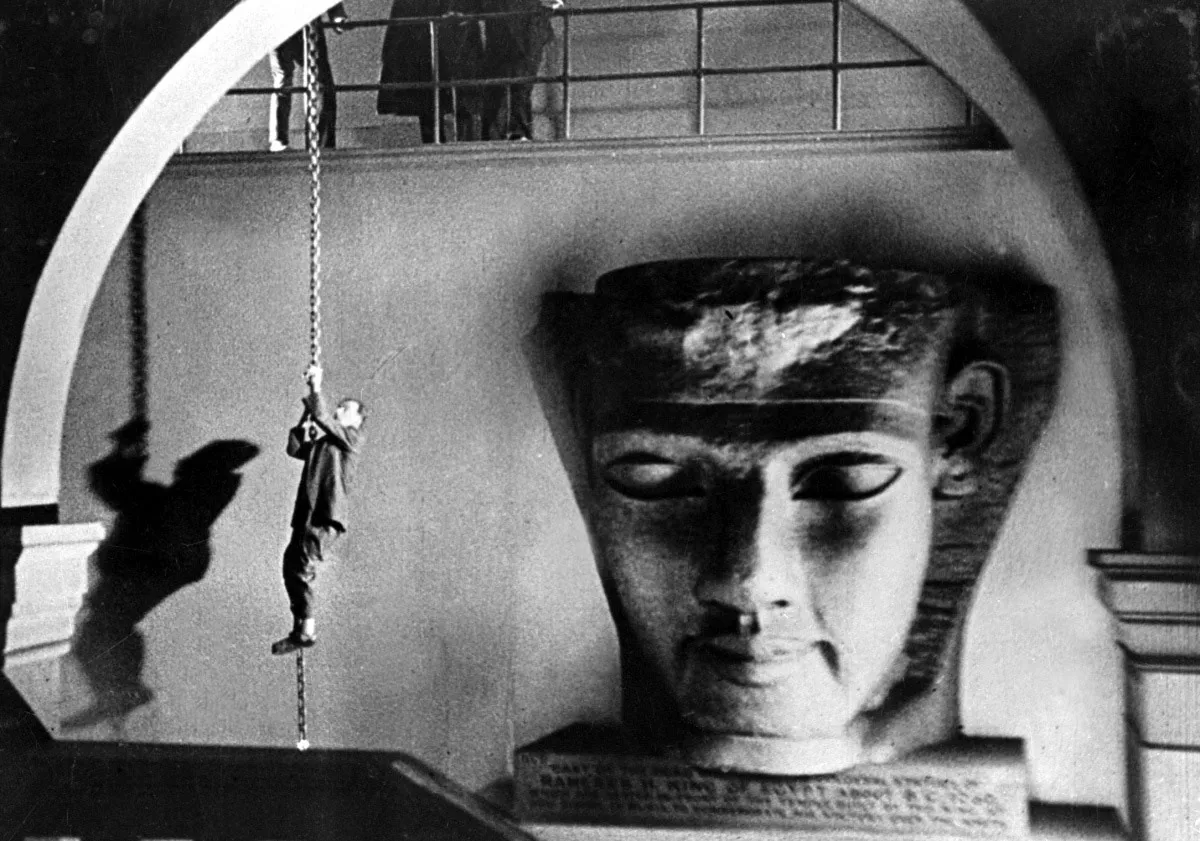
A man on a rope descends next to a massive granite carving of a head.

On Screen/Sound: No. 9

Morgan Fisher and Alfred Hitchcock

Returning for Spring 2016, the On Screen/Sound film series resumes with a pair of films that consider the way that dialogue is dubbed into a film’s soundtrack. 
Presented as a filmed lecture about sound and image, 


Picture and Sound Rushes


 by Morgan Fisher disassembles the fixed relationship between spoken word and image to expose new relationships that intrigue, discomfort, and amuse.

 One of the earliest British “talkie” films, Alfred Hitchcock’s Blackmail


 was originally planned as a silent film. After the production studio jumped at the opportunity to include new sound technologies, the thick-accented lead actress needed her lines “dubbed” in real-time by an offstage speaker. Creating a woozy audio effect that complements the film’s German-expressionist visual influence, Blackmail relentlessly confronts complex issues around assault, murder, and obsession.

PROGRAM
  • Picture and Sound Rushes


 (1973) Morgan Fisher
  • 


Blackmail


 (1929) Alfred Hitchcock
  • Approximate runtime: 120 mins

This year-long film series takes a close look at—and listen to—the way filmmakers have employed the sonic dimension of their form to complement, challenge, and reconsider our experience of the moving image.

Presenting cinematic performance, artists’ moving image, and Hollywood feature films, each On Screen/Sound program delves into the relationship between movie sound and image tracks, highlighting some radical examples of the aesthetic power and technical potential of sound in cinema. From musical theater to the music video, experimental shorts to industrially produced features, the series explores the affective and technical relationship between sound and image through the art of Foley, experimental music, found footage, soundtrack imaging, synched, multi-channel, and non-diegetic sound.

Main Image: Film still from Blackmail (1929). Courtesy Rialto Pictures, New York.

Entertainment Electrics Workshop

Learn the essentials of planning, setting up, testing, and troubleshooting electrical systems for lighting, audio, and video.

Richard Cadena is an Entertainment Technician Certification Program (ETCP) Certified Entertainment Electrician and Recognized Trainer. On June 27-29, Cadena will offer a three-day entertainment electrics workshop geared toward the industry professional. The workshop includes essential skills and knowledge that no technician should be without, covering theory, practice, and application.

About the workshop

The workshop begins with basic electricity and covers a wide range of topics, from intermediate to advanced power distribution, electrical safety, codes and regulations, and control systems.

TOPICS TO BE COVERED

Foundations of Electricity
  • Circuits / DC and AC electricity
  • Power calculations / Voltage drop
  • Three-phase systems / Connectors
  • Cables / Power factor / Harmonics
practical power distribution
  • Electrical safety / NFPA 70E
  • 4-wire plus ground systems
  • Portable generators
  • Feeder transformer connections
  • Setting up PD Overcurrent protection
  • Grounding / GFCIs
control systems and networking
  • DMX512-A / Remote Device Management
  • Streaming ACN (sACN) / Digital networks
  • Ethernet / Wireless systems / Fiber optics


Where + When

Held in EMPAC’s Studio Beta, the course will run 9AM–5PM each day, with breakfast, lunch, and parking included.

Lodging

Lodging accommodations are available on campus for those traveling to attend.

Cost and Registration

  • $675 Includes: workbook and certificate of completion
  • $750 Includes: all of the above plus three nights on-campus lodging
  • Attendance limited to 30 participants

REGISTER

For ETCP certified electricians and riggers, this workshop will count toward 21 renewal credits.

ETCP

Holy Science

Amirtha Kidambi's Elder Ones

Harmonium player and vocalist Amirtha Kidambi’s quartet Elder Ones was in residence in the Concert Hall to record an audio recording of her new work Holy Science. The album was released by Norther Spy in 2016.

Elder Ones, a quartet performing the composi- tions of vocalist Amirtha Kidambi, lies nestled in a Venn diagram of diverse musical spheres and communities in New York City. Bandleader Kidambi performs on harmonium and draws her vocal influence from both Indian Carnatic and Western Classical training. With saxophonist Matt Nelson, bassist Brandon Lopez, and drum- mer Max Jaffe, the band expands its influence to the realm of hip-hop and free improvisation. Oscillating between modal, Sufi-like circular grooves and jagged, brutal rhythmic construc- tions, the band equally suspects Thyagaraja, Coltrane, and Stockhausen as illegitimate fathers of their sound.

2016 Spring

spring 2016 brochure cover

2016 Spring season reel. Courtesy the artists/EMPAC.