My Voice Has An Echo In It

Temporary Distortion

A six-hour performance—combining live music, text, and video—where the performers were confined in a freestanding 24' x 6' soundproof box. Free to come and go, the audience was able to see the inside, stationed at windows, and listen to the performance through headphones whenever they chose. But the performers could only see their reflections in the two-way mirrors, stretching off infinitely in both directions. This EMPAC-commissioned work called into question the very nature of live events. All sounds created by the performers were captured, processed, and stored by a computer before being played back for the listener after a few seconds delay. The audience experienced the performance both as a live spectacle and a disembodied record of what had just been presented.

Temporary Distortion pushes the boundaries of theater with unsettling and meditative acts staged in claustrophobic, boxlike structures. In New York City its work has been shown at Anthology Film Archives, Baryshnikov Arts Center, The Chocolate Factory, Harvestworks Digital Media Arts Center, Museum of the Moving Image, The New School, and displayed internationally.
Image
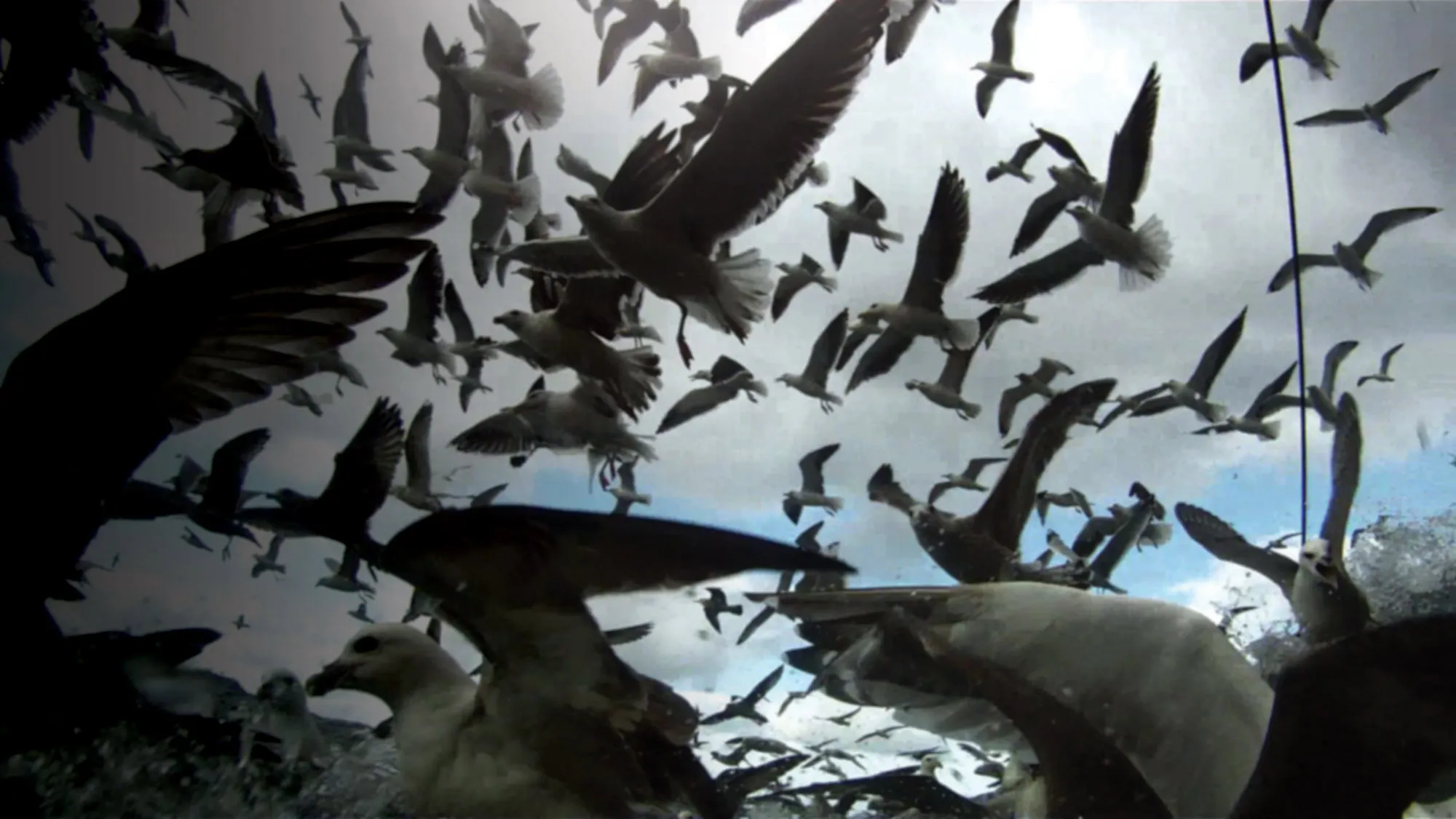
A cluster of seagulls flying against a blue sky.

Surface Tension

Surface Tension was a film series where image trumps the narrative: special effects, intense lighting, extreme image resolution, and hyper-real sound heighten the subject of the film through the tension between surface-level sensuality and the narrative. As a result, the intuition of the senses has more interpretive power than what words can hold. 

Main Image: Leviathan (2012).

Image
Steve goodman in discussion

Steve Goodman

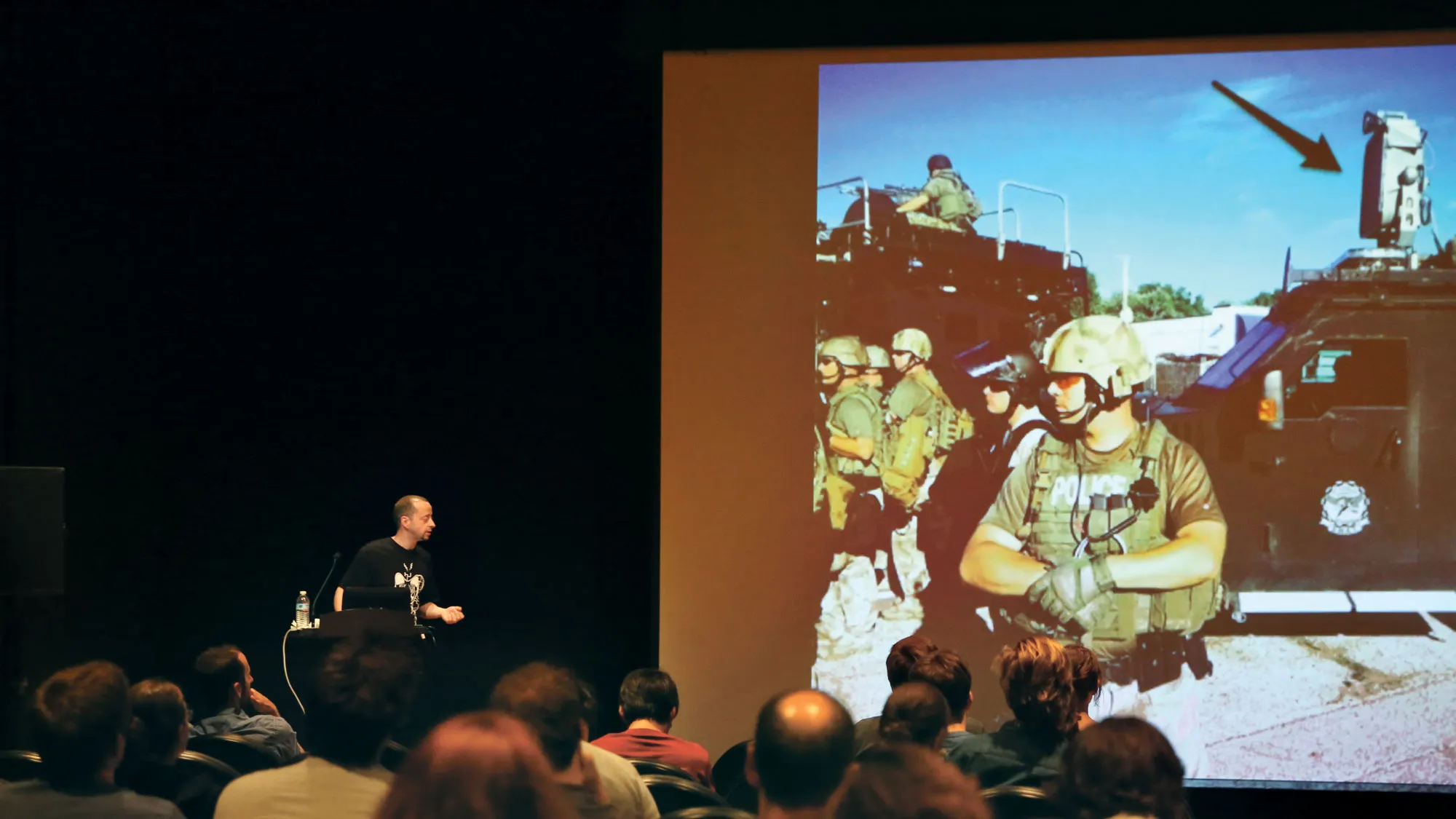
Sonic Warfare

Steve Goodman, otherwise known as electronic musician Kode9, presented a rare talk on his investigations into the weaponization of sound. How can sound produce discomfort, become threatening, or create an ambiance of fear? Goodman mapped the many different ways vibrations in air can be transformed into force, combining philosophy, science, fiction, aesthetics, and popular culture. Taking examples from police and military research into acoustic crowd control, corporate uses of sonic branding, and intense works of sound art and music culture, Goodman revealed a startling new dimension of sound in society. 

Steve Goodman is a lecturer in music culture at the School of Sciences, Media, and Cultural Studies at the University of East London, a member of the CCRU (Cybernetic Culture Research Unit), and the founder of the record label Hyperdub.

A Possibility of an Abstraction

Germaine Kruip

In A Possibility of an Abstraction, Germaine Kruip created an atmospheric film-like effect accomplished by manipulating light across the proscenium stage. Shifting between the cinematic, the theatrical, and the sculptural, A Possibility of an Abstraction creates a meditative space at the edges of our perception with optical illusions and the passage of time. The artwork recalls pre-cinematic traditions of shadow play, and what Ken Jacobs termed paracinema (denoting experimental film practice from the 1960s in which films lacked material or mechanical elements). Commissioned by EMPAC, Kruip worked in residence with composer Hahn Rowe, lighting designer Laura Mroczkowski, dramaturge Bart Van den Eynde, and the EMPAC stage technologies team to precisely choreograph the light so that shadow, reflection, and architecture become the characters in a filmic experience that is created in the moment itself. Kruip’s artworks often take the form of “architectural interventions.” Manipulating daylight with geometric, kinetic sculptures, these interventions transform each site into a stage, with the audience as actors in a play of substantive absence.

Germaine Kruip’s work has been exhibited at List Visual Arts Center at MIT, Boston; Stedelijk Museum, Amsterdam, Netherlands; Art Basel 41, Basel, Switzerland; the Approach, London; Hiroshima Museum of Contemporary Art, Tokyo; the Drawing Center, New York City, and in the MARZ Gallery, Lisbon, among others.

2014 Fall

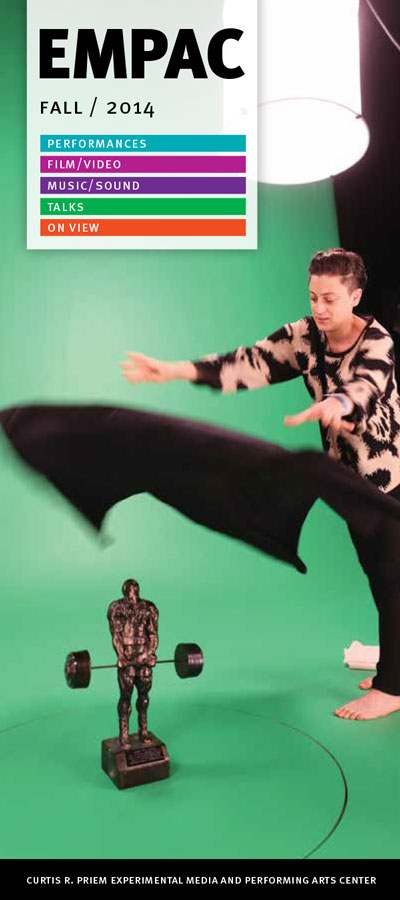
fall 2014 brochure cover

2014 Fall season reel. Courtesy the artists/EMPAC.

Expanded Piano

Stavros Gasparatos

During two production residencies, Stavros Gasparatos—a composer and digital sound artist—preapared for the world premiere of Expanded Piano, an EMPAC commission. Working in residence, the artist concentrated on finalizing the audio composition for the electronically prepared piano, testing and creating the sound design for the 24-channel speaker setup, as well as doing final audio mastering of the performance. For Expanded Piano, an acoustic piano is wired with both regular microphones and contact microphones attached to the body of the piano, its strings, and mechanisms. Each microphone’s signal is manipulated in real time through a computer and then routed to its own loudspeaker, creating a multi-channel space around the audience that puts the listeners “inside” the piano.

Gasparatos is a composer and digital sound artist who lives and works in Athens, Greece. He composes music for dance, theater, cinema, and frequently works on solo music projects. His work has been performed internationally in London, Macao, Naples, Berlin, Toronto, Amsterdam, Paris, and Sofia. Gasparatos is a frequent collaborator of the National Greek Theatre.

The Color Out of Space

Rosa Barba

Berlin-based artist Rosa Barba was in residence for the development of a site-specific EMPAC commission, working in collaboration with Heidi Newberg, professor of physics, applied physics, and astronomy and director of Rensselaer’s Hirsch Observatory, and Rensselaer physics undergraduate students Nicholas Palmieri, Jake Weiss, and Thomas Hartmann. A large-scale projection covering the building’s 8th Street façade in Spring 2015, it was to be viewable from downtown Troy and beyond, and the accompanying sound composition broadcast via audio stream. Using voices collaged by composer Jan St Werner from interviews, fictions, and readings by artists and astronomers from around the world, the artwork hovers at the speculative intersection of astronomy and art.

Rosa Barba’s publications, sculpture, and installation work is rooted in the material of cinema. In 2010, she won the Nam June Paik Award, and was a resident artist at Artpace in San Antonio in 2014, Chinati Foundation in Marfa in 2013, and the Dia Art Foundation in 2008. Her work has been presented in exhibitions worldwide, including the Bergen Kunsthall; Temporäre Kunsthalle Berlin; the 53rd Venice Biennale; and the Palazzo Grassi in Venice; and the Museum of Contemporary Art, Chicago.

KODE9

One of the most influential and iconic DJ/producers working today, Kode9 presented a solo set of new and experimental electronic works as part of the 10th year of the Hyperdub Tour. 

Also known as Steve Goodman, Kode9 founded the influential record label Hyperdub and has been a pioneer in the electronic music scene since the early 1990s. Kode9 has performed at Sonar Festival, Sonar Tokyo, Mutek, Glastonbury, Unsound, Melt, and Coachella and in clubs across Europe, Asia, North and South America, Australia, New Zealand, and South Africa.

Media
Image
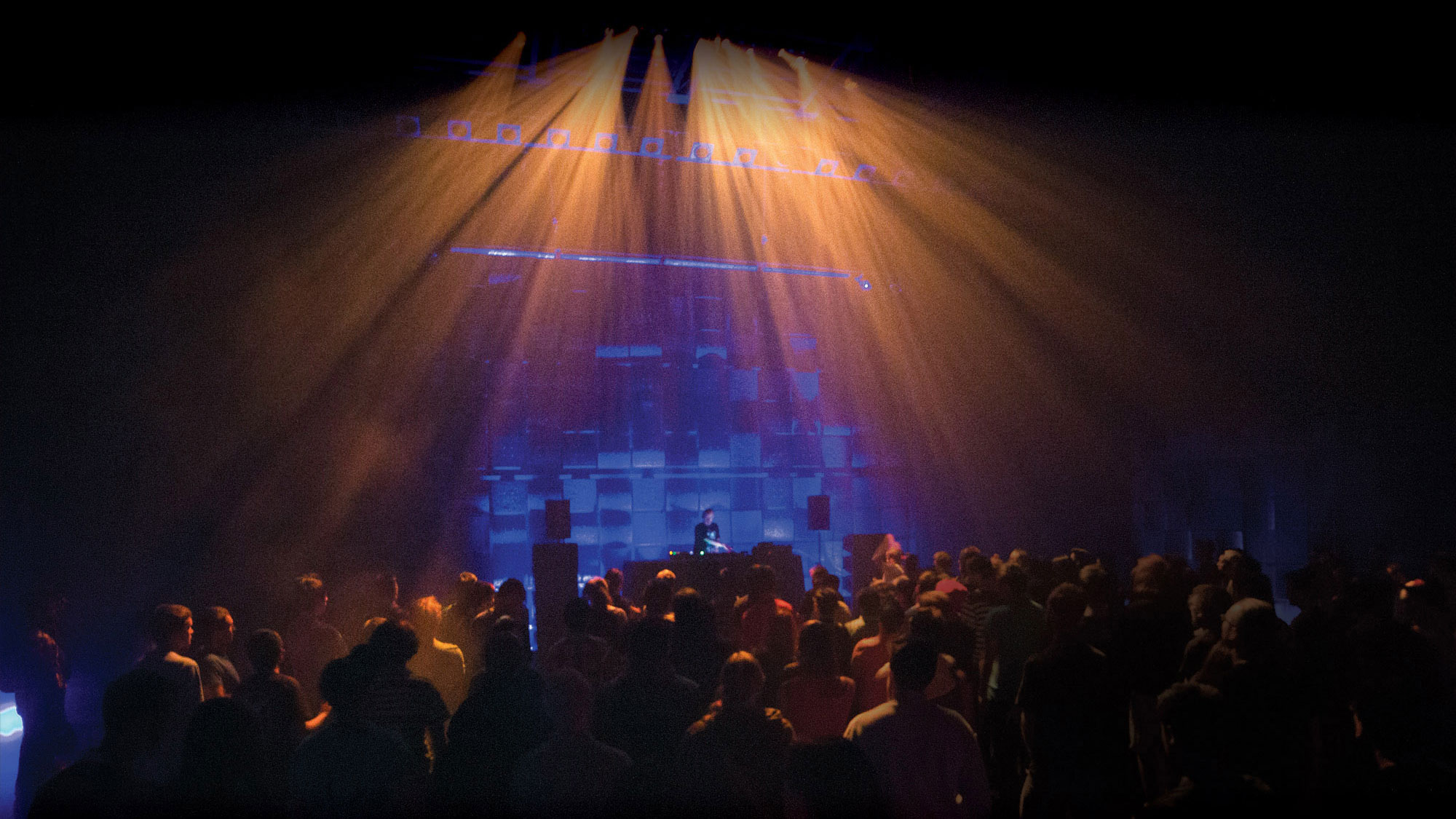
A man DJing on a small stage lit my blue and yellow lights in front of a silhouetted crowd.
Image
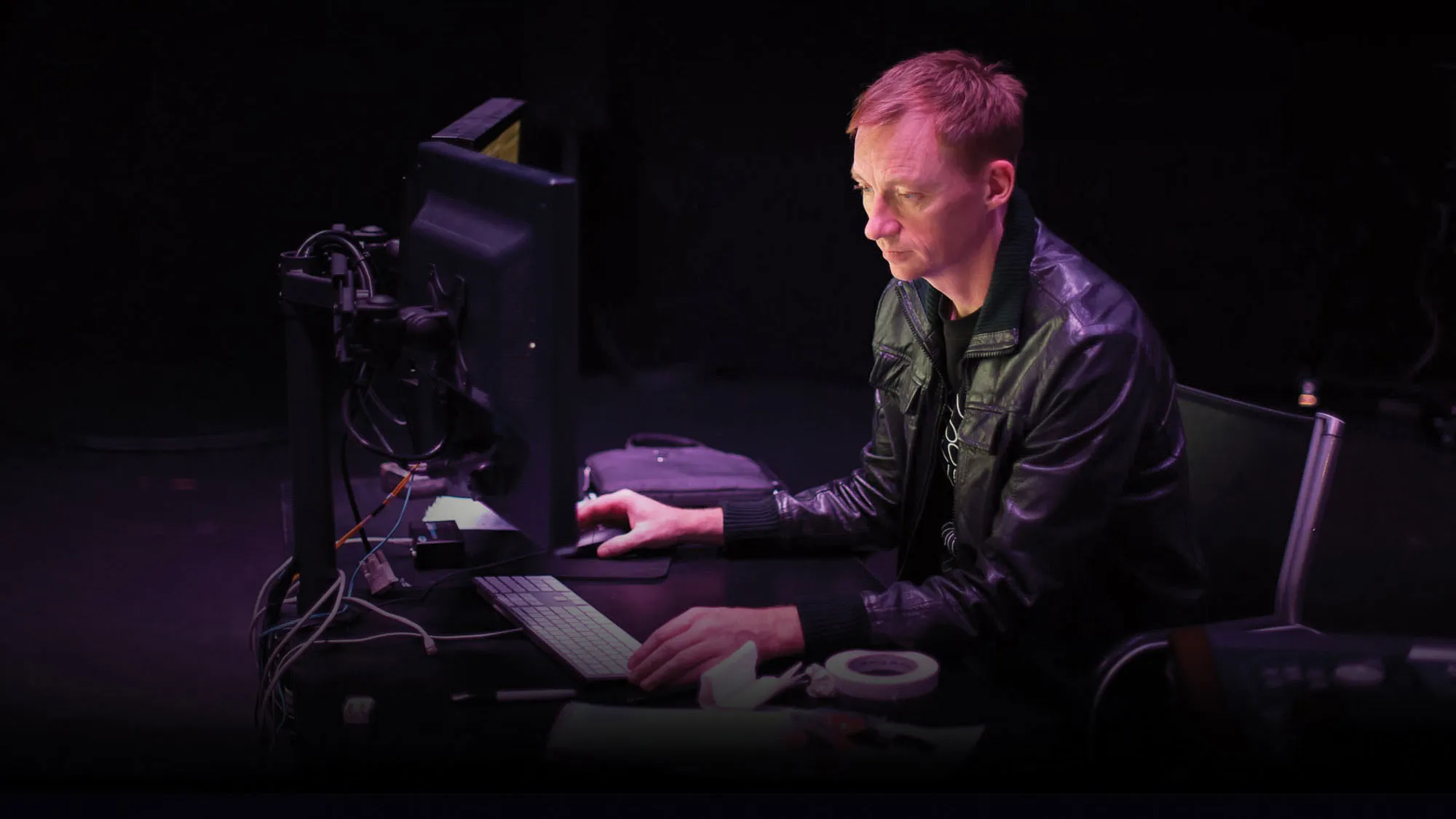
A white man wearing a leather coat seated in front of a dual computer console.

AKOUSMA @ EMPAC

This selection of performer/composers from the ninth annual AKOUSMA—the annual Montréal-based festival dedicated to electroacoustic music—included Nicolas Bernier, Richard Chartier, Jean Francois Laporte, Martin Tétreault, and Louis Dufort. The performers used dozens of loudspeakers hung in a ring surrounding the listeners, manipulating the pieces in real-time. 

Nicolas Bernier’s music ranges from musique concrète to live electronics, to post-rock to noise improv, and features electronic music made from objects of the past, such as typewriters and tuning forks. Richard Chartier’s work has been called both “microsound” and neo-modernist, with a minimalist approach to sound, silence, focus, and perception. Jean-François Laporte works closely with the raw materials of sound, from the everyday environment to traditional and invented instruments that produce unconventional sounds. Martin Tétreault is an internationally known Montréal DJ and improviser who explores the intrinsic sounds of the turntable and needles, as well as prepared surfaces (with thanks to John Cage), and small electronic instruments. Montréal composer Louis Dufort developed his style through electroacoustic music, and then turned his attention to mixed music and multimedia art, and has worked with a wide range of organizations.

PROGRAM

Louis Dufort - Étude no.1 for the EMPAC Lobby Gilles Gobeil - Des temps oubliés Seth Nehil - Collide Adam Basanta - instant gris Adam Basanta - is not a / a / is not Olivia Block - Dissolution Louis Dufort - Étude no.2 for the EMPAC Lobby Please note: Evelyn’s Cafe will not be open for service prior to this performance.

Media

Empathy School

Aaron Landsman & Brent Green

Theater director Aaron Landsman, visual artist and filmmaker Brent Green, and performer Jim Findlay collaborated on Empathy School, an EMPAC commission that combined travel, theater, and audio in a contained space—a bus trip—where listening to another person’s stories is the only possible act of togetherness. The work was conceived, while Landsman lived in central Illinois. He traveled out of town frequently, and to get home, flew into Chicago and then took a night bus for three hours, overhearing riders as they spoke to relatives on the phone or talked to one another. Their stories were of financial desperation and separated families, reflecting the difficult circumstances of those abandoned by the post-industrial economy. In residence, the artists engaged in final audio mastering, installation of audio and video hardware on the bus and in locations along the route, as well as rehearsals.

Aaron Landsman creates participatory performances that combine formal experimentation with long-term community engagement. His works are often staged where people go every day—homes, offices, meeting rooms, and sidewalks. He has taught at the Juilliard School, the University of Illinois, and New York University, and has guest lectured widely. Brent Green is a visual artist, filmmaker, and storyteller working in the Appalachian hills of rural Pennsylvania. Green’s films have screened, often with live musical accompaniment, in venues such as MoMA, the J. Paul Getty Museum, Walker Art Center, Hammer Museum, Museum of Fine Arts Boston, Wexner Center for the Arts, The Kitchen, and the Sundance Film Festival.