Image
Leslie Vosshall

Leslie Vosshall

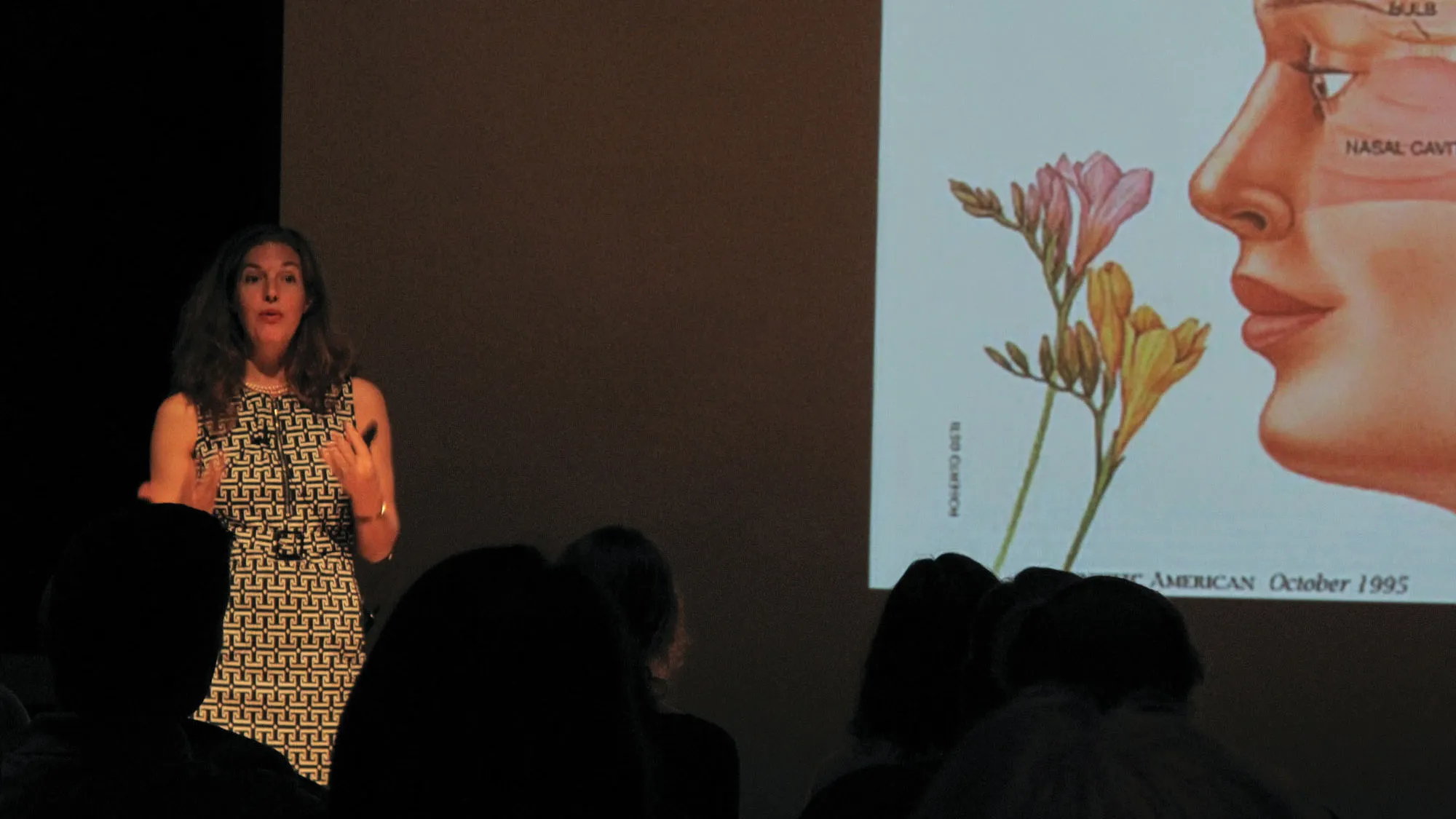
Bitten: Why Do Mosquitoes Bite Some People and not Others

How are mosquitoes able to detect our presence? Leslie Vosshall, neuroscientist and head of laboratory at Rockefeller University’s Howard Hughes Medical Institute, will give an in-depth presentation on the origins and complexities of smell and its impact on behavior. Her talk will cover a range of topics from the physiology of our sense of smell to the history of perfume making, and will answer the age-old question, “why do mosquitos bite some people and not others?”
Image
Zbigniew Oksiuta in disucssion

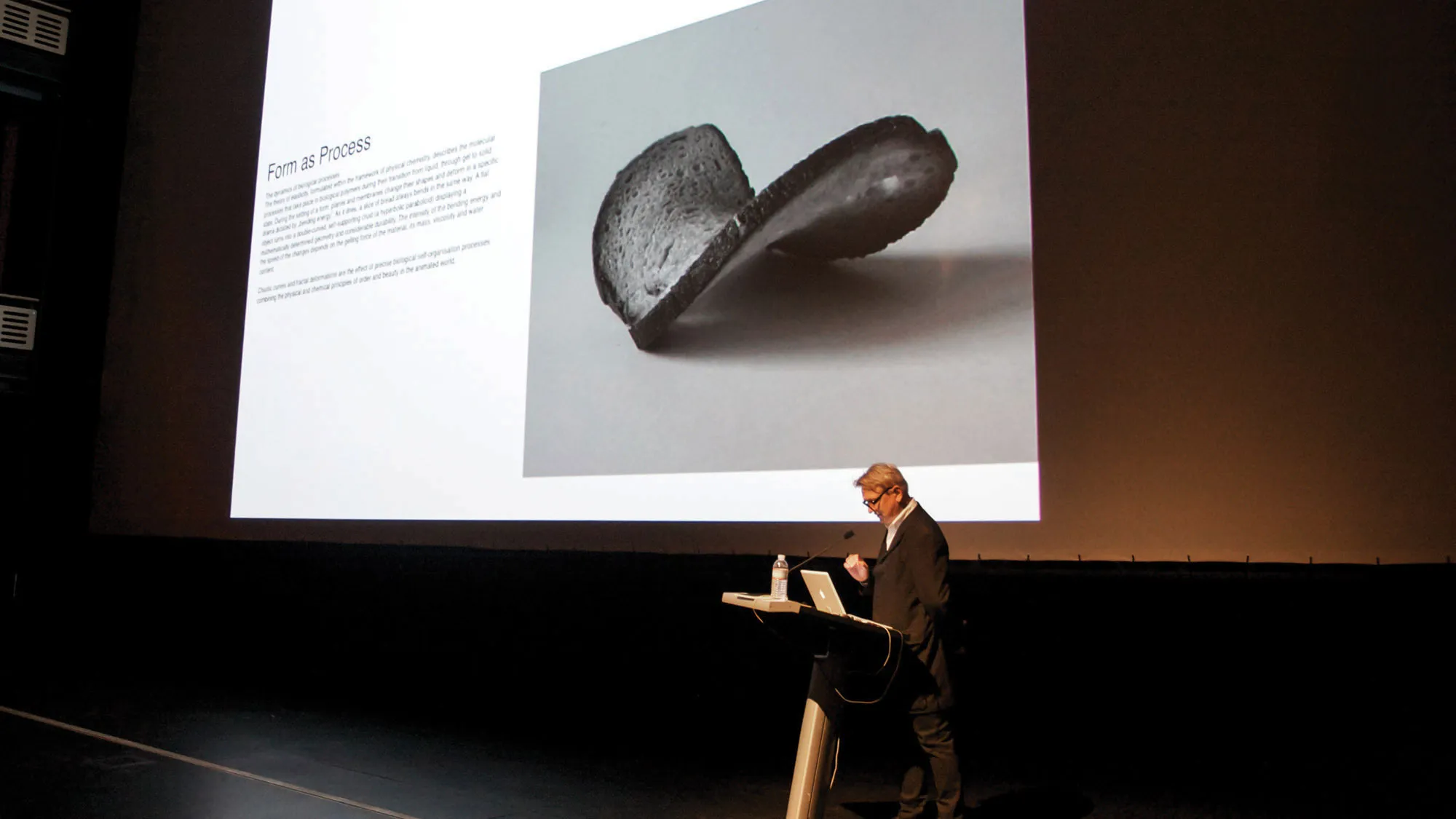
A Biological Future?

Zbigniew Oksiuta

In his research, Rensselaer Architecture professor Zbigniew Oksiuta develops living biological habitats by combining art, architecture, engineering, and the biological sciences. His work looks beyond historical, social, urbanistic, and aesthetic factors to reduce the notion of space to its absolute minimum: the physical and chemical parameters that enable physiological existence. In this two-part lecture, presented as part of the Detail View: Campus Perspective series, Oksiuta will examine dynamic systems that transfer information and energy through a liquid medium. Using biological polymers as building material, he has developed liquid, jelly-like, and rigid shapes on a human scale for unusual gravitational conditions, which enable the development of new kinds of living habitats in the biosphere and in space. The underlying narratives are driven by contrasting conceptions of the role of the artist and of time. The first sees the artist as anticipating the powers and dangers of techno-scientific progress through idiosyncratic experiments, with time as linear and progressive. The second sees the artist as re-constituting past historical ruptures and forgotten pathways to envision alternative ways of being contemporary with a more cyclical sense of progress. In the context of his research on living biological habitats, Professor Oksiuta will present work developed by Rensselaer Architecture students in his Human Habitat as Biological Living System design studio course.

Image
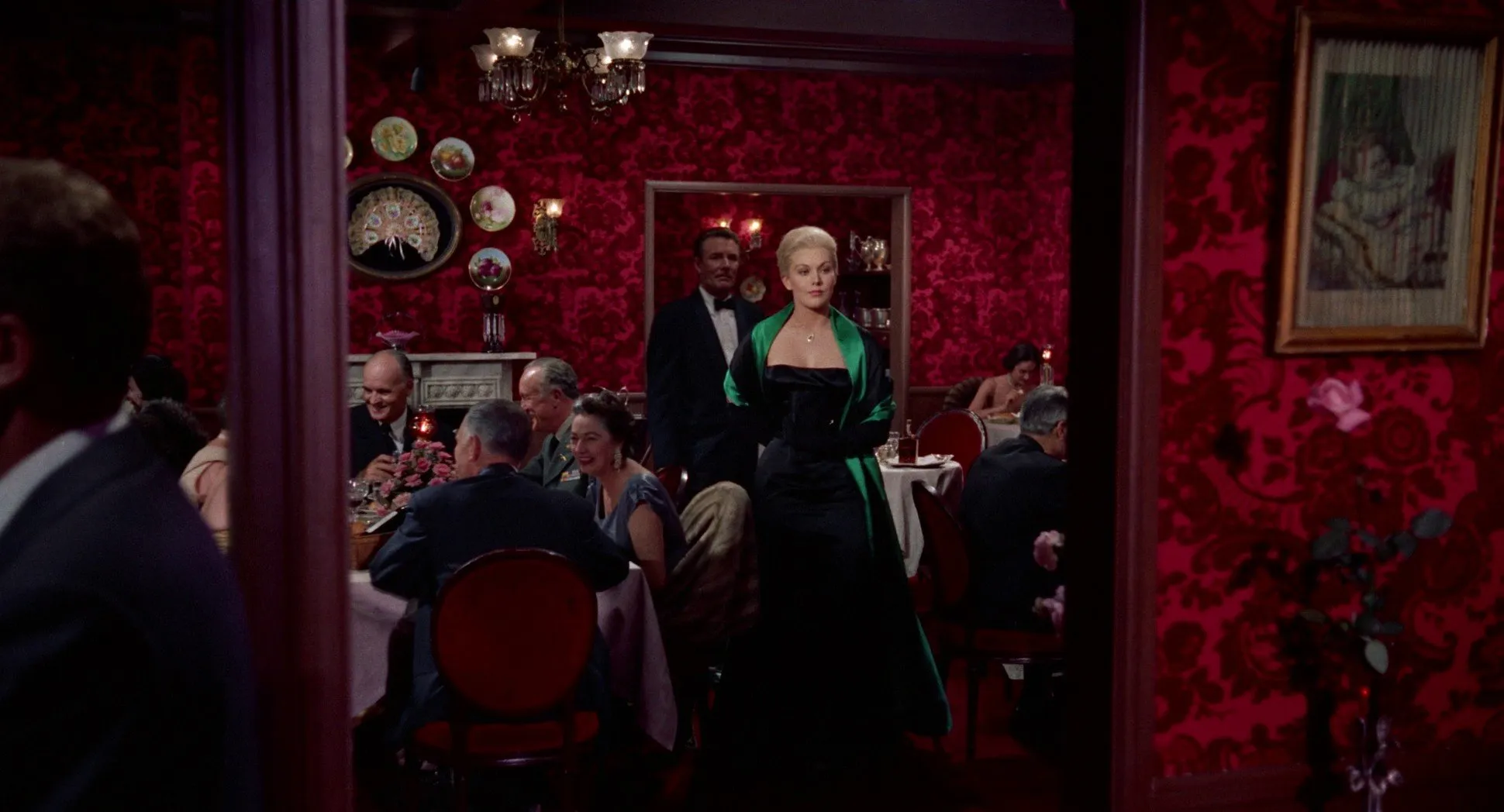
Kim Novak wearing a green 1950's cocktail dress entering a crowded restaurant with red damask wallpaper.

Vertigo

Directed by Alfred Hitchcock

Frequently cited by contemporary film scholars and critics alike as one of the most important films of all time, Alfred Hitchcock’s 1958 psychological thriller received little critical attention when it was first released. Starring James Stewart and Kim Novak, Vertigo is based on Boileau-Narcejac’s 1954 novel The Living and the Dead, which tells the story of a retired San Francisco detective with a crippling fear of heights who tracks the activities of a woman possessed by a spirit from another time. An influential work for the generation of filmmakers following Hitchcock, Vertigo had a deep impact on the work of Chris Marker, whose film, La Jetée, inspired the

The acknowledged master of the thriller genre, Alfred Hitchcock was also a brilliant technician who deftly blended suspense and humor. Born in England, Hitchcock entered the film industry in 1920, writing scenarios and assistant directing. In 1939, he went to Hollywood, where his first film, Rebecca, won an Academy Award for best picture. During the next three decades, he made a film a year, including the classics Rear Window and Psycho. He received the American Film Institute's Life Achievement Award in 1979 and died in 1980. He made over 60 films, nearly all commercial and critical successes.

Vertigo / Alfred Hitchcock (1958)

Image
Jonathan Sterne in discussion.

Jonathan Sterne

MP3: A Hundred-Year History of an 19-Year-Old Format in Under an Hour

There are now more MP3s in circulation than all other forms of recorded audio combined. Through a series of episodes, Jonathan Sterne offers a history of the MP3 format, and uses it to point to a longer, general history of compression in the 20th century. Our most basic ideas of what it means to hear and listen, as well as our ideas of information, are tied to the problems and progress of 20th century media. In its everyday combination of sound, information, and infrastructure, the history of the MP3 offers a radically different story about the meaning of hearing and the origins of digital media.

Main Image: Jonathan Sterne in the theater during his talk in 2012.

Image
John D Barrow

John D. Barrow

Better Than a Thousand Words

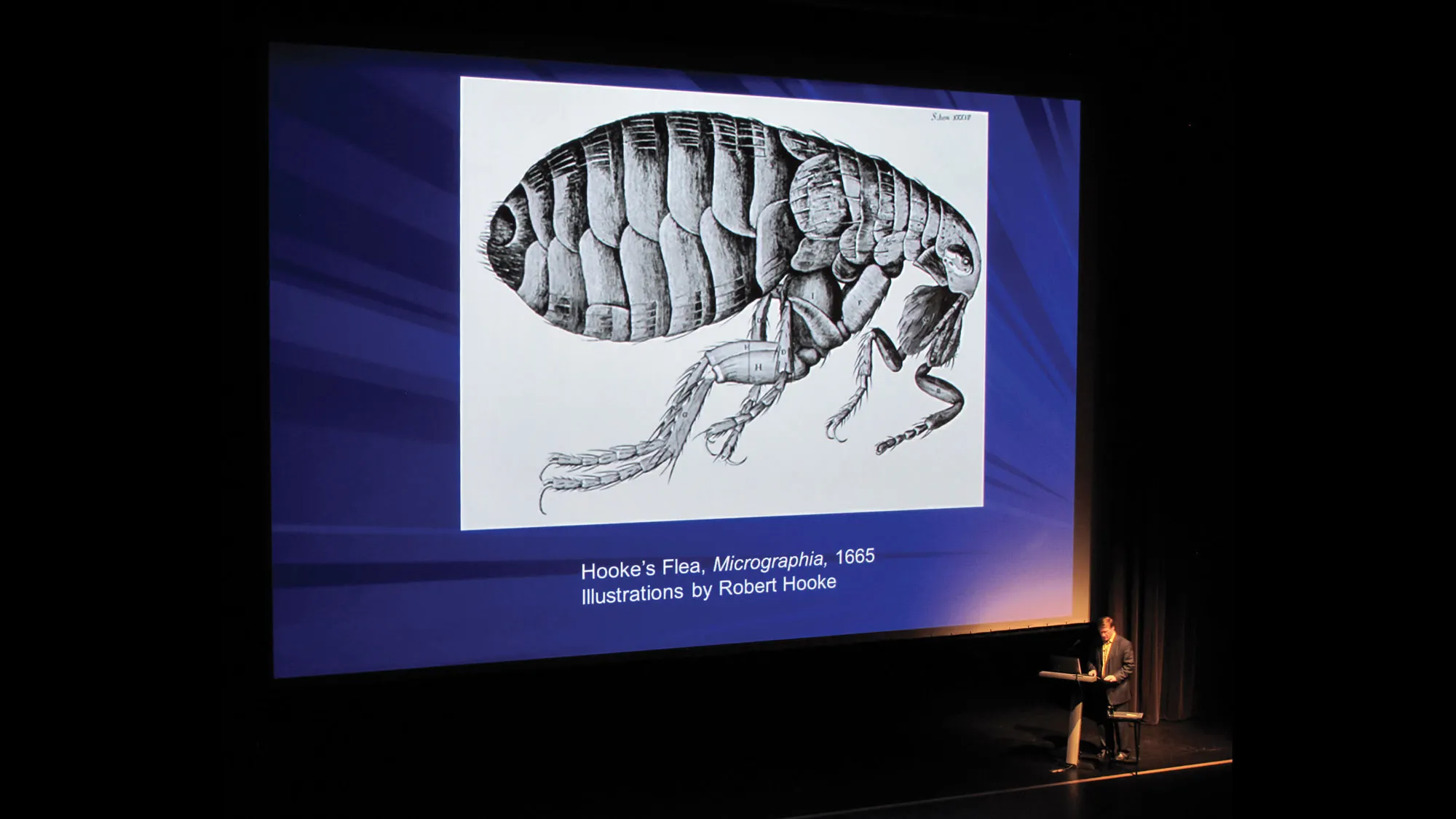
Physicist John D. Barrow discussed the “observer effects” principle and the impact of images on the development of science throughout history. From the first graphs and illustrated books to MolScript; from the first pictures of spiral galaxies in Van Gogh’s The Starry Night to the Hubble Space Telescope; and from the atomic bomb’s mushroom cloud to the intricacy of fractals, he examined the past influence of pictures in science and the growing influence of visual expression today. 

Barrow is a cosmologist who studies the early history of the universe, the mathematical structure of cosmological models, and ways in which astronomy and cosmology can be used to test aspects of fundamental physics. He is a professor of mathematical sciences at Cambridge University. He is also the director of the Millennium Mathematics Project, an initiative to improve the understanding and appreciation of mathematics and its applications.

Observer Effects offered a dialogue between the fields of art and science. The title was derived from the principle in physics that the act of observation transforms the observed, an idea that has been influential in philosophy, aesthetics, psychology, and politics.

Main Image: John Barrow in the theater during his 2012 talk at EMPAC. Photo: EMPAC/Rensselaer.

Image
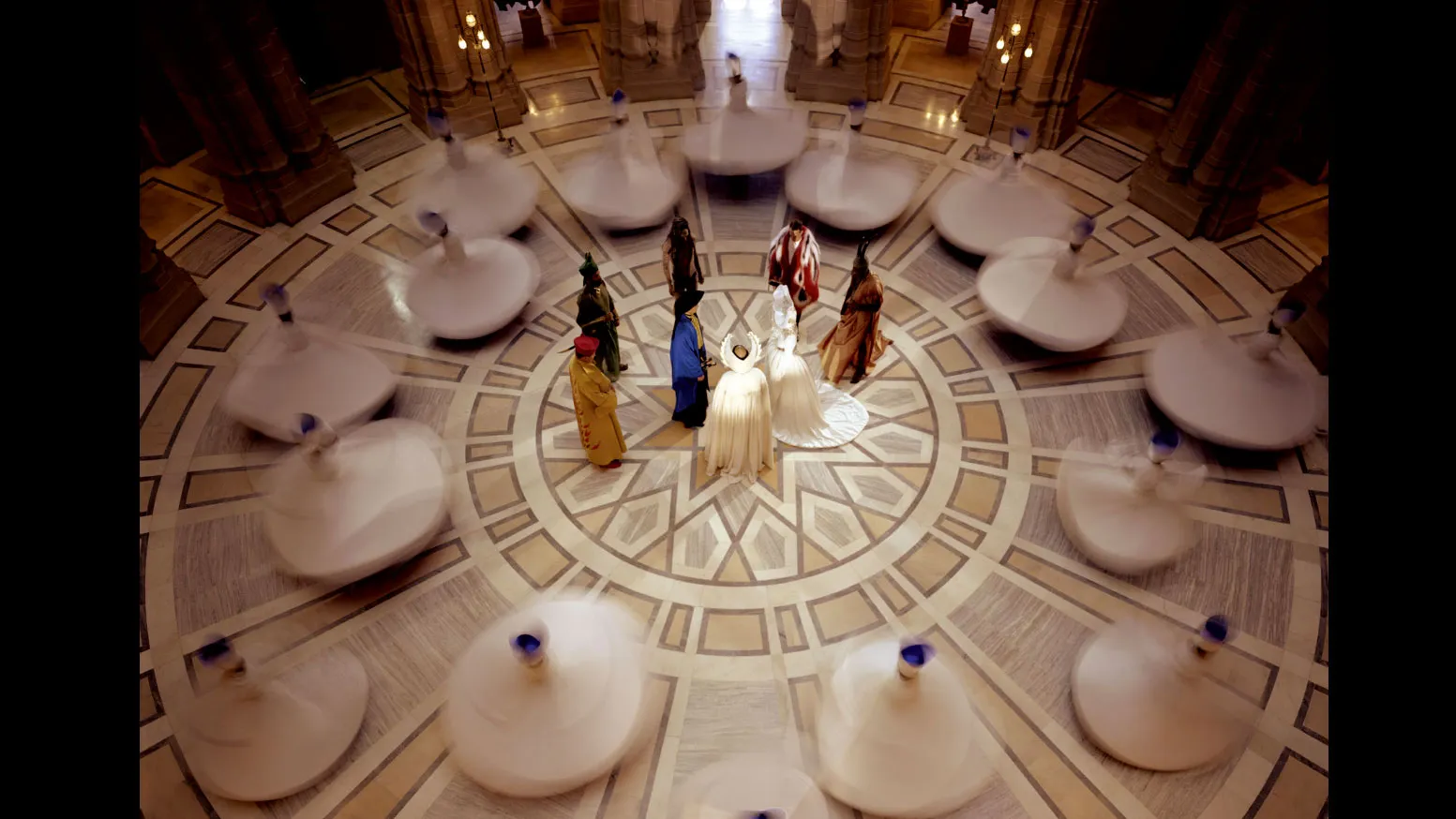
An aerial view of a whirling dervishes with a group of individuals wearing various regalia in the middle.

The Fall

Directed by Tarsem Singh

Set it a 1915 Los Angeles hospital, The Fall is a visually stunning fantasy film about a bedridden stunt man who entertains a curious little girl by telling her a fantastical story of exotic heroes and far off places that reflect his psyche. The reality of the hospital and the imaginary epic narrative become increasingly interdependent as the film progresses, until the demarcations of reality and fiction can no longer be discerned. The film takes place during the period of Hollywood’s formation, and reflects on the fantastical and illusory nature of cinema.

Shadow Play is a series of films that tread nimbly between reality and illusion, acknowledging the artificial nature of cinema. Referencing the tradition of shadow puppetry, the origins of cinema in phantasmagoria, and Plato’s “Allegory of the Cave,” each film draws on the metaphors of light as reality and shadow as artifice. In Plato’s The Republic, the allegory of the cave illustrates the difference between truth and illusion. Many writers have noted that Allegory of the Cave (written c. 360 BCE), bears great resemblance to the contemporary movie theater.

Main Image: Film still from The Fall ().

Image
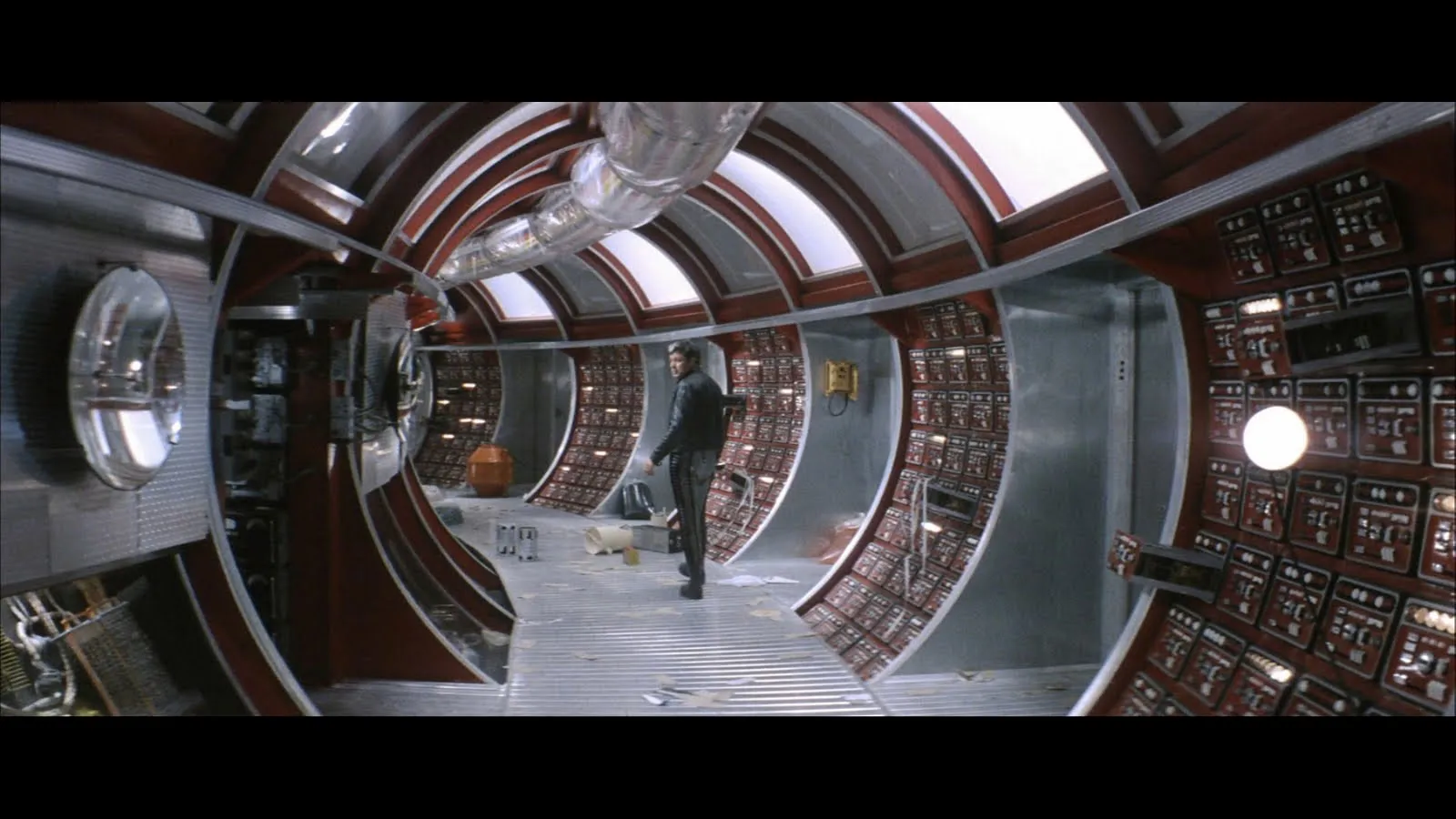
A man standing inside a messy hallway of a fictional spaceship. The steel gray and burgundy tunnel is lined in various nobs and buttons.

Solaris

Directed by Andrei Tarkovsky

Based on Stanislaw Lem’s science fiction novel of the same name, Andrei Tarkovsky’s iconic film Solaris is set aboard a space station orbiting a planet where a crew of scientists is studying its ecosystem. A scientist is sent to the space station to account for strange events that have been taking place onboard. Solaris charts a psychological territory haunted by phantoms, in which the real and the imagined are inextricably mixed, presenting a critique of faith in pure reason. As Tarkovsky writes in Sculpting in Time: “Solaris had been about people lost in the cosmos and obliged, whether they liked it or not, to take one more step up the ladder of knowledge. Man’s unending quest for knowledge, given him gratuitously, is a source of great tension, for it brings with it constant anxiety, hardship, grief, and disappointment, as the final truth can never be known.” Frequently compared to Kubrick’s 2001: A Space Odyssey, Tarkovsky’s directing style is marked by long takes with slow, careful framing, allowing the film’s themes of memory and love to take root.

Shadow Play is a series of films that tread nimbly between reality and illusion, acknowledging the artificial nature of cinema. Referencing the tradition of shadow puppetry, the origins of cinema in phantasmagoria, and Plato’s Allegory of the Cave, each film draws on the metaphors of light as reality and shadow as artifice. In Plato’s The Republic, the allegory of the cave illustrates the difference between truth and illusion. Many writers have noted that Allegory of the Cave (written c. 360 BCE), bears great resemblance to the contemporary movie theater.

Main Image: Film still from Solaris (1972).

Image
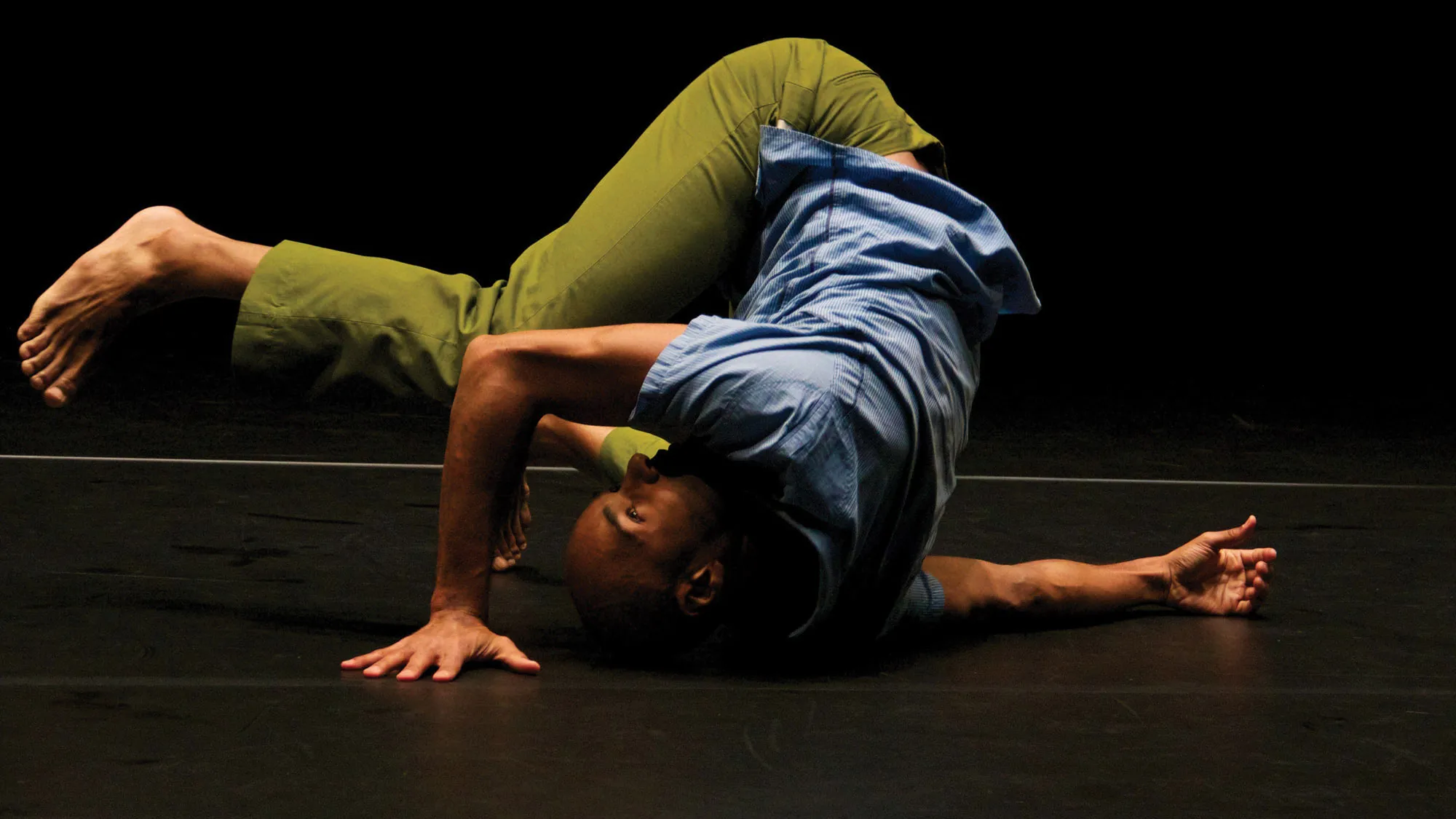
A Black man wearing a blue top and green pants laying on the stage floor with his leg over his head.

4Walls

Ralph Lemon

With 4Walls, Ralph Lemon premieres a live multimedia dance installation that provides four points of view on one dance, giving a new shape to a “dance with no form.” The basis of the amorphous collaborative work is a play on time, energy, and the disappearing body. Four Walls is an extension of a long-term project that began in 2003 with pieces originally titled Ecstasy and Wall. Lemon's intention for Wall was to create a “dance that disappears”—an attempt, in the words of dramaturge Katherine Profeta, to “fling the body headlong into an instant of pure presence.” Lemon desires to create a work that provides, for viewers, a different kind of engagement in a creative process that is relentless in questioning the nature of what passes between performers and audiences.

Main Image: 4Walls in Studio 1, 2012.

Media
Image
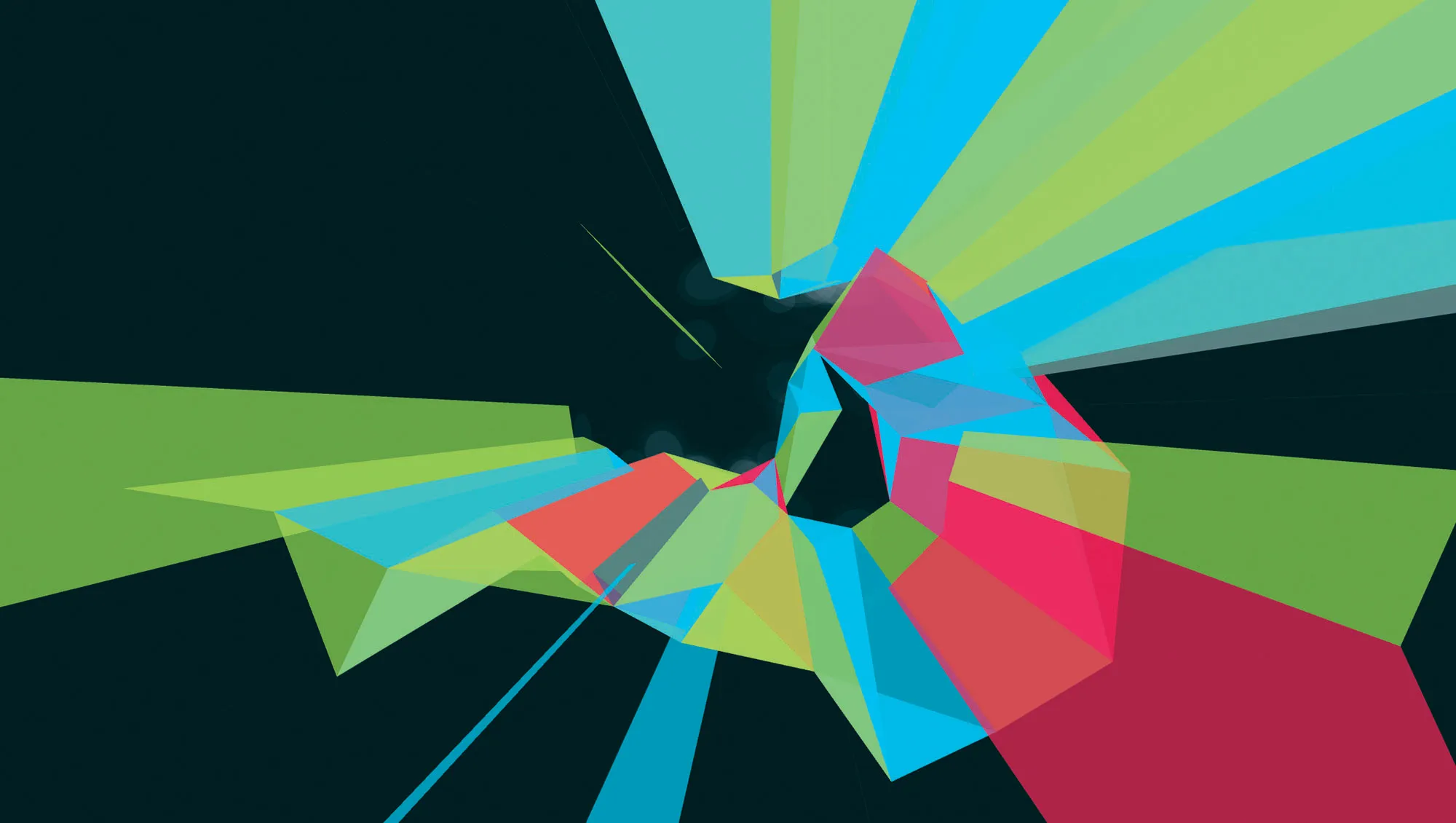
A computer generated image of a prism of magenta, lime green, and teal on a black background.

onedotzero

Code Warriors and Future Cities

Curated and compiled by onedotzero, this double feature presents programs that look to the future, with exuberant renderings of the next generation of urban landscapes, and to the past, with a retrospective of key works produced through the Processing programming language.

code warriors: a decade of processing — Celebrating 10 years of the open source programming language, Processing, which encompasses a development environment and an online community promoting software literacy within visual arts. Today, there are tens of thousands of students, artists, designers, researchers, and hobbyists who use Processing for learning, prototyping, and production.

future cities — An eclectic selection of short films, animations, and motion graphics presenting evocative visions of future cities and urban destinies. Juxtaposing utopian fantasies with nightmarish dystopias, Future Cities highlights the possible metropolis of tomorrow with sci-fi architectural visions, near future worlds, and the warped frontier of space.

Main Image: onedotzero codewarriors.

Image
Jennifer Koh

Jennifer Koh

Bach and Beyond

Jennifer Koh presents a concert from her Bach and Beyond series, a set of three solo violin recitals that strengthen the connections of the Six Sonatas and Partitas by Bach and the present day through a historical journey of solo violin works by various composers.

Johann Sebastian Bach
Sonata No. 1 in G minor, BWV 1001 (c. 1720)
Phil Kline
Partita for Solo Violin (2011)
Kaija Saariaho
… de la Terre (1991)
John Zorn
Passagen (2011)
Béla Bartók
Sonata for Solo Violin, Sz. 117 (1944)

Main Image: Jennifer Koh at EMPAC in 2012.

Media