Image
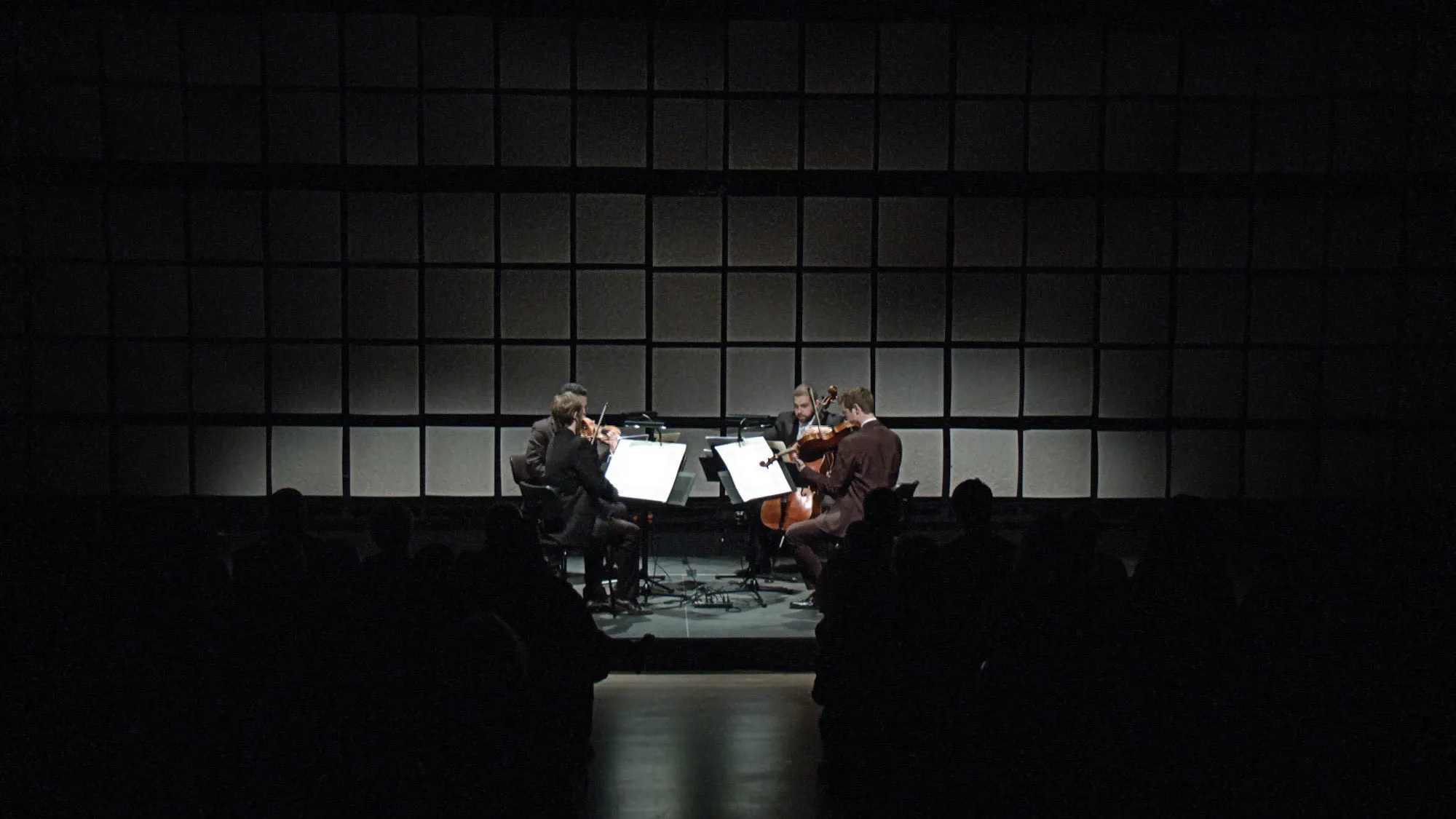
A quartet in a right formation performing a concert on a dark stage in front of a wall of gray acoustic tiles.

JACK Quartet

A string quartet performance in two acts featuring three pieces from the 1960s to the present that play with conventions of music notation and performance, and a haunting 30-minute piece from the 1990s with an uncanny spectral interplay.

Program Info:

Earle Brown, String Quartet

Peter Ablinger, Wachstum und Massenmord Alex Mincek, String Quartet No. 3 “lift-tilt-filter-split”

Intermission

Horaţiu Rădulescu, String Quartet No. 5 “before the universe was born”

The JACK Quartet electrifies audiences worldwide with “explosive virtuosity” (The Boston Globe) and “viscerally exciting performances” (The New York Times). David Patrick Stearns of The Philadelphia Inquirer proclaimed their performance to be “among the most stimulating new-music concerts of my experience,” and NPR listed their performance as one of The Best New York Alt-Classical Concerts Of 2010.

Comprising violinists Christopher Otto and Ari Streisfeld, violist John Pickford Richards, and cellist Kevin McFarland, JACK is focused on commissioning and performing new works, and the quartet has worked closely with composers Helmut Lachenmann and György Kurtág, among others. JACK also offers fresh interpretations of early music, including works by Don Carlo Gesualdo, Guillaume de Machaut, and Josquin des Prez.

Main Image: Jack Quartet in 2011.

Image
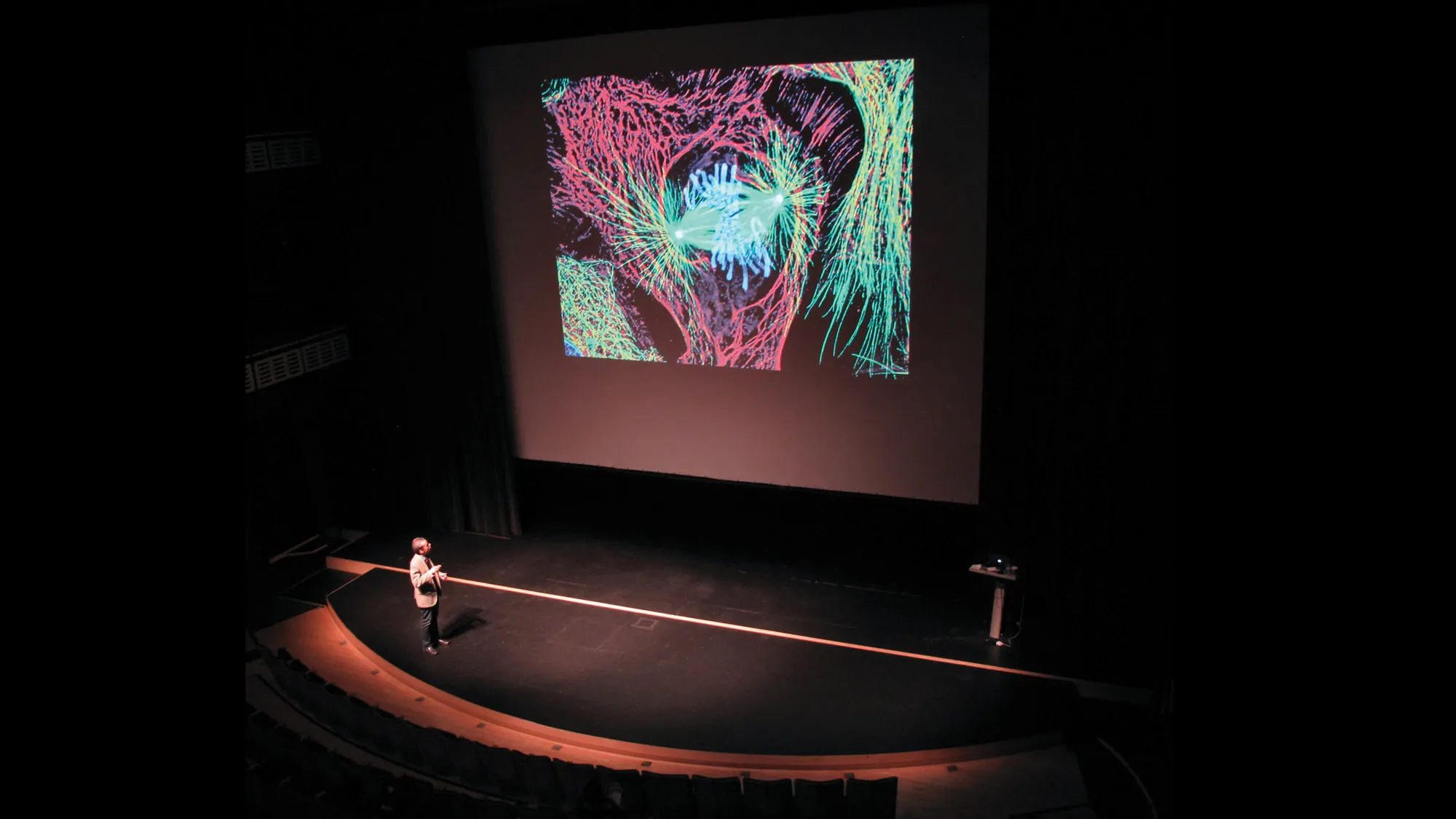
Robert Lue giving a lecture.

Robert Lue

Using Art to Express and Advance the Scientific Process

Robert Lue, biologist and director of life sciences education at Harvard, will discuss the vital and transformative role that visualizations play in both science research and education. Lue is the founder of BioVisions, a collaborative initiative led by Harvard scientists to improve the beauty and precision of science visualization. Biovisions is responsible for animations such as The Inner Life of the Cell (2006) and Powering the Cell: Mitochondria (2010).

Robert A. Lue is a professor in the Department of Molecular and Cellular Biology and the director of life sciences education at Harvard University. Lue received his PhD in biology from Harvard and has taught undergraduate courses there since 1988. He has a longstanding commitment to interdisciplinary teaching and research, and chaired the faculty committee that developed the first integrated science foundation in the country to serve multiple science majors, as well as the needs of pre-medical students. He has also developed award-winning multimedia on several topics including Understanding HIV and AIDS (1999), Biochemistry: Interactive Learning (2000), The Inner Life of the Cell (2006), and Powering the Cell: Mitochondria (2010). His media publications have been praised for their scientific accuracy, educational utility, and vibrant 3-D reconstructions of the world within the cell. He has co-authored undergraduate biology textbooks, and has chaired educator conferences on college biology for the National Science Foundation, and on supporting diversity in science for the Howard Hughes Medical Institute and the National Institutes of Health. Lue also has a long history in pre-college education, and consequently founded and directs a Harvard life sciences outreach program that now serves over 50 high schools across Massachusetts, New Hampshire, and Rhode Island. As the faculty director of the Harvard-Allston Education Portal, he also oversees the integration of undergraduate education with community outreach on Harvard’s new Allston campus.

Main Image: Robert Lue in the theater during his talk in 2011. Photo: EMPAC/Rensselaer.

JACK Quartet

JACK Quartet

JACK Quartet (violinists Christopher Otto and Ari Streisfeld, violist John Pickford Richards, and cellist Kevin McFarland) collaborated with EMPAC’s audio and video teams while in residence to finish their recording of Helmut Lachenmann’s complete string quartets. At the residency’s conclusion, the JACK Quartet presented a performance in two acts. The first featured three pieces (by Earle Brown, Peter Ablinger, and Alex Mincek) spanning the 1960s to the present that played with conventions of music notation and performance. The second act featured Horat,iu Radulescu’s haunting 30-minute String Quartet No. 5, before the universe was born from the 1990s. JACK Quartet commissions and performs new works, working closely with composers in the US and Europe, and touring extensively. JACK also offers fresh interpretations of early music, including works by Don Carlo Gesualdo, Guillaume de Machaut, and Josquin des Prez.

Image
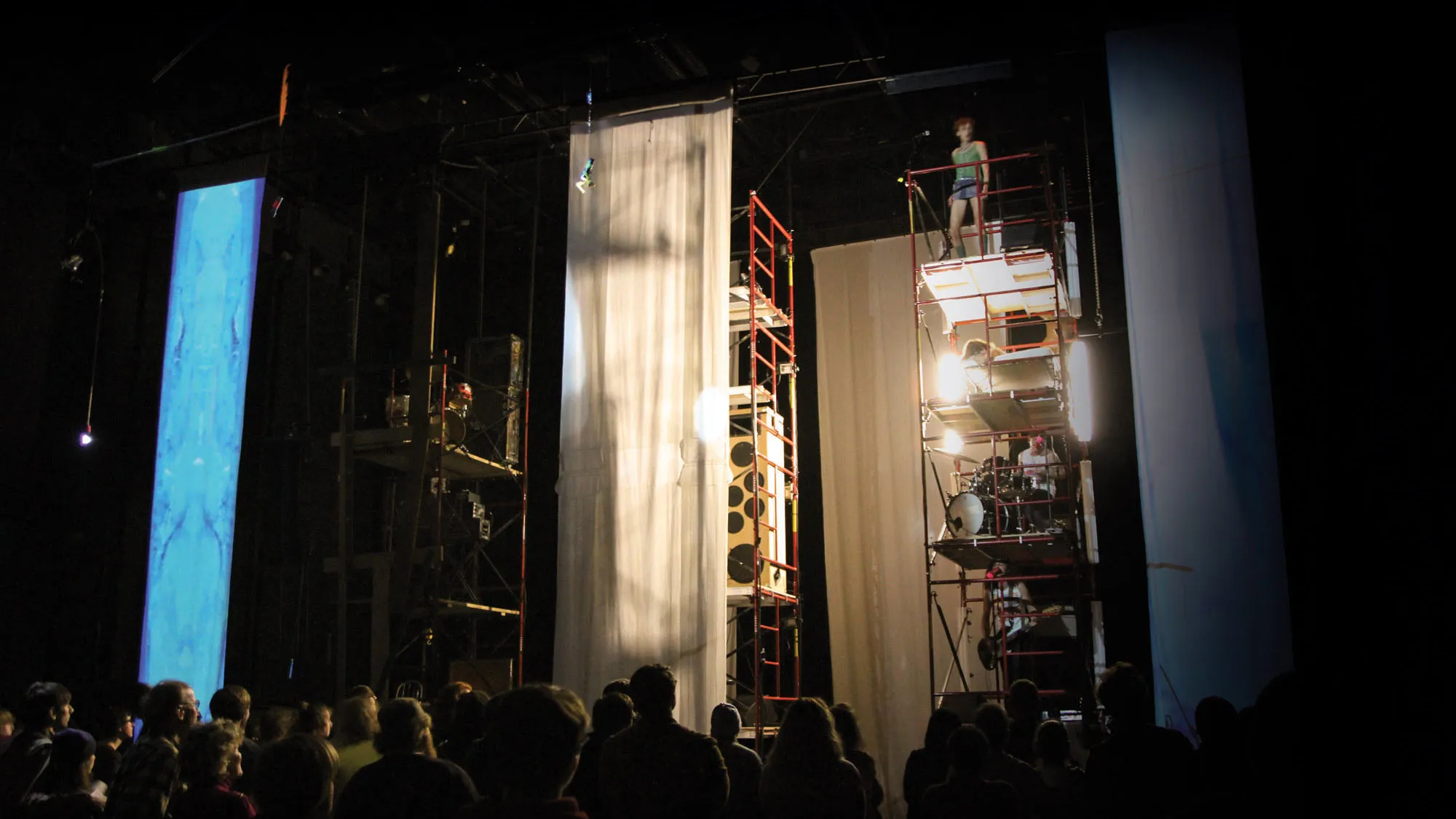
Musicians on scaffolding with each member of the band on different levels playing a concert to a crowd on a staged draped in sheer white fabric.

The Cake of The 3 Towers

Japanther

The three towers are prison, museum, and (housing) project, albeit loosely. Music, video, and performance draw parallel lines between the three industrial archetypes. Moving through these structures, the artists utilize fragments of their environment to envision a utopian creative endgame. Meanwhile, an Austrian super villain (Florian Reither) attempts to unite and destroy the dystopian worlds. The Cake of The 3 Towers (TCo3T) is a collaborative project featuring Japanther, Schuyler Maehl, Florian Reither, and Felice Faison commissioned for Quote Unquote: Experiments in Time-Based Text, an interdisciplinary series presenting work by artists that use an existing text as a departure point for installation, film, and performance.

Japanther is an art project established circa 2001 by Ian Vanek and Matt Reilly in Brooklyn, New York. In addition to wild interactive live showings in unconventional settings, the duo has collaborated with Dan Graham, Gelitin, Eileen Myles, ninjasonik, and Spank Rock, among others. Japanther was featured in the 2006 Whitney Biennial as part of Don’t Trust Anyone Over Thirty and the 2011 Venice Biennial as part of Gelitin's Some Like It Hot performance. The duo has made a name for themselves through unique performance situations including shows with synchronized swimmers, oversized puppets, from out of the back of a moving truck, alongside giant dinosaurs, and with BMXers flying off the walls of the Whitney sculpture garden.

Media
Image
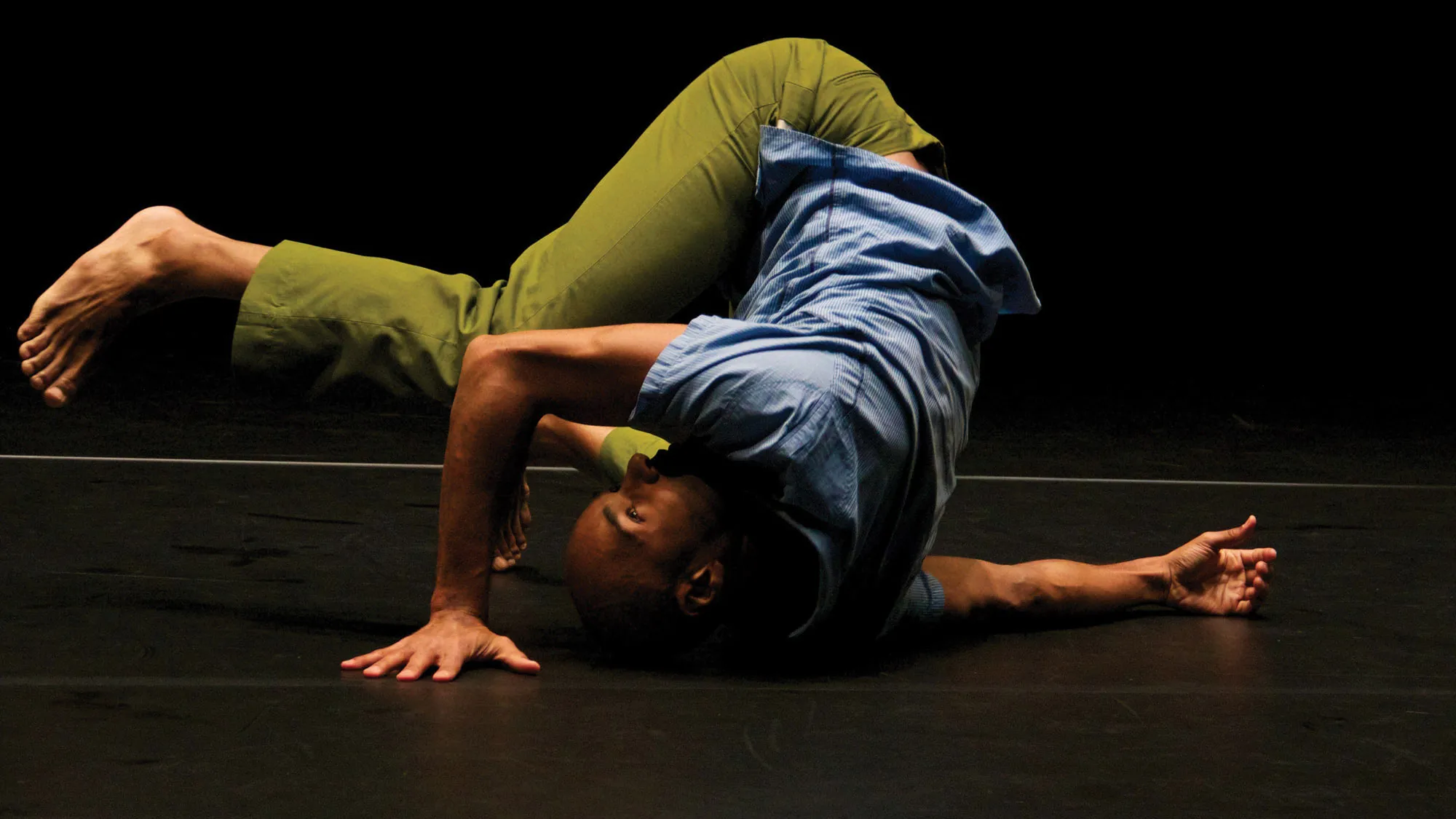
A Black man wearing a blue top and green pants laying on the stage floor with his leg over his head.

Ralph Lemon

Ralph Lemon shared a work-in-progress presentation of a two-channel video installation of 4Walls, a piece that would eventually encompass live performance, surround sound, and two large-scale projections in an open environment where the audience can roam. This video captures the ecstatic abandon of a 20-minute dance section from Lemon’s How Can You Stay in the House All Day and Not Go Anywhere?, which also blended live performance, film, and visual art, and toured the US in 2010. In this excerpt, performers exhibit a turbulent physicality bordering on complete exhaustion, revealing what is left when we feel we cannot go any further. 

Lemon is a dancer, choreographer, writer, and visual artist, and is also artistic director of Cross Performance, a company dedicated to the creation of cross-cultural and cross-disciplinary performance and presentation. 

Main Image: 4Walls in studio 1, 2011. Photo: EMPAC/Rensselaer.

Image
Michael Century

Extraordinary Freedom Machines

Vignettes in the History of a Multimedia Century

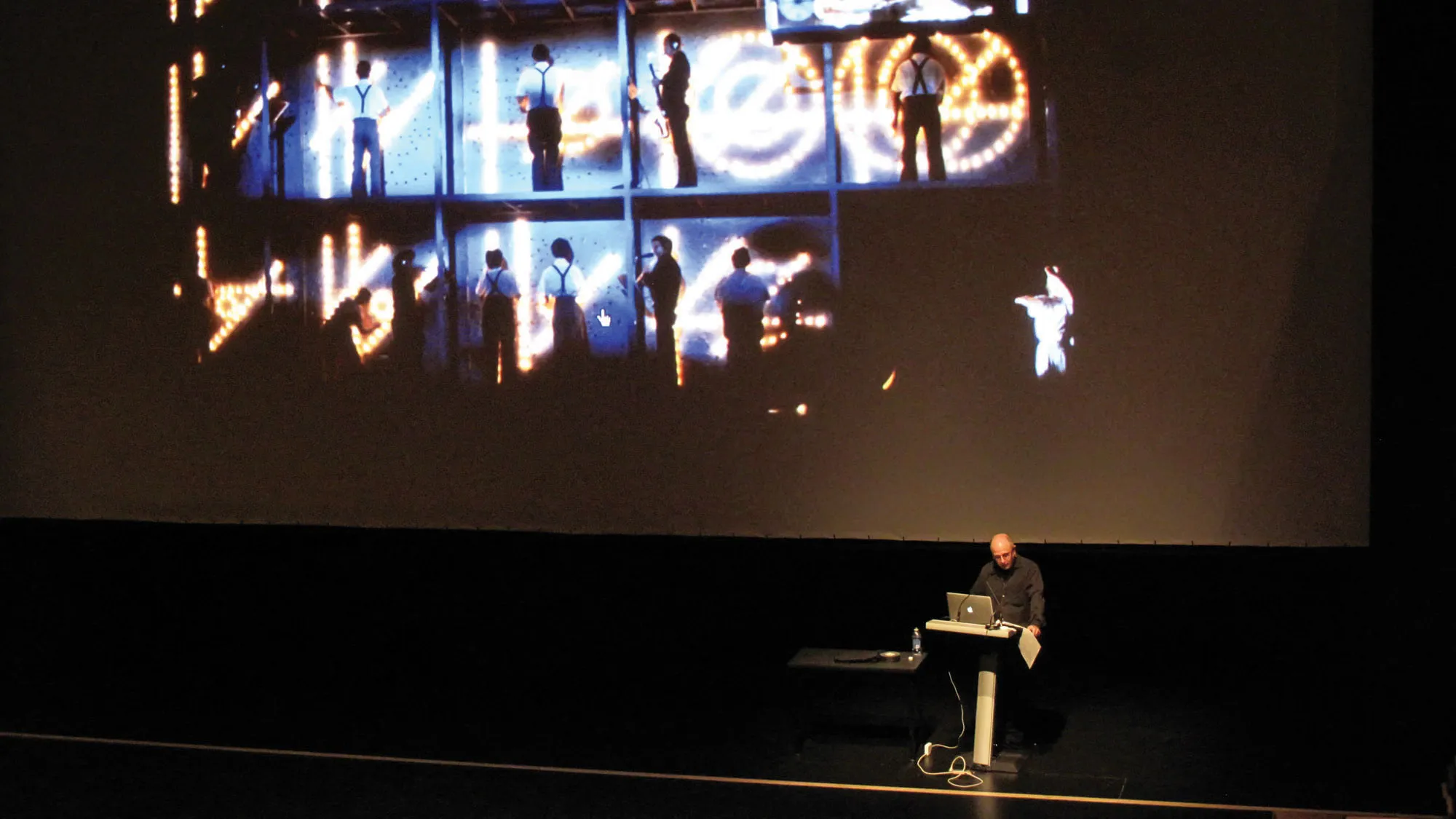
In this three-part lecture series, Michael Century presents a fresh reading of today’s experimental media art scene by surveying key works, personalities, and movements of the past century and laying out a framework for forecasting its future. Organized around an intertwined pair of narratives, the lectures are richly illustrated with stills and video, sound recordings, and live musical demonstrations. The underlying narratives are driven by contrasting conceptions of the role of the artist and of time. The first sees the artist as anticipating the powers and dangers of techno-scientific progress through idiosyncratic experiments, with time as linear and progressive. The second sees the artist as re-constituting past historical ruptures and forgotten pathways to envision alternative ways of being contemporary with a more cyclical sense of progress.

September 27— Après le Deluge, 1913-1947

Surveys key moments and tensions within the historical avant-garde, with examples from dance, abstract film and animation, experimental music, and critical theory.

October 11— The Panacea That Failed, 1948-1974

Balances the celebratory heyday of art and technology against a rising tide of disillusionment and media-archeological irony.

November 29— Virtuality to Virtuosity, 1974-2011

Moves beyond what some have termed the crisis of new media art today—its relegation to “cool obscurity” by the institutional art world, and its simultaneous co-option by the information industries—by sketching out an anti-anti-utopian view of the potential of experimental artworks as “extraordinary freedom machines.” By framing the future of art and technology in terms of creative freedom, this concluding lecture weaves together and synthesizes strands from the first two. The argument unfolds in two parts, examining in turn the micro-temporality of specific media art works, and the macro-temporality of aesthetic systems designed to enable future creativity. In the first part, “virtuality” is explained as an intensification of time; selected works by David Rokeby, Bill Viola, and Steve Reich illustrate the potential in art to vitalize and open new horizons of experience. The second part embraces political philosopher Hannah Arendt’s notion of freedom as “virtuosity”, entailing the creation of a sustainable public space for creative dialogue and collaboration. Examples are drawn from the histories of video art in the 1970s (Dan Sandin’s Image Processor), the history of computer music in the 1980s (the invention of the MAX programming language), and recent new media art (Loops by the Open Ended Group).

Main Image: Michael Century in the theater during his talk, 2011. 
Media
Image
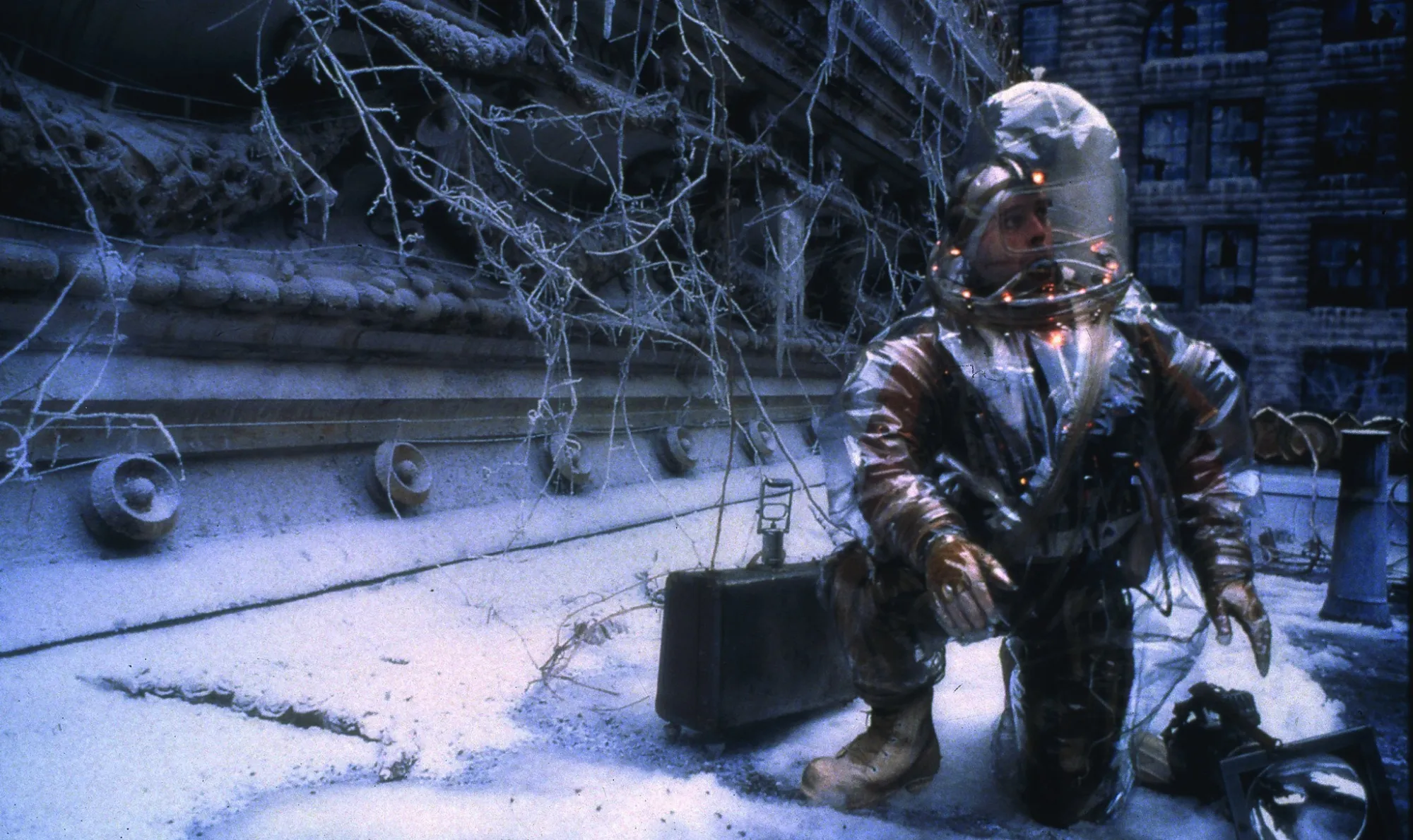
Bruce Willis kneels in a environmental hazmat suit in the snow in the film, 12 monkeys.

12 Monkeys

Directed by Terry Gilliam

12 Monkeys, Terry Gilliam’s apocalyptic science fiction film, imagines a future ravaged by disease. In Gilliam’s dystopian vision, John Cole (played by Bruce Willis) travels back to 1990 to gather information about the man-made virus that will wipe out the majority of humanity in 1996. Inspired by Chris Marker’s La Jetée, the film’s narrative is structured by a parallel temporal loop.

Terry Gilliam is an American-born British screenwriter, film director, and animator. Originally known for his fantasy animations in the television series Monty Python’s Flying Circus (1969–74), he went on to work in film, directing such imaginative adventures as Jabberwocky (1977), Time Bandits (1981), Brazil (1985), The Adventures of Baron Munchausen (1988), The Fisher King (1991), Fear and Loathing in Las Vegas (1998), and The Brothers Grimm (2005). Gilliam’s films often include fantastical plotlines where the sanity of his characters is questioned.

Main Image: Film still from 12 Monkeys (1995).

The Cruise

eteam

While in residence, eteam (Franziska Lamprecht and Hajoe Moderegger) worked on The Cruise, recording a three-and-a-half hour monologue performed by Maja Sweeny. An audio film for radio, The Cruise was inspired by daily observations of a waitress on a cruise ship who habitually kept track of every task she performed: number of footsteps taken, number of words spoken, tea drinkers who appeared, non-tea drinkers who didn’t, cuts to prepare the sandwiches, waves that passed, temperature, etc. Based on their observations and the waitress’s log, eteam wrote a script that covered six days on board the ship. The resulting monologue premiered on WGXC, an upstate New York community radio station that is a division of Wave Farm.

eteam works at the intersection of relational aesthetics, the Internet, and land art, and coordinates collective happenings and conceptual transactions.

Image
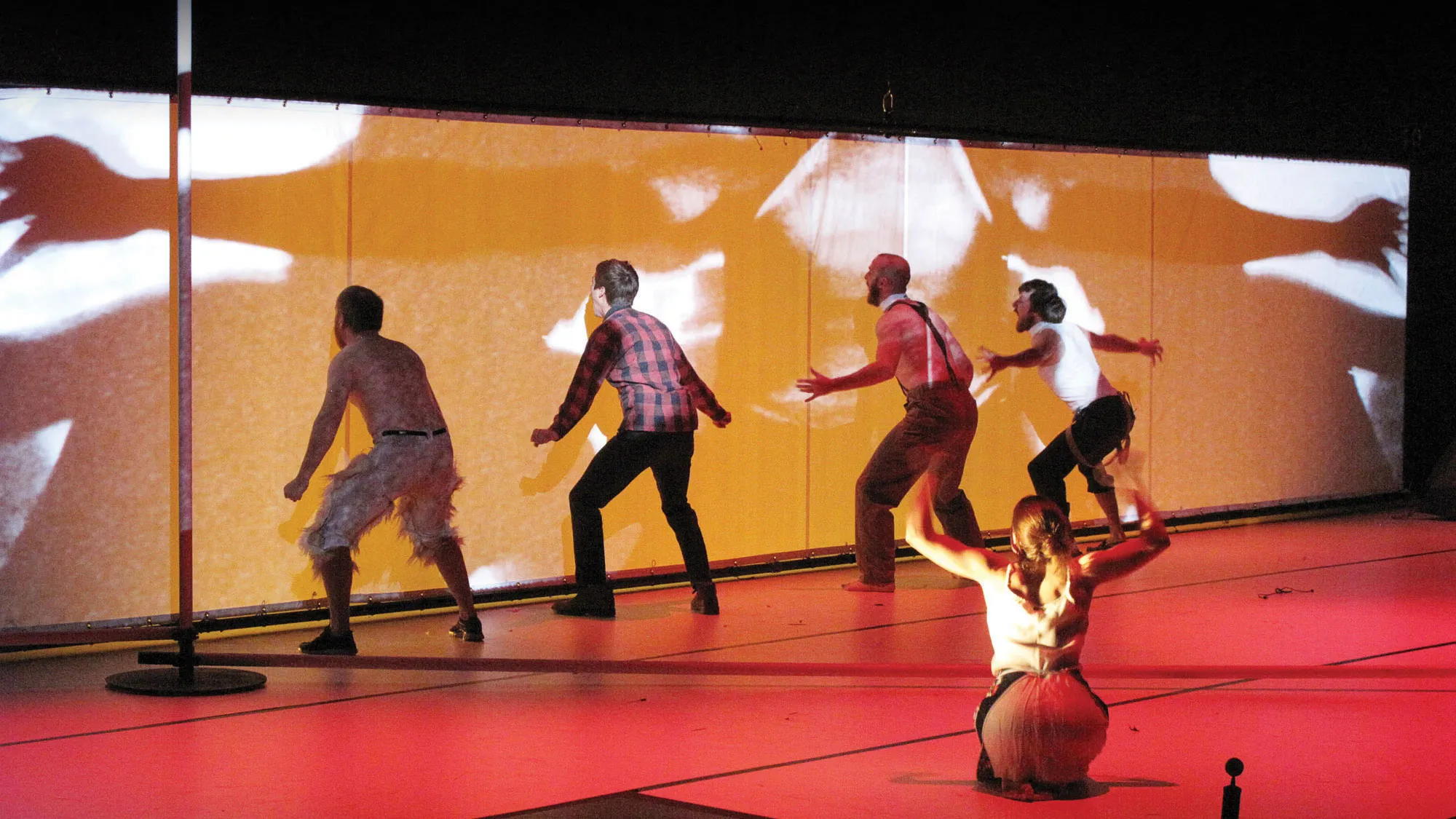
Four male performers yellowing at a yellow wall with outstretched arms. A woman sits on her knees on a red floor in the foreground with back to the viewer with her arms up, directing the performance.

Workshop with Poor Dog Group

This four hour session with the artists of Poor Dog Group (PDG) exposed and examine the unique artistic practices of the PDG collaborators. Participants learned how to build a new theatrical experience in a collaborative environment; learning the fundamentals of constructing an experimental performance piece with the tools of original story structure, character development, movement and text.

Main Image: Poor Dog Group in the theater, 2011.

The Cake of The 3 Towers

Japanther

EMPAC commissioned Japanther to create and present The Cake of The 3 Towers. With performers perched on three “towers” made up of scaffolding and platforms—to represent a prison, museum, and housing project—the piece mixed music, video, and performance to draw parallels between the prison-industrial complex and the “art-industrial complex.” The Cake of The 3 Towers was a collaboration among Japanther, Schuyler Maehl, Florian Reither (as an Austrian super villain who attempts to destroy this dystopia), and Felice Faison.

Japanther is an art project established by Ian Vanek and Matt Reilly in Brooklyn, New York that creates interactive live shows in unconventional settings: out of the back of a moving truck, alongside giant dinosaurs, with synchronized swimmers, with oversized puppets, and with BMXers flying off the walls at the 2006 Whitney Biennial presentation of Don’t Trust Anyone Over Thirty, All Over Again in collaboration with Dan Graham and Tony Oursler.

Quote Unquote: Experiments in Time-Based Text was an interdisciplinary series presenting works by artists that use an existing text as a departure point for time-based works including installation, film, and performance.