One can make out the surface only by placing any dark-colored object on the ground

Hannah Rickards

One can make out the surface only by placing any dark-colored object on the ground is a performance that used navigational techniques to choreograph the interaction of a moving camera with two performers.

The title refers to how one can travel in polar whiteout conditions by placing an object on the ground and continuing to place the object in front of you as you move forward. By this succes- sive act, a pattern is formed, which can be viewed as a visual score for performance. Inspired by the graphic scores of Morton Feldman that explore musical composition as spatial terrain, London- based artist Hannah Rickards approached the media infrastructure of EMPAC’s Studio 1 in a similar fashion. A cable-suspended camera was maneuvered throughout the space in relation to the performers, capturing wide aerial shots as well as close-up detail of their gestures.

This performance was developed specifically for the production environment of Studio 1 and was the only time this work was performed live. Fol- lowing the artist’s residency, One can make out the surface... is exhibited as a video installation.
Jennifer West

Film Memory

Los Angeles-based artist Jennifer West was in residence to develop Film Memory, an installation in which she integrated 100 channels of film to explore cinema as a material repository of memory.

A night of unabashed film love that delved into the darkened make-out corners of cult and mid- night movie theaters, celebrated the circulation of VHS bootlegs, and tracked through the video rental houses, multi-screen drive-ins, discount multiplexes, art house theaters, lecture halls, and museums of film culture, ending up in today’s tangled web of digital file sharing and online- streaming platforms. An elegy to our ever- changing cinematic contexts and their continued transition to the virtual world, the event reached beyond the frame to reveal how our experience of celluloid and its circuits of distribution function both as a catalyst for personal memory and as a tool to trace unconsidered histories.

Jennifer West was in residence to develop Film Memory—a feature-length film and multi- channel installation exploring the moving image as material memory. Constructed as a “personal historical survey” of cinema, it captures and reconnects the places, spaces, languages, and memories that are born from the cinematic experience.

Image
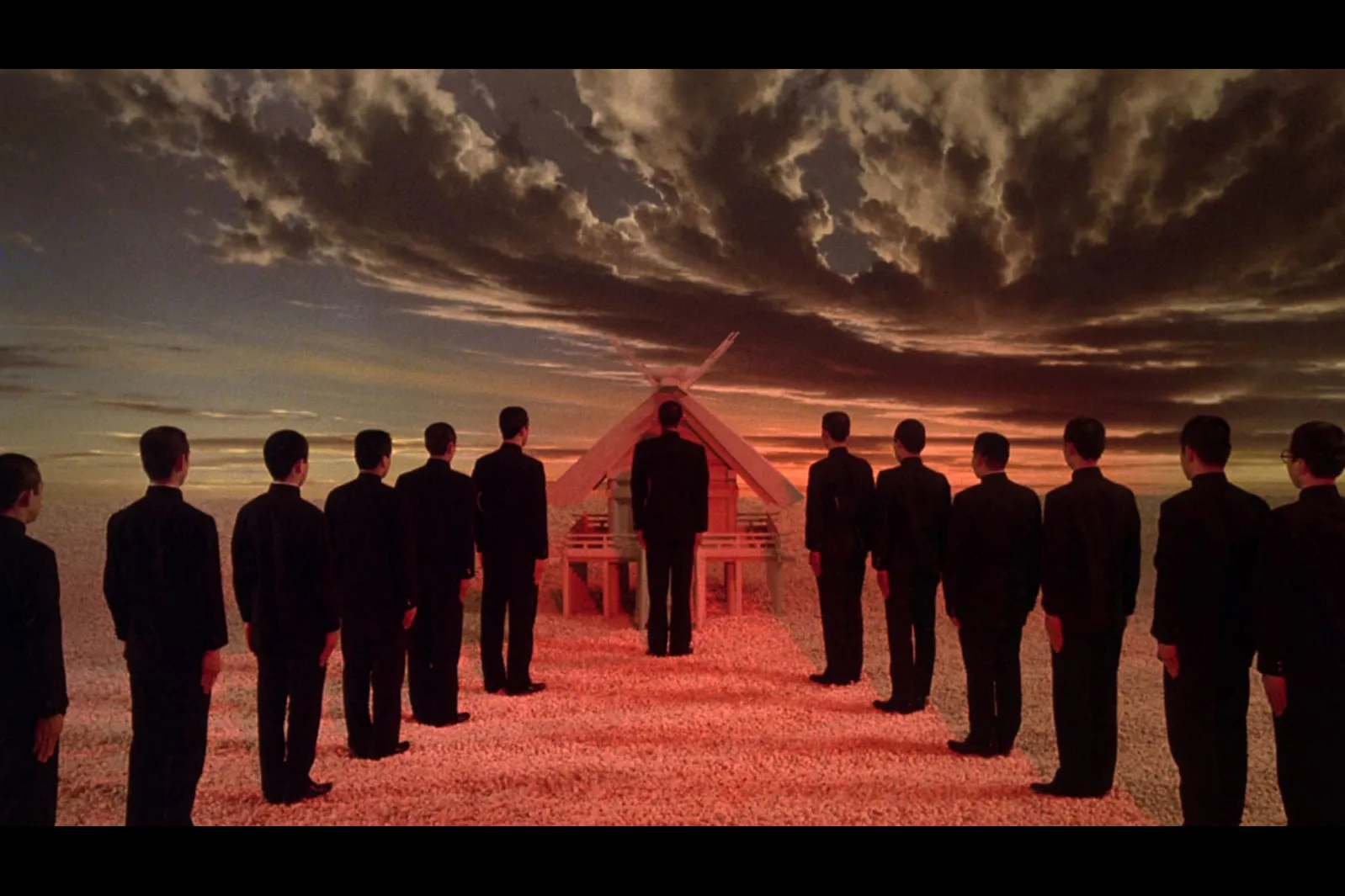
Thirteen men dressed in black in a surreal landscape standing with backs to the camera in a 'V' formation with one man at the point, facing an alter.

On Screen/Sound: No. 5

Jimmy Joe Roche and Dan Deacon / Paul Schrader

The fifth screening in On Screen/Sound grapples with ideas of the real, acted, and reenacted as intertwined in both image and music.

A melting pot of experimental performance and sound, quiet beauty, pop fantasy and social commentary, Hilvarenbeek concocts a surreal post-consumer utopia in the Dutch countryside. Directed and scored by longtime collaborators Jimmy Joe Roche and musician Dan Deacon, the faux documentary follows a heavy-metal cow herder, a gang of thrift-store naturalists who hunt with automatic weapons, and other imagined historical personalities.

Paul Schrader’s 1985 film Mishima was called by Roger Ebert the “most unconventional biopic I've ever seen, and one of the best.” Framing the life and ritual suicide of Japanese writer Yukio Mishima with interwoven dramatizations of his novels, the film establishes a visual and sonic palate for each element. The film score by Philip Glass—one of his earliest—musically parallels the narrative elements and is regarded as one of his finest.

PROGRAM:

Main Image: Mishima: A Life in Four Chapters (1985) Paul Schrader / Music: Philip Glass. Courtesy Swank Motion Pictures.

Image
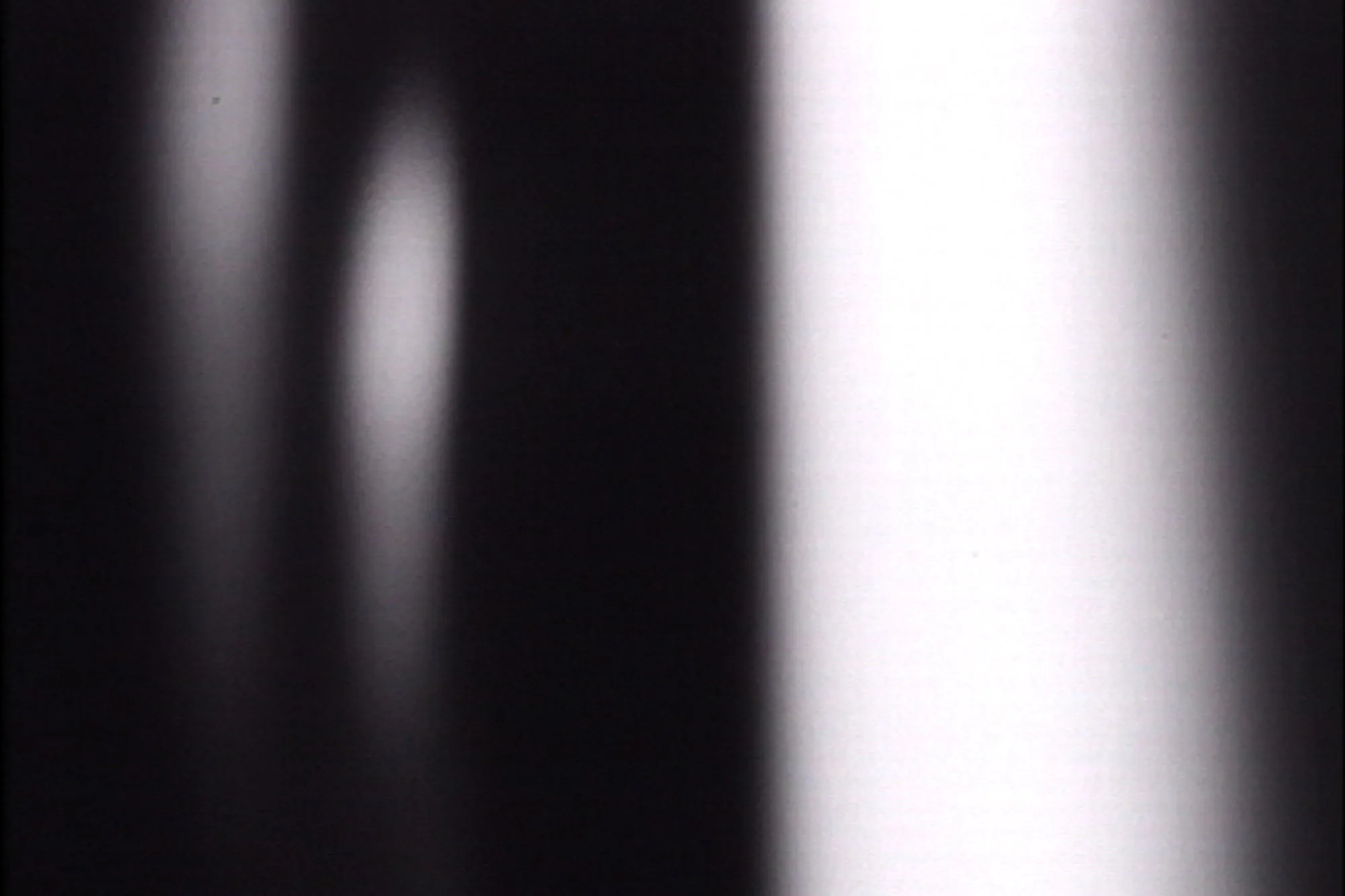
an abstract black and white image.

On Screen/Sound: No. 6

Henning Lohner and John Cage / Lis Rhodes

The sixth screening in the series On Screen/Sound features two works composed exclusively using light: Lis Rhodes' Light Music and Henning Lohner and John Cage's One11 and 103.

With two opposing 16mm projectors illuminating the room, Lis Rhodes' Light Music shakes its audience from passive observer into active participant. Composed by printing black and white patterns onto celluloid film, which are then read by the projector as both audio and image tracks, Light Music flickers this "score" directly onto the audience as their shadows merge with the oscillating images. The sputtering of the projectors themselves blend with the audio to immerse the audience and make them feel at once as the projectionist, audience, and star.

The only feature-length film by the iconoclastic artist John Cage, One11 was completed in 1992, the year of his death. A 96-minute contemplation on the movement of light, accompanied by sounds that just happen to occur at the same time (Cage's orchestral work 103), One11 is not a normal film. As Cage says "One11 is a film without subject. There is light but no persons, no things, no ideas about repetition and variation. It is meaningless activity, which is nonetheless communicative, like light itself, escaping our attention as communication because it has no content to restrict its transforming and informing power."

PROGRAM

Main Image: One11 and 103, John Cage and Henning Lohner, (1992). Video still: Courtesy of EAI, NY.

Image
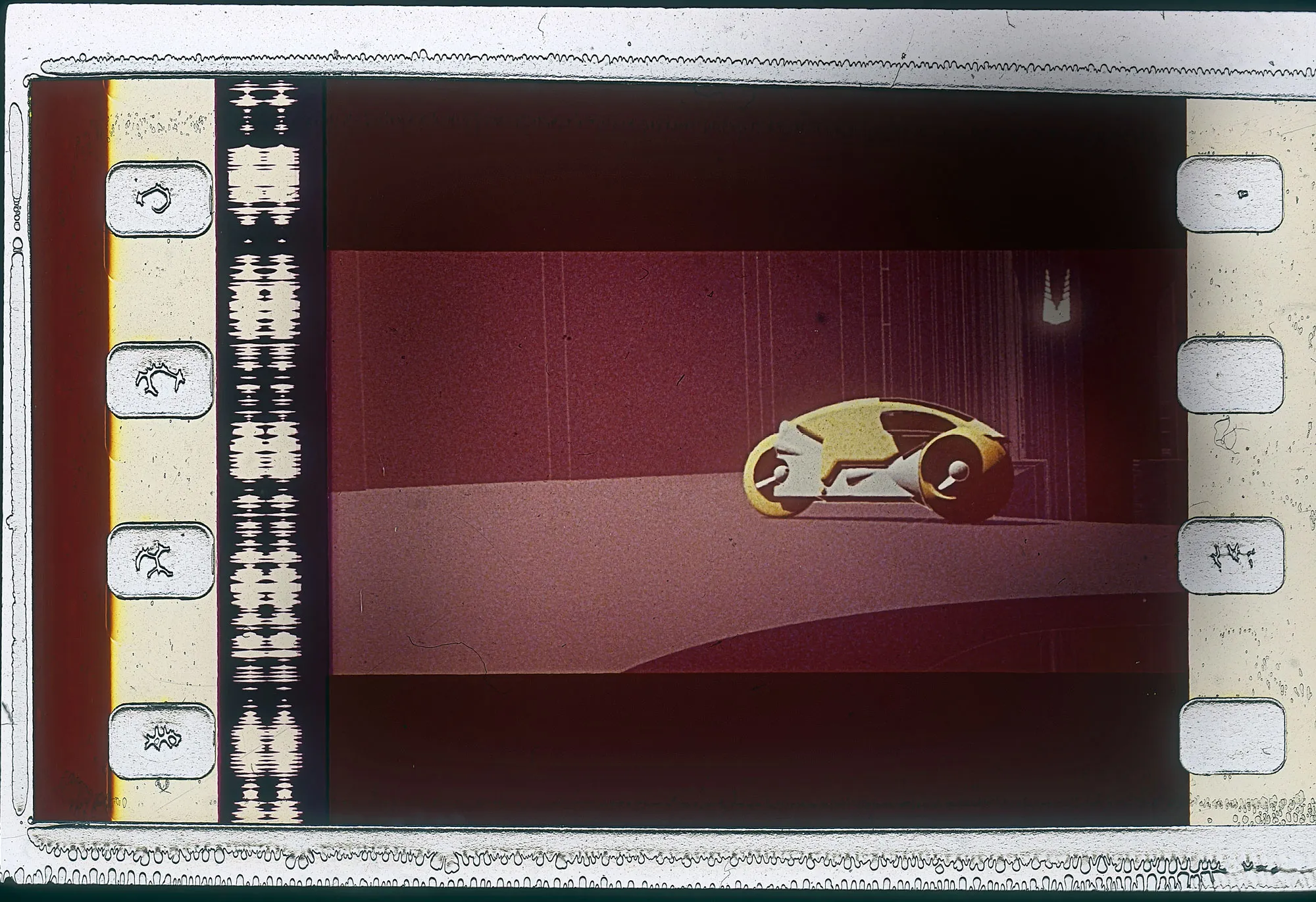
a celluloid still of a small yellow vehicle.

On Screen/Sound: No. 1

Dara Birnbaum / Evelyn Lambart and Norman McLaren / Steven Lisberger / Nam June Paik and Jud Yalkut

This event is FREE in celebration of the launch of Programming EMPAC, The First 4,158 Days

The first screening of the new series On Screen/Sound focuses on analog and synthetic experiments by US-based artists who pioneered new approaches to the correlation of a film's sound and image tracks.

Presenting films and videos from a 15-year period of intense experimentation with electronic synthesis, animation, and editing techniques across all media, this program begins with Norman McLaren and Evelyn Lambart's Mosaic, in which the artists composed the soundtrack by engraving it directly onto the filmstrip. McLaren followed this in 1971 with Synchromy, taking this approach further by photographing sound-card patterns on the soundtrack and reproducing them on the celluloid's image track in order to directly visualize the sound.

Built from the manipulation, distortion, and looping of found footage and televisual images, both Nam June Paik and Jud Yalkut's Video Tape Study No. 3 and Dara Birnbaum's iconic Technology Transformation: Wonder Woman are videos structured by the original sound as well as its image.

These experimental shorts, which combine animated and live-action techniques and materials, are followed on an industrial scale by Steven Lisberger's acclaimed 1982 feature film Tron, with a soundtrack scored to combine both synthesizer and orchestra by electronic music pioneer Wendy Carlos.

PROGRAM:

Main Image: A celluloid film still of TRON. Steven Lisberger (1982). Courtesy Swank Motion Pictures


Media

On Screen/Sound: No. 8

Cally Spooner / Mervyn Le Roy

Introduced by London-based artist Cally Spooner, the final fall event for the On Screen/Sound series presents an evening exploring the specificities of transforming the musical from theater to screen.

Cally Spooner's EMPAC-produced musical And You Were Wonderful, On Stage is a picture that appropriates the choreography of different performance genres, such as the Broadway musical, the television commercial, and the political speech. Spooner considers how dematerialized, indeterminate, unmediated performance can sit within the extreme visibility of entertainment and today's attention economies.

Nominated for an Oscar for Best Sound Recording, the iconic Busby Berkeley-choreographed musical Gold Diggers of 1933 was based on the play by Avery Hopwood and translated to screen by director Mervyn Le Roy. Including expansive overhead shots that follow classic Berkeley set-pieces, the musical is set to songs by Harry Warren and Al Dubin.

PROGRAM:
Image
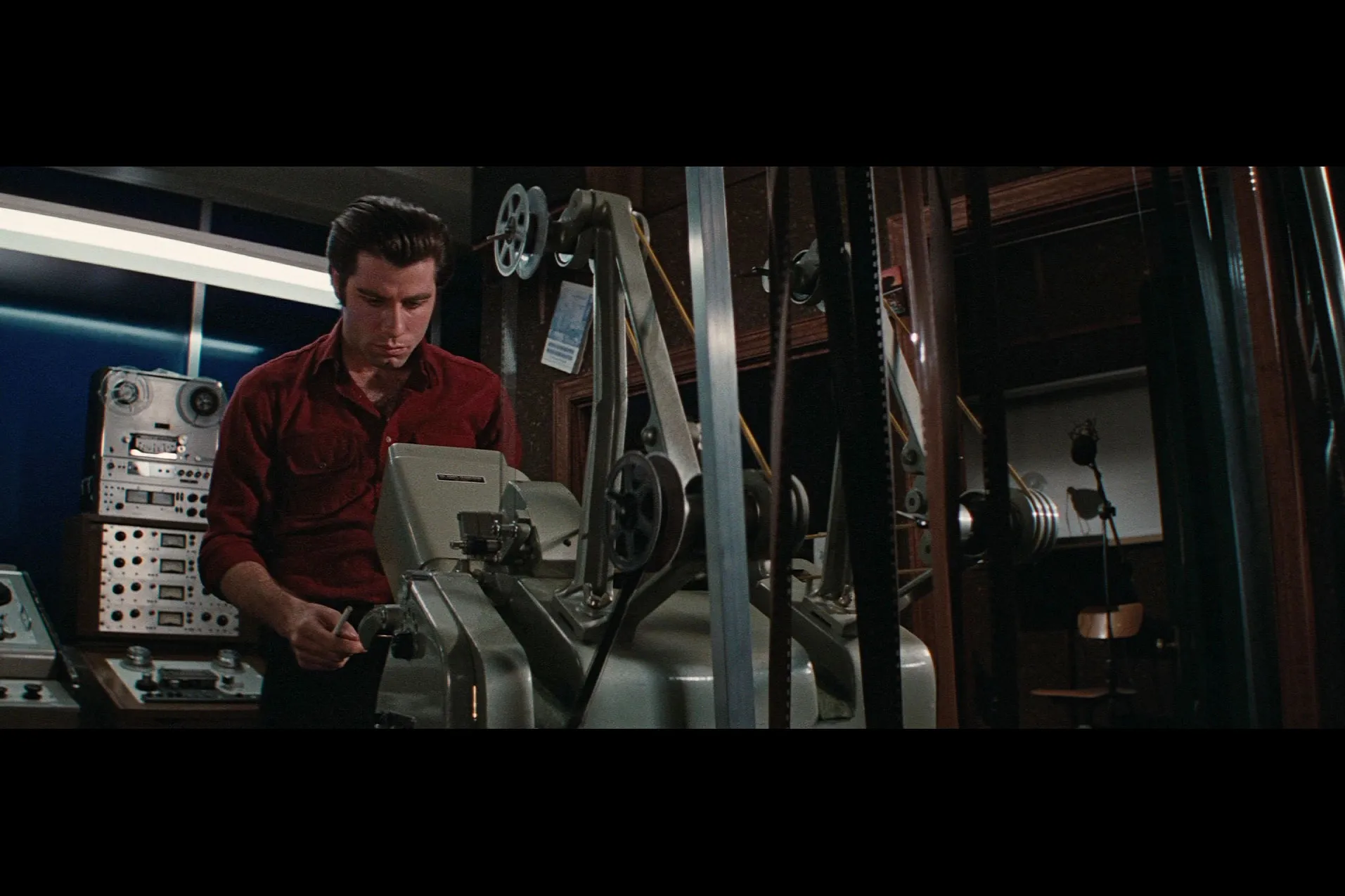
john travolta standing behind a projector in a projection booth.

On Screen/Sound: No. 7

Kou Matsuo / Brian de Palma / Deborah Stratman

Footsteps, the screech of car tires, a gunshot—these events, devoid of their identifiable sounds, would render their image nearly powerless. It is the unity of these elements that binds them together and gives them visceral effect. The seventh screening in the On Screen/Sound series examines the influence of Foley and sound effects on moving image.

Creeping tension is defused by the banality of production in Deborah Stratman’s Hacked Circuit, while the hyperactive, fantastical sounds of magic highlight the otherworldliness of an episode of Kou Matsuo's Japanese anime Yozakura Quartet: Hana no Uta.

The feature film of the evening, Brian de Palma’s Blow Out, a sonic response to Michelangelo Antonioni’s classic Blowup, finds a movie sound-effects engineer (John Travolta) in the wrong place at the wrong time as he unwittingly records the sound of a murder and is drawn into a web of intrigue. Hacked Circuit will be introduced by Chicago-based filmmaker Deborah Stratman.

PROGRAM:

  • Hacked Circuit (2012)
  • Deborah Stratman
  • Yozakura Quartet: Hana no Uta - No. 7 (2013)
  • Kou Matsuo
  • Blow Out (1981)
  • Brian de Palma

Main Image: Film still from Blow Out, Brian de Palma (1981). Courtesy Swank.

Media
Image
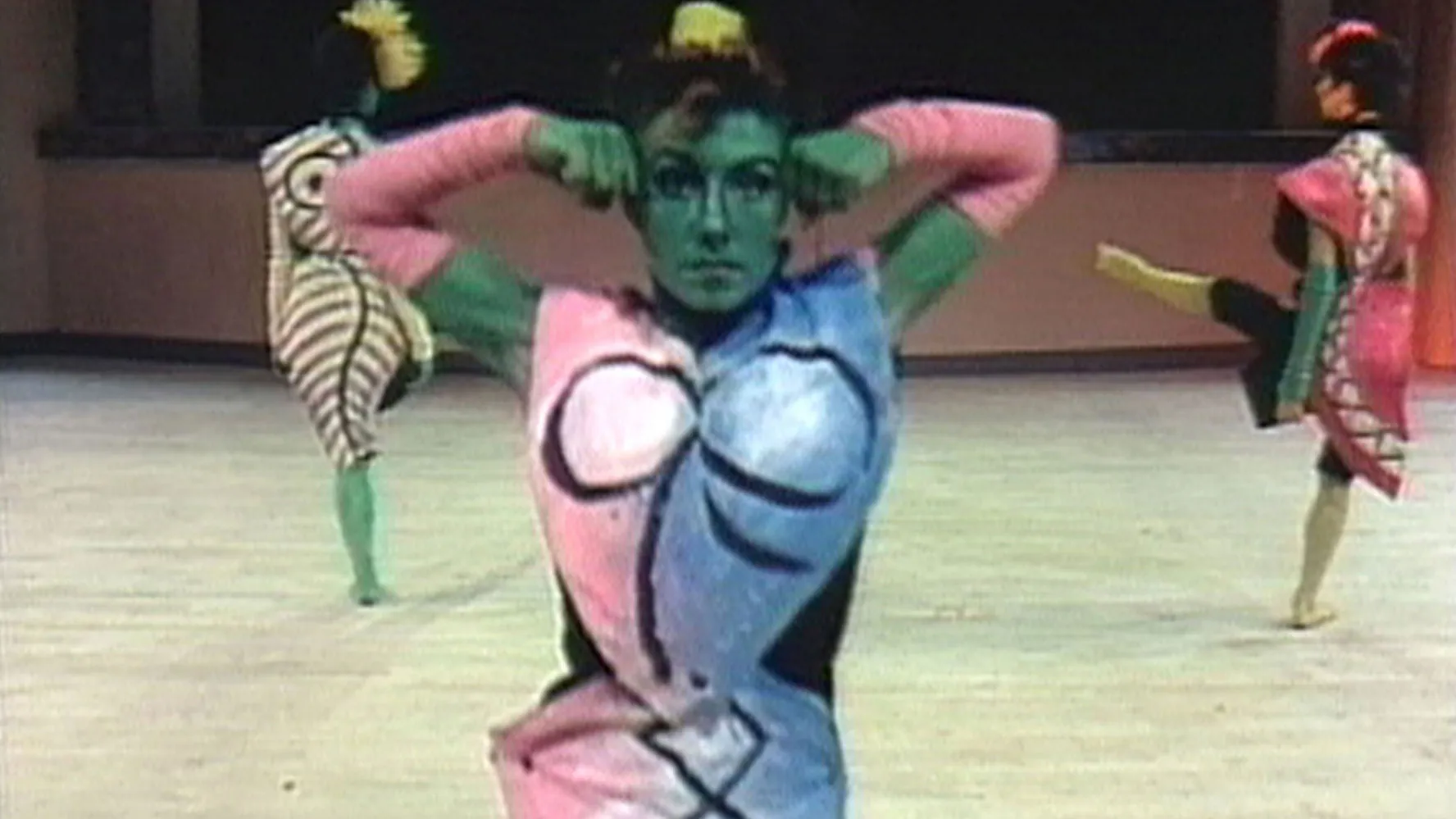
A woman painted green wearing a half pink, half blue costume with a Picasso inspired nude female form painted on her outfit. Two other female performers are in the background similarity dressed.

On Screen/Sound: No. 2

Martin Arnold / Charles Atlas and Philippe Decoufle / Loretta Fahrenholz / Hassan Khan / Gunvor Nelson / Akram Zaatari

The second program of On Screen/Sound presents a series of shorts from the past five decades that use human movement to embody the connection between image and sound.

Inspired by the repetitive looping structure of Steve Reich's musical compositions, Gunvor Nelson edited footage of her daughter to the increasingly abstracted and overlaid repetition of her voice. This tactility of the body, as a cypher through which sound and image can create a new psychological space, is reversed by Martin Arnold, who distorts the frame-by-frame flow of a short excerpt from To Kill A Mockingbird, deliberately stuttering the bodily gesture and creating a new film that violently transforms both sound and image tracks.

Loretta Fahrenholz creates a similarly precise and repetitive effect in her collaboration with the Ringmaster Crew, whose constrained and tight gestures appear to punch out every sound. Both Hassan Khan and Charles Atlas, however, use the joyful intensity of dance to project the energy of the music.

Meanwhile in Akram Zaatari's Endnote, the movement is transmitted in the choreography of lights, while the protagonists sit oblivious in the foreground.

PROGRAM


Main Image: Jump (Hysterique Bourreé), Charles Atlas and Philippe Decoufle, (1984). Video still: Courtesy of the artists and EAI, NY.


Image
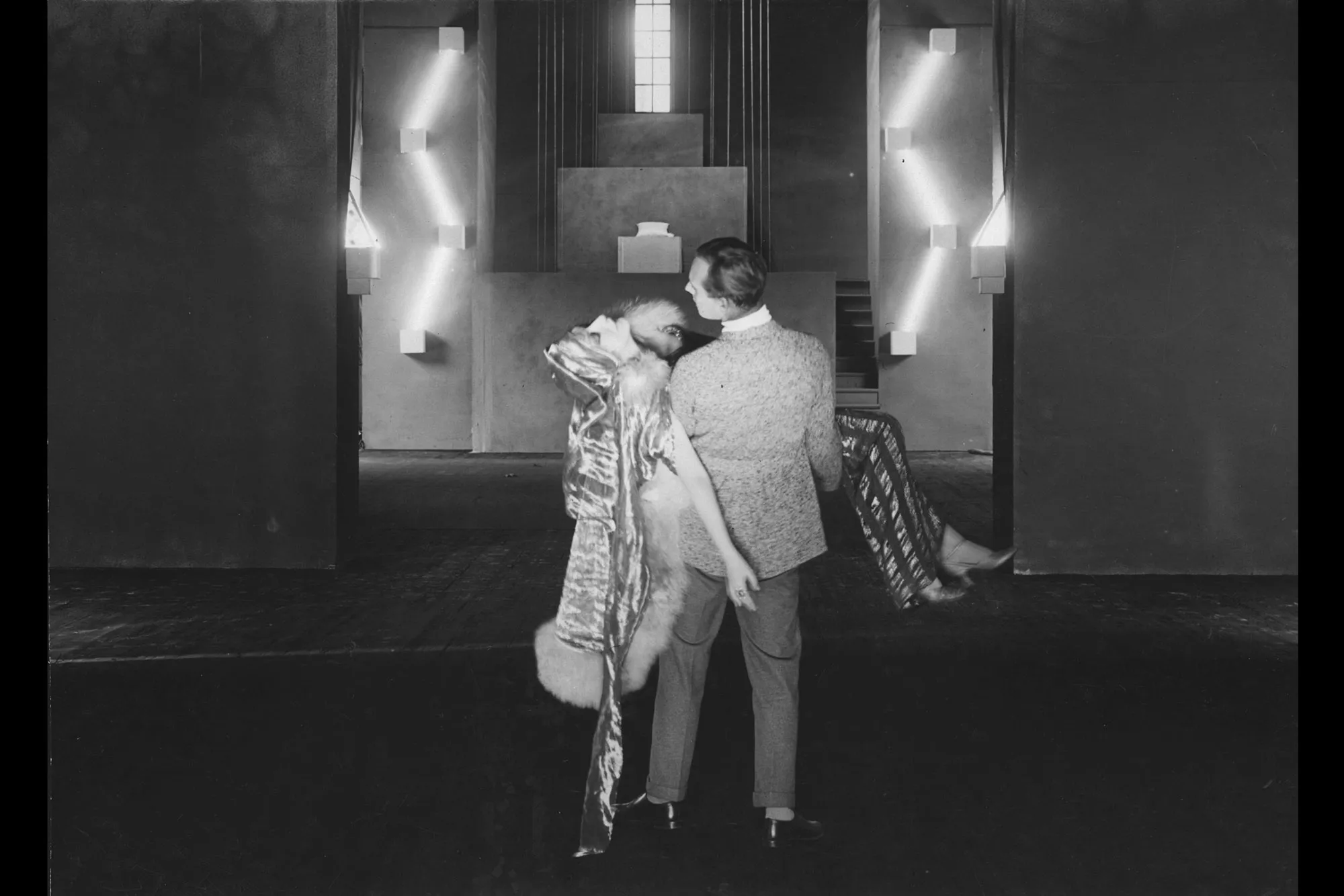
a man holding a woman in a dress in the 1920s in front of an art deco set.

On Screen/Sound: No. 4

Marcel L'Herbier / Robert Nelson

The fourth screening in On Screen/Sound brings together painting, architecture, fashion, dance, and music for an evening of modernist and surreal cinema.

In Robert Nelson's 1963 short film Plastic Haircut, two actors perform absurd actions in sets composed of geometric shapes, followed by two experts who attempt to explain what it all means. The audio track features sound by American composer Steve Reich, his earliest complete electronic piece.

The 1924 ultramodernist masterpiece L'Inhumaine ("the inhuman woman") was considered by its director, Marcel L'Herbier, to be "a fairy story of modern decorative art." Using "experimental" camera techniques and hallucinatory imagery, with sets by Fernand Léger, and costumes by Paul Poiret, L'Inhumaine tells the story of the life, death, and rebirth of a cold-hearted opera singer who learns to love. The musical score, originally by French composer Darius Milhaud, was lost to time—but has been reimagined by Aidje Tafial. Recently restored in its original tints by the French Cinémathèque and Lobster Films, this new print and soundtrack was premiered this year at Théâtre du Châtelet in Paris.

PROGRAM

Main Image: Film still from L’inhumaine (1924) Marcel L’Herbier / Music (lost) - Darius Milhaud.


Image
three blonde childern kneeling in the sand with their hands over their faces.

On Screen/Sound: No. 3

Cory Arcangel / Andrew Lampert

The third screening in the series On Screen/Sound is introduced by Brooklyn-based filmmaker and archivist Andrew Lampert.

Exploring the power of the soundtrack in our reading of, and response to, moving images, Andrew Lampert's film All Magic Sands (Chappaqua) challenges the intentionality of combining sound and image on film by juxtaposing found film footage with a rejected movie soundtrack.

Lampert assembled reels of found footage from the unfinished Christian children's movie All Magic Sands, and synched it with Ornette Coleman's rejected soundtrack from Conrad Rook's feature film Chappaqua, which was recorded in 1965 at approximately the same time and with an almost identical duration.

Cory Arcangel's Beach Boys/Geto Boys is a "mash-up" of two music videos based only on the similarity of the two bands names. Arcangel juxtaposes live performance footage of the Beach Boys with a music video by Geto Boys. As the soundtracks are overlaid to produce hybrid pop, the images retain their clear political, racial, and historical specificity.

PROGRAM

Main Image: All Magic Sands (Chappaqua), Andrew Lampert (1965/2011). Film still: Courtesy the artist and EAI, NY.