Jonathan Dordick

CANCELED

Due to unforseen circumstances, this talk has been canceled. We apologize for any inconvenience.

Nature is unparalleled in its structural and functional diversity. Living organisms make fantastic materials under myriad conditions with properties we cannot emulate today using conventional approaches. In many cases, nature has provided us with a blueprint to design and assemble both natural and synthetic building blocks to create a new generation of functional, organized, and responsive materials. Accordingly, we have taken cues from nature to design materials with unique structural and functional properties, along with new process technologies with the ability to produce a wide range of biomimetic structures.

In this talk, Dr. Dordick will highlight Rensselaer’s recent efforts to exploit the interface of biology with materials science, enhancing protein function along the way. Both fundamental advances and applications will be discussed, the latter focused on composites that endow surfaces with decontaminating properties and nanomaterials with magnetic properties that enhance therapeutic function.

Jonathan Dordick has been the Vice President for Research at Rensselaer since 2013. Before that he was the director of CBIS, the Center for Biotechnology and Interdisciplinary Studies. Since 1998 he has been a professor in the department of Chemical Engineering. He is actively pursuing his research in the ares of Biocatalysis in Nonaqueous Media, Combinatorial Biocatalysis, Nanobiotechnology, enzyme technology, and molecular bioprocessing. He is a fellow of the American Association for the Advancement of Science and has recently been named fellow of the National Academy of Inventors.
Image
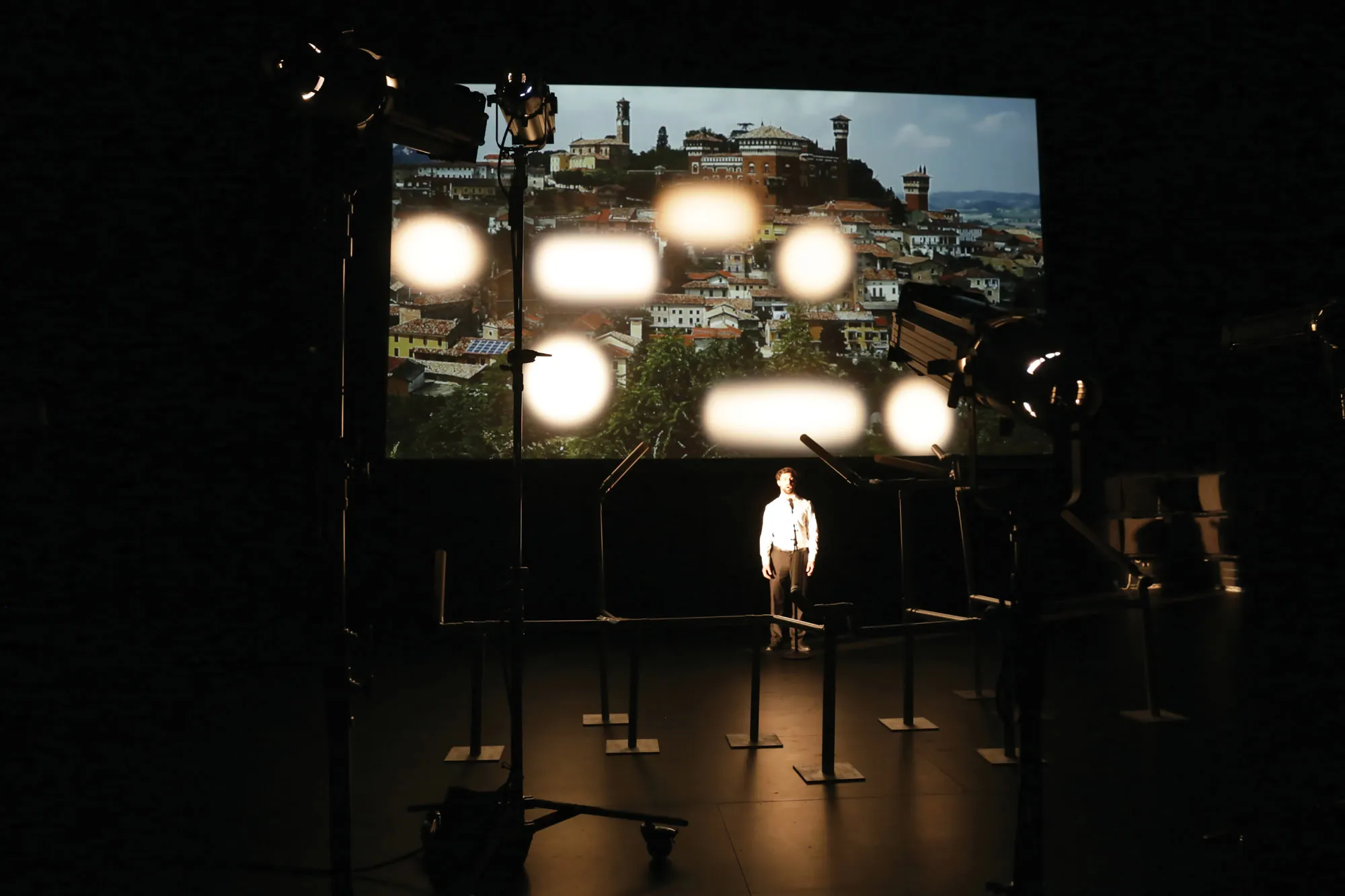
A man wearing a white button up shirt and black pants in front of various lighting rigs and a projection of a town's skyline.

dotQuantum

Flatform

As part of a series of academic activities on campus, Italian media-art collective Flatform present dotQuantum, a multimedia event that manipulates moving image, programmed light, and objects to "see through" a static understanding of the world around us.

Founded in 2006 and based in Milan and Berlin, Flatform use an array of visual effects to play with temporal perception. dotQuantum constructs what initially appear as "real" images—landscapes, architecture, and people—before rendering them malleable objects that betray their means of production and expose the processes that build digital worlds. Defining their work as "spectral landscape," the artists combine on-location footage with digitally created environmental effects (wind, rain, and rapid cuts between day and night) to produce optical illusions and temporal ambiguity that call into question our understanding of chronological time.

Following the intermission, Flatform will present a selection of their short videos from the past five years and will participate in a Q&A at the end of the evening.

PROGRAM
  • dotQUANTUM (2014/15)
  • — INTERMISSION with complementary light refreshments —
  • 57.600 seconds of invisible night and light (2009)
  • Movements of an impossible time (2011)
  • Trento Symphonia (2014)
  • 90 minutes including intermission

Main Image: dotQuantum in the theater in 2015. Photo: Mick Bello/EMPAC.

Holly Herndon

CANCELED

Due to unforseen circumstances this event has been canceled. We apologize for any inconvenience.

Holly Herndon’s musical range and depth has positioned her as a definitive figure in contemporary sound, forging ties between avant-garde composition, protest music, and electronic dance pop.

Equally at home in clubs, concert halls, and museums, her intricate, thoughtful textures both call the listener to action and to dance. Employing her voice and breath alongside digital tools, Herndon’s compositions approach the laptop as an extension of the human body, responding to the fractured intimacy of the internet age with a resolutely contemporary electronic music that is as tactile as it is referential.

Born in Tennessee, Herndon broke out from her formative years in Berlin’s minimal techno scene to repatriate to San Francisco, where she currently lives and studies as a doctoral candidate at Stanford’s Center for Computer Research in Music and Acoustics (CCRMA). Her newest album, Platform, has been heralded as a breakthrough work in the burgeoning genre of experimental electronic music.

Commissioned in collaboration with MOMA PS1, Herndon will present a new multi-channel audio work in Studio 1.

Image
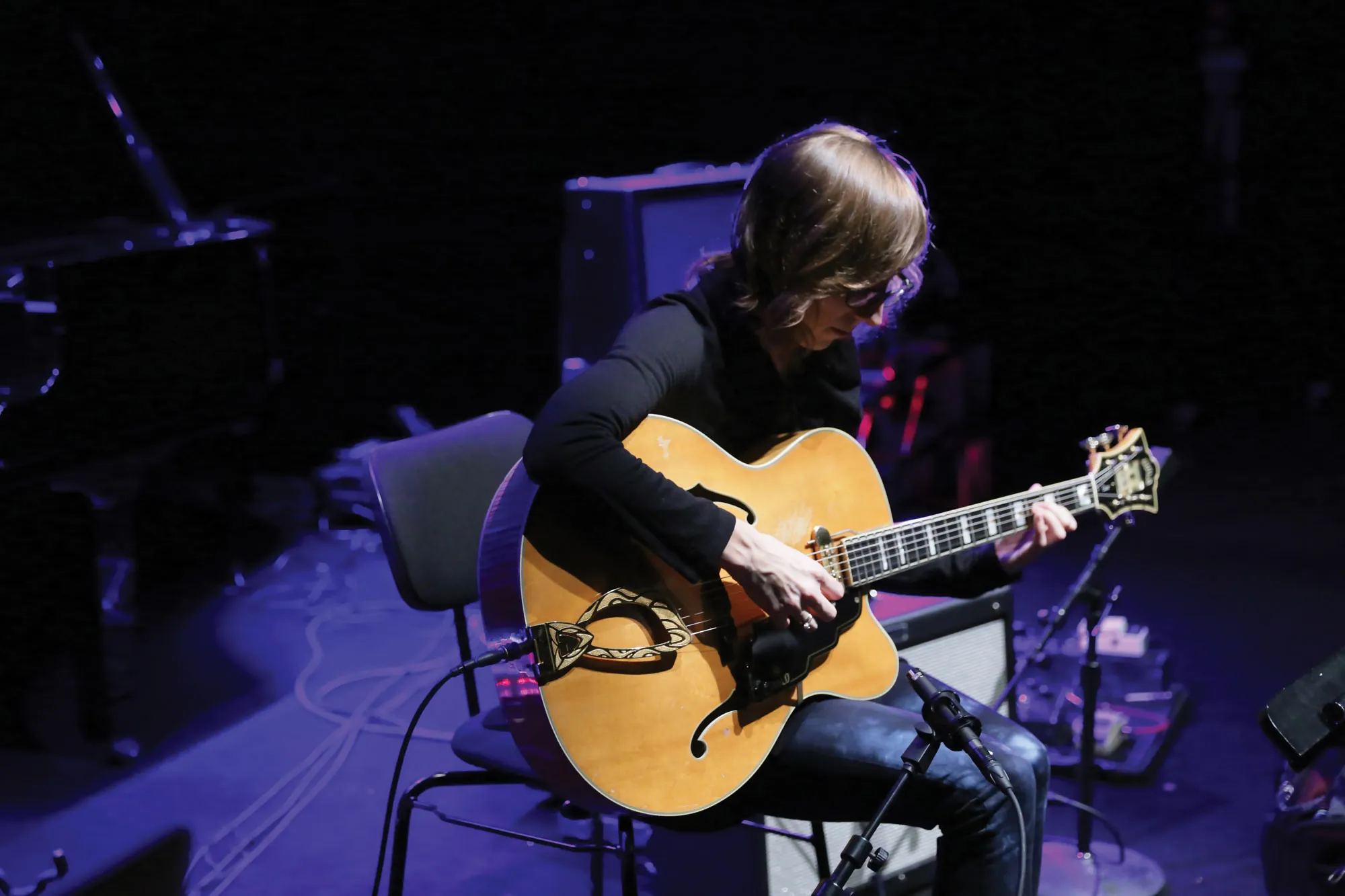
A woman playing an amplified acoustic guitar washed in purple light.

Mary Halvorson + Colin Marston

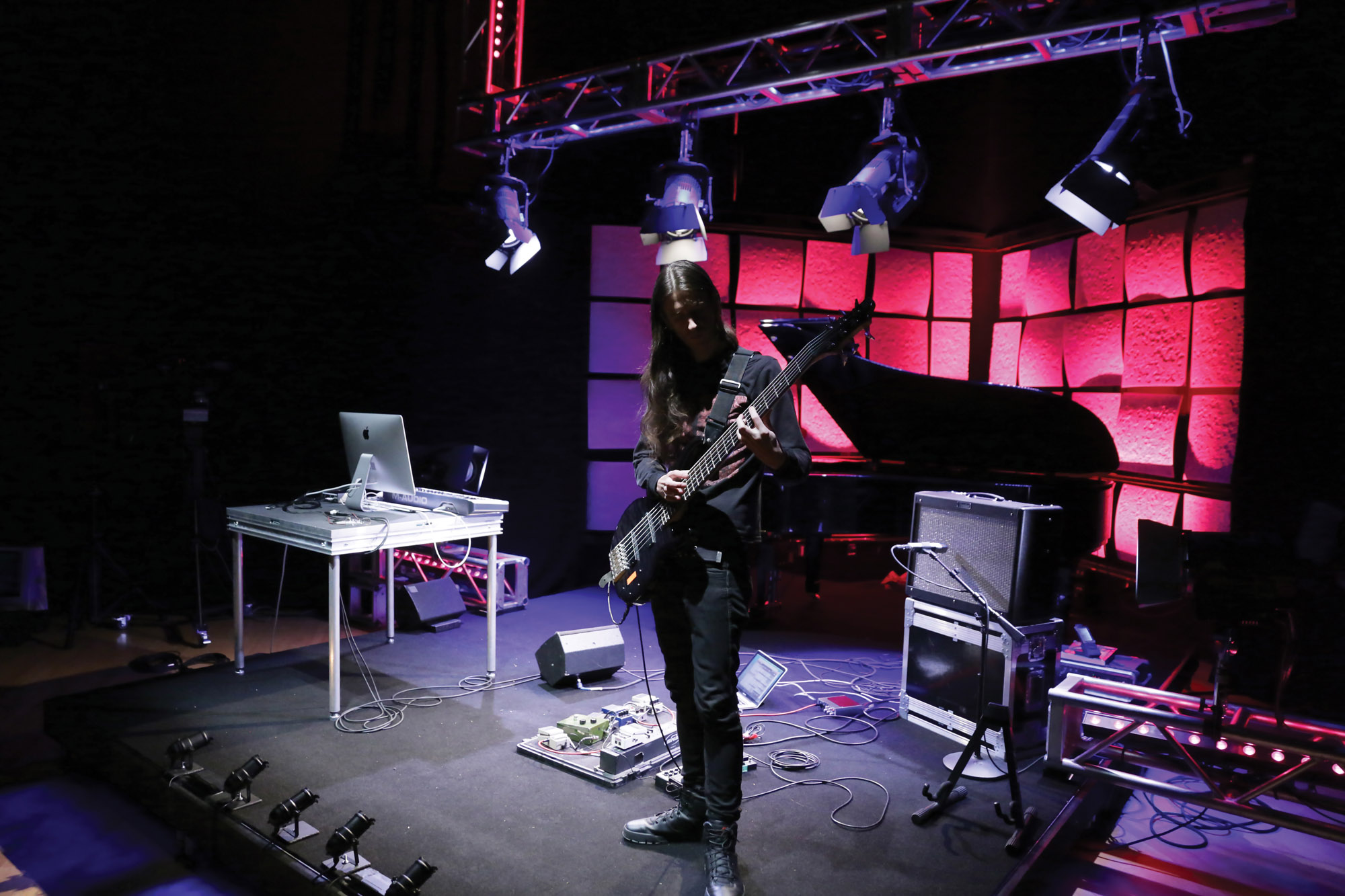
In a performance that juxtaposes jazz with extreme metal, guitarist Mary Halvorson and bassist Colin Marston played solo sets hailing from opposite sides of the musical spectrum. 
 
A composer, bandleader, and improviser, Halvorson is renown for her elastic, sometimes-fluid, sometimes-shredding, wholly unique style. A student of famed improviser Anthony Braxton, she studied jazz at Wesleyan University and the New School before becoming a member of several of Braxton’s bands and a contributor to six of his recordings. Her education deepened with stints in no-wave guitarist Marc Ribot’s quartet Sun Ship and Mr. Bungle bassist Trevor Dunn’s Trio-Convulsant. Her longstanding trio has been named a “rising star” by Downbeat Magazine and critics have called her “NYC’s least-predictable improviser” and “the future of jazz guitar.”
 
Marston is one of the most powerful figures on the New York death-metal scene, playing with groups such as Behold…The Arctopus, Dysrhythmia, Krallice, and Gorguts. His complex and technically demanding music weaves jagged rhythms with unrelenting energy to confront listeners with a wall of pure sonic force. Marston also runs a recording studio called Menegroth, The Thousand Caves in Queens where he records, mixes, and masters many forms of music. His prolific output includes extreme metal, progressive/experimental rock, avant garde improvisation, free jazz, new music/modern classical, and ambient genres.

Main Image: Mary Halvorson in studio at EMPAC in 2015. Photo: EMPAC/Rensselaer.

Media
Image
Colin Marston playing bass on a stage cluttered with amps washed in red and blue light.

Colin Marston at EMPAC in 2015. Photo: EMPAC/Rensselaer.

Image
a male dancer wearing a teal top and gray bottoms suspended mid-air after a jump on the concert hall stage.

THINGING: Dance and Translation and the Work of Anne Carson

Silas Riener

Through the articulation of his body, choreographer/dancer Silas Riener explored the potential of dance in describing “things.” Based on word histories, personal histories, and translational acts in poet, translator, and essayist Anne Carson’s Variations on the Right to Remain Silent, The Autobiography of Red, and the Gender of Sound, Riener resisted the linguistic impetus to name in the effort to describe. Driven by both the promise and inherent futility of choreographic description, he performed this resistance as a translational act that challenges us to combine memories with meaning while circumnavigating language and the weight of words.

Silas Riener has been researching and translating Carson's prose into dance since making NOX in 2010 with choreographic collaborator Rashaun Mitchell. A member of the Merce Cunningham Dance Company from 2007-2012, Silas Riener is in residence at EMPAC with Rashaun Mitchell and artist Charles Atlas to produce a newly commissioned stereoscopic dance film and subsequent theatrical production, co-commissioned with Walker Art Center.

Main Image: THINGING in the concert hall in 2015. Photo: EMPAC/Rensselaer.

Image
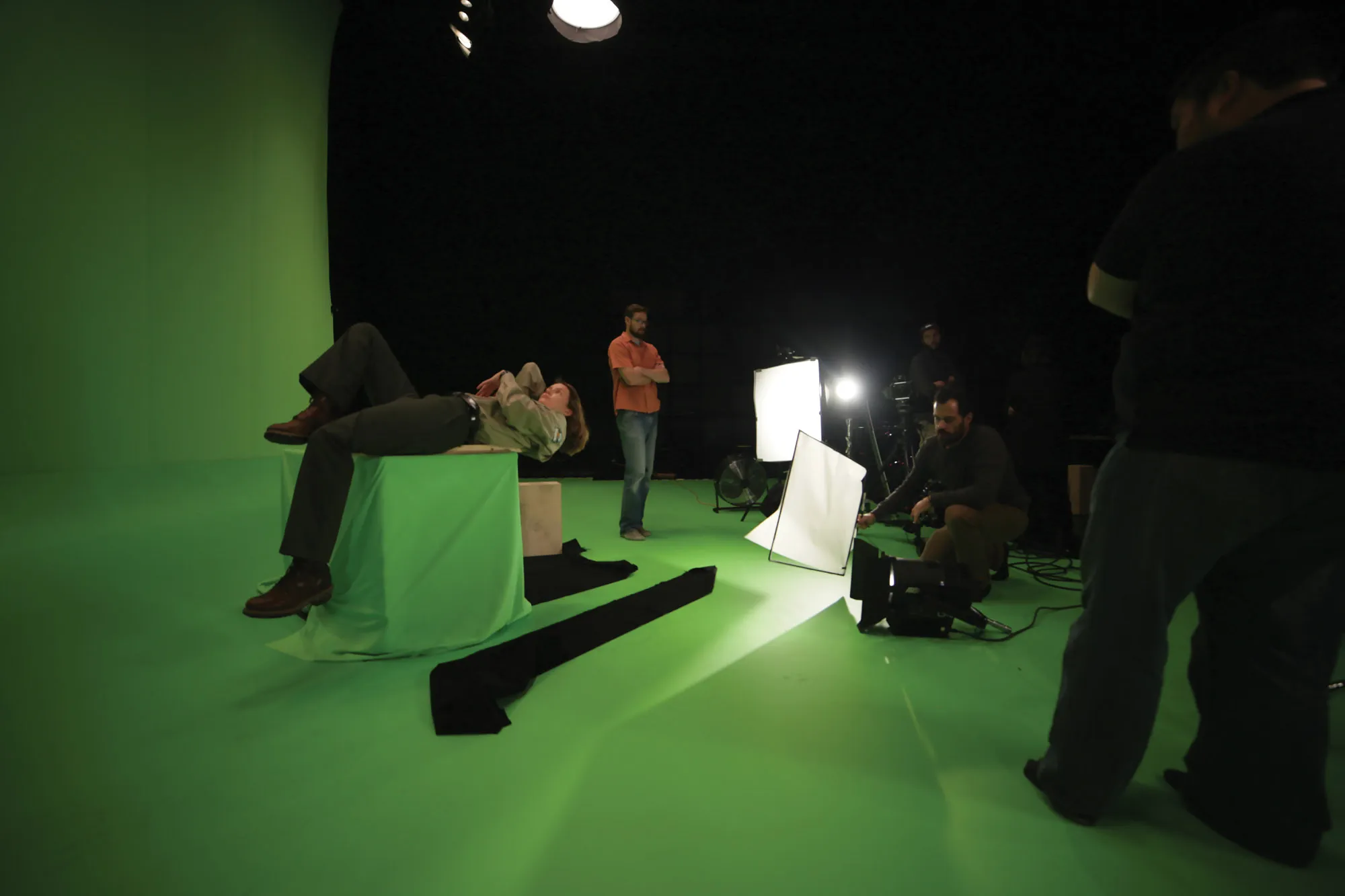
Five people doing various production tasks work around a woman laying on a green cube in green room.

Mt. Rush

Elizabeth Orr

Brooklyn-based artist Elizabeth Orr presents a multimedia performance and her work-in-progress film Mt. Rush, a moving-image work that interprets the language and visuality of online political marketing and the alarmist fundraising strategies of contemporary American politics.

Mt. Rush tracks the day-to-day activities of a Mount Rushmore park ranger attempting to navigate an onslaught of interactive fundraising emails in the lead up to the presidential election. Presenting a fantastical, near-future narrative that combines animation and live-action, the performance utilizes video technologies to animate a fictional email interface reminiscent of the holographic voice- and gesture-controlled screens imagined by contemporary science fiction. Serving as both narrator and foil to the ranger, the emails perform the politics of emergency so pervasive in today's systems of governance.

Main Image: Production still from Mr. Rush (2015). Photo: Mick Bello / EMPAC.

Image
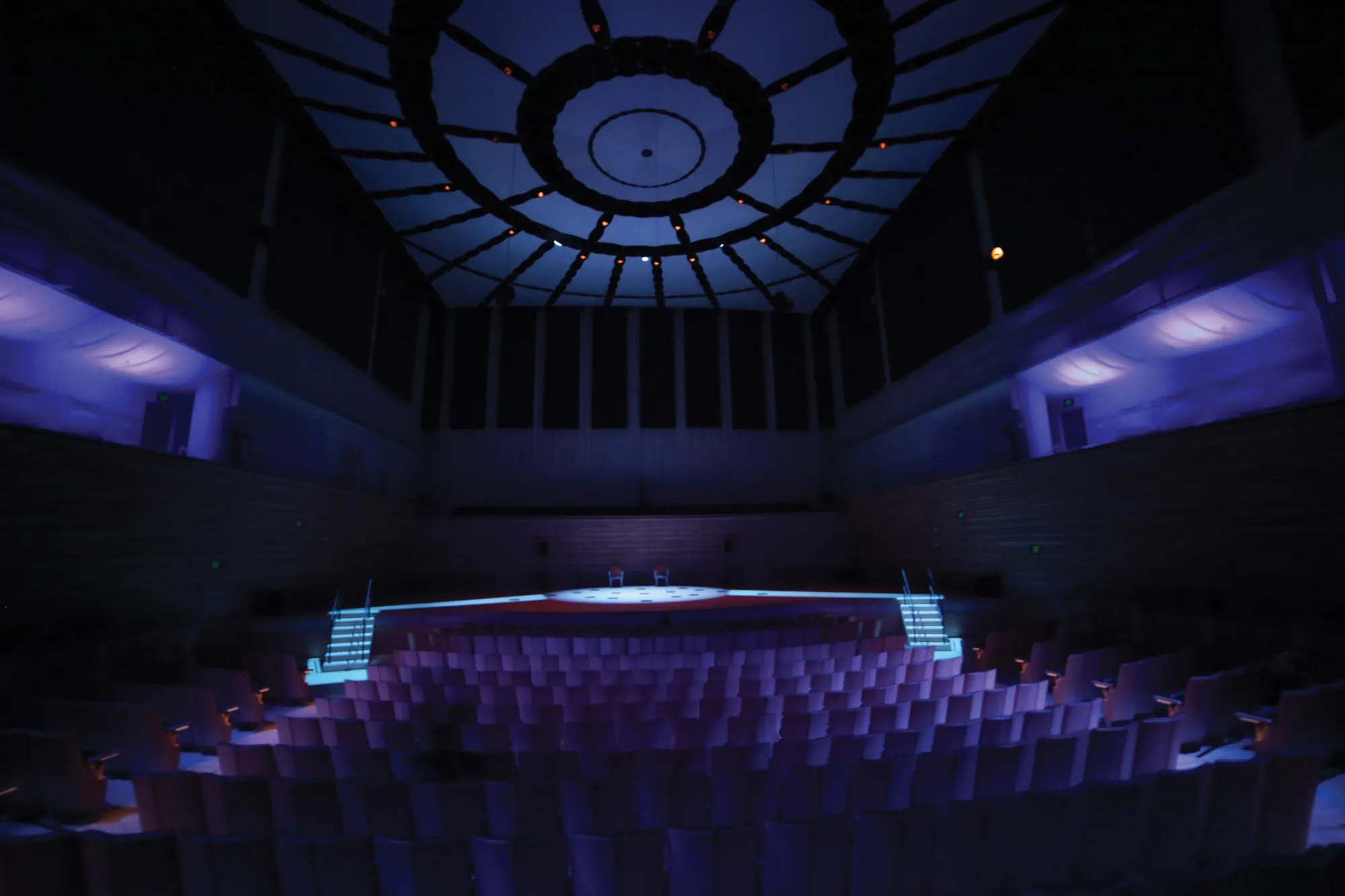
The concert hall washed in purple lighting

France Jobin

4.35 - R0 - 413

The electronic music of composer France Jobin can be described as "sound-sculpture," revealing a minimalist approach to complex sound environments where analog and digital methods intersect. While her music often makes use of restraint and limit, she isn't one to shy away from extremes.

Her skillful interplay between highs and lows, louds and softs, creates an intricate narrative, which stretches the listener's perception and continually refocuses attention. Using an array of specifically placed loudspeakers numbering in the dozens, Jobin will present a new work built for the EMPAC Concert Hall.

France Jobin is a sound/installation artist, composer, and curator residing in Montreal, Canada. Her installations express a parallel path, incorporating both musical and visual elements inspired by the architecture of physical spaces. Her works can be “experienced” in various music venues and new-technology festivals across Canada, the United States, South America, South Africa, Europe and Japan.

Main Image: Purple light washes across the concert hall for France Jobin's 4.35 - R0 - 413 in 2015. Photo: Mick Bello/EMPAC.

Media
Image
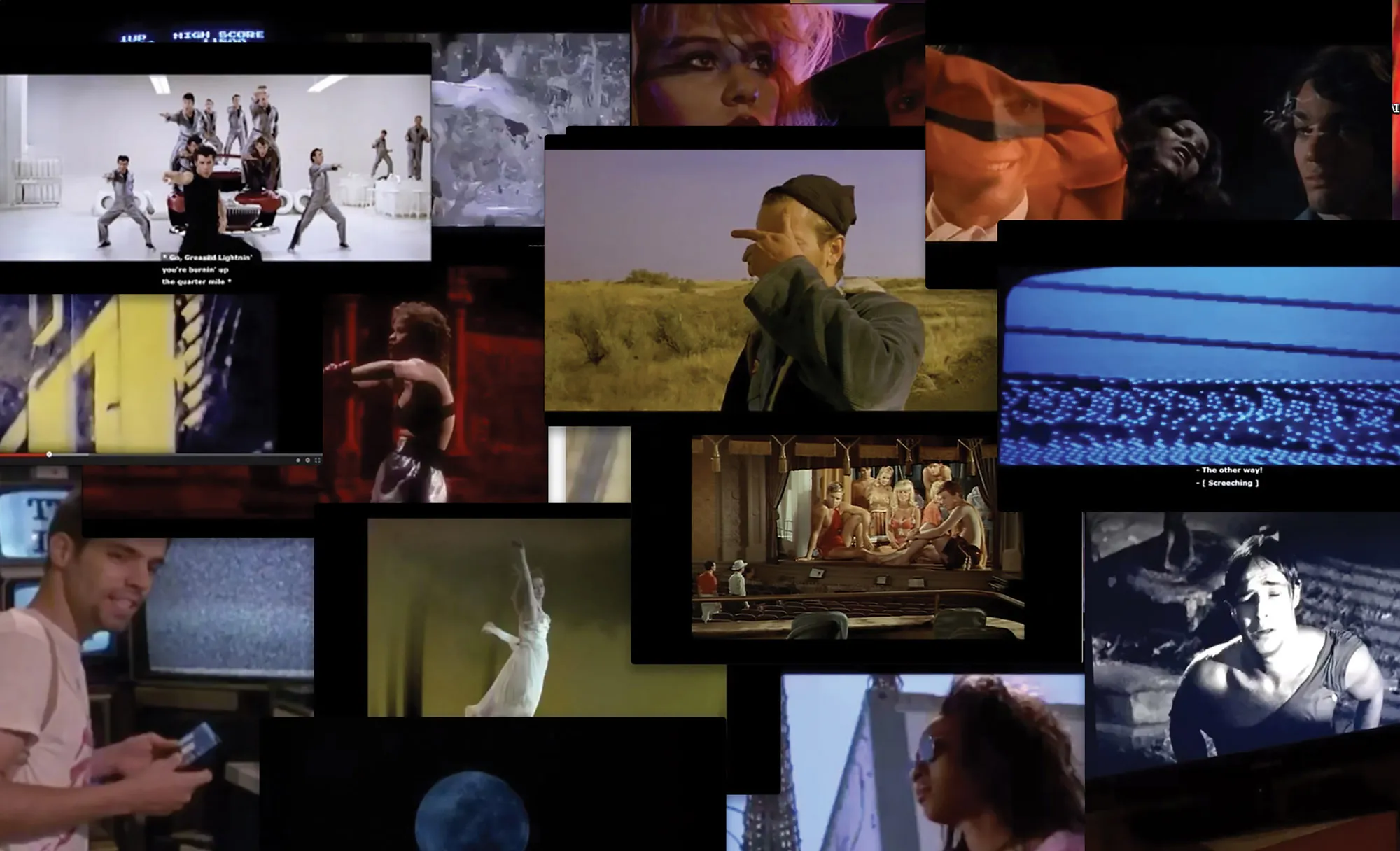
a collage of film stills.

Jennifer West and Michael Ned Holte

In Conversation: Film Memory

Artist-in-residence Jennifer West presents an evening on the "remembered movie" with Los Angeles-based writer and curator Michael Ned Holte. In a conversation of personal cinematic histories, each will perform memory (and movies) by capturing and reconnecting the places, spaces, and languages born from the movie-going experience.

A night of unabashed film love that delves into the darkened make-out corners of cult and midnight movie theaters, celebrates the circulation of VHS bootlegs, and tracks through the video rental houses, multi-screen drive-ins, discount multiplexes, art house theaters, lecture halls, and museums of film culture, ending up in today's tangled web of digital file sharing and online-streaming platforms. An elegy to our ever-changing cinematic contexts and their continued transition to the virtual world, the event reaches beyond the frame to reveal how our experience of celluloid and its circuits of distribution function both as a catalyst for personal memory and as a tool to trace unconsidered histories.

Jennifer West is in residence to develop Film Memory—a feature-length film and multichannel installation exploring the moving image as material memory. Constructed as a "personal historical survey" of cinema, it captures and reconnects the places, spaces, languages, and memories that are born from the cinematic experience. West and Holte met in graduate school in 2002 at the Art Center College of Design in Pasadena, CA, where they shared film memories and post-movie parking-lot discussions.

Image
Tarek Atoui standing in front of a sound board.

WITHIN 2

Tarek Atoui

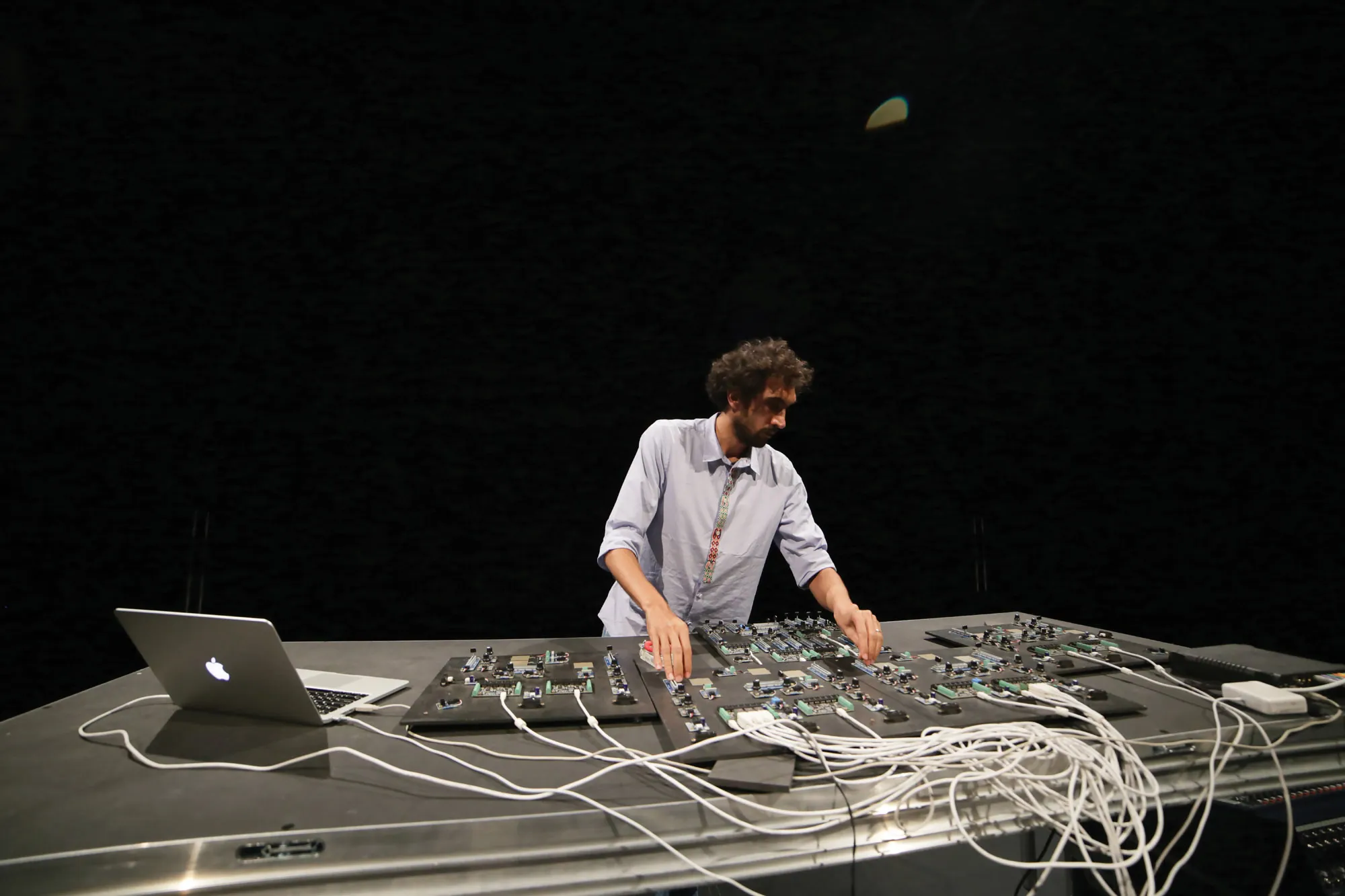
For WITHIN 2, Tarek Atoui will present his approach to performing sound in relation to anticipation, tactile sound, visual noise, gestures, and the multimodal nature of hearing. The workshop is a platform for performance, research, improvisation, and spatial composition that explores not only auditory perception among our diversity of listening abilities, but the social relations of public space, techniques of visual communication, and architectural tactility.

Atoui presented the project's first incarnation, WITHIN, as a series of performances and workshops during the Sharjah Biennial in 2011 and has continued to research principals of sonic architecture (in particular, the system of DeafSpace, developed by Hansel Bauman at Gallaudet, Washington) in the development of instrument-building techniques. During his time at EMPAC, Atoui will work with Distinguished Research Professor of Music Pauline Oliveros to engage students in designing and building new instruments and interfaces for performance.

WITHIN 2 is presented in collaboration with Berkeley Art Museum and Pacific Film Archive, Berkeley.

Main Image: Tarek Atoui in residence at EMPAC in 2015. Photo: Mick Bello/EMPAC.

Image
A small crowd of people wearing neon yellow construction vests gathered on a dark stage it only by a flashlight.

The Extra People

Ant Hampton

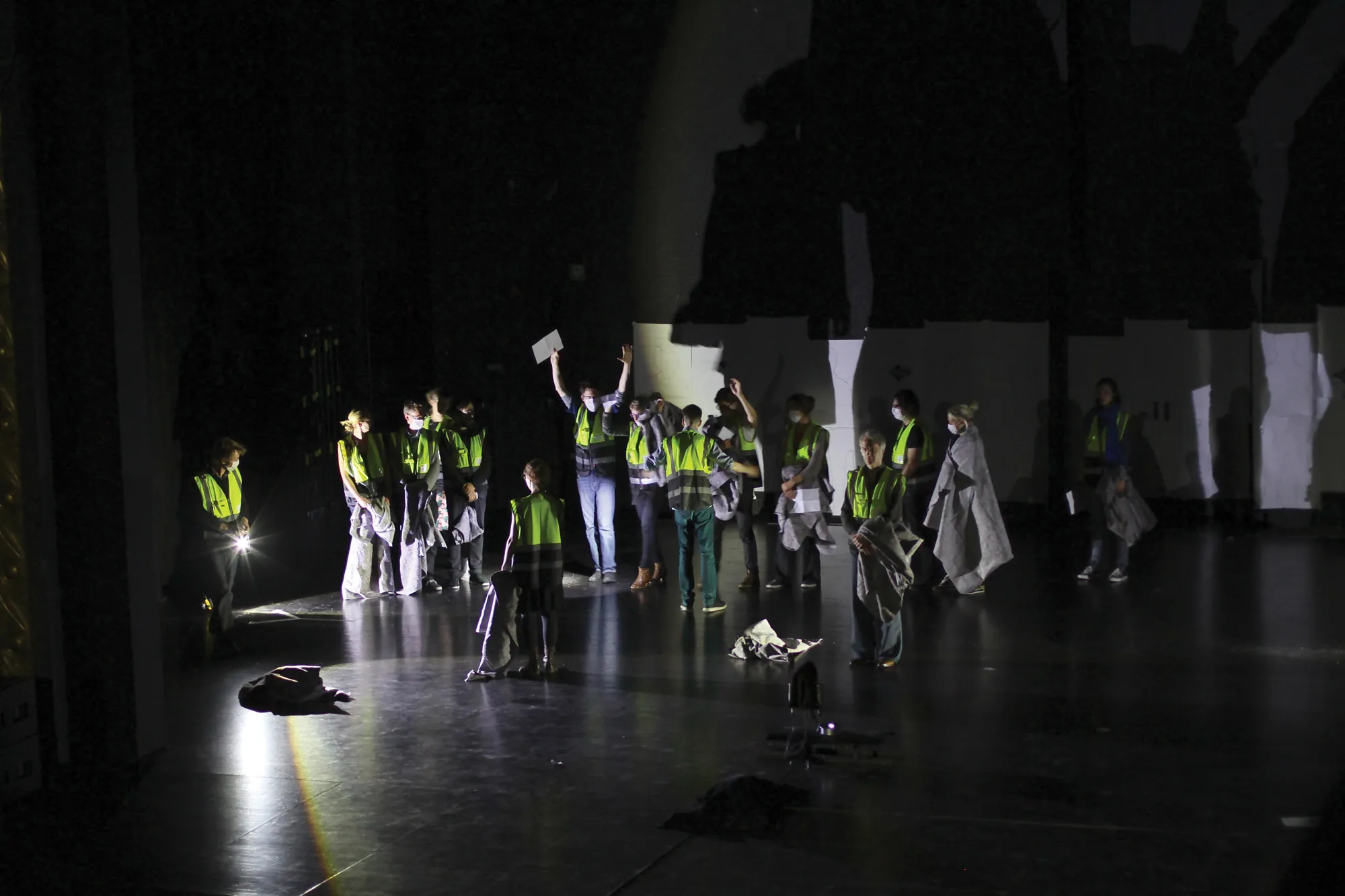
The Extra People is an immersive theater performance where 15 audience members sit and watch another 15 onstage. After half an hour, they find themselves replacing those onstage, only to discover that another 15 have appeared in the seats they've left behind. And so it continues, through the hours… The theater building—dormant, empty, and unlit save for your flashlight—seems unable to be deactivated. And within this strange process, wearing headphones and a "hi-viz" vest, you're cast along with everyone else as some kind of extra. But an extra for what?

Starting with Rotozaza's Etiquette (2007), Ant Hampton has created nine "autoteatro" works, including his recent Bessie-award-winning collaboration with Tim Etchells for library reading rooms (The Quiet Volume). The "protocol" behind autoteatro—automated processes (often audio) where instructions are given to audience members who find themselves experiencing the work from the inside—is now taken back to the theater building to operate on a larger scale.

The Extra People was commissioned by EMPAC and will premiere in the space where it was developed via the artist-in-residence program.

Ant Hampton (British, b.1975 Fribourg, Switzerland) made his first show as Rotozaza in 1998, a project which ended up spanning performance, theater, installation, intervention and writing-based works, and often focusing on the use of instructions given to unrehearsed “guest” performers, both on stage and in public settings. Solo projects include ongoing experimentation around “live portraiture”: structured encounters with people from non-theatrical milieu.


Main Image: The Extra People (2015). Photo: EMPAC/Rensselaer