Image
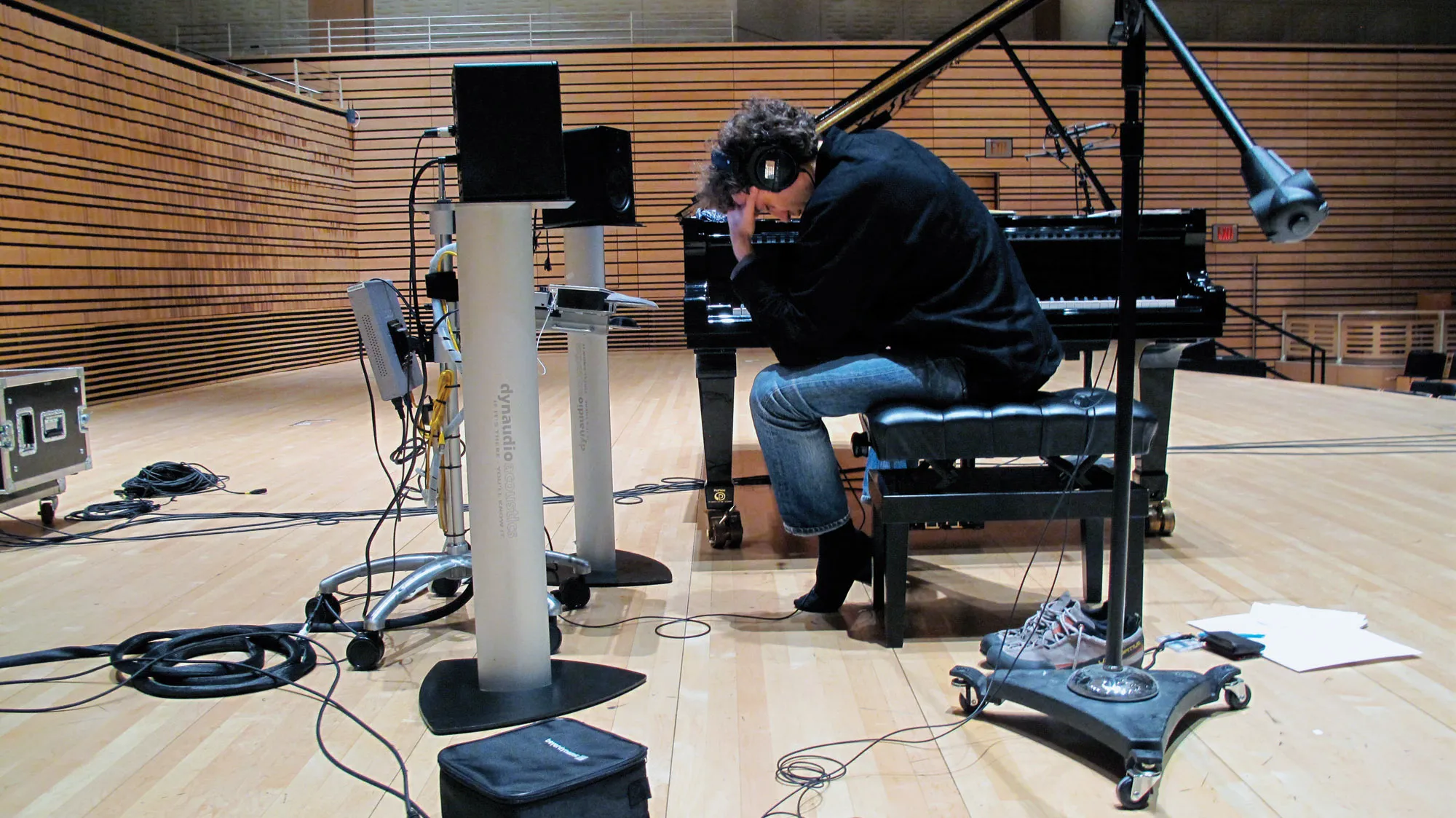
Yegor Shevtsov hunched at the piano.

Yegor Shevtsov

As part of an artist-in-residence recording project, pianist Yegor Shevtsov presents an in-progress performance of solo works by two giants of twentieth-century music. Separated by almost a century, Debussy’s Etudes and Boulez’s Incises intersect in both their French heritage and their substantial demands on a pianist’s control and technique. Rounding out the recital is Boulez’s most recent work for solo piano, une page d'éphéméride.

PROGRAM
  • Claude DebussyEtudes (1915)
  • Pierre BoulezIncises (1994/2001)
  • Pierre BoulezUne page d'éphéméride (2005)
Media
Image
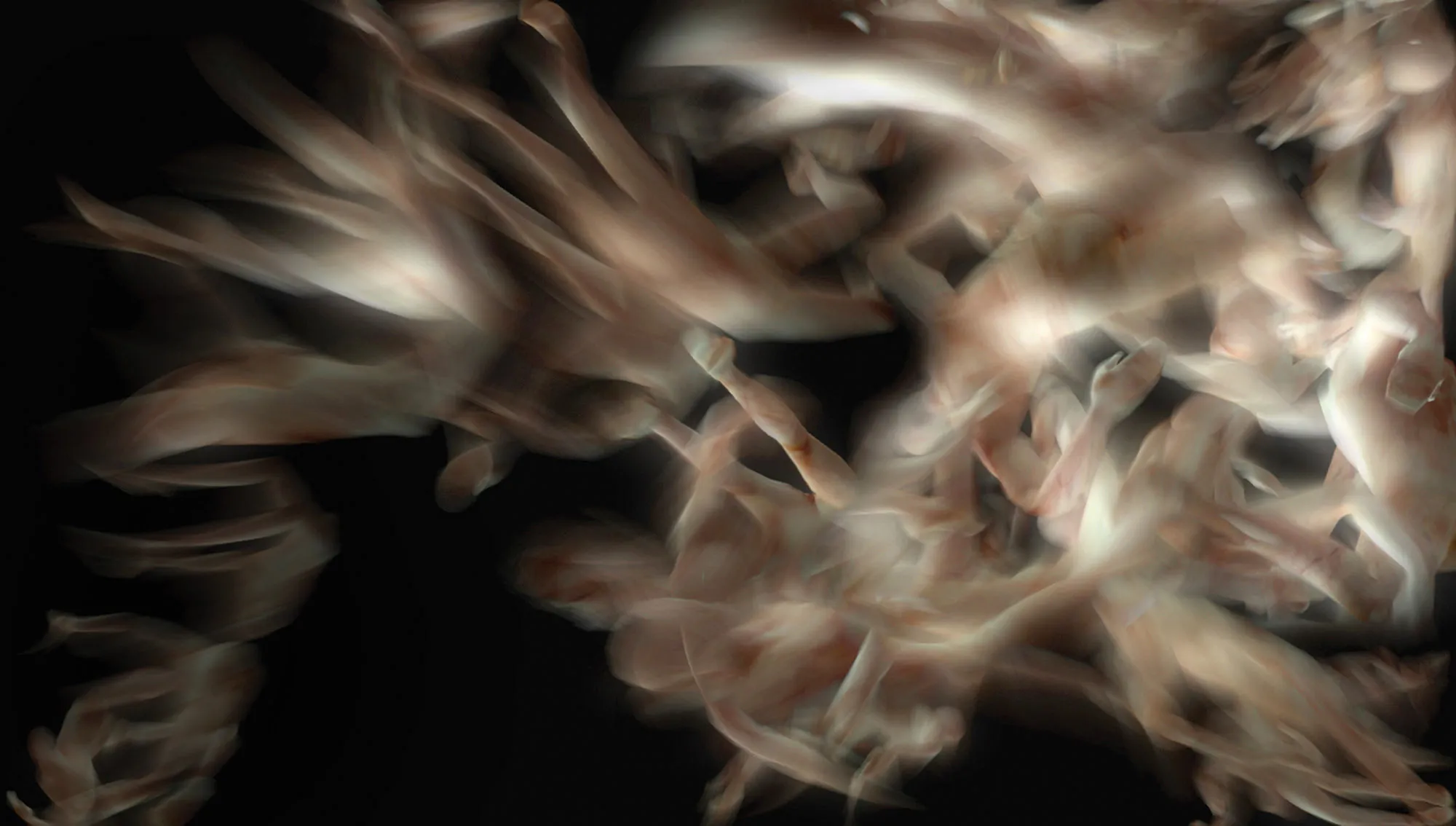
Abstract image of wispy pale human-esque forms floating through black space.

CLUSTER

Kurt Hentschläger

Austrian artist Kurt Hentschläger was in residence developing his audiovisual work CLUSTER, an evolutionary step in his artistic practice. A work in progress that began in 2004 combining seven complete, independent works, a full-length stereoscopic version of CLUSTER premiered in 2012. Focused on group behavior and the various stages of swarm motion, the 3D characters engage in a weightless slow-motion choreography, with human figures appearing as clouds of blurred matter intermingling with light. 

Chicago-based Austrian artist Kurt Hentschläger creates audiovisual performances and installations. Between 1992 and 2003 he worked collaboratively as one half of Granular Synthesis, whose performances and installations confronted viewers on both a physical and emotional level, overwhelming them with sensory stimulation. 

Main Image: CLUSTER.

Image
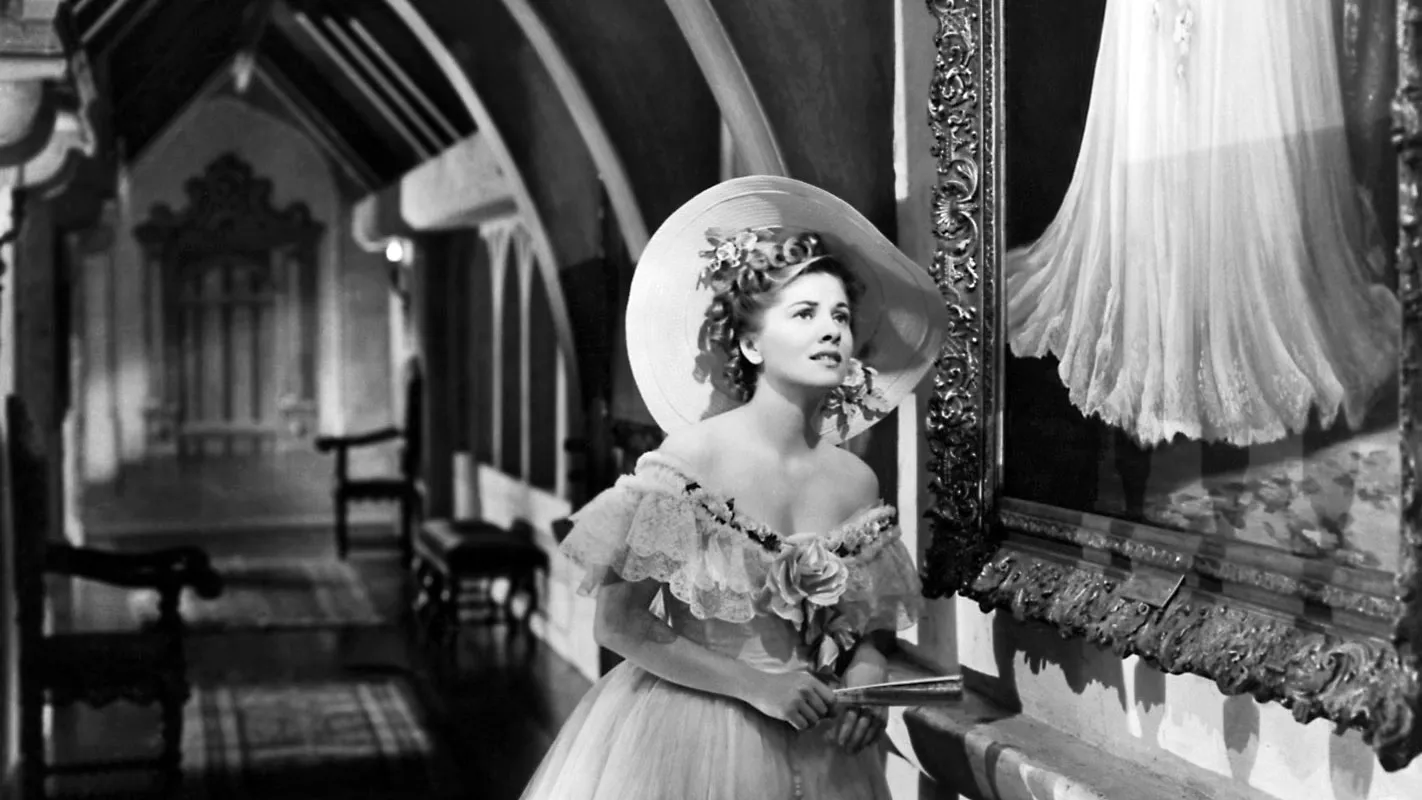
A southern woman dressed in civil war era clothing standing in an ornately decorated hallway, looking pensively at a painting.

Rebecca

Directed by Alfred Hitchcock

Alfred Hitchcock’s only Oscar-winning film, Rebecca, stars Sir Laurence Olivier and Joan Fontaine in an adaptation of Daphne du Maurier's 1938 novel of the same name. Located between a ghost story and film noir, Rebecca is a gothic thriller about a love triangle between English aristocrat Maxim de Winter, his young wife, and the shadow of his deceased wife, Rebecca. This film classic contains a haunting score by Franz Waxman and brooding cinematography by George Barnes.

Shadow Play is a series of films that tread nimbly between reality and illusion, acknowledging the artificial nature of cinema. Referencing the tradition of shadow puppetry, the origins of cinema in phantasmagoria, and Plato’s “Allegory of the Cave,” each film draws on the metaphors of light as reality and shadow as artifice. In Plato’s The Republic, the allegory of the cave illustrates the difference between truth and illusion. Many writers have noted that Allegory of the Cave (written c. 360 BCE), bears great resemblance to the contemporary movie theater.

Main Image: Film still from Rebecca (1940).

AKOUSMA @ EMPAC

An acousmatic music performance of work from the annual AKOUSMA festival in Montréal, Quebec, which is produced by Réseaux, a composer-run organization dedicated to presenting and commissioning electroacoustic music. Known as “cinema for the ear,” acousmatic music is a compositional form traditionally presented in the dark to help focus and intensify the audience’s sense of hearing. Dozens of loudspeakers were placed throughout EMPAC’s lobby and hallways. The performers manipulated their pieces in real-time, creating an all-encompassing aura as electronic sound moved throughout the building. Performers included Adam Basanta (Canada), Olivia Block (US), Gilles Gobeil (Canada), Seth Nehil (US), and Louis Dufort (Canada). Adam Basanta’s work traverses electroacoustic and instrumental composition, audiovisual installations, site-specific interventions, laptop performance, and dynamic light design; he explores notions of listening and audiovisual perception, the reanimation of quotidian objects, and the articulation of site and space. Olivia Block creates original sound compositions for concerts, site-specific multi-speaker installations, live cinema, and performance; compositions often include field recordings, chamber instruments, and electronic textures. Many of Gilles Gobeil’s pieces have been inspired by literary works and attempt to let us see through sound; he has won over 20 national and international awards and is a co-founder of Réseaux. Seth Nehil has crafted a unique and unusual sonic world, mixing acoustic and electronic sources, field recordings, granular synthesis, and voice; he has released over 15 albums and has collaborated with dance companies, performers, and video artists. Montréal composer Louis Dufort’s music ranges from a cathartic form of expressionism to a focus on the inner structure of sound matter; he is the artistic director of the AKOUSMA festival.

Program

Louis Dufort - Grain de Lumière_I Martin Tétreault - Empreinte à Reculons (For record imprints, 2 turntables & small electronics)

Nicolas Bernier - Antithèse Électronique & Danse le ventre de le machine

Richard Chartier - from Recurrence

Jean Francois Laporte - Rust Louis Dufort - Grain de Lumière_II
Image
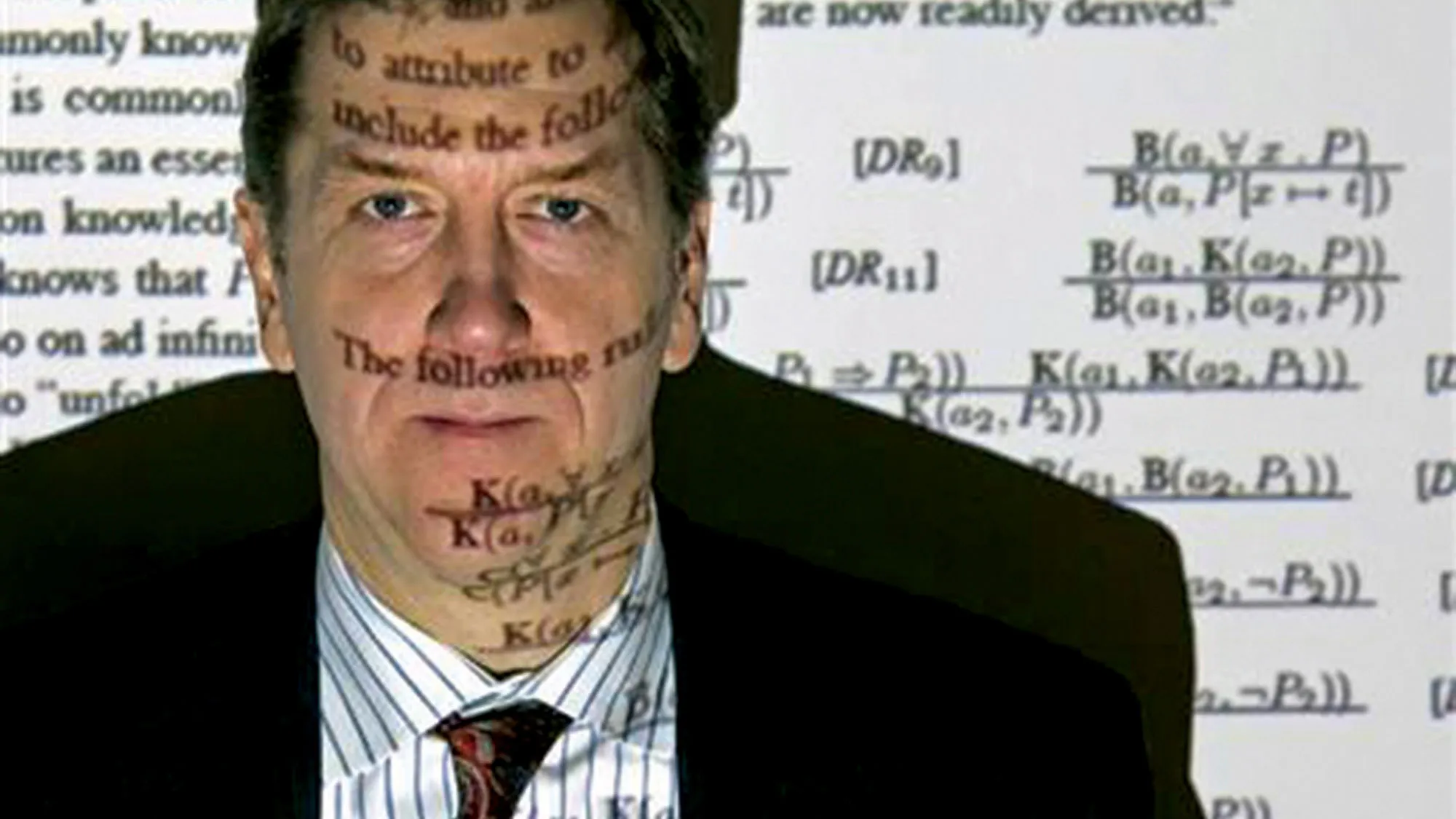
Selmer Bringsjord with equations projected over his face.

Selmer Bringsjord + Naveen Sundar G

To Infinity and Beyond!

Computing machines are getting smarter, attempting to reach levels of human-like intelligence. But even artificial intelligence systems like Watson on Jeopardy! can’t compare to the complexities of the human mind. Rensselaer Professor Selmer Bringsjord and PhD student Naveen Sundar G. used EMPAC’s unique environment to visualize the infinite and question three claims: that all of mathematical cognition is reducible to simple problem-solving carried out by dogs and monkeys (Darwin); that mathematics is just a humdrum human construction rooted in bodily motion and metaphor (Lakoff); and that artificial intelligence will soon explode beyond human intelligence in an event known as “the singularity” (Kurzweil). Bringsjord specializes in the logico-mathematical and philosophical foundations of artificial intelligence (AI) and cognitive science.

Naveen Sundar Govindarajulu is an International Fulbright Science and Technology scholar. Since receiving his PhD in computer science at  the Rensselaer Artificial Intelligence and Reasoning Laboratory (RAIR Lab), he has been a research scientist at Yahoo.

Detail View: Rensselaer professors and researchers shared in-depth perspectives on their fields of inquiry, inviting an exchange of ideas between experts and non-experts alike.

Main Image: Selmer Bringsjord.

Image
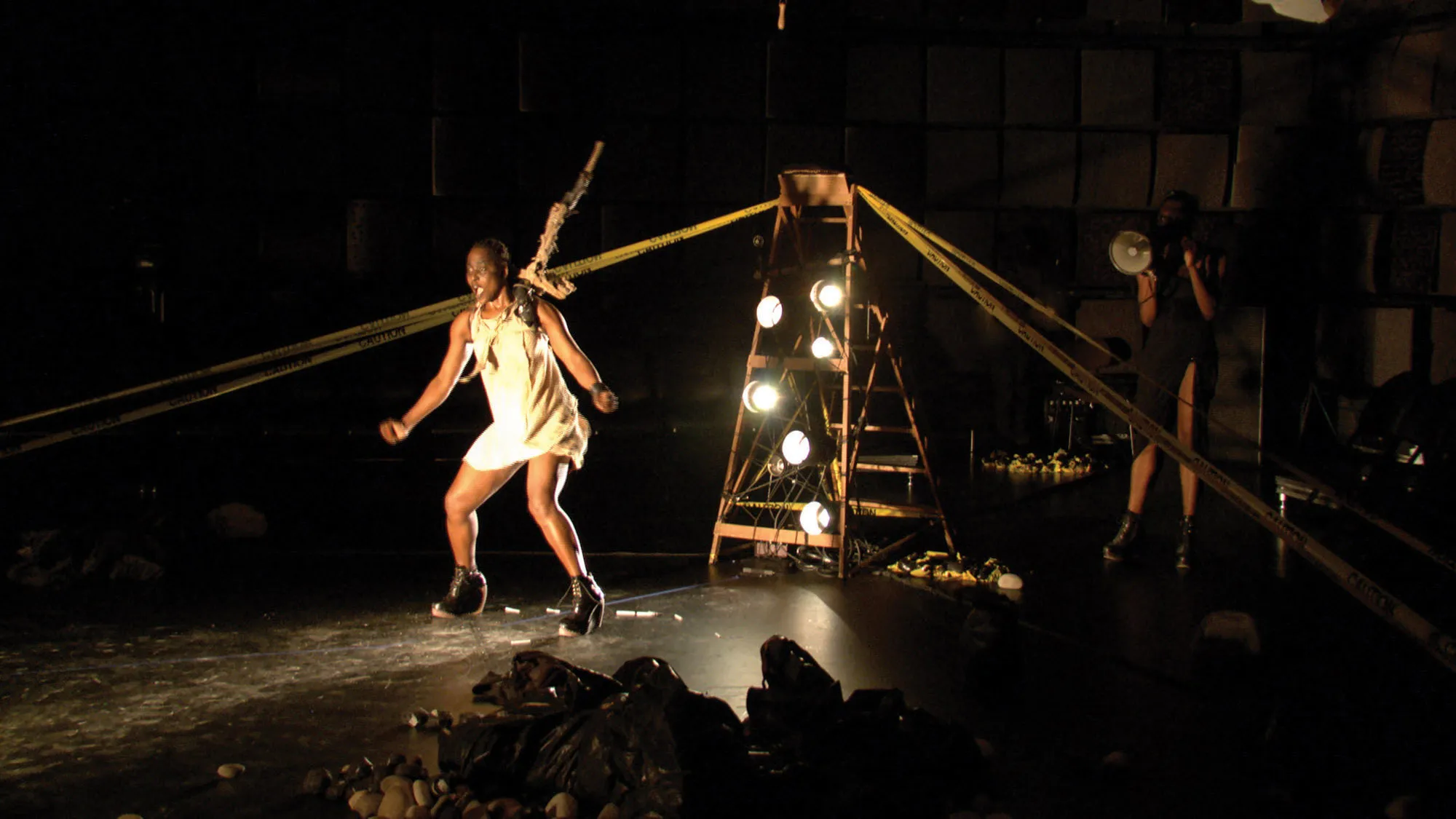
A Zimbabwean woman on a harness dancing in black box studio amongst piles of trash bags, caution tape, and a ladder with stage lights placed on the steps.

Miriam

Nora Chipaumire

Choreographer and dancer Nora Chipaumire returned to EMPAC after working in residence in 2011 to present Miriam, a deeply personal dance-theater performance that looks closely at the tensions women face between public expectations and private desires; between selflessness and ambition; and between the perfection and sacrifice of the feminine ideal. The inspiration for the work springs from the cultural and political milieu of Chipaumire’s southern African girlhood, her self-exile to the US, and her self-discovery as an artist. Performed by Chipaumire and Okwui Okpokwasili, Miriam renders the intensity of women who fight to create themselves despite the dual legacies of strict cultural traditions and imperialist racial views that define female beauty and power. 

Born in Zimbabwe and based in New York City, Chipaumire has studied dance in many parts of the world including Africa (Senegal, Burkina Faso, Kenya, and South Africa), Cuba, Jamaica, and the US. She was a 2012 Alpert Award in the Arts recipient, a 2011 United States Artist Ford Fellow, and a two-time New York Dance and Performance (Bessie) award winner.


Main Image: Production still from Miriam (2012). Courtesy the artist.

Media
Image
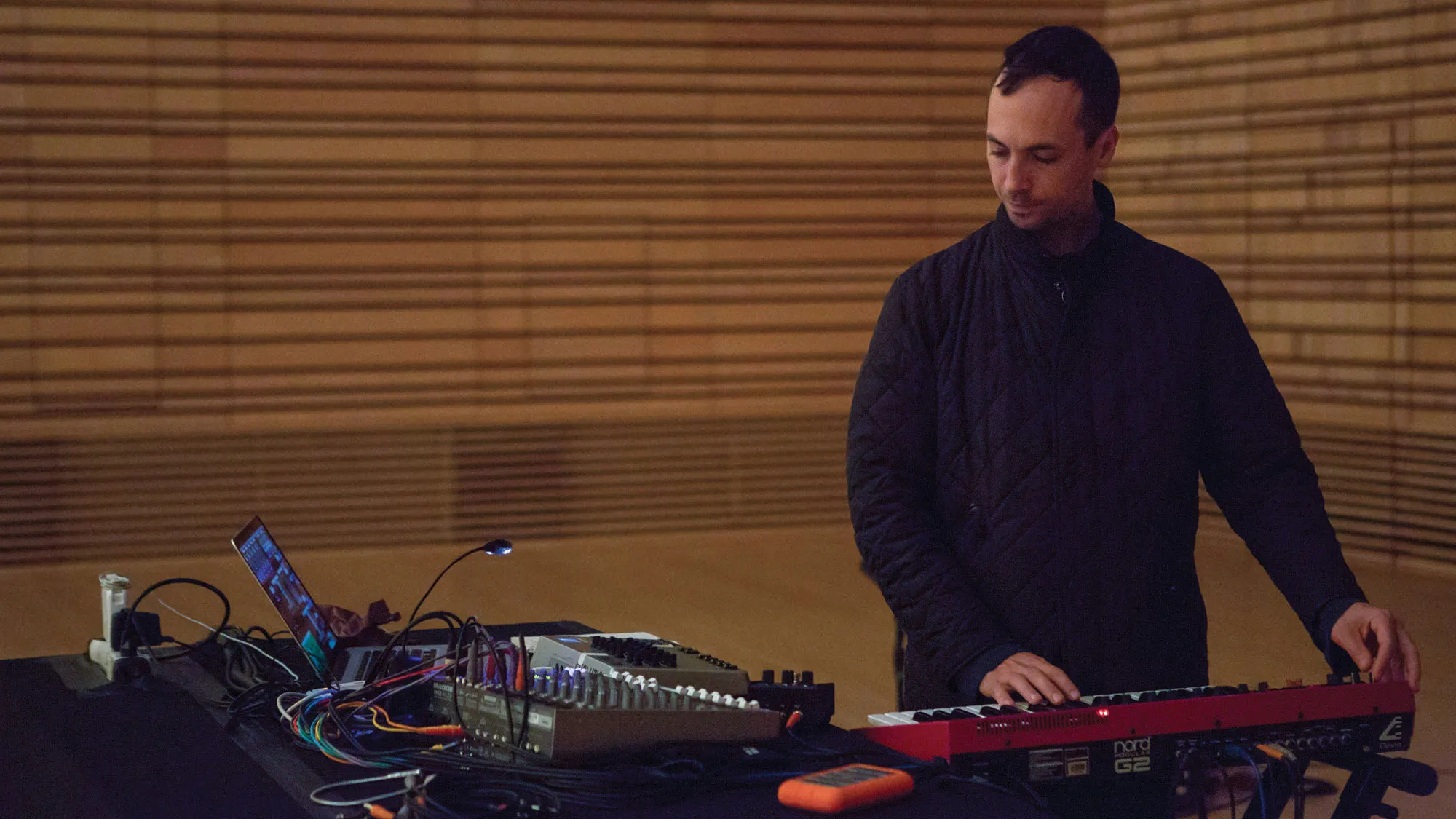
Tim Hecker

Tim Hecker

Canadian musician and sound artist Tim Hecker was in residence developing a site-specific performance in the Concert Hall at EMPAC and recording new material for an upcoming album. Hecker used a multi-channel surround-sound setup, including speakers located above the Concert Hall’s suspended fabric ceiling, to create an immersive sound experience in near darkness. 

Hecker is a Canadian-based musician and sound artist; since 1996, he has produced a range of audio works for Kranky, Alien8, Mille Plateaux, Room40, Force Inc, Staalplaat, and Fat Cat. His works have been described as “structured ambient,” “tectonic color plates,” and “cathedral electronic music.” He has focused on exploring the intersection of noise, dissonance, and melody, fostering an approach to songcraft that is both physical and emotive. His work has also included commissions for contemporary dance, sound-art installations, and various writings. 

Media
Image
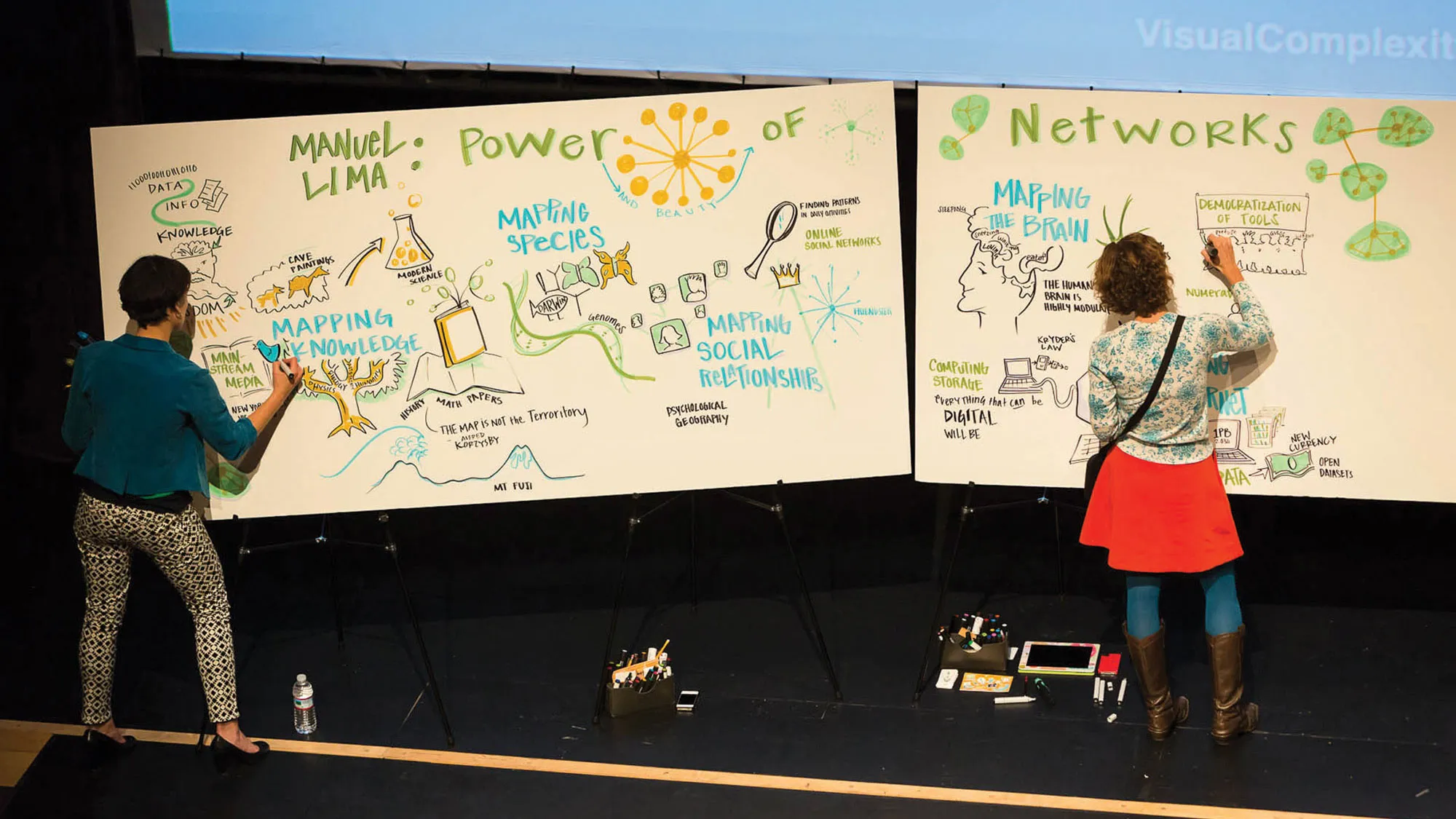
Two people dressed colorfully drawing an infographic about the 'Power of Networks' on large white boards.

Manuel Lima

Session: The Power of Networks

Manuel Lima, author of Visual Complexity: Mapping Patterns of Information, led a discussion on network visualization, which has experienced a meteoric rise in the last decade, bringing together people from various fields and capturing the interest of individuals across the globe. This talk explored the critical paradigm shift of using networks to map the complexities of our modern world rather than hierarchical tree structures. 

The talk was drawn live by ImageThink (Nora Herting and Heather Willems), who use the art of graphic facilitation to transform complex ideas into powerful visual stories. Lima is an interaction designer and founder of VisualComplexity.com, a comprehensive repository of complex network visualizations. Prior to joining Microsoft, Lima worked as a senior user experience designer at Nokia and senior interaction designer at the leading digital agency R/GA.

Observer Effects offered a dialogue between the fields of art and science. The title was derived from the principle in physics that the act of observation transforms the observed, an idea that has been influential in philosophy, aesthetics, psychology, and politics.

Main Image: Session: The Power of Networks talk in 2012.

Media
Image
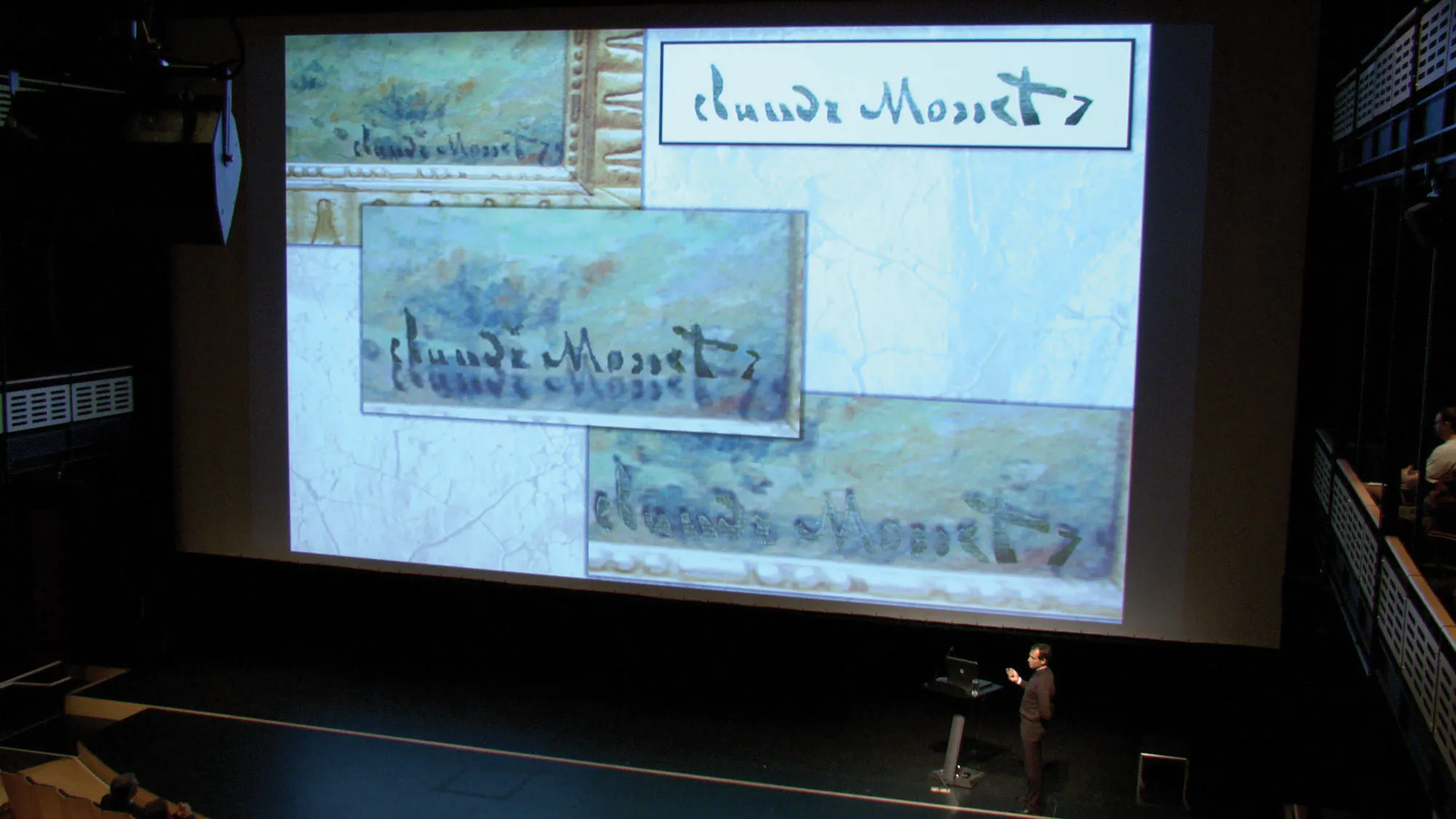
A large screen projecting four images of Claude Monet's signature.

Peter Matthaes

Art Fraud: Recognizing Authenticity in Art

Peter Matthaes, director of the Museo D’Arte e Scienza, presented a discussion on art fraud and the use of science and the senses to recognize authenticity in art. Recognizing the authenticity of an art object is as fascinating as it is complex. The classic approach, which studies style, is supported by numerous new methods of scientific investigation and by the ability to use our senses: sight, touch, smell, hearing, and to a much lesser extent, taste, substituted by our “sixth sense.” Matthaes offered an overview of methods used by the Museo d’Arte e Scienza of Milan in its day-to-day activities to ascertain authenticity. Since becoming head of that laboratory, Matthaes has conducted hundreds of scientific appraisals each year. He receives commissions from various parts of the world, and provides technical opinions to Italian and foreign courts. 

Observer Effects offered a dialogue between the fields of art and science. The title was derived from the principle in physics that the act of observation transforms the observed, an idea that has been influential in philosophy, aesthetics, psychology, and politics.

Main Image: Peter Matthaes during his talk in 2012.

Media
Image
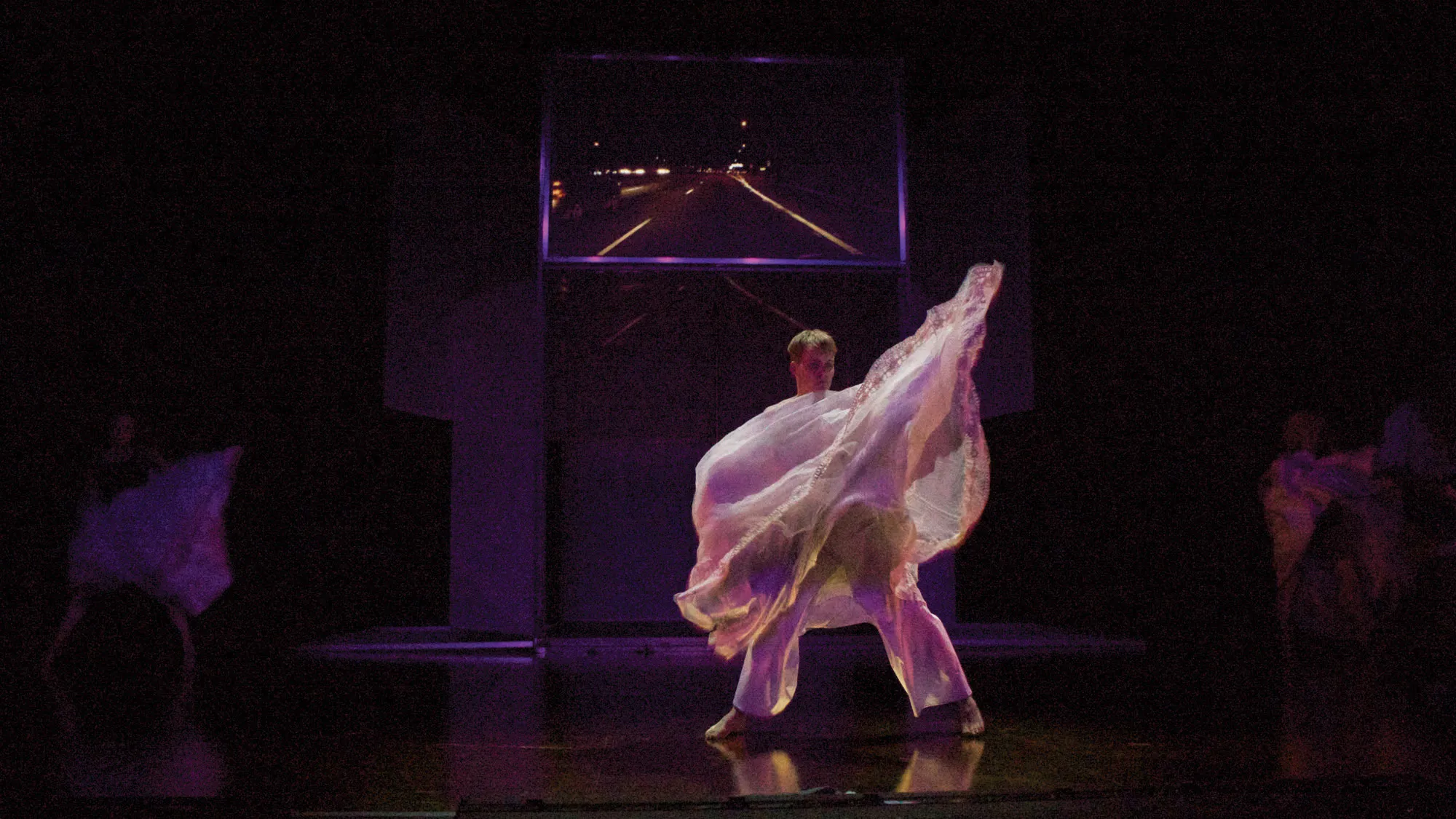
A male dancer wearing a sheer white flowing costume dances with an arm outstretched on a dark purple lit stage infant of a small screen projecting a road.

Triptych 0811

Ella Fiskum Danz

Triptych 0811 explores the relationship between dreams, reality, and ambition. Ella Fiskum Danz draws inspiration from the art triptych, in which three images or panels are separate, yet together. The Norwegian dance company journeys into the inner life of fantastic aspirations flanked by the obstacles of real life. Using classical ballet vocabulary in stark contrast to aspects of contemporary life, Fiskum culls together a theatrical dreamscape: a woman in a burqa, a ballerina turned nightclub dancer, a Hollywood starlet played by a man, and a prima ballerina. With a live performance by Norwegian rock guitar legend Ronni Le Tekrø and innovative stage design by Serge von Arx, the audience is invited to view multiple realities through the lives of the characters on stage. This work in progress functions as an open environment to test ideas from a two-week production residency as part of an ongoing open-call residency initiative at EMPAC.

Main Image: Triptych 0811 (2012). Photo: EMPAC.

Media