No food No money No jewels

Eve Sussman & Simon Lee

Eve Sussman, an award-winning film director and visual artist and Simon Lee, a film director and installation artist, along with their full creative team, engaged in research and development for this EMPAC commission. During a three-week film production residency, the team installed a large structural set, prepared all the props, costumes, lighting setup, as well as camera testing, leading up to a week-long filming period that transformed EMPAC’s Theater stage into a full-scale soundstage.

Eve Sussman creates work that incorporates film, video, installation, sculpture, and photography. In 2003 she began working in collaboration with The Rufus Corporation—an international ad hoc ensemble of performers, artists, and musicians—producing motion picture and video art pieces including 89 Seconds at Alcázar (2004) and The Rape of the Sabine Women (2007). With humble materials and straightforward means—found snapshots, plastic toys, pinhole cameras, and projectors—Simon Lee creates evocative, dream-like videos, projections, and photographs.

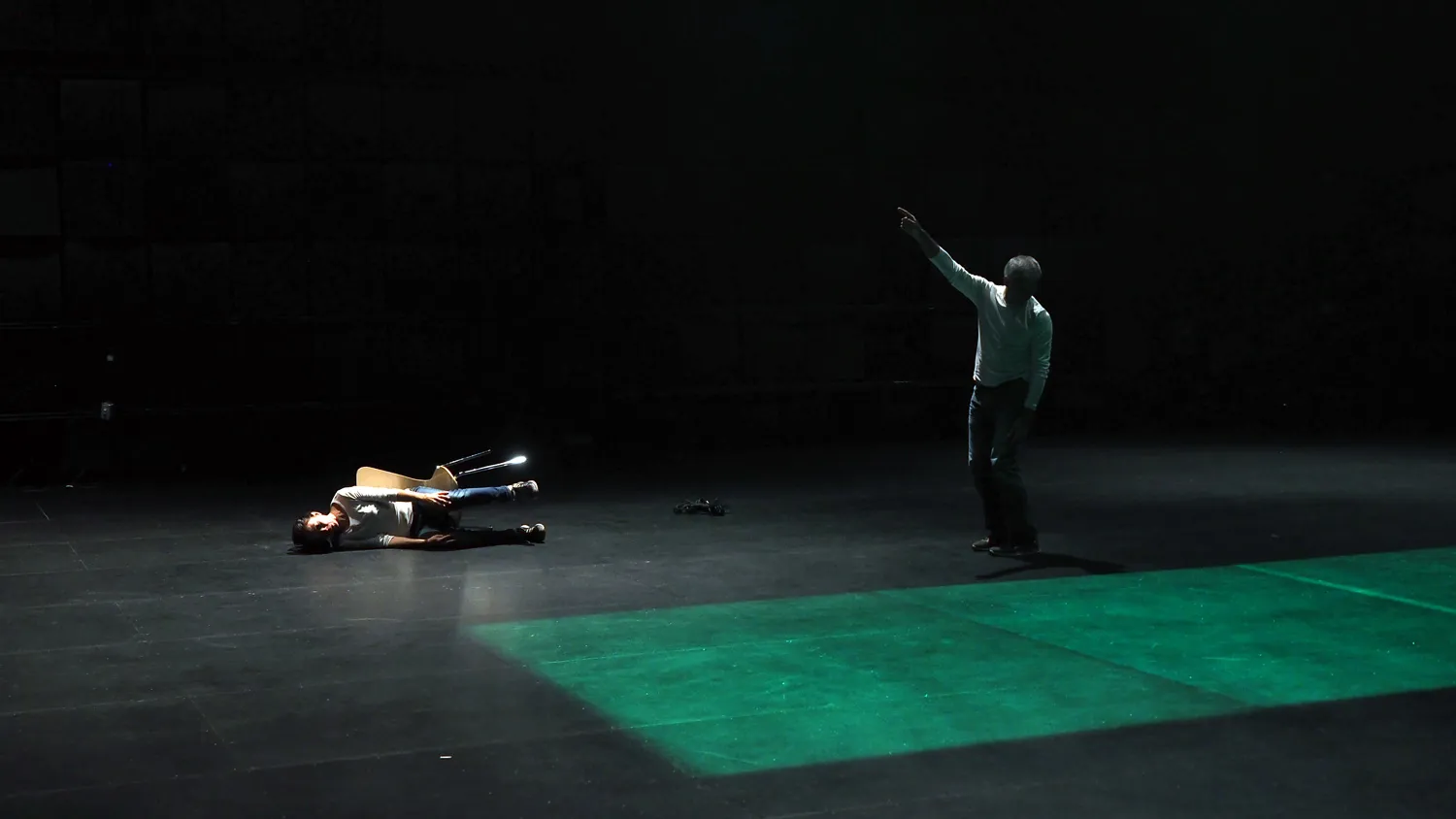
No food No money No jewels is a cinematic event in three episodes loosely inspired by the Andrei Tarkovsky film Stalker and the A.A. Milne book The House at Pooh Corner that conflates the “Zone” and the “100 Acre Wood” and the themes of escaping daily life to get ‘lost in the woods’ or ‘go to the zone’ that pervades both stories.

No food No money No jewels creates parallel characters that are sometimes human, sometimes anthropomorphic. The plot suggested by both the film and the book details a journey and an adventure. Episode 1 – At the FifthStroke introduces the protagonists as some of them attempt to escape their daily lives. Episode 2 – The Zone/The Hundred Acre Wood takes the characters in and out and around in circles on a journey that finally lands them in Episode 3 – Barroom Radio or “the room” (the goal of the protagonists in Stalker) that turns out to be the radio station, first heard as an audio broadcast during Episode 1 – At the FifthStroke.

Like the film and the book the characters strikeout on adventure only to end up where they started, back in the bar in time for “tea”. Each episode will have its own distinct set built for the EMPAC theatre space – the creation of Episode 1 is detailed below as the first part of our proposed three stage residency, the sets for Episodes 2 & 3 are to be developed.
Media
Image
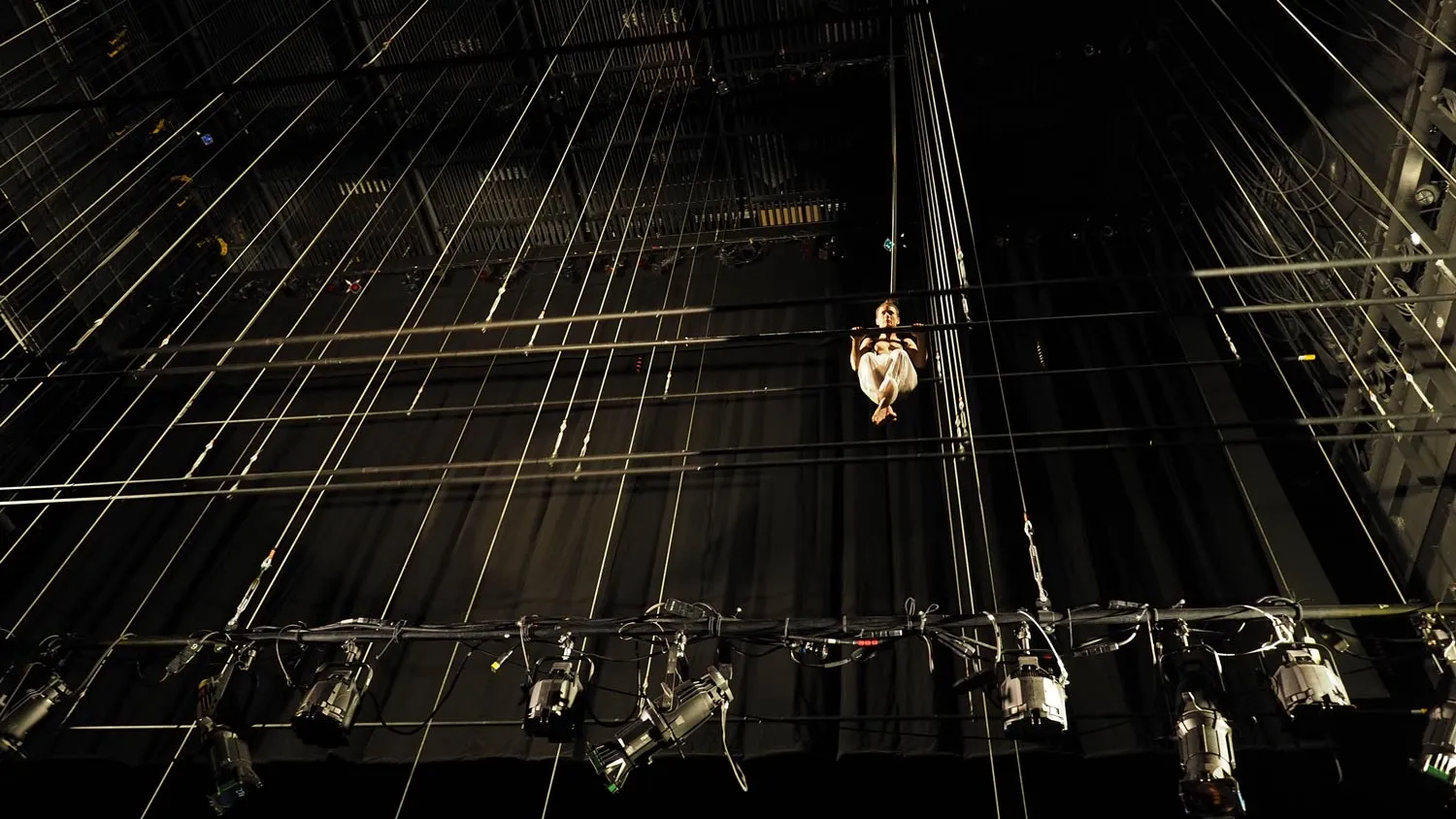
A dancer suspended 40 feet up among the theater fly tower line sets in a black box theater.

Void

A.K. Burns

A.K. Burns will be in residence to film collaborator Savannah Knoop among the line-sets and technical infrastructure in the Theater’s fly tower. This will be the final production in a series of residencies, which has included a shoot with performer Shannon Funchess in the catwalks above the Concert Hall and experiments with light, haze, sound, rigging, and video.

The scenes produced at EMPAC over the past two years will be incorporated into a long-form, multichannel image work for exhibition, which is premiering at the Julia Stoschek Collection in Dusseldorf in Fall 2019.

Main Image: A.K. Burns was in residence in May, 2019 to film collaborator Savannah Knoop among the line-sets and technical infrastructure in the Theater’s fly tower. A.K. Burns, Production Still, 2019. Courtesy the artist. Photo: Mick Bello/EMPAC.

Image
An aerial shot of an orange apartment film set, set up on a black box studio.

The Inheritance

Ephraim Asili

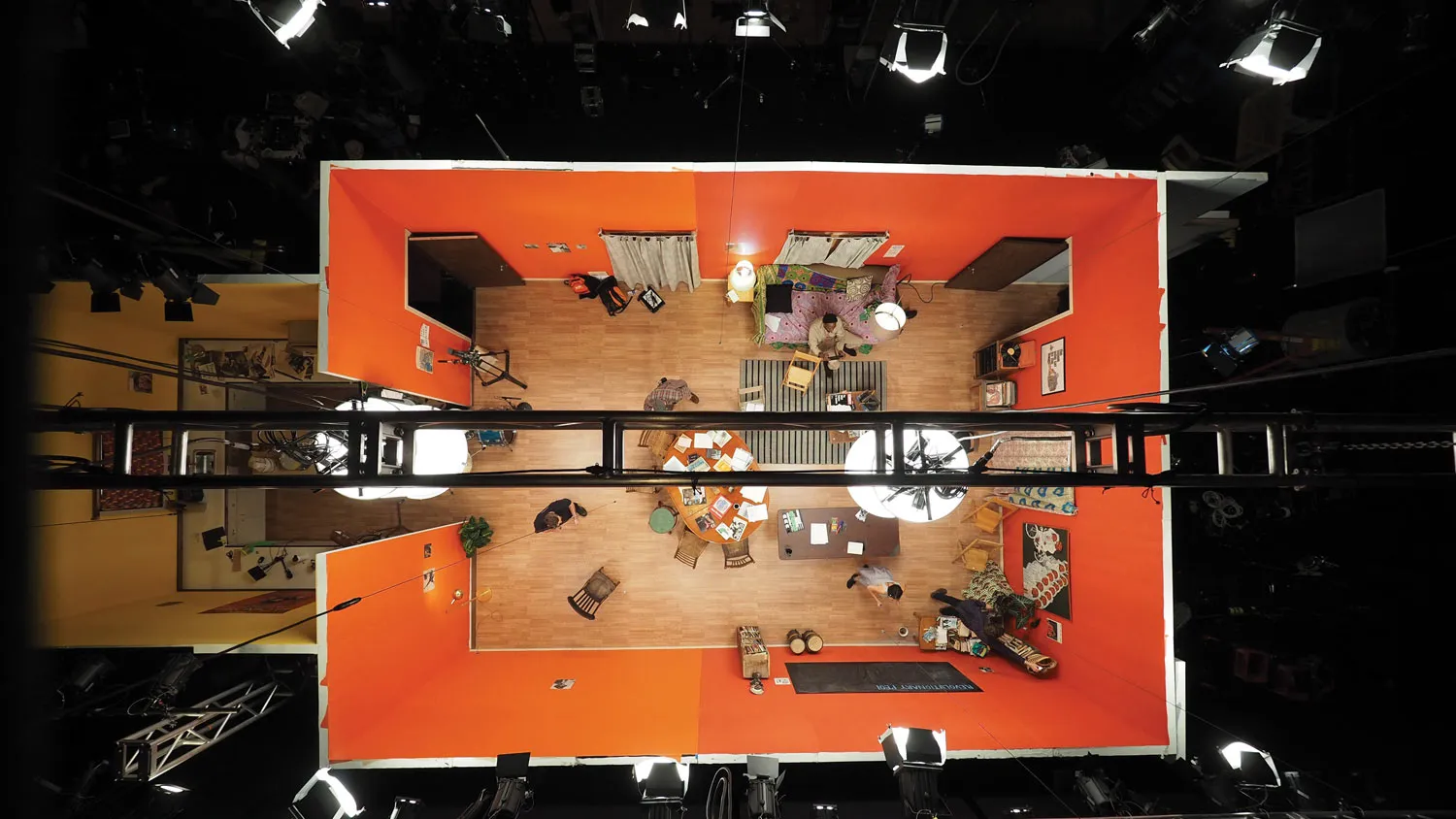
Hudson Valley–based filmmaker Ephraim Asili was in residence between 2018 and 2020 for the production of his EMPAC-commissioned feature film The Inheritance. Based on real events, the film’s protagonist inherits a house in West Philadelphia that becomes home to an urban collective for activists of color. The increasingly claustrophobic drama unfolds as the group attempts to live together and find consensus through Black political discourse and social philosophy. 

The Inheritance, premiered at Toronto International Film Festival in early September 2020 and headlined Currents at New York Film Festival later in the month. The film is subsequently touring to festivals world-wide and will be presented at EMPAC once the Center is able to reopen to the public. 

Special preview screenings of the film in EMPAC’s theater are available for Rensselaer faculty and students during the current fall semester. For more information on campus protocols and to book a screening for your class, please contact the box office.


Main Image: Production still from The Inheritance in Studio 1, June 2019. Courtesy the artist. Photo: Mick Bello/EMPAC.

Image
miriam ghani and Vic Brooks on stage in front of a large projection of an Afghan film.

What We Left Unfinished

Miriam Ghani

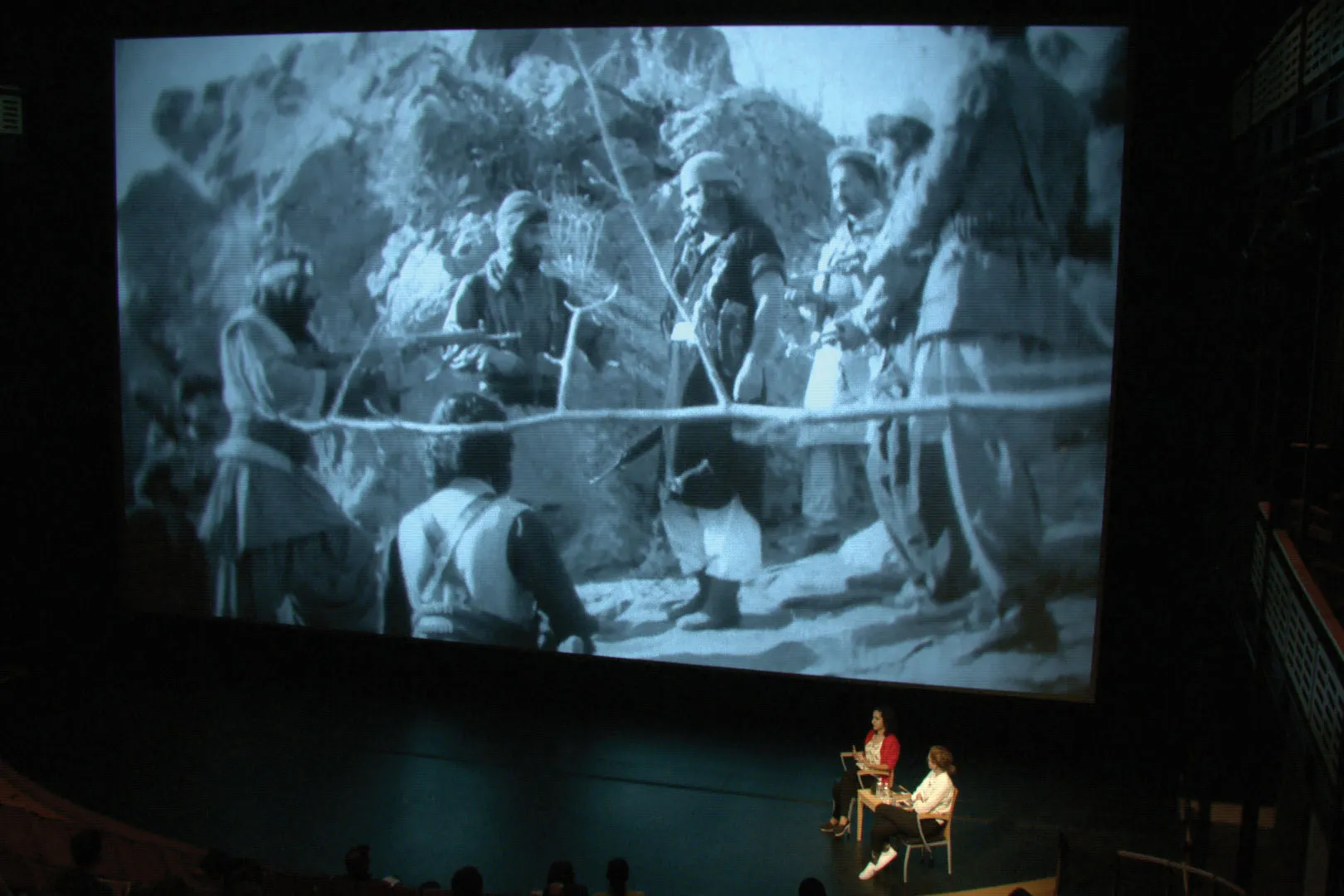
Mariam Ghani was in residence to work on the post-production audio and video for her film What We Left Unfinished, based on the history of the Afghan Film Archive, the state film institute based in Kabul, Afghanistan. The film gestures toward the possibility of reconstructing hidden and parallel narratives from both images of state propaganda and the day-to-day lived experience of the Afghan Film Archive’s management, film directors, and governmental players during the period of Afghan Communism.

Main Image: Miriam Ghani What we Left Unifinished, Production still, 2018. Courtesy the artist. Photo: Mick Bello/EMPAC.

Image
clarissa tossin working in a studio against a gradient background with a mayan flute

Mojo’q che b’ixan ri ixkanulab’ / Antes de que los Volcanes Canten / Before the Volcanoes Sing

Clarissa Tossin

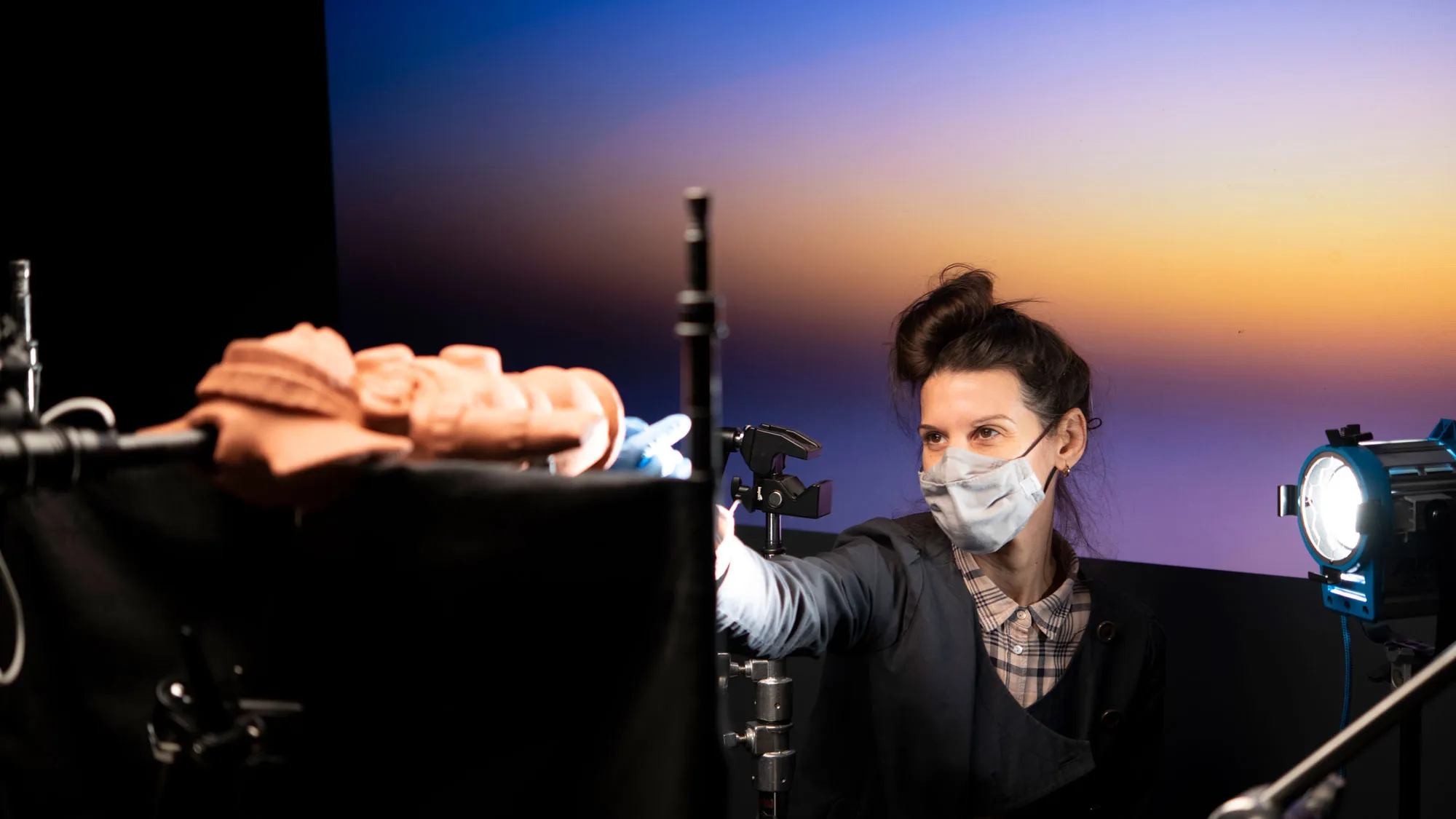
Artist Clarissa Tossin is back in residence in the Concert Hall with composer Michelle Agnes Magalhães to work on the sound design, dramaturgy, and realization of her installation Mojo’q che b’ixan ri ixkanulab’ / Antes de que los Volcanes Canten / Before the Volcanoes Sing.

The moving image work utilizes a higher-order Ambisonic spatial audio system. Ambisonics is a specific audio format developed to record, mix, and playback audio in a scalable immersive three-dimensional soundfield. The listeners in the Concert Hall are surrounded by 64 loudspeakers distributed across the wall and ceiling surfaces, each contributing to the soundfield with their own audio channel.

Over the last several years, the principal photography for Mojo’q che b’ixan ri ixkanulab’/ Antes de que los Volcanes Canten / Before the Volcanoes Sing was filmed by Tossin and cinematographer Jeremy Glaholt in the Concert Hall and Theater at EMPAC with flautist Alethia Lozano Birrueta; at Sowden House and the Mayan Theater in Los Angeles with Lozano Birrueta and artist Tohil Fidel Brito; and in Guatemala with poet and artist Rosa Chávez.

Los Angeles-based artist Clarissa Tossin’s Mojo’q che b’ixan ri ixkanulab’ / Antes de que los Volcanes Canten / Before the Volcanoes Sing is scored by Brazilian composer Michelle Agnes Magalhães and performed by Mexican flautist Alethia Lozano Birrueta, Ixil Maya artist Tohil Fidel Brito, and K’iche ’Kaqchiquel Maya poet Rosa Chávez. The film takes a sonic approach to the articulation of architectural borrowings by Western architects of indigenous cultural motifs, utilizing 3D-printed replicas of Maya wind instruments from Pre-Columbian collections held in US and Guatemalan museums.

In this video Tossin and some of her collaborators, including the director of photography Jeremy Glaholt, discuss the production of the flutes, the composition of the score, and approaches to the film’s cinematography. These 3D scanned and playable replica instruments were created by anthropologist/archaeologist Jared Katz, the Mayer Post-Doctoral Curatorial Fellow for Pre-Columbian Art at the Denver Art Museum.

Main Image: Clarissa Tossin working in residence in the theater on principal photography for Mojo’q che b’ixan ri ixkanulab’ September 28, 2021. Courtesy the artist. Photo: Michael Valiquette / EMPAC. 

Media


An introduction to Mojo’q che b’ixan ri ixkanulab’ / Antes de que los Volcanes Canten / Before the Volcanoes Sing, a new EMPAC-commissioned moving image work by Clarissa Tossin that is currently in production at Sowden House in Los Angeles and at EMPAC/Rensselaer in Troy, NY.

Image
A woman laying in a coffin covered in flowers while a another woman wearing a green cloak whispers in her ear.

Oriana

Beatriz Santiago Muñoz


Following the principal filming of Oriana at EMPAC and in Puerto Rico, and the production of a score by Brazilian ensemble Rakta, Beatriz Santiago Muñoz will be back in residence in the Theater to work on the post-production of her feature-length moving image work. 

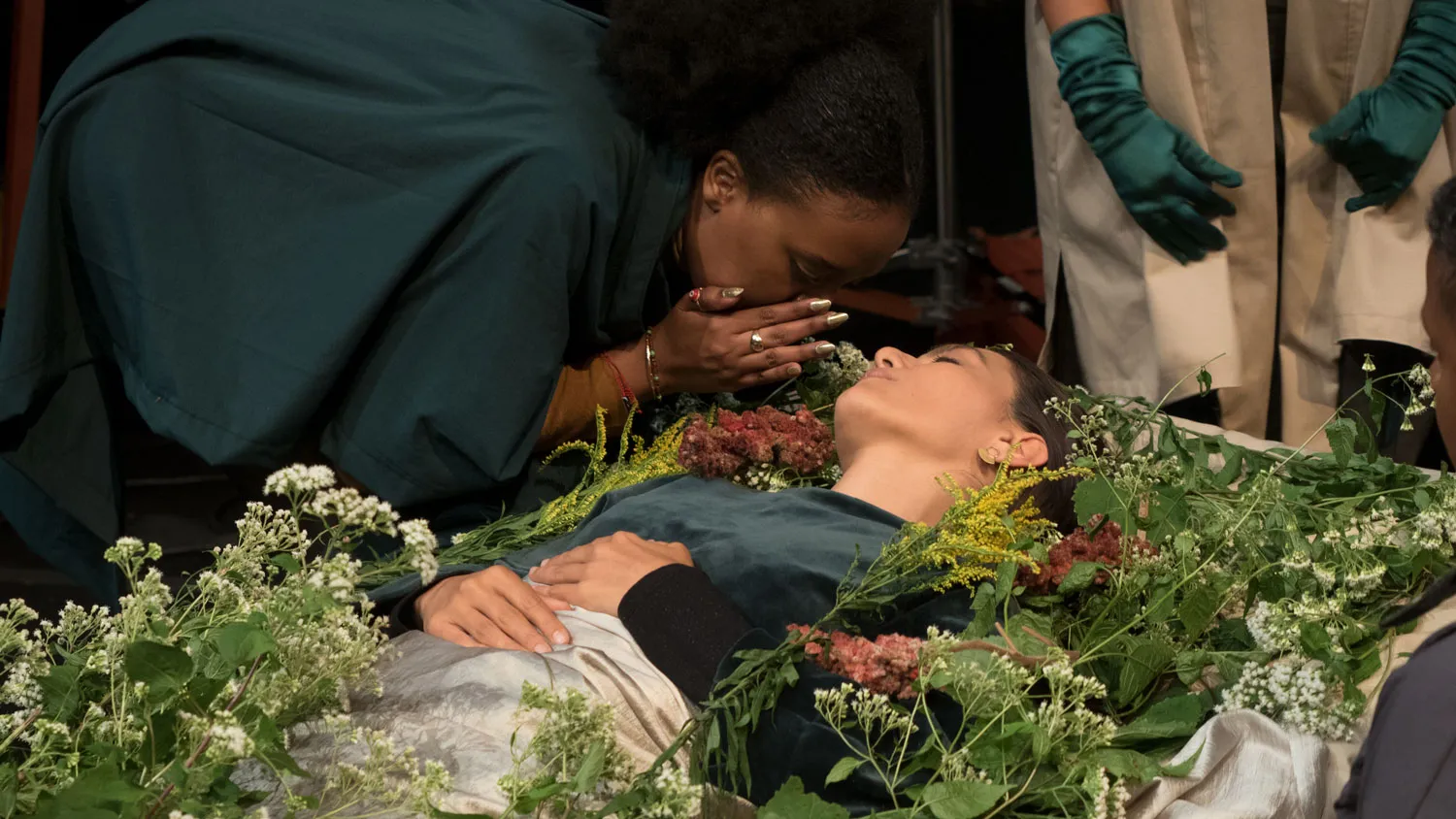
Oriana entwines the linguistic structure of Monique Wittig’s iconic 1969 feminist novel Les Guérillères with the material and conceptual ground of the Caribbean. It visualizes the ecstatic potential of a near-future, non-binary world order through the struggles of its protagonists to imagine a new sort of sensorium—an autonomous language of post-colonial and post-patriarchal society.

Animated by a shifting cast of collaborators from music, performance, art, and poetry, Oriana is being produced in Puerto Rico and at EMPAC, where the center’s theatrical infrastructure forms the backdrop to an iterative and recursive moving image work.

Main Image: Production still from Oriana by Beatriz Santiago Muñoz. Photo: Sara Griffith/EMPAC

Media

Beatriz Santiago Muñoz – Oriana (Coming Fall 2021)

Beatriz Santiago Muñoz in conversation with Vic Brooks

Image
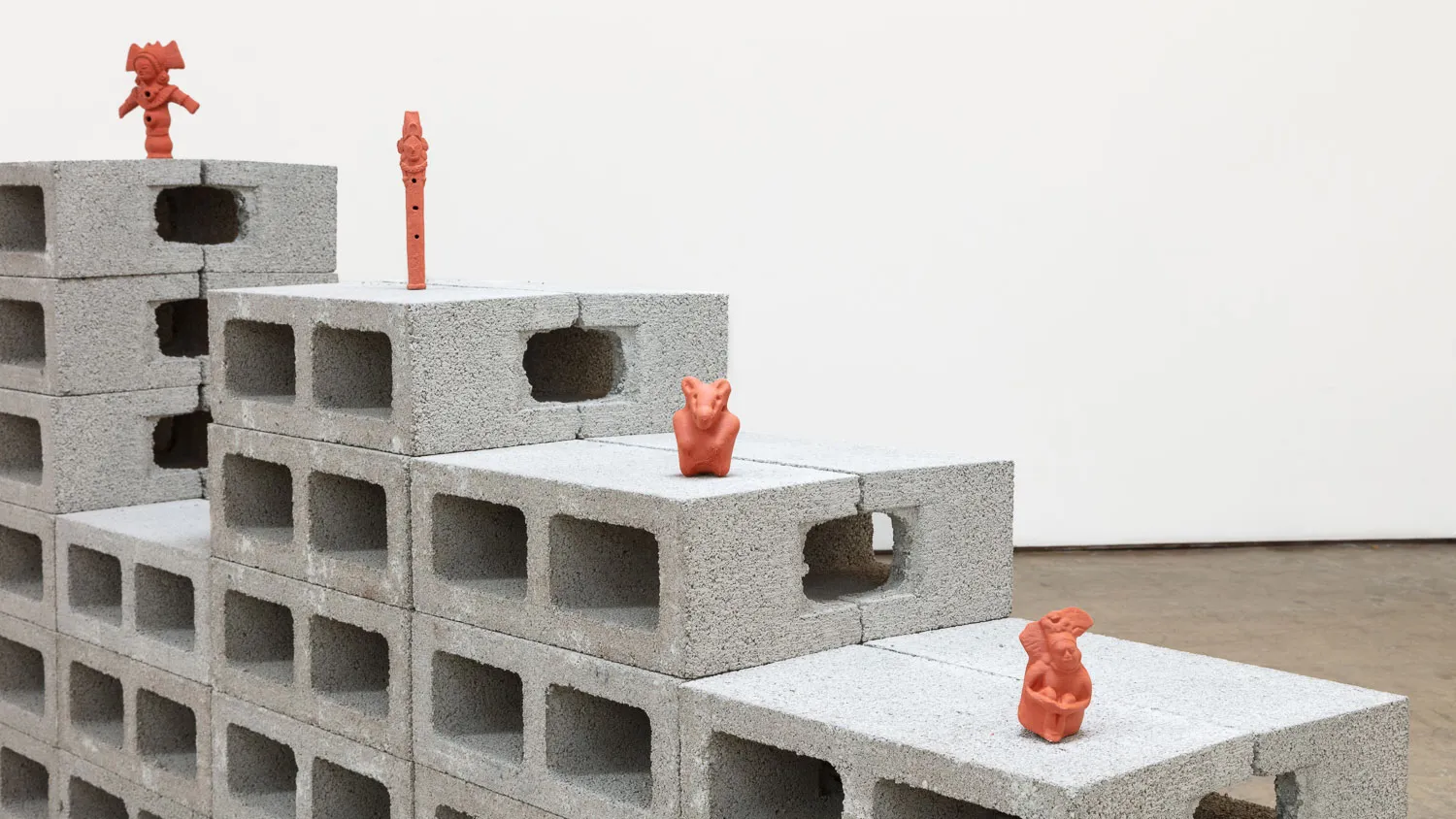
Red clay mayan flutes in shapes of animals and deities on cement blocks arranged as stairs.

Clarissa Tossin

Work in Progress

This work-in-progress presentation will introduce artist Clarissa Tossin’s research into pre-Columbian wind instruments. Tossin is in residence with Mexican flautist Alethia Lozano Birrueta and Brazilian composer Michelle Agnes Magalhães to develop the score for a new EMPAC-commissioned moving image artwork. Working with 3D-printed versions of these traditional instruments, which are held in US and Guatemalan museum collections, Tossin will discuss and demonstrate the prototypes she has produced in collaboration with anthropologist/archaeologist Jared Katz, the Mayer Post-Doctoral Curatorial Fellow for Pre-Columbian Art at the Denver Museum.

Tossin’s Chu Mayaa (2018) was screened at EMPAC as part of the Spring 2019 season. In the artist’s first moving image work to explore the appropriation of Mayan motifs in the architecture of Frank Lloyd Wright, she collaborated with choreographer and dancer Crystal Sepúlveda, who moves in and out of the shadows cast by the pastiche of indigenous motifs at the architect’s famous Hollyhock House.

This new work not only explores the sonic potential of traditional Mayan forms to resituate Mayan Revival buildings in the context of Pre-Columbian Mesoamerican architectural lineage, but also reveals the ways in which this lineage is continuous in the cultural hybridity of contemporary Mayan communities in Los Angeles.

Work-in-Progress events offer a window into the research, development, and production of new works by artists in residence at EMPAC. These free events open up a dialogue between our audiences, artists, and EMPAC staff.

Main Image: Clarissa Tossin, 21st Century Wisdom: Healing Frank Lloyd Wright's Textile Block Houses, At 18th Street Art Center. Photo: Brica Wilcox.

Media

An introduction to Mojo’q che b’ixan ri ixkanulab’ / Antes de que los Volcanes Canten / Before the Volcanoes Sing, a new EMPAC-commissioned moving image work by Clarissa Tossin that is currently in production at Sowden House in Los Angeles and at EMPAC/Rensselaer in Troy, NY.

Image
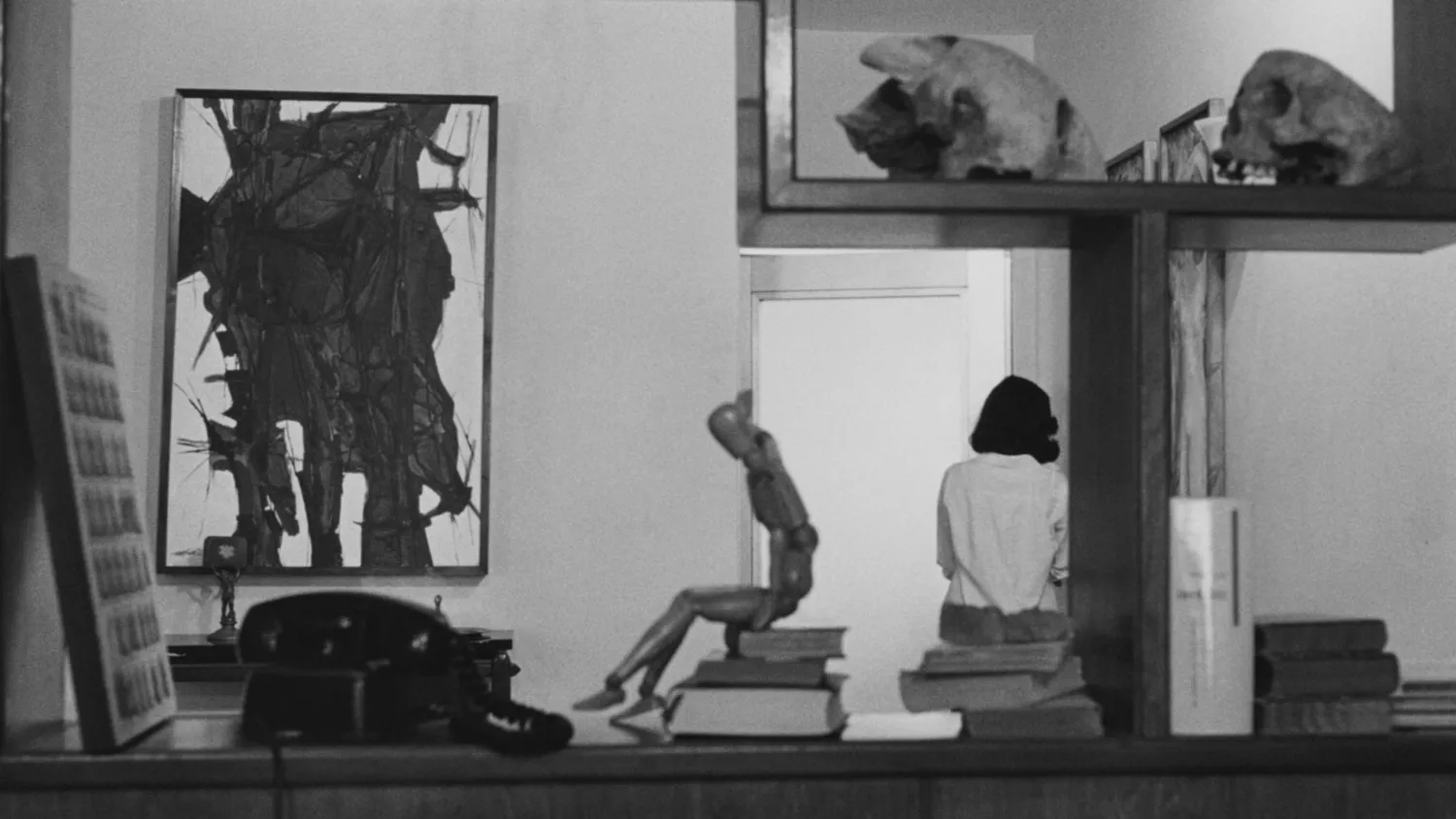
A table parallel to the view of the camera with books, a wooden artists dummy, and a rotary phone. A neatly decorated apartment with an AbEx painting can be seen in the background. A woman stand with back to the viewer leaning against the wall.

Short Shadows: Memories of Underdevelopment

Agnès Varda and Tomás Gutiérrez Alea

A double-bill of iconic films produced in 1960s Havana. Salud les Cubains (1963) by Agnès Varda and Memories of Underdevelopment (1968) by Tomás Gutiérrez Alea both take a documentary approach in capturing Havana and its inhabitants, while producing starkly divergent fictions. The first is a joyful journalistic photo-montage shot through the lens of a master of the French experimental tradition, and the second is a feature film that firmly takes its cues from a Cuban revolutionary tactic of “imperfect cinema.”

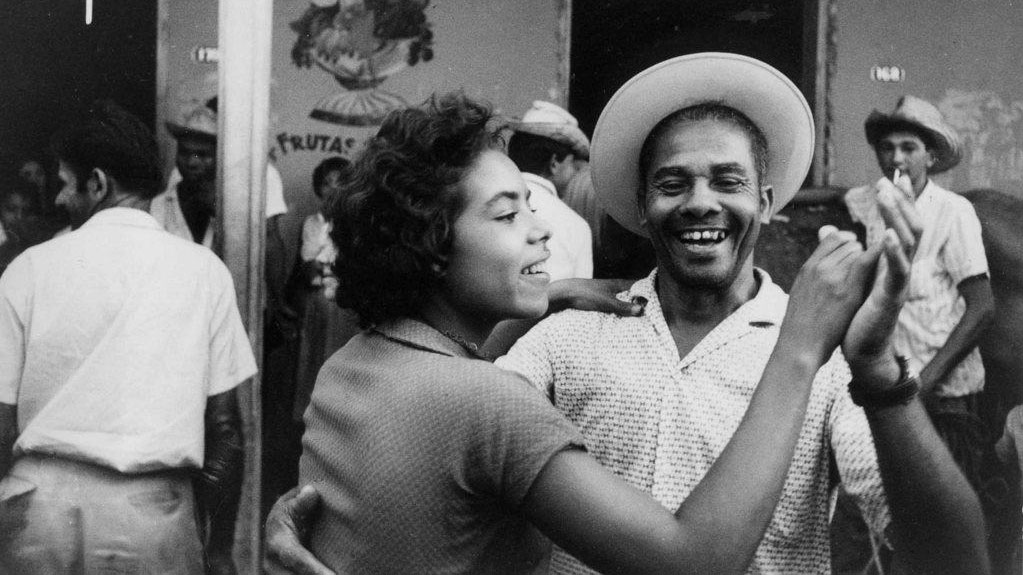
Invited by Instituto Cubano del Arte e Industria Cinematográficos (of which Tomás Gutiérrez Alea was a key member) to visit Havana in 1962, Varda left her bulky 16mm film camera behind, favoring the portability of a stills camera in order to capture the Cuban political climate. The resulting photo-montage Salud les Cubains is a lively portrait of post-revolutionary Cuba indebted in its narration to Chris Marker’s legendary work of experimental cinema La Jetée that was produced the year prior. Although a staunchly political film in its intention, it is marked by the exoticizing cultural aesthetic of European Left political cinema. Animated with over 1500 stills and edited to the tempo of Cuban music, Varda weaves recordings of Fidel Castro with an impressionistic voice-over narrated by herself and actor Michel Piccoli in a film described by the artist as “socialism and cha-cha-cha.”

Released five years after Varda’s film, Tomás Gutiérrez Alea’s recently restored Memories of Underdevelopment, based on the novel Inconsolable Memories by Edmundo Desnoes, is a touchstone of Cuban revolutionary cinema. Alea incorporated footage shot on location and found documentary materials into his fictionalized story of the bourgeois dilettante, Sergio, who stays behind in Havana after his family has fled the revolution. In Alea’s words, “photographs, direct documentation, fragments of newsreels, recorded speeches, [and] filming on the street with a hidden camera on some occasions, were resources we could count on and needed to develop to the fullest.” The striking black and white cinematography of this cautionary tale is an iconic example of Cuba’s “imperfect cinema”—Latin American movements of the ‘60s and ‘70s that emphasized deep cultural and social engagement.

Program

  • Salud les Cubains (1963)
  • Agnès Varda
  • Memories of Underdevelopment (1968)
  • Tomás Gutiérrez Alea

Main Image: Memories of Underdevelopment (1968) by Tomás Gutiérrez Alea. Courtesy Janus Films

Media
Image
A Black Cuban couple wearing 1950's clothing dancing joyfully in a crowded street.

Salud les Cubains (1963) by Agnès Varda. Courtesy Janus Films. 

Image
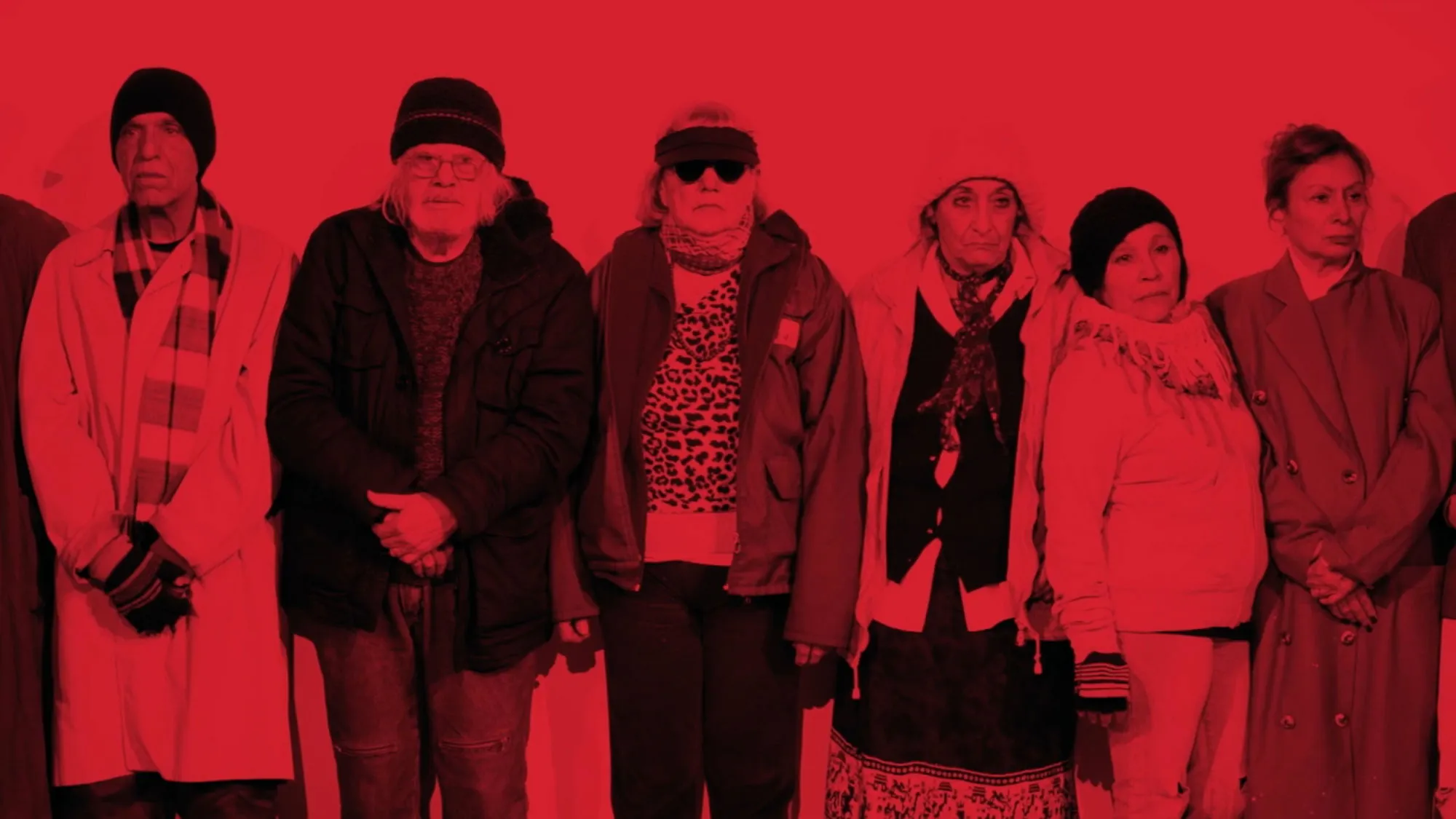
a group of six people bundled in layers of winter clothes washed in red light.

Short Shadows: Second Time Around

Dora Garcia, Basir Mahmood, Deimantas Narkevičius

The final Short Shadows program of the season presents three moving-image works with narrative structures that orbit around performances from the past in order to make hidden histories visible. 

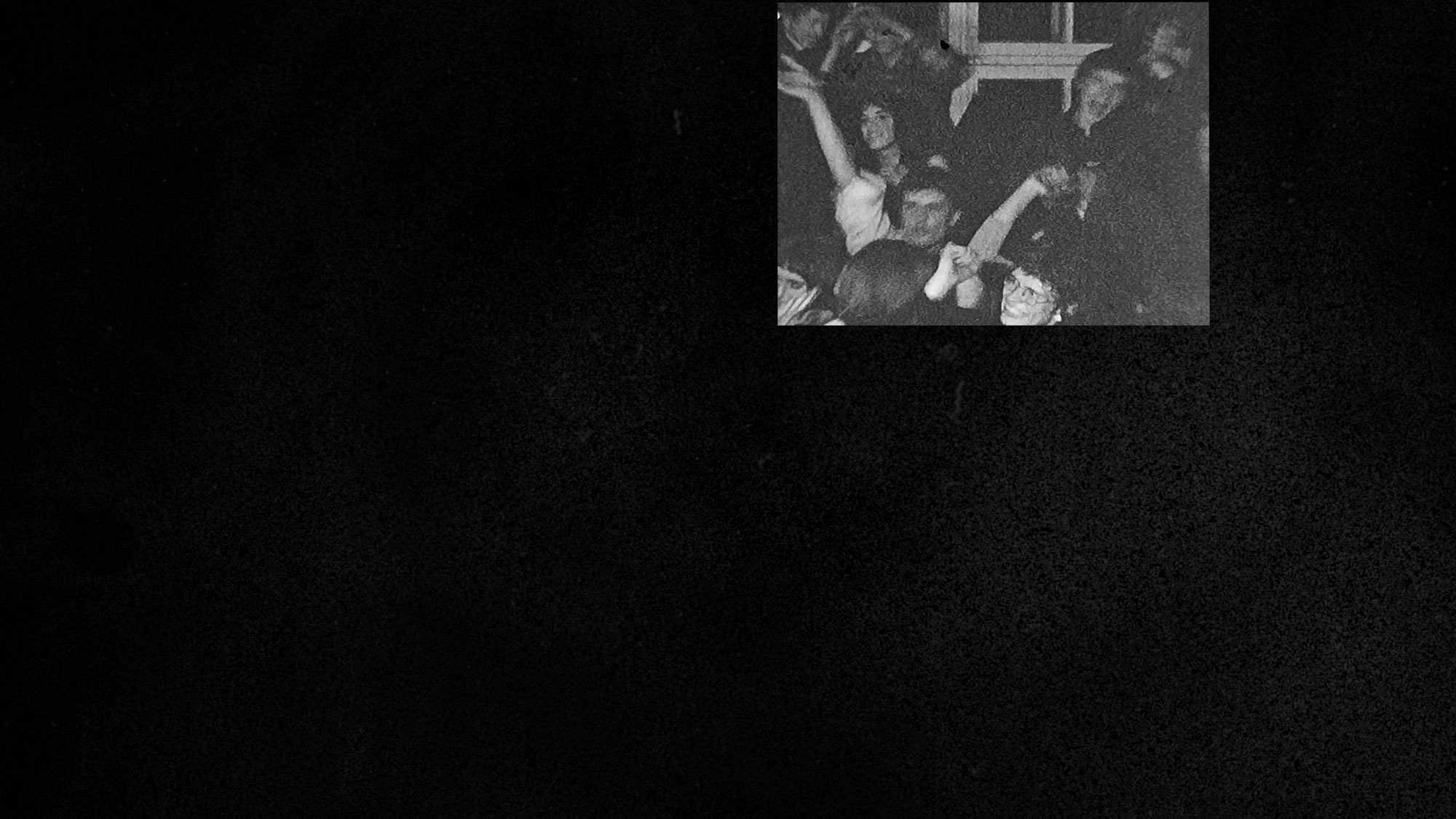
Deimantas Narkevičius’s Stains and Scratches focuses on found footage of an underground performance of Jesus Christ Superstar in Vilnius, Lithuania during the 1970s. The show was performed by students at the Vilnius Academy of Art from a score re-written by ear from an unsanctioned double LP. Narkevičius further dislocates the documentation by layering and doubling the film onto a scratched black celluloid background, the soft-montage composition highlighted and rendered sculptural in Stereoscopic 3D. 

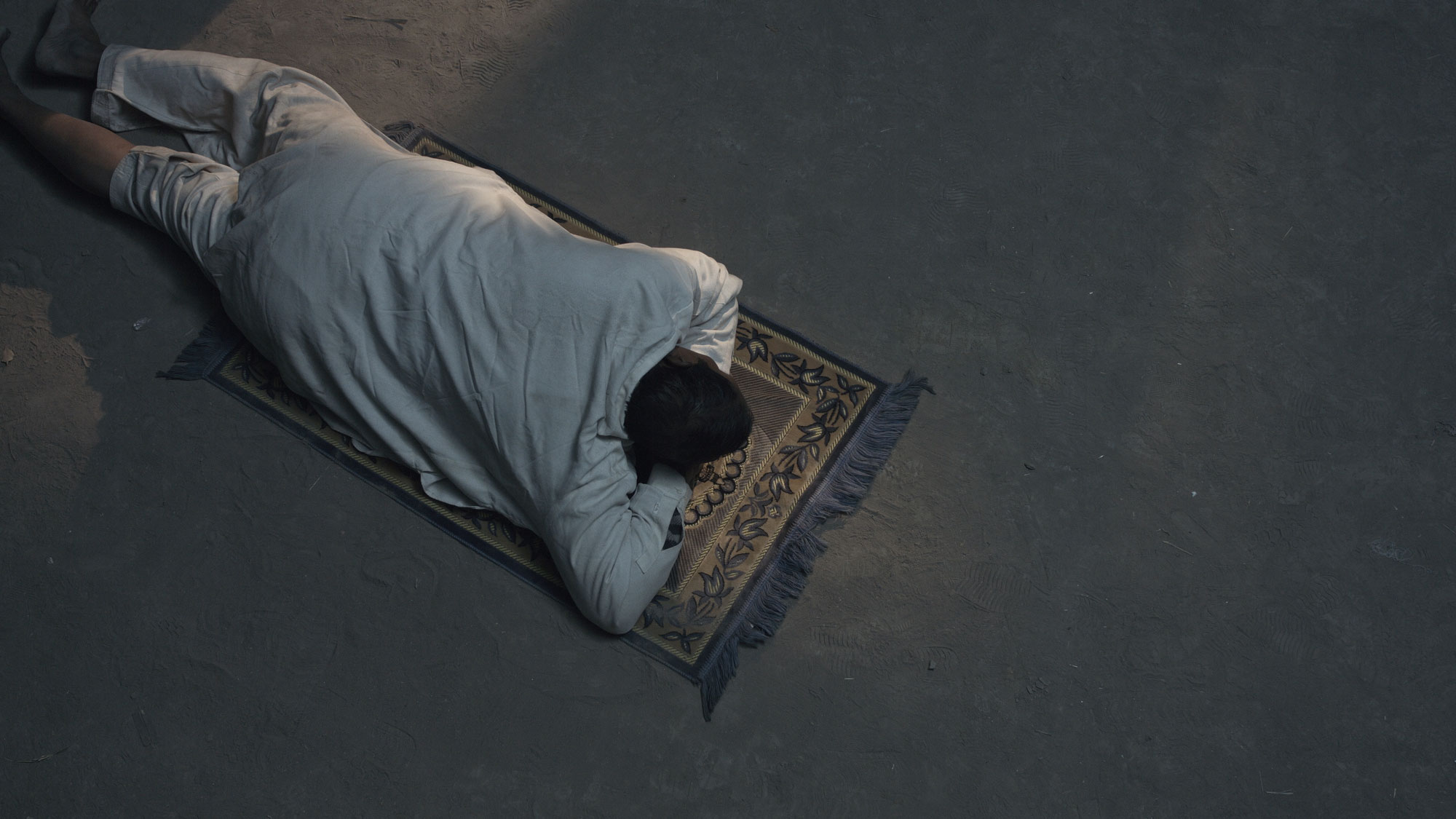
One of a series of films produced during Basir Mahmood’s research into “Lollywood” (Pakistan’s center for cinema production in Lahore) history, the script for all voices are mine was derived from recollections of actors, filmmakers, and writers. The film is structured around reenactments of their scenes from previous films and is performed without dialogue, a dramaturgical approach that produces a film that is at once unfamiliar and recognizable. This collage technique produces an uncanny sense of a film that we have all seen, albeit one that is rehearsed only in memory. 

Spanish artist Dora Garcia’s first feature, Segunda Vez (Second Time Around), pivots around avant-garde theorist Oscar Masotta’s ideas concerning psychoanalysis, politics, and art in 1960s Buenos Aires. Structured by a series of interconnected re-enactments, re-stagings, and social experiments, the film shifts between documentary-style interpretations of past “happenings” and the fictional psychodrama of novelist Julio Cortázar. Segunda Vez weaves a complex narrative within the climate of surveillance and disappearances in Argentina, producing an acute sense of paranoia for what might happen the second time around. 

Whether anchored in real or fictional scenarios, each artwork presented in the Short Shadows series stretches beyond a singular moment or place to foreground the political importance of unexpected historical interconnections. Mostly produced within the last decade, the artists’ films, videos, poetry, and performances presented here shine a light on cultural and historical events that may otherwise remain in shadow. 

Program

  • all voices are mine (2018)
  • Basir Mahmood
  • 4K digital video
  • Courtesy the artist
  • Stains and Scratches (2018)
  • Deimantas Narkevičius
  • 3D digital video
  • Courtesy the artist and LUX
  • Segunda Vez (2018)
  • Dora Garcia
  • 4K digital video
  • Courtesy the artist and August Orts

Main Image: Dora Garcia, Segunda Vez (2018)Courtesy the artist and Auguste Orts.

Media
Image
A man wearing draped white fabric laying in prostrate on a small prayer rug on a gray concrete floor.

Basir Mahmood, all voices are mine (2018). Courtesy the artist.

Image
A black screen with a small film still in the upper right corner or a group of people with arms up and smiling.

Deimantas Narkevičius, Stains and Scratches (2018), Courtesy the artist and LUX, London.

Image
A blue high-rise apartment building with mean windows projecting on to a wall. A small puddle forming a reflection is on the floor where the wall meets the ground.

Short Shadows: Bahar Behbahani and Jon Wang

This event brings together the work of New York-based artists and filmmakers Bahar Behbahani and Jon Wang as part of Short Shadows, an ongoing moving image series at EMPAC curated by Vic Brooks. The evening will engage themes and processes of displacement and longing, as well as narratives of transformation that run through Behbahani and Wang’s work.

Bahar Behbahani's We Were Missing A Present is a meditative study on the social and topographical transformations of the cultural landscape. By exploring the site of the garden as a place of contest, Behbahani seeks an alternative dynamic between power and control. United by her research-based practice, the various components of this project including moving image, brush strokes, body movement, sound, text, and water are utilized by Behbahani to provoke spatial memory while observing the inherent complexities of material resources. We Were Missing A Present re-imagines the historical structure of landscape, botany, migration, and the processes of colonization. Behbahani expresses sincere gratitude to Imani's family for facilitating the garden visits in Shiraz, Iran, and dedicates We Were Missing a Present to the people of Shiraz in the wake of recent flooding this week.

New York-based Iranian artist Bahar Behbahani’s work addresses her long-term conceptual dialogues with memory and loss. Through painting, video, and participatory performance, she revisits Iran’s psychogeographic landscapes. The Persian garden, a contested space marked by colonialism and seductive beauty, is a reoccurring site for reflection and recovery.

John Wang's From Its Mouth Came a River of High-End Residential Appliances is comprised of drone footage of Hong Kong’s dragon gates, a series of gaps in modern high-rise buildings constructed to allow mythological dragons to fly from the mountains to the sea. Originally shot for a documentary, the work has since taken on a life of its own. In its different stagings, the footage has masqueraded as a personal screensaver (MUBI), wallpaper in a Chinatown motel (Images Festival), and as a location for a live soap opera taping (Triple Canopy). At EMPAC, a new iteration of Wang’s project will dematerialize into a wall of fog, finally revealing its true form as weather. As they describe, “fog is defined by a lack of visibility, but its opacity forms an image of its own.” The footage was originally developed with the support of Triple Canopy & Charlotte Feng Ford.

Jon Wang generates films, sculptures, and performances that question notions of representation and desire. Wang’s treatments of pace—at times drawing on techniques of voice-over narration, tenants of feng shui, and the day-to-day activities of silk worms—gesture towards the ways in which beings and their surroundings are in states of perpetual transition. In this sense, pace, as a techno-sensual material, both grounds and disrupts their atmospheric videos and installations.

Whether anchored in real or fictional scenarios, each artwork presented in the Short Shadows series stretches beyond a singular moment or place to foreground the political importance of unexpected historical interconnections. Mostly produced within the last decade, the artists’ films, videos, poetry, and performances presented here shine a light on cultural and historical events that may otherwise remain in shadow.

Program

  • We Were Missing A Present (2019)
  • By Bahar Behbahani
  • Sound: Maciek Schejbal
  • Text: Ghazal Mosadeq
  • From its Mouth Came a River of High-End Residential Appliances (2018)
  • Written & Directed by Jon Wang
  • Aerial Assistant: Hercules Lau
  • Sound: Alex Wang, Yllis Wang, and Aaron Sanchez

Main Image: Jon Wang, From it's Mouth Came a River of High-end Residential Appliances (2018). Courtesy the artist.

Media
Image
Abstract blue ink splotches projected over images of traditional Middle Eastern architecture and arches.

Bahar Behbahani, We Were Missing A Present, Performance Installation, 2019. Photo: Courtesy the artist.