Image
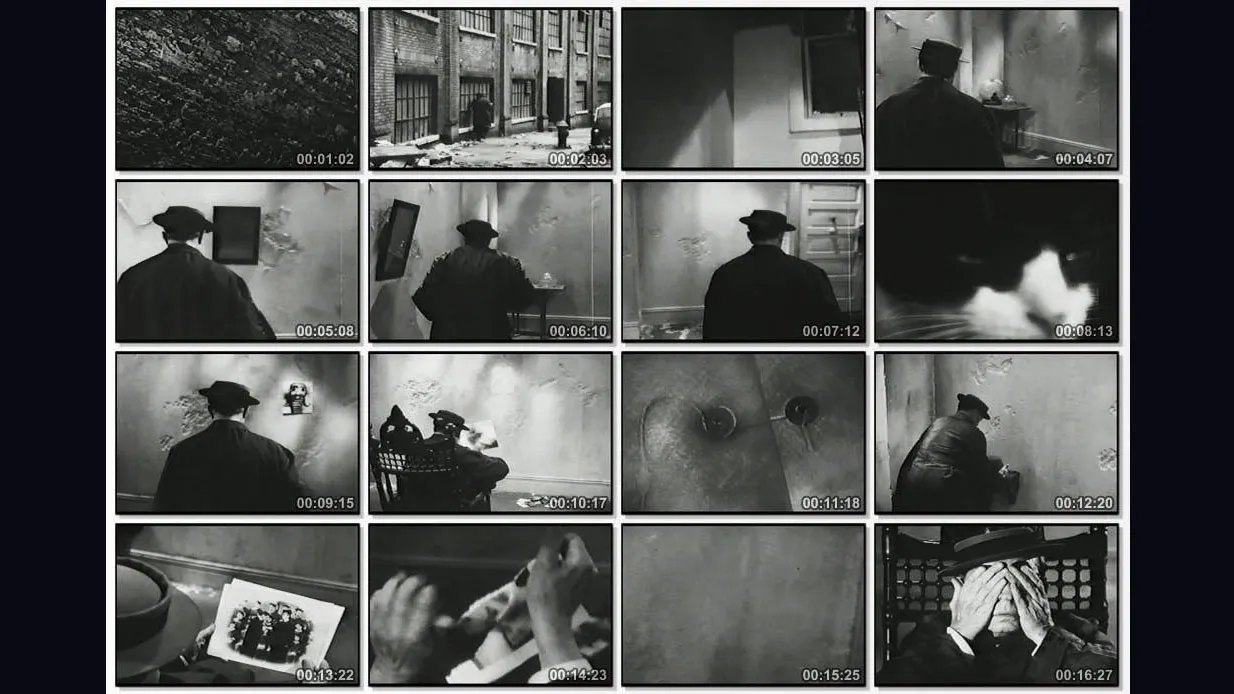
A grid of sixteen vintage film stills depicting a man wearing a 30's era trench coat and hat walking up to and through a distressed building.

Film

Directed by Alan Schneider

The launch for the film series A Door Ajar will bring together a screening of Beckett's Film, Jean Genet's Un Chant D'Amour, and a talk by curator and film theorist Ed Halter.

Nobel Prize-winning playwright Samuel Beckett’s only screenplay, Film (1965), was inspired by George Berkley’s philosophical pronouncement, “to be is to be perceived” (“esse est percipi”). In one of his last film appearances, Buster Keaton is cast as the object of observation by an all-seeing eye. Film documents the chase between camera and pursued image, raising questions about the nature of recorded and projected images. Beckett once summarized Film in the following manner: “It’s a movie about the perceiving eye, about the perceived and the perceiver—two aspects of the same man. The perceiver desires like mad to perceive and the perceived tries desperately to hide. Then, in the end, one wins.”

Hailed by French philosopher Gilles Deleuze as “the greatest Irish film,” Film was commissioned and produced by Grove Press’ Barney Rosset, directed by Alan Schneider, and features the cinematography of Academy Award-winner Boris Kaufman. The screenplay was written in 1963 and filmed in New York in the summer of 1964. For the shooting, Samuel Beckett made his only trip to America. Film has received numerous awards, including the Film Critics’ Prize at the 1965 Venice Film Festival, the Special Prize at the Oberhausen Festival (Germany) in 1966, and the Special Jury Prize at the 1996 Tours Festival (France).

Un Chant D’Amour (A Song of Love) is the only film created by the French novelist Jean Genet. Created in 1950, the silent film is a powerful work of homoerotic cinema, depicting the relationships between male prisoners in adjacent cells and the guard who watches over them. Un Chant D’Amourinfluenced Barney Rosset, who commissioned Film from Samuel Beckett in 1964.

Note: this film contains scenes of nudity, and sexually explicit scenes.
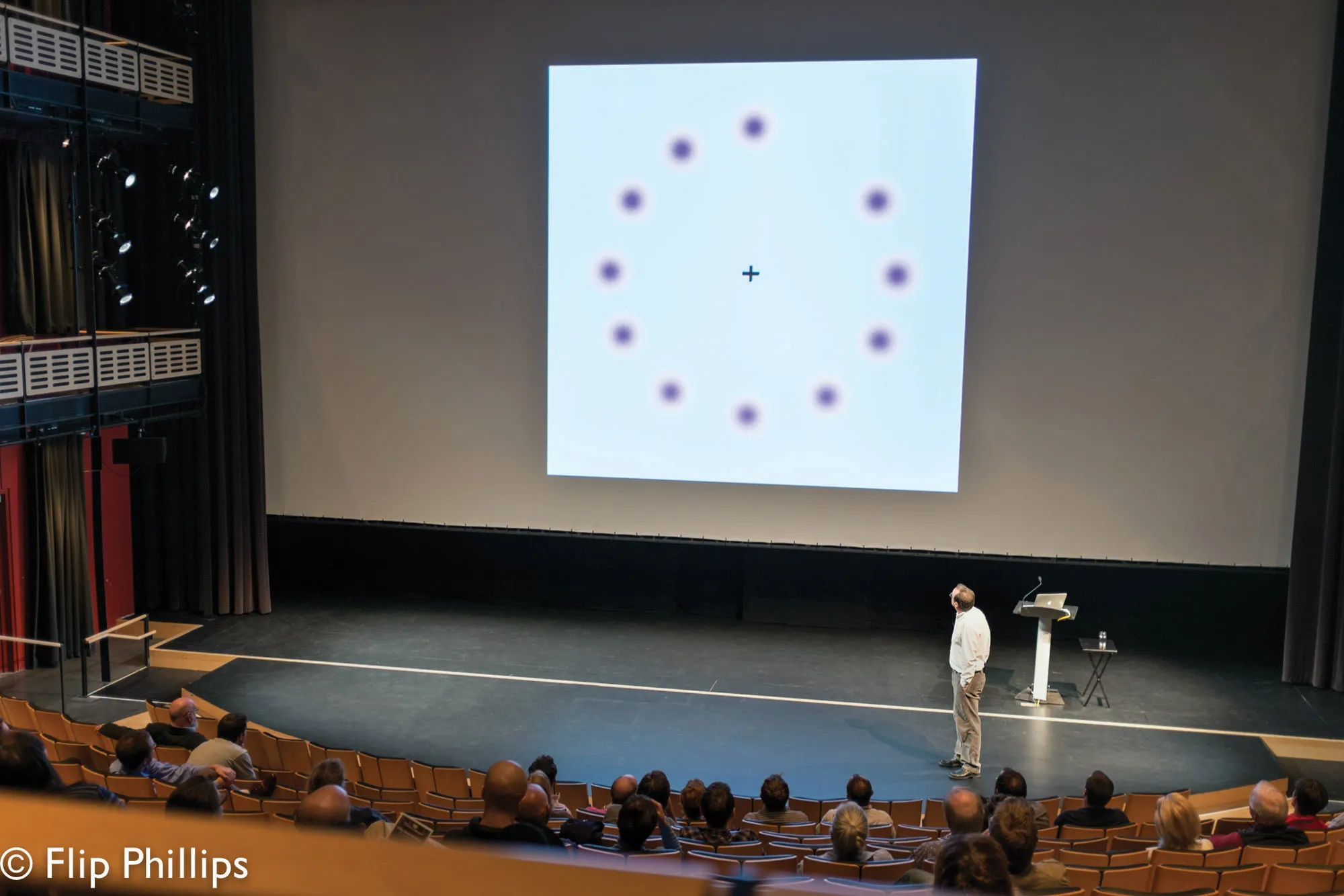
Image
Flip Phillips in lecture.

Flip Phillips

Deconstructing Perception

In this talk, Skidmore College professor of psychology and neuroscience Flip Phillips tackles a series of questions about the nature of human perception: are the senses related, and how do they interact? What sort of “information” do we need to perceive our world? Can that information be decomposed into simpler, atomic parts? Does it need to be in order to be understood? This talk is commissioned in conjunction with Julien Maire’s lecture-performance, Open Core, presented on September 20. Maire dissects a projector, and Phillips takes apart human visual perception and its relationship to technologies for image production.

Main Image: Flip Phillips on the theater stage in 2013. Photo: EMPAC/Rensselaer

Image
Ewa Borysiewicz in lecture.

Ewa Borysiewicz

How a Sausage Dog Works

Curator Ewa Borysiewicz discusses the work of Polish avant-garde filmmaker Julian Józef Antoniszczak (1941-1987). Antoniszczak created animated films by scratching images directly onto the film, and his work is commonly associated with naïve, trashy fables and harmless humoresque. Borysiewicz screens Antoniszczak’s animations and unpacks a hidden and carefully considered political dimension in the filmmaker’s cameraless workshop. The aim of the workshop was to stimulate the creativity of viewers subjugated to oppressive social and political conditions imposed by the Polish communist state. This talk is presented in conjunction with Julien Maire’s lecture-performance, Open Core, taking place on September 20. Antoniszczak’s experimental approach to technologies for producing visual images echoes the work of Julien Maire, who similarly disassembles image-making machines to create new methods for moving images. The talk will present Borysiewicz’s research into the archive of Julian Józef Antoniszczak, and was inspired by the work and ideas of Mikhail Bakhtin and his reflections on the subversive aspects of humour and the carnivalesque.

Main Image: Borysiewicz on stage in the theater in 2013. Photo: EMPAC/Rensselaer.

Media
Image
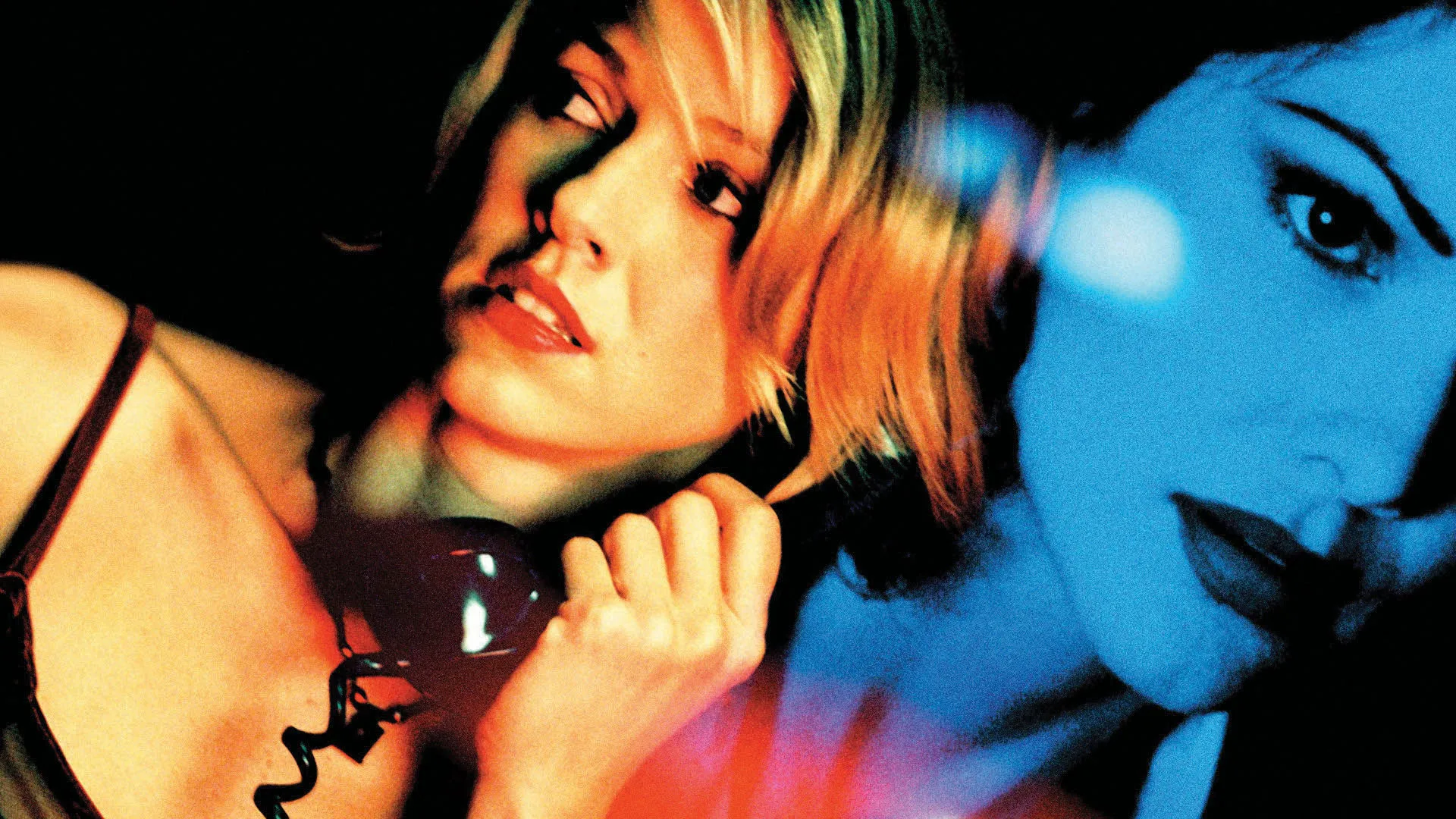
A white woman with blonder hair looking over her shoulder on the phone. An image of another woman is projected behind her in blue.

Mulholland Drive

Directed by David Lynch

David Lynch’s last work on real celluloid film, 2001’s Mulholland Drive is a surrealist neo-noir thriller that scrutinizes the collective dream that is Los Angeles through a famously disjointed narrative. After a car wreck on the winding Mulholland Drive renders Rita amnesic, she sneaks into the apartment of aspiring actress, Betty. As she and the Hollywood-hopeful search for answers about what happened to Rita, reality unravels into a Lynchian dream. 

Starring Justin TherouxNaomi Watts, and Laura Harring, Lynch originally conceived of Mulholland Drive as a television series and then turned it into a feature film. It received the Best Director award at the 2001 Cannes Film Festival, as well as an Oscar nomination for Best Director. A. O. Scott of  The New York Times wrote that while some might consider the plot an offense against narrative order... the film is an intoxicating liberation from sense, with moments of feeling all the more powerful for seeming to emerge from the murky night world of the unconscious.

Main Image: Film still from David Lynch's Muholland Drive (2001). 

Image
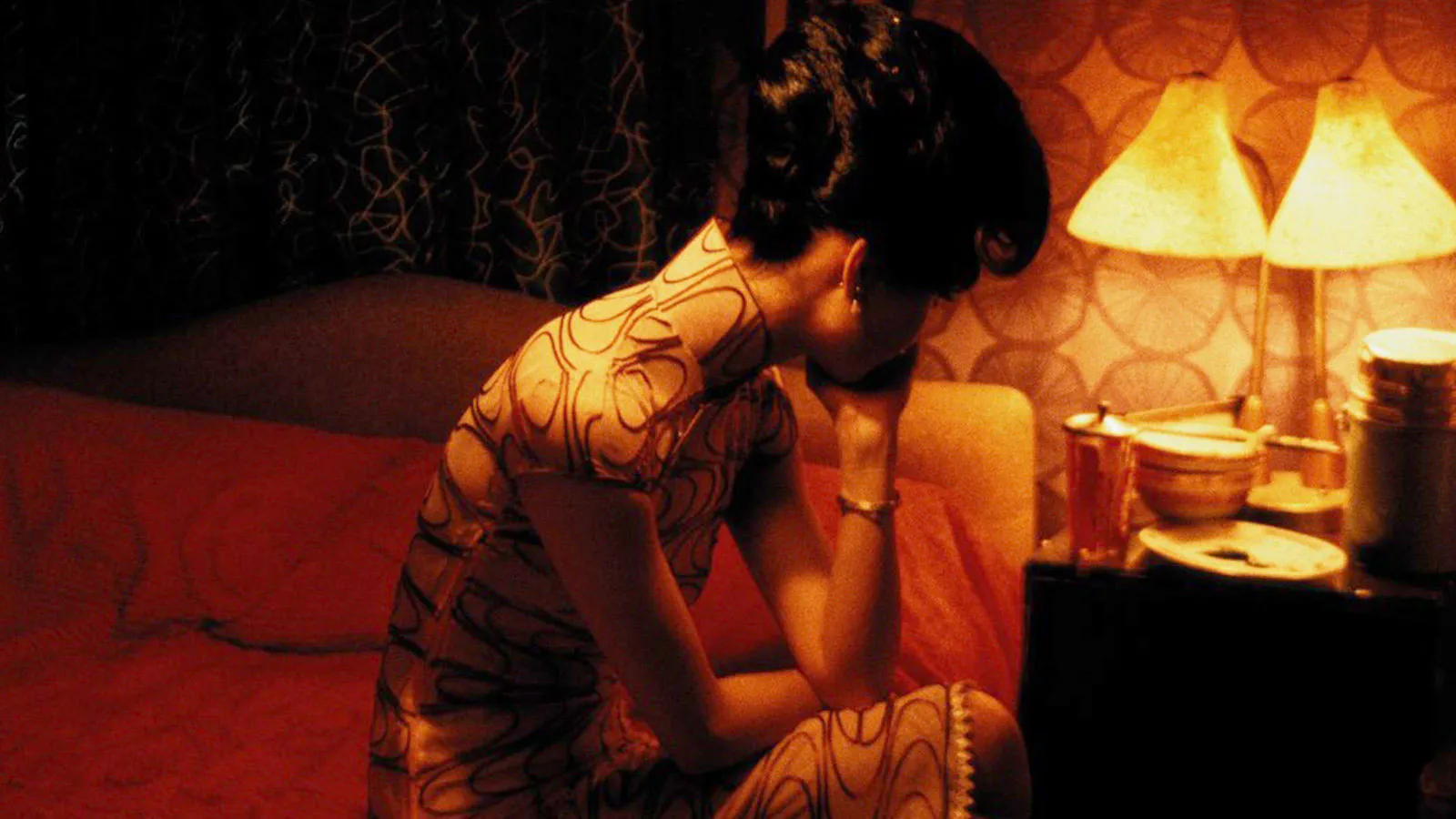
An asian woman wearing a Cheongsam sitting on a bed in an orange lit room with her head in her hand looking forlorn.

In the Mood for Love

Directed by Wong Kar Wai

Wong Kar-wai’s hauntingly beautiful film, In the Mood for Love (2000) deals with unfulfilled relationships, the fallibility of memory, and endings without resolution. Starring Tony Leung (Mr. Chow) and Maggie Cheung (Mrs. Chen), In the Mood for Love is the story of two couples that move into adjoining apartments on the same day. Over time, Mr. Chow and Mrs. Chen realize that their frequently absent spouses are having an affair. At once deftly crafted and visually extravagant, it is a masterful evocation of fleeting moments in which “the told is not resolved but the telling is concluded” (Neupert). Original music is by Michael Galasso, with cinematography by Christopher Doyle and Mark Lee Ping-bin.

Main Image: Film still from In the Mood for Love (2000). Wong Kar Wai. Hong Kong/China.

Image
A rainbow bullseye with a cartoon cat and nude woman super imposed over top.

House (Hausu)

Directed by Nobuhiko Ôbayashi

A Halloween screening of the psychedelic Japanese cult horror classic, House (Hausu), introduced by writer and theorist Evan Calder Williams. Nobuhiko Ôbayashi’s House (Hausu) is a nightmarish film about a schoolgirl named Gorgeous and six of her classmates who vacation at her aunt’s home in the country. Each of the characters is marked by a special trait—Melody plays music, Mac likes to eat, Kung-fu is a martial arts expert, Sweet is very tidy, Fanta daydreams, and Prof is a skillful logician. One by one, the girls encounter possessed objects that become the instruments of their demise. An outlandish and visually stunning spectacle that parodies horror film clichés, Ôbayashi collaborated with his daughter to create the deranged script, employing many of the techniques he learned through his background in experimental cinema and as an advertisement producer for television.

Main Image: Film still: House (Hausu) (1977), Janus Films.


Calder Quartet

The Calder Quartet presented a concert of new and not-so-new music that framed Schubert’s Death and the Maiden quartet with works by Webern, Mozart, and a Calder commission by film composer Don Davis: Vexed Man (inspired by Messerschmidt)

The Calder Quartet performs a broad repertoire striving to channel the true intention of the work’s creator. Known for the discovery, commissioning, recording, and mentoring of some of today’s best emerging composers (with over 25 commissioned works to date), the group continues to work and collaborate with artists across musical genres, spanning the classical and contemporary music worlds, as well as rock, dance, and visual arts, performing in venues ranging from art galleries and rock clubs to Carnegie and Walt Disney concert halls. 

This event is presented in context with La Jeune-Fille et la Mort (The Young-Girl and Death) on Saturday, October 12, 2013, at 7 PM.

PROGRAM

Wolfgang Amadeus Mozart String Quartet No. 14 in G major, K. 387 Anton Webern Five Movements for String Quartet, Op. 5 Don Davis Vexed Man (inspired by Messerschmidt) Interval Franz Schubert String Quartet No. 14 in D minor—Death and the Maiden

Mark Fell

British electronic musician Mark Fell was in residence to create three site-specific audio and light installations and an immersive performance in the Concert Hall. Each of the installation pieces used the same algorithm to generate different effects: a cube of color-scrolling lights; a three-floor, haze-filled room permeated by vibrantly oscillating light and sound; and a massive, dark space filled by a strobe-lit skydancer. Fell’s invitation for the audience to explore the places less traveled culminated in a performance with a 50-channel audio and 84-channel light work, during which each panel of the fabric ceiling in EMPAC’s Concert Hall was independently lit.

Fell is a multidisciplinary artist based in Sheffield, UK. The variety of institutions that present his work—from large super clubs, such as Berghain (Berlin), to the Hong Kong National Film and Sound Archive—speak to the diversity of Fell’s work. He received an honorary mention in the digital music category at Prix Ars Electronica, and was shortlisted for the Quartz award for his contributions to research in digital music. Fell has also been involved in a number of academic research projects ranging from computer science to musicology and, as a curator, he is recognized for his contributions to the development of experimental electronic music in Europe.

Image
A white man looking directly into a video monitor.

ISOS

Kris Verdonck / A Two Dogs Company

ISOS is a 3D video installation inspired by the apocalyptic science fiction novels of J.G. Ballard. Theater maker and visual artist Kris Verdonck worked extensively in residence on this installation, which focuses on the feeling of estrangement and “unheimlichkeit” (or eeriness) that arises from the tension between man and machine. Following the residency, an audience was invited to an open studio and lecture demonstration of his innovative stereoscopic filming techniques. Verdonck and his collaborators worked at EMPAC to construct precision sets, create custom lighting effects for microcosmic sets, and on a challenging 3D shoot with two high-definition cameras mounted for a bird’s-eye perspective. 

Kris Verdonck’s visual arts, architecture, and theater training is reflected in the work he creates: his creations are situated between visual arts and theater, installation and performance, and dance and architecture. 

Media
Image
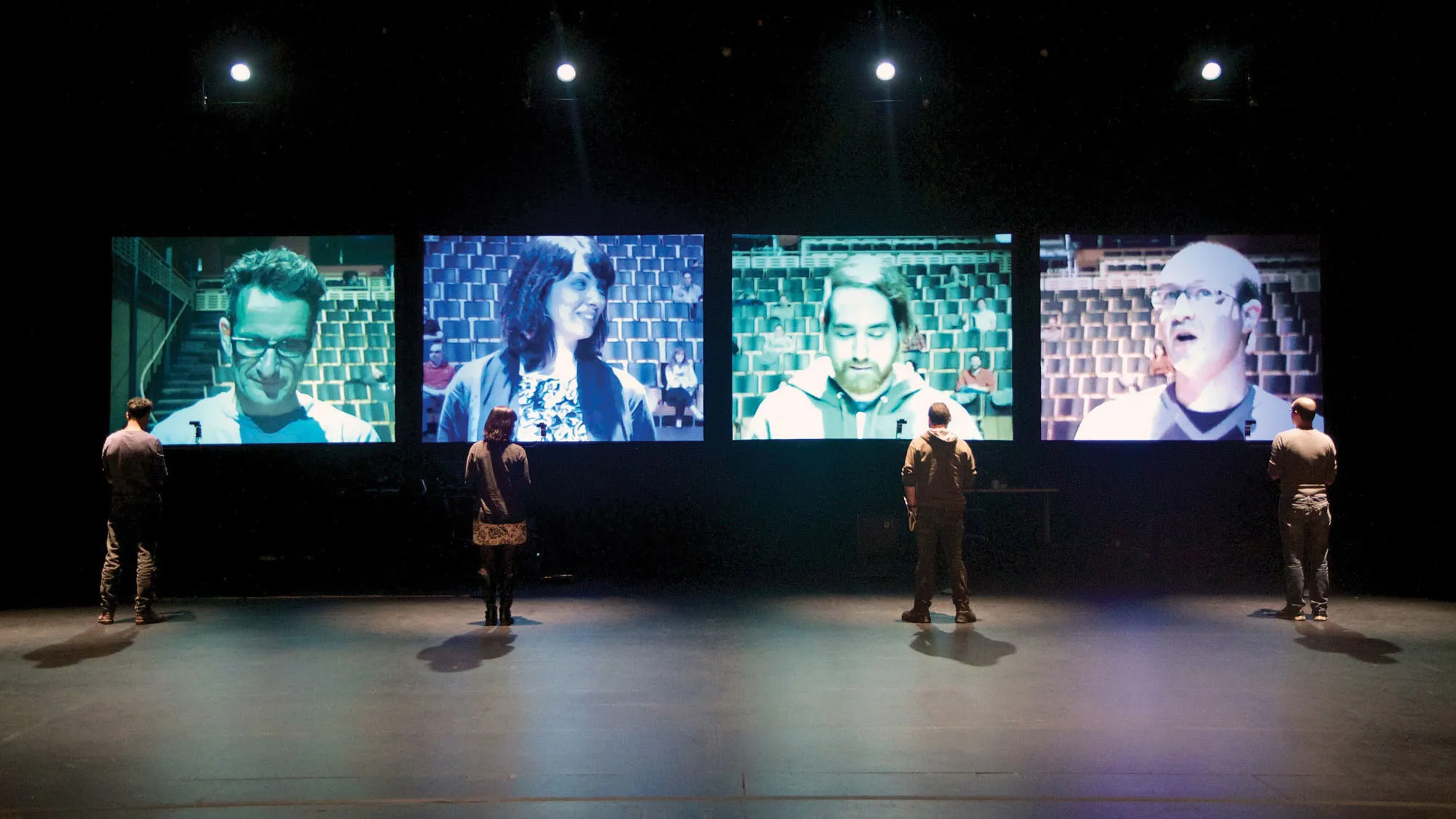
Four people standing on stage, back to the viewer looking at a projected image of themselves on a four screens in front of them.

Central Intelligence Agency

Wojtek Ziemilski

In the 1950s, the CIA participated in the promotion of American art for propagandistic purpose, investing funds to turn an unexpected group of artists—Jackson Pollock and other abstract expressionists among them—into international art stars exemplifying America’s creativity. Central Intelligence Agency centers on stories, the difficulty of objectivity, and how judgment can become hostage to what we see. 

Polish performance artist Wojtek Ziemilski collaborated with German interaction designer Sebastian Neitsch on this performance, installation, and interactive environment; while in residence, the artists proto-typed robotic arms with cameras programmed to automatically follow audience members.

Ziemilski is a theater director and visual artist who graduated from the theater directing course at the Gulbenkian Foundation in Lisbon, Portugal. He teaches contemporary approaches to theater making with a particular focus on devising techniques and the use of new dance (or so-called “non-danse”) in theater. He is the author of the contemporary art blog new-art.blogspot.com.

Media