Image
A person silhouetted in the passenger side of a car with the window and sunroof open

Decolonizing Language

It is with gratitude and humility that we acknowledge that we are learning, speaking and gathering on the ancestral homelands of the Mohican people who are the Indigenous peoples of this land. Despite tremendous hardship in being forced from here, today their community resides in Wisconsin and is known as the Stockbridge-Munsee Community. We pay honor and respect to their ancestors past and present as we commit to building a more inclusive and equitable space for all.

Decolonizing Language is an ongoing series of conversations with artists and cultural practitioners whose works center Indigenous languages and seek to destabilize linguistic hierarchies.

The series approaches questions around Indigenous language revitalization and the potential of art, poetry, film, performance, and music to articulate suppressed narratives and histories from ecological, social, and artistic perspectives. 

Main Image: Still from Jáaji Approx (2015) by Sky Hopinka. Courtesy of the artist.

Media

Decolonizing Language: In conversation with Heather Bruegl and Dr. Anne Leilehua Lanzilotti. March 4, 2021

Decolonizing Language: Mojo’q che b’ixan ri ixkanulab’: Rosa Chávez and Tohil Fidel Brito in conversation with Clarissa Tossin and Mariana Fernández. March 17, 2021
 

Image
A person silhouetted in the passenger side of a car with the window and sunroof open

Sky Hopinka

In conversation with Mariana Fernández

Please join us for this online event featuring the artist and filmmaker Sky Hopinka in conversation with curator Mariana Fernández. 

Over the past decade, Hopinka’s videos and films have been animated by an exploration of language as a way to formulate questions of identity and belonging. Hopinka’s filmmaking career began around the same time he started learning Chinuk Wawa, an almost extinct creole trade-language spoken in the Pacific Northwest, and Hočąk, the endangered, Indigenous language of the Ho-Chunk peoples. His works often overlay English, Chinuk Wawa, and Hočąk to move beyond static ideas about language and cultural identity. 

As the third in EMPAC’s Decolonizing Language series of conversations seeking to destabilize linguistic hierarchies and present strategies of Indigenous language revitalization, Hopinka will discuss his use of language in crafting alternative understandings of place, community, and knowledge transmission.

Main Image: Still from Jáaji Approx (2015) by Sky Hopinka. Courtesy of the artist.

Media

Sky Hopinka in conversation with Mariana Fernández. May 3, 2021.

Image
Red background with a clip art style rock, Break Out 2021

THE UNDO FELLOWSHIP / Break @ut 2021

UnionDocs: Center for Documentary Art

Break @ut is a symposium (of sorts) that celebrates the research, writing, and filmmaking initiated during THE UNDO FELLOWSHIP and presented by our partners UnionDocs: Center for Documentary Art. Four ambitious research topics will be explored through a set of online screenings, study groups, and public dialogues. We are excited to share the ideas resulting from the inaugural year of this endeavor. 

Five artists — all extremely different in their curiosities, aesthetics, methods, and personalities, but more or less aligned in their efforts to break out of the patterns and preconceptions that dominate the documentary form — paired up with four intellectually adventurous writers. Together they proposed a research topic inspired by the artist’s practice. Having stewed on these thorny questions in regular dialogue with the whole group of brilliant fellows, their drafts now seek readers.

So, Break @ut with UnionDocs! Choose a single thread of inquiry, or weave connections between them all. Tune into the stream to watch and listen in, or sign up for an UNDO STUDY GROUP to get the reader and join a rigorous and creative discussion.

Main Image: Break ꩜ut 2021, a symposium presented by UNIONDOCS: Center for Documentary Art

Sisters with Transistors

Lisa Rovner and Marcus Werner Hed

Please join us for a talk by the director Lisa Rovner and producer Marcus Werner Hed of Sisters with Transistors: Electronic Music’s Unsung Heroines, an award-winning documentary that maps the history of twentieth century women experimental music pioneers. 

Narrated by Laurie Anderson, Sisters with Transistors features the work of visionary composer and Rensselaer professor Pauline Oliveros alongside Clara Rockmore, Daphne Oram, Bebe Barron, Delia Derbyshire, EMPAC-alum Maryanne Amacher, Eliane Radigue, Suzanne Ciani, and Laurie Spiegel. Through rigorous research, interviews, and archival footage, the film follows the electronic music composers’ radical experimentations with machines that redefined the boundaries of contemporary music.

The talk will include an educational screening of the film in Zoom. Students, staff, and faculty at Rensselaer were able to access the film throughout the semester. 

Sisters with Transistors opened at Metrograph on April 23, 2021.


Media

Talk recording, Sisters with Transistors with Lisa Rovner and Marcus Werner Hed, March 18, 2021.

Trailer: Sisters with Transistors

Pauline Oliveros discusses Deep Listening at Tedx Indianapolis, 2015. 

Image
bora yoon, lesley flanigan, and miya masaoka

In Depth: Bora Yoon, Lesley Flanigan, and Miya Masaoka

In conversation with Anne Leilehua Lanzilotti

Join us for a series of lunch hour conversations with EMPAC-commissioned composers Bora Yoon, Lesley Flanigan, and Miya Masaoka facilitated by Curator of music Dr. Anne Leilehua Lanzilotti.

Korean-American composer, vocalist, and multi-instrumentalist Bora Yoon is an interdisciplinary artist who conjures audiovisual soundscapes using digital devices, voice and found objects and instruments from a variety of cultures and historical centuries—to formulate an audiovisual storytelling through music, movement and sound. Using sensory gloves to embody the sonic landscape of her compositions, she will create a work that explores the intimacy and delicacy of the human voice. Yoon will create an hour-long solo work for singer and electronics that explores the intimacy and delicacy of the human voice, using sensory gloves to embody the sonic landscape of her compositions, activating the Wave Field Synthesis Array through movement.

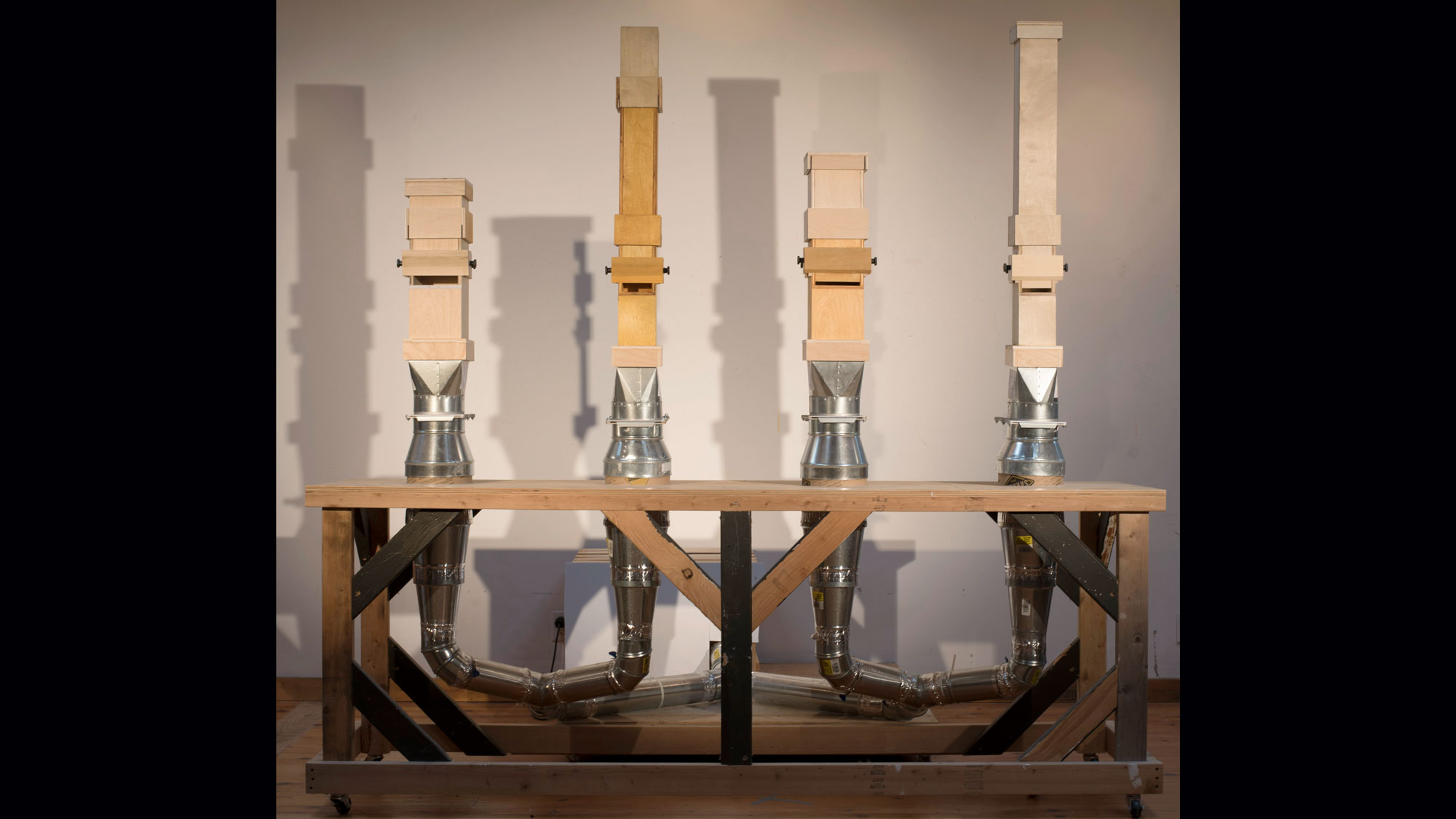
Lesley Flanigan is an experimental electronic musician living in New York City. Inspired by the physicality of sound, she builds her own instruments using minimal electronics, microphones and speakers. Performing these instruments alongside traditional instrumentation that often includes her own voice, she creates a kind of physical electronic music that embraces both the transparency and residue of process—sculpting sound from a palette of noise and subtle imperfections. Her work has been presented at venues and festivals internationally, including The Red Bull Music Festival at Saint John the Divine (New York), De Doelen (Rotterdam), Sonar (Barcelona), The Pritzker Pavilion at Millennium Park (Chicago), the Guggenheim Museum (New York), The Kitchen (New York), The Broad Museum (Los Angeles), ISSUE Project Room (Brooklyn), TransitioMX (Mexico City), CMKY Festival (Boulder), the Roskilde Museum of Contemporary Art (Denmark) and KW Institute for Contemporary Art in Berlin. Flangian's new commissioned work for EMPAC will further explore these themes within the unique acoustics of our Concert Hall.

Miya Masaoka is a composer, sound artist and musician based in New York City. Classically trained, her work operates at the intersection of spatialized sound, frequency and perception, performance, social and historical references. Whether recording inside physical objects or the human body, within architecturally resonant spaces or outdoor resonant canyons, American composer Miya Masaoka creates incongruencies that feed the paradox of the contemporary condition. Her new solo work for Wave Field Synthesis Array and solo performer will connect the artistic practices of notated composition, alternative personas, and hybrid acoustic-electronic performance on Japanese traditional string instruments such as the koto and ichigenkin.

Main Image: Bora Yoon, Lesley Flanigan, and Miya Masaoka. Photos: Courtesy the artists.

Image
Heather Bruegl and Anne Leilehua Lanzilotti

Decolonizing Language

In conversation with Heather Bruegl and Dr. Anne Leilehua Lanzilotti

This online event features historian and Stockbridge-Munsee Community Director of Cultural Affairs Heather Bruegl in conversation with Kanaka Maoli (Native Hawaiian) composer and EMPAC curator Anne Leilehua Lanzilotti. 

EMPAC is located on the ancestral homelands of the Mohican people who are the Indigenous peoples of this land. Despite tremendous hardship in being forced from here, today their community resides in Wisconsin and is known as the Stockbridge-Munsee Community. This conversation traces cultural strategies for the revitalization of Indigenous languages and frames the ways in which language shapes both our perception and environment.

Bruegl and Lanzilotti will discuss how “first voices” are central to their respective cultural work by introducing their intersecting approaches to decolonizing language, as well as the potential of such practices to reveal long-suppressed ecological, social, and artistic perspectives. Starting with an introduction by Bruegl of her cultural advocacy for, and historical inquiry into, the Stockbridge-Munsee Community, Lanzilotti will present examples of how she seeks to challenge inherited notions of the hierarchy of language in her work as both a curator and a composer. 

Lanzilotti’s recent composition hānau ka ua, for example, explores the hundreds of words for rain in ʻŌlelo Hawaiʻi. This astonishingly complex vocabulary is able to reflect the time of day, color, intensity and sound of a rainfall. Through taking the instruments, sounds, and language of her own kanaka maoli heritage as a starting point, she reveals the perceptual role language has in Native Hawaiian culture in its relationship with the natural world.

Main Image: Heather Bruegl and Anne Leilehua Lanzilotti. Courtesy the artists.

Media

Decolonizing Language: In conversation with Heather Bruegl and Dr. Anne Leilehua Lanzilotti. March 4, 2021

Decolonizing Language: Mojo’q che b’ixan ri ixkanulab’: Rosa Chávez and Tohil Fidel Brito in conversation with Clarissa Tossin and Mariana Fernández. March 17, 2021

Image
A futuristic town of biospheres in a desert plain with a double rainbow in the sky.

Spaceship Earth

Matt Wolf

Please join us for a screening of Spaceship Earth by award-winning documentary filmmaker Matt Wolf. The film brings a fresh perspective to the famed 1991 habitation experiment in which eight volunteers lived within a biosphere that replicated the earths ecosystem at the earth system science facility in Oracle, Arizona. By asking why these people wanted to embark on such a self-imposed quarantine in a closed-sustained environment, Spaceship Earth reminds us of the utopian promise and environmental ambition of Biosphere 2, the “brainchild of this countercultural group called the Synergists.” 

The screening will be followed by a question and answer session with Wolf on the history and production behind the project on Zoom. 

Main Image: Biosphere 2. Courtesy of NEON.

Media
Image
A group of people in red jumpsuits in a V formation posed inside of a biosphere filled with lush greenery.

Biosphere 2.

Courtesy of NEON

Official Trailer. Courtesy NEON.

Image
Rosa Chávez, Tohil Fidel Brito, Clarissa Tossin, Mariana Fernandez

Mojo’q che b’ixan ri ixkanulab’

Rosa Chávez and Tohil Fidel Brito in conversation with Clarissa Tossin and Mariana Fernández

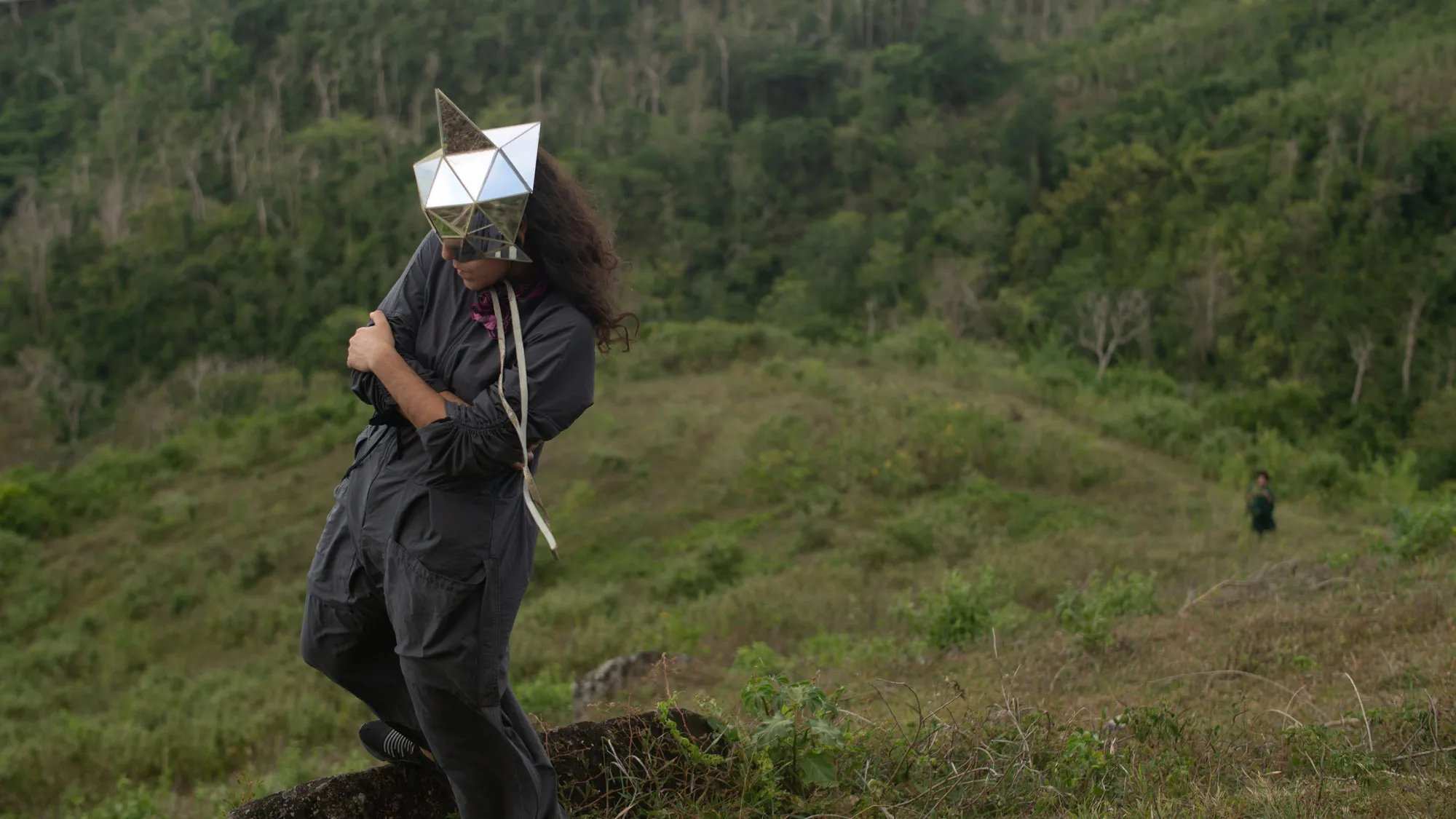
This online event presents artist Clarissa Tossin in conversation with poet, artist, and activist Rosa Chávez and artist Tohil Fidel Brito. The conversation is moderated by curator and writer Mariana Fernández and features poetry by Chávez as well as Brito’s work with classical Maya glyphs. 

Traversing their intersecting references, interests, and modes of inquiry, the three artists discuss the potential of art and poetry to articulate suppressed narratives and histories. The conversation foregrounds the importance of Indigenous ancestral knowledge and cultural practice for Maya artists in order to counteract the systemic erasure of their culture. In particular, Chávez and Brito trace the ways in which K’iche’ (the widely spoken Maya language of Guatemala) and other Mayan languages are central to their approach towards artmaking. 

Chávez and Brito are collaborating with Tossin on her forthcoming EMPAC-commissioned moving image work Mojo’q che b’ixan ri ixkanulab’ / Antes de que los volcanes canten / Before the volcanoes sing. The strategies of linguistic and temporal decolonization explored in this conversation, and common to all of the artists’ work, are similarly reflected in Tossin’s collaborative approach to the production of her new film, which seeks to perform a gesture of repair for the trauma of cultural erasure and appropriation. 

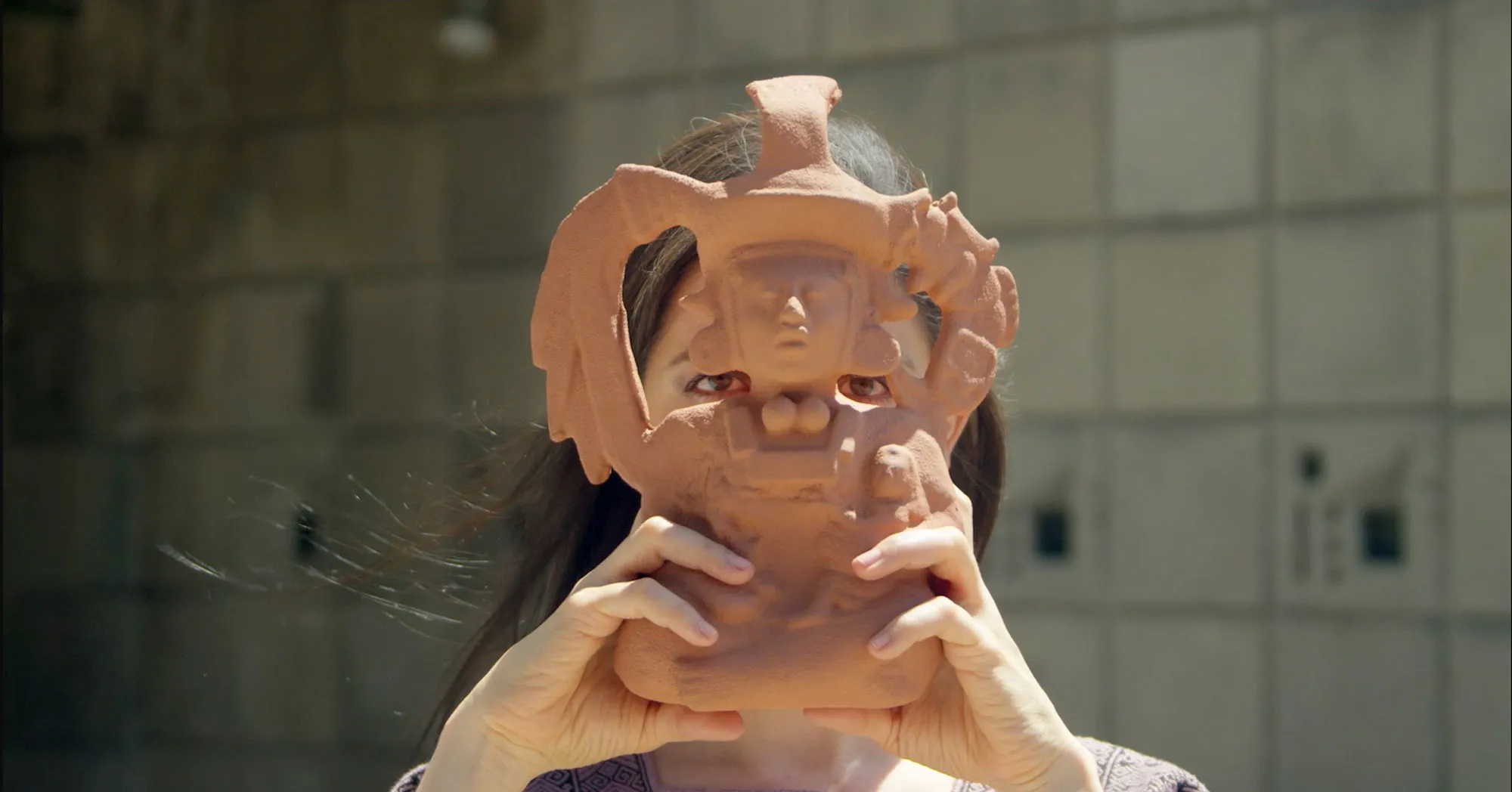
Currently in production, Mojo’q che b’ixan ri ixkanulab’ / Antes de que los volcanes canten / Before the volcanoes sing takes a sonic approach to reclaiming the Indigenous cultural motifs borrowed by Western architects in the 1920s Mayan Revival style through the study and performance of 3D printed replicas of Maya wind instruments from pre-Columbian collections held in US and Guatemalan museums. Principally filmed at Sowden House in Los Angeles, it animates the Mayan iconography that was co-opted and transformed into the building’s architecture through sound, performance, and poetry. These actions generate a kind of healing ritual that seeks to bring the appropriated Mayan motifs back into conversation with the contemporary Maya cultures that thrive in Los Angeles, where Tossin lives. 

This conversation is presented in Spanish with English subtitles. Translation by Mariana Fernández. It includes poetry by Rosa Chávez spoken in K’iche’.

Main Image: Clockwise from top left: Rosa Chávez, Tohil Fidel Brito, Mariana Fernandez, and Clarissa Tossin. Photos courtesy the artists.

Media

Decolonizing Language: Mojo’q che b’ixan ri ixkanulab’: Rosa Chávez and Tohil Fidel Brito in conversation with Clarissa Tossin and Mariana Fernández. March 17, 2021

Decolonizing Language: In conversation with Heather Bruegl and Dr. Anne Leilehua Lanzilotti. March 4, 2021

An introduction to Mojo’q che b’ixan ri ixkanulab’ / Antes de que los Volcanes Canten / Before the Volcanoes Sing, a new EMPAC-commissioned moving image work by Clarissa Tossin that is currently in production at Sowden House in Los Angeles and at EMPAC/Rensselaer in Troy, NY.

Image
Two people on stage silohetted against a purple lit background with geometric leafy like shapes. Another person stance with back to the view in the middle of the scene, but hidden by a shadow.

Hammers, Paintbrushes, Robots, and Glitter

Embracing Duality in Movement Design and Creating New Tools for Expression with Artist-Engineer Teams

Which tools are more useful: hammers or paintbrushes? Robots or glitter? This talk will share a notion of duality between function and expression that challenges the traditional answers to these questions, highlighting how expression supports function (and vice versa) and pointing to ways that traditional value models can create counter-productive imbalance, especially in movement design. Collaborations between artists and engineers, such as the work of Leonardo Da Vinci, the Bauhaus School, and Apple, often reach legendary status, seeming impossible or impractical to emulate. However, the talk will offer solutions to the real, pragmatic challenges of working across these disciplines, providing examples of work by artist-engineer teams that have contributed to research in robotics: designing styles of artificial gait for bipeds; translating movement between natural and artificial bodies; and building installations that give the public creative experiences with robots. Thus, the talk motivates constructing balance between art and engineering through collaborative work — work that reveals the practical value of play, the utility of dance, the urgent importance of glitter.

This event is a co-production with Rensselaer's departments of Electrical, Computer, and Systems Engineering and Industrial and Systems Engineering. 

Amy LaViers is the director of the Robotics, Automation, and Dance (RAD) Lab at the University of Illinois Urbana-Champaign. Her choreography and machine designs have been presented internationally, including at Merce Cunningham’s studios, the Ferst Center for the Arts, Joe’s Pub at the Public Theater, and the Performance Arcade. Her writing has appeared in Nature, American Scientist, and Aeon. She is a co-founder of three startup companies: AE Machines, an award-winning automation software company; caali, an embodied media company; and, most recently, Soma Measure, a wearable device company. Her teaching has been recognized on the University of Illinois at Urbana-Champaign (UIUC)’s list of Teachers Ranked as Excellent by Their Students, with Outstanding distinction. She is a recipient of DARPA’s Young Faculty Award (YFA) and Director’s Fellowship (2015-2018). She has held positions as an assistant professor in mechanical science and engineering at UIUC and in systems and information engineering at the University of Virginia (UVA). She completed a two-year Certification in Movement Analysis (CMA) in 2016 at the Laban/Bartenieff Institute of Movement Studies (LIMS) and her Ph.D. in electrical and computer engineering at Georgia Tech in 2013. Her research began with her undergraduate thesis at Princeton University where she earned a certificate in dance and a degree in mechanical and aerospace engineering in 2009. From 2002-2005 she toured internationally as a member of the Tennessee Children’s Dance Ensemble (TCDE).

Main Image: "Babyface" by Kate Ladenheim x The RAD Lab. Photo by Colin Edson.

Media

Amy LaViers: Hammers, Paintbrushes, Robots, and Glitter. March 3, 2021