Image
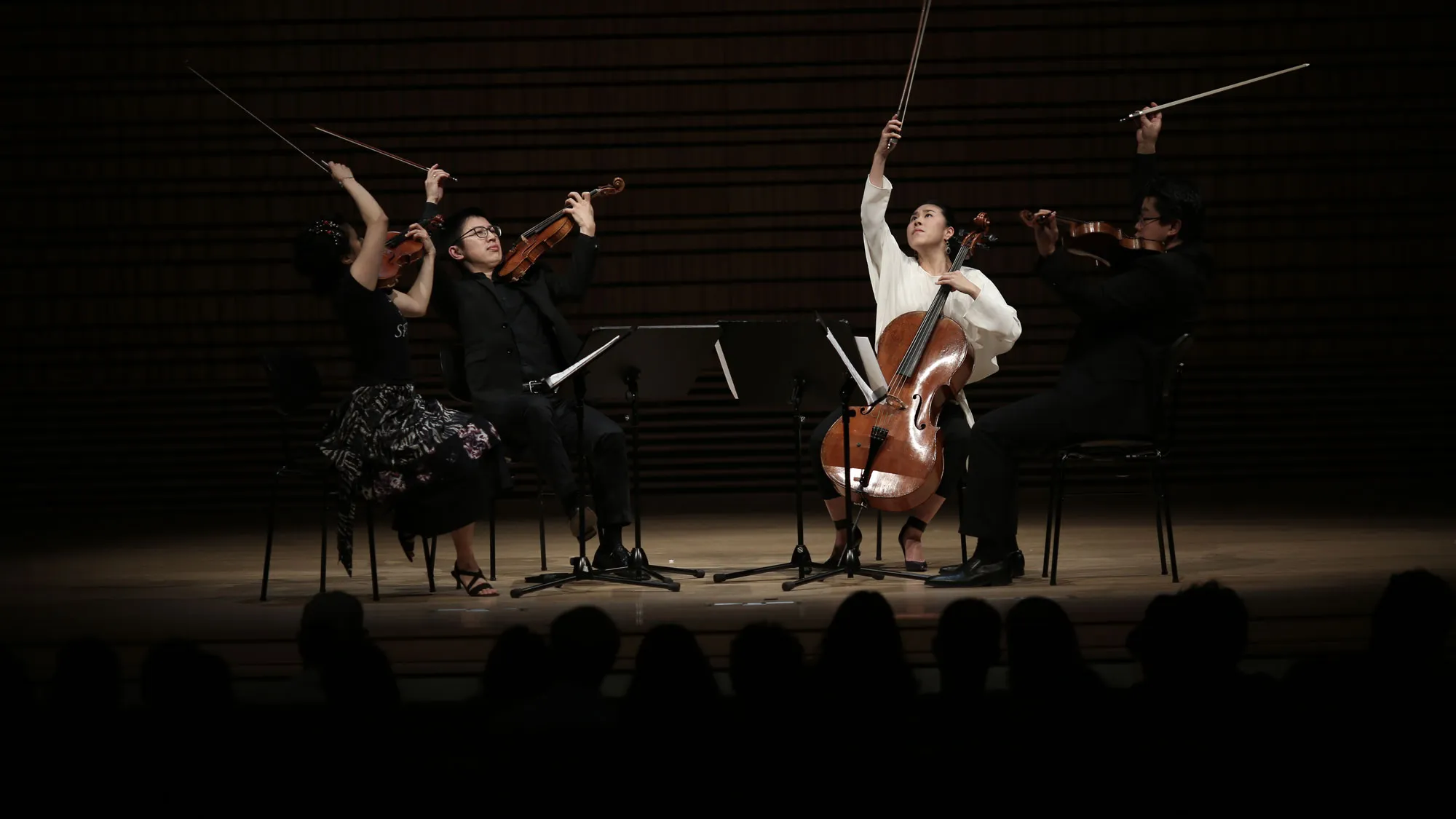
Formosa Quartet with bows lifted and pointed to the ceiling on a dimly lit concert hall stage.

10YEARS

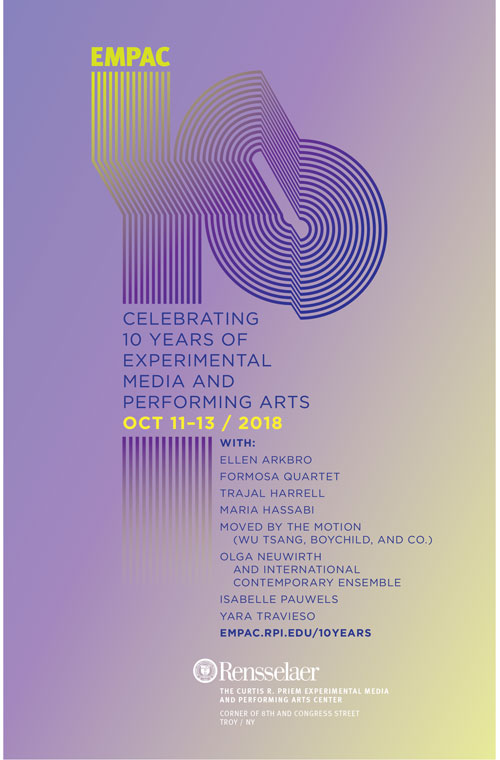
Celebrating 10 years of Experimental Media and Performing Arts

Over the course of three days, and across EMPAC’s four main venues and public spaces, the 10YEARS celebration marks a decade since the building's opening in 2008 by presenting a diverse offering of cross-disciplinary performances spanning music, dance, theater, film, and many experiential spaces in between. Five of these performances have been newly commissioned by EMPAC, were developed over the past year through the artist-in-residence program, and will make their world premiere this weekend.

10YEARS features works by:

In addition to the lineup of performances and installations, Saturday’s events include a research demonstration by the Cognitive and Immersive Systems Laboratory (CISL), a talk on digital archiving strategies by EMPAC Director Johannes Goebel, and an address by Rensselaer President Shirley Ann Jackson preceding Saturday evening’s Ambisonic performance in the Concert Hall.

Formosa Quartet during their finale in the Concert Hall during 10YEARS, October 2018. Photo: Paula Court/EMPAC.

Media

Formosa Quartet - Double Quartet: Strings and Spaces. October 11, 2018
Fall 2018

10th Anniversary Season

10 YEARS

Image
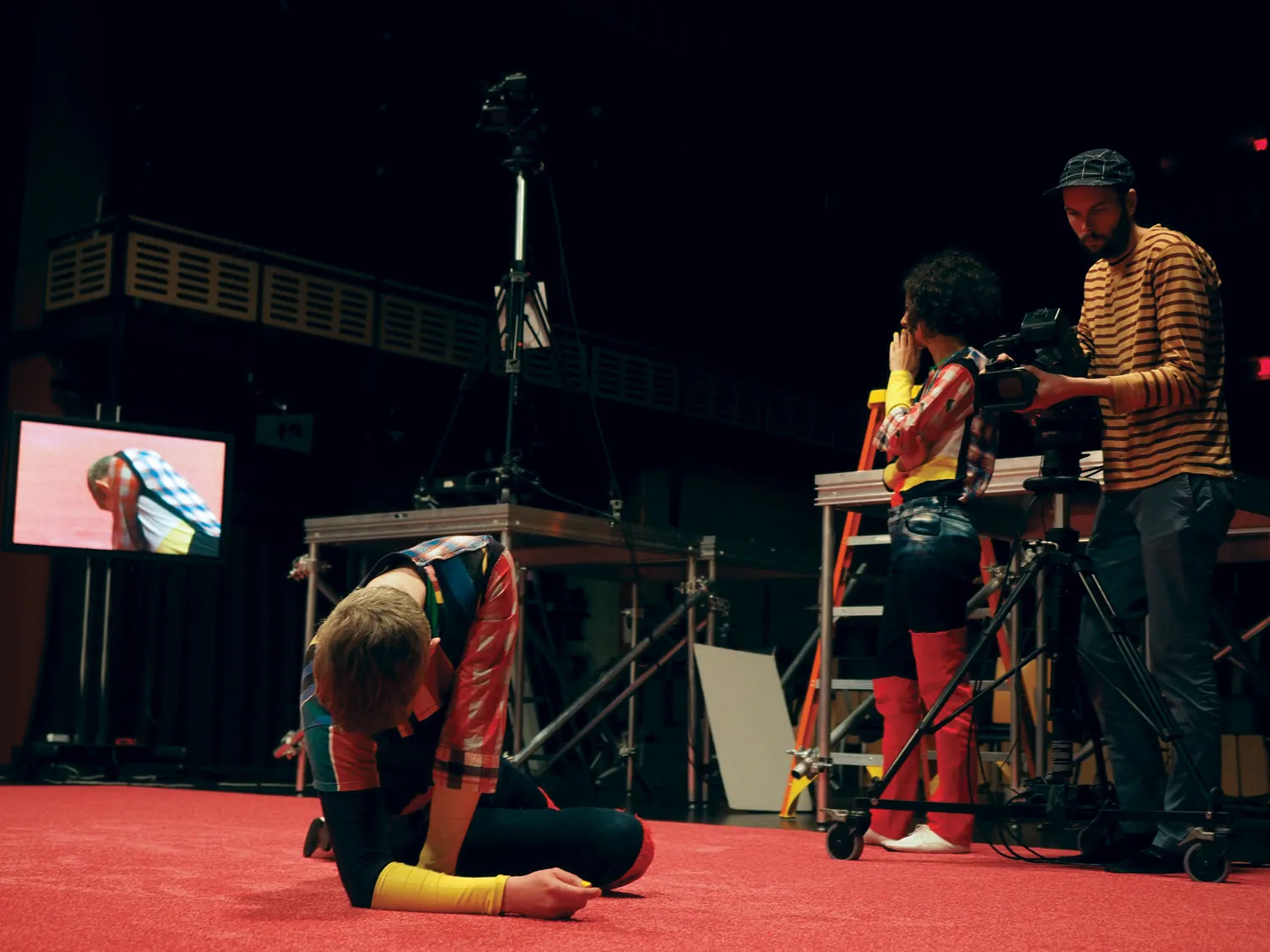
A dancer wearing a colorful costume laying on a red carpet while being filmed as Maria Hassabi looks at the video feed on a screen, contemplating.

SlowMeDown

Maria Hassabi

Artist/choreographer Maria Hassabi was in residence with dancers to shoot and begin editing footage for a moving-image installation derived from various iterations of her work STAGING (2017). This new project was Hassabi’s first moving-image installation and was co-commissioned by EMPAC.

The residency included a four-camera shoot on STAGING’s iconic pink carpet arranged in the EMPAC theater, as well as Steadicam and robotic camera shoots in four locations throughout the EMPAC building. Hassabi’s installation furthered her exploration of color and the signature slowness of her prior performances. The piece had its premiere at the EMPAC 10YEARS celebration.

Main Image: Maria Hassabi in residence shooting her commission for EMPAC's 10YEARS celebration SlowMeDown. Courtesy the artist. Photo: Mick Bello/EMPAC.

Image
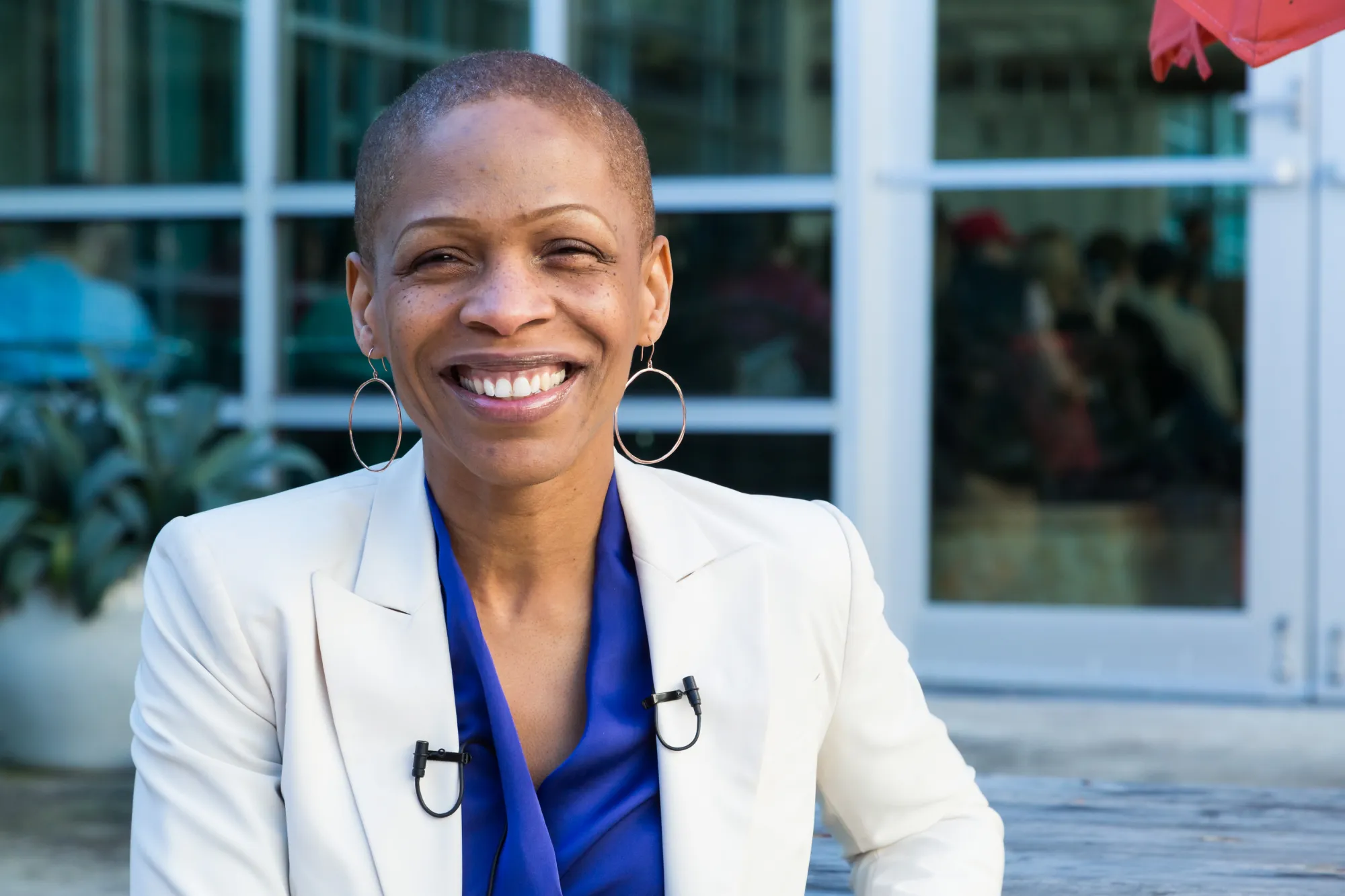
Dawna Ballard.

Creating Time Through Design

Dawna Ballard

Dawna Ballard presents a talk on “chronemics,” the study of the relationship between time and human communication. Ballard’s research focuses on how communication affects communities, organizations, and individuals. Her work explores the history and context of work-life balance in our contemporary “always-on,” information-overloaded, 24/7 multitasking culture. Particular to EMPAC, Ballard will explore a new perspective of chronemics in relation to time-based arts.

Dawna Ballard is Associate Professor in the Department of Communication Studies at the University of Texas Austin where she teaches courses on organizational communication, communication in groups, teams and communities, scale development, and chronemics. Ballard published and edited Work Pressures, a collection of research about the nature of pressure in the workplace. She is a Public Voices Fellow, Texas Program in Sports and Media Fellow, and a faculty affiliate at the Center for Identity as well as the Center for Health Communication at the University of Texas Austin.

Media
Image
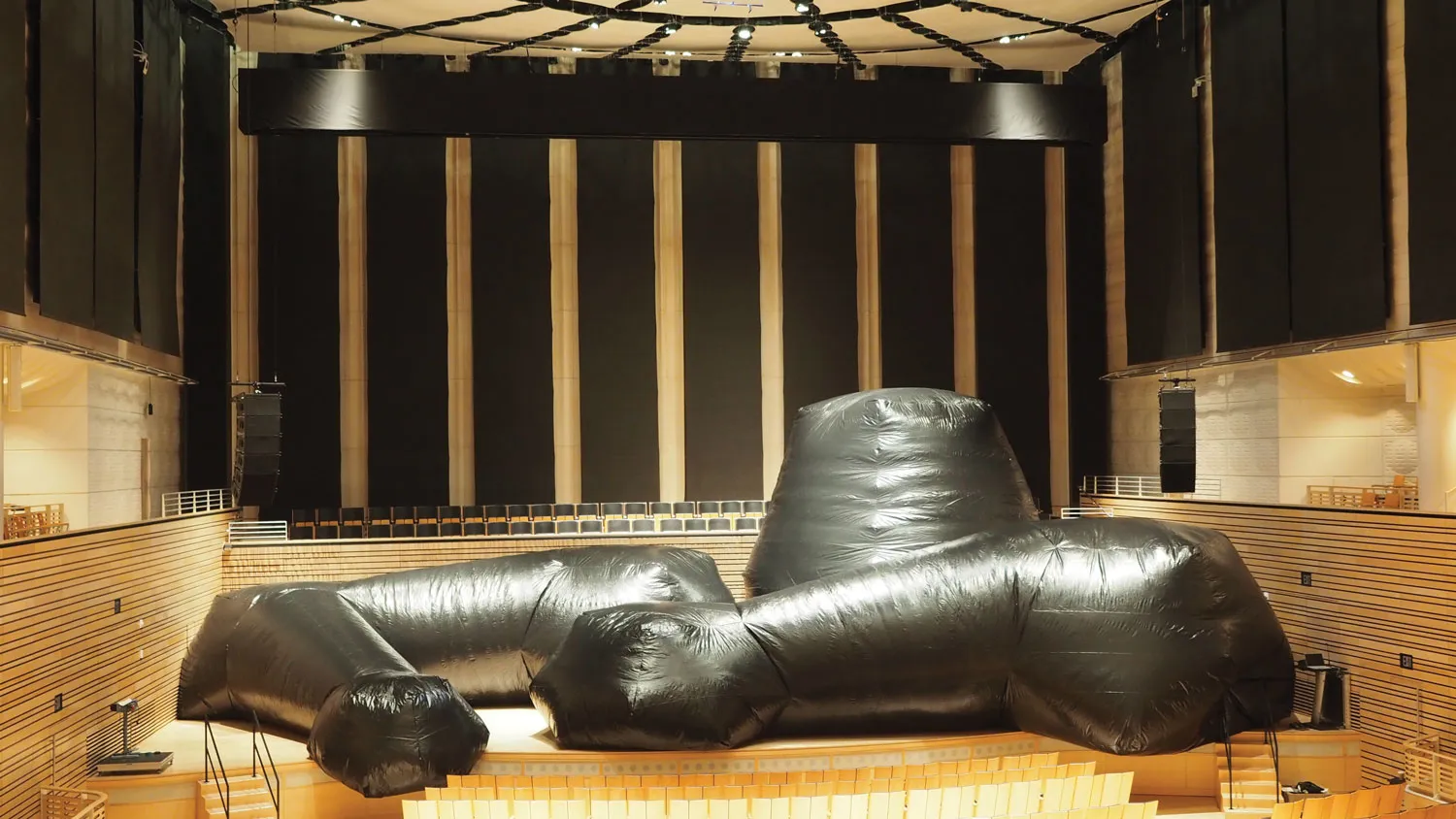
A black inflatable sculpture in an organic shape set up on the concert hall stage.

Myriad

Oneohtrix Point Never

Returning to EMPAC, Oneohtrix Point Never (AKA Daniel Lopatin) was in residence to develop elements for his concertscape MYRIAD, which premiered at the Park Avenue Armory in 2018. Lopatin and his team worked on audio, video, and staging — which included the construction of a giant inflatable object which occupied the Concert Hall.

Pulling from long-standing fascinations with film and television tropes, abstract sculpture, game ephemera, poetry, apocryphic histories, internet esoterica, and philosophies of being, MYRIAD generates a conceptual spectrum that is as much a speculation on the unthinkable future as it is an allegory for the current disquiet of a civilization out of balance with its environment.

Main Image: Oneohtrix Point Never working in the Concert Hall on Myriad in 2018. Photo: EMPAC.

SASS 2018

Spatial Audio Summer Seminar

Our second annual Spatial Audio Summer Seminar, co-presented by the Center for Computer Research in Music and Acoustics (CCRMA) at Stanford University and the Paris-based Institut de Recherche et Coordination Acoustique/Musique (IRCAM).

This intensive seminar offers musicians, composers, audio engineers, and programmers the rare opportunity to study the fundamentals of multi-channel spatial audio in pristine acoustic environments. Participants will experience multiple large spatial audio systems, including Wave Field Synthesis, High-Order Ambisonics, and Binaural audio.

SEMINAR—July 9–13, 2018

The first week of the seminar is an open forum for participants of all backgrounds and experience levels to dive into general concepts, workflows, and control mechanisms related to spatial audio. Topics will include introductory, intermediate, and advanced patching for IRCAM’s SPAT software, in-depth discussions of Wave Field Synthesis, Ambisonics, Binaural and Transaural audio, 3D audio recording and mixing, and more.

WAVE FIELD SYNTHESIS WORKSHOP—July 16–22, 2018

The wave field synthesis workshop gives participants focused time and hands-on access to the system in order to develop new creative work. This portion of the workshop will be reserved for only a handful of participants who submit project proposals in advance. Submissions will be reviewed by workshop leaders and accepted based on the degree to which they utilize the capabilities of these spatial audio systems and the potential to realize the proposed project within the given time frame.

Media

Image
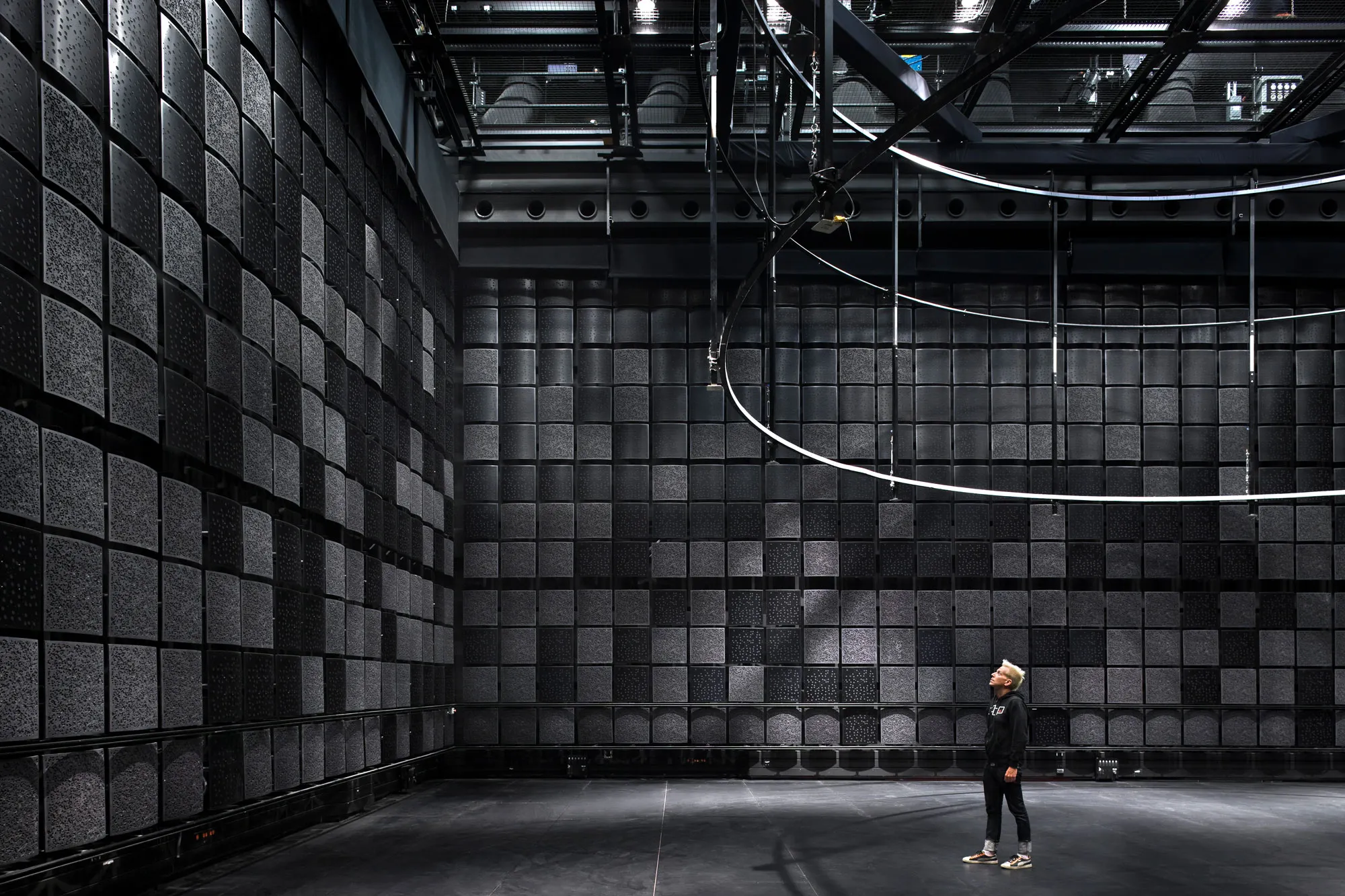
A white person standing in a black box studio looking at a wall of black sound proofing squares.
Main Image: © Peter Aaron/ESTO.

Building Tour

Spring 2018

This spring, we’ll continue to offer a series of EMPAC building tours led by different members of the EMPAC team to highlight the diverse and specialized functions of the space.

Each tour will run on the first Saturday of the month. Admission is free and open to the public. Visitors should meet at the EMPAC box office on the 7th floor at 2PM.

FEB 3: Building Tour with Senior Research Engineer Eric Ameres

This tour will focus on EMPAC’s function as a research environment facilitating projects at the intersection of art and science. EMPAC has developed a number of new media technologies and is the current home of the Cognitive and Immersive Systems Laboratory.

MARCH 3: Building Tour with EMPAC Curators

This tour will approach the building from the programmatic perspective of how the space can be optimized to create boundary-pushing work in the fields of dance, theater, music, and time-based visual arts.

APRIL 7: Building Tour with Senior Network Administrator Dave Bebb

This tour offers a look at the center from an information-technology perspective. With miles of fiber optic cable linking all four venues as well as the audio and video recording facilities, EMPAC is an environment where physical and digital worlds seamlessly intersect.

MAY 5: Building Tour with Lead Video Engineer Eric Brucker

From 3D film productions to green-screen animations, flying cameras, and panoramic projection environments, EMPAC is a lush visual world. This tour focuses on EMPAC as a film-production facility and high-resolution screening venue.

EMPAC building north curtain wall. Photo: Paul Rivera

Image
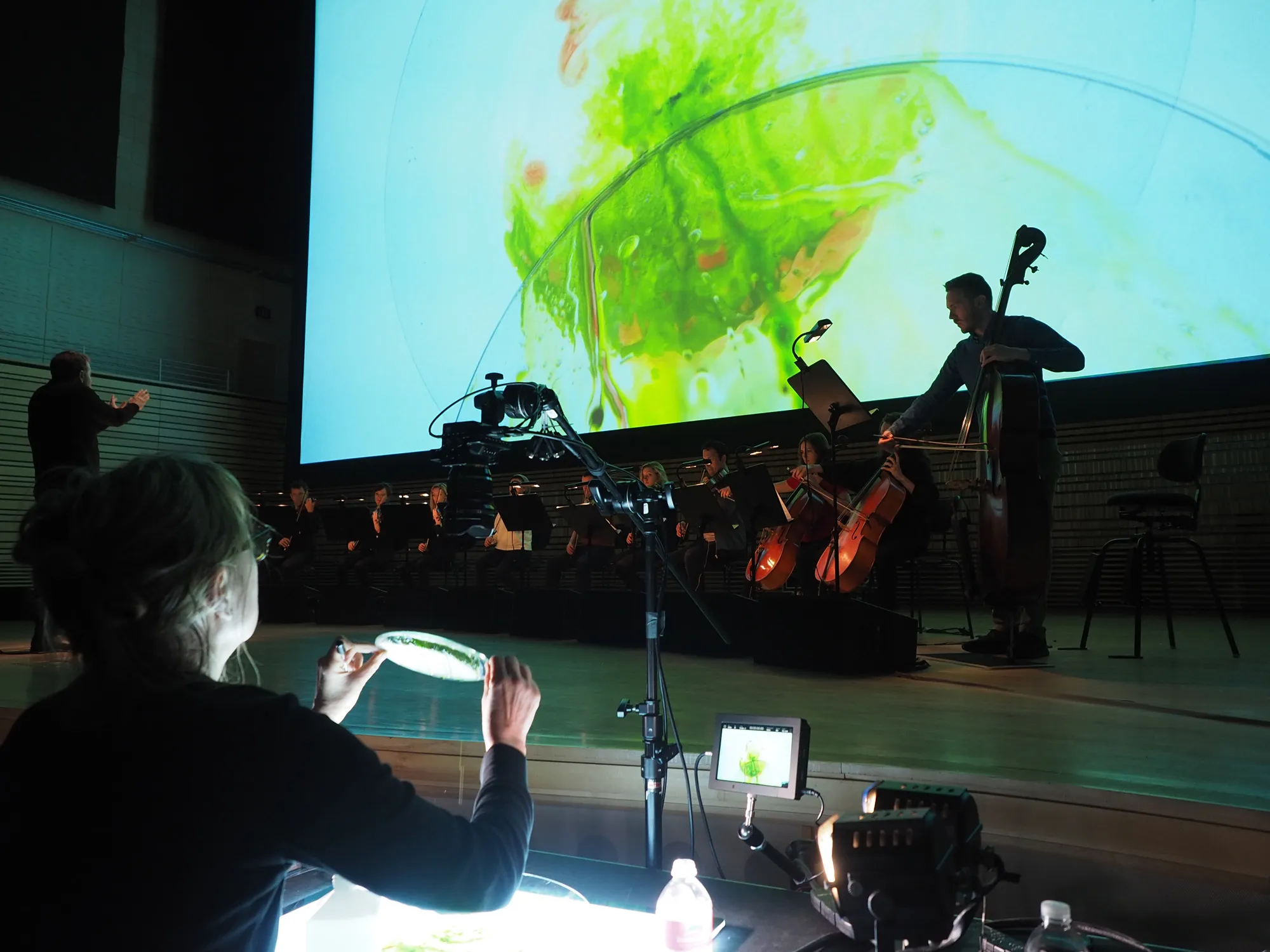
An orchestra on stage in front of a projected image of an lime green blob that is being controlled by a woman in the foreground.

darker

David Lang, Ensemble Signal, Suzanne Bocanegra

Pulitzer Prize-winning composer and Bang on A Can co-founder David Lang brought his pensive evening-length piece, darker, to EMPAC, for a recording residency and performance featuring Esnemble Signal with live projections by Suzanne Bocanegra.

Scored for 12 strings, darker is a slow exploration of sound. At times, it gives the ensemble the feel of a giant pipe organ or, with the aid of visual artist Suzanne Bocanegra’s live projections, the feel of splattering rain on an immoveable wall. As much a hypnotic sonic and visual object as it is a piece of music, darker weave its intricate solo lines into a delicate and subtly emotional fabric.

darker was recorded in the Concert Hall by Ensemble Signal for future release on Cantaloupe Records.

David Lang is one of the most highly esteemed and performed American composers writing today. His works have been performed around the world in most of the great concert halls. Lang is co-founder and co-artistic director of New York’s legendary music collective Bang on a Can. 

Ensemble Signal, described by the New York Times as “one of the most vital groups of its kind,” is a NY-based ensemble dedicated to offering the broadest possible audience access to a diverse range of contemporary works through performance, commissioning, recording, and education. 

Suzanne Bocanegra is an artist living and working in New York City. Her recent work involves large-
scale performance and installation, frequently translating two dimensional information, images and ideas from the past into three dimensional scenarios for staging, movement, ballet, and music.

Main Image: David Lang's DARKER Photo: Mick Bello/EMPAC

Media
Image
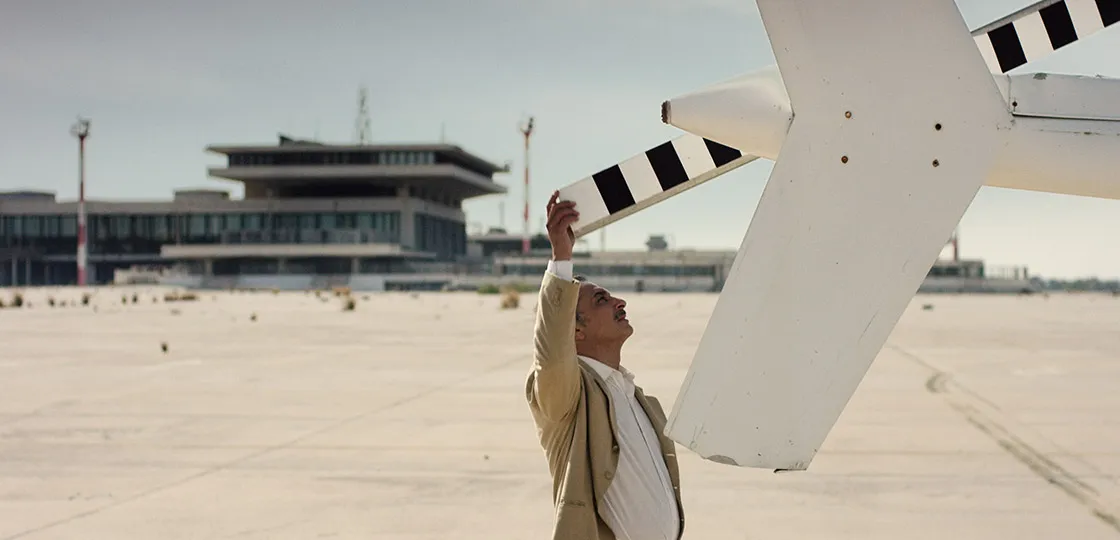
A lebanese man standing on a runway with his hand on a white helicopter rear propeller.

Other Uses 06

Jorge Jácome, Naeem Mohaiemen, and Beatriz Santiago Muñoz

For the final episode of the yearlong film series Other Uses, three films chronicle the afterlives of sites that time has suspended, abandoned, or reclaimed.

Beatriz Santiago Muñoz captures the convergence of plants, animals, and the local Puerto Rican population in Ojos para mis Enemigos (Eyes for my enemies) as they covertly share a decommissioned US military base in Ceiba. Jorge Jácome’s Flores transforms the autonomous Portuguese Azores Islands into a landscape rendered uninhabitable by the proliferation of hydrangeas, and a man is stranded at a disused Olympic airport in Naeem Mohaiemen’s first fiction feature Tripoli Cancelled.

Program

  • Ojos para mis Enemigos / Eyes for my enemies (2014)
  • Beatriz Santiago Muñoz
  • Flores (2017)
  • Jorge Jácome
  • Tripoli Cancelled (2017)
  • Naeem Mohaiemen
  • Approximate run-time: 130 min.

Main Image: Tripoli Cancelled, Naeem Mohaiemen. Film Still: Courtesy of the artist and LUX